


- PVD (physical vapor deposition), also called ion plating, is the standard way gold-tone stainless steel jewelry gets its color: gold is vaporized in a vacuum and bonded to the steel surface.
- PVD is more durable than traditional electroplating (dipping metal in a gold-ion bath), because the vacuum-bonded coating is harder and adheres more tightly, but neither process makes the piece solid gold.
- Gold-filled jewelry is a different category entirely: a much thicker layer of real gold mechanically bonded to a base metal, sold by weight percentage, and typically not built on stainless steel.
- All plating, PVD included, eventually wears at high-friction points (clasps, the backs of rings) with years of daily use. No plated finish is permanent.
- AJLuxe's steel line is 316L surgical-grade stainless steel. The silver-tone pieces are solid steel with nothing plated on; the gold-tone steel pieces carry a gold finish over that same steel base. AJLuxe's separate women's line uses 18K gold plating over 925 sterling silver, a different base metal.
"Plated" gets used loosely in jewelry listings, and it covers several genuinely different processes with different durability. If you're shopping stainless steel jewelry specifically, the plating question matters more than usual, because steel is chosen in the first place for being tough and tarnish-resistant, and it's worth knowing whether the color on top holds up to that same standard. This guide breaks down how stainless steel jewelry actually gets its gold or rose-gold color, how that compares to plating on silver or brass, where gold-filled fits in, and how to keep a plated piece looking new for as long as possible.
How Gold Plating Actually Works
Gold plating means bonding a thin layer of real gold onto the surface of a different base metal, using one of two main processes: electroplating or PVD (physical vapor deposition).
Electroplating is the older, more common method. The base metal piece is submerged in a solution containing gold ions, and an electric current pulls those ions onto the metal's surface, building up a thin gold layer. It's effective and inexpensive, but the bond is comparatively soft, which is why electroplated jewelry on brass or copper tends to show brassy patches at the clasp or high-contact edges within a year or two of regular wear.
PVD (physical vapor deposition), also called ion plating, is a vacuum-based process. The coating metal, gold in this case, is vaporized inside a vacuum chamber and the vapor bonds directly to the surface of the piece at a molecular level. Because there's no liquid bath and the bond forms under vacuum, the resulting layer is denser and adheres more tightly than standard electroplating. This is the process almost universally used on gold-tone stainless steel, because steel's hard, non-porous surface is well suited to it and the extra durability is a large part of why buyers choose steel in the first place.
Plating Methods Compared
| Method | How It's Applied | Typical Base Metal | Relative Durability |
|---|---|---|---|
| Electroplating | Gold-ion bath + electric current | Brass, copper, silver | Lower. Thinner, softer bond, wears at contact points fastest. |
| PVD / ion plating | Vacuum-deposited metal vapor | Stainless steel | Higher. Denser, harder-bonded coating; still wears over years of heavy use. |
| Gold vermeil / plating over silver | Electroplating, thicker minimum layer set by federal standard | 925 sterling silver | Moderate to higher. Precious-metal base means no base-metal show-through if the layer thins. |
| Gold-filled | Heat and pressure mechanical bonding | Brass or other base metal | Highest among "plated" categories. Layer is 5 to 100+ times thicker than standard plating. |
| Solid gold | Not plated: gold throughout | N/A | Highest. Color cannot wear off because there is no coating. |

Gold-Filled vs. Gold-Plated: Why the Distinction Matters
Gold-filled is not the same thing as gold-plated, even though both put a layer of real gold over a cheaper base metal. Under U.S. Federal Trade Commission rules, gold-filled jewelry must carry a layer of gold that's at least 1/20th of the item's total weight, mechanically bonded to the base metal using heat and pressure rather than an electric current or vapor deposition. That works out to a coating that's typically 5 to 100 times thicker than standard gold plating, which is why gold-filled pieces can be worn daily for years, including in water, without showing base metal.
The tradeoff is that gold-filled jewelry is almost never built on a stainless steel base; it's typically layered onto brass. So the choice, in practice, usually isn't "steel plus gold-filled versus steel plus PVD," it's a choice between two different base-metal-and-finish combinations entirely: stainless steel with PVD gold plating, or brass with a gold-filled layer. Each has real strengths. Steel's advantage is the base metal itself: it doesn't rust, tarnish, or discolor even where the surface finish is worn away entirely, so a scratched-through spot on a PVD steel piece shows plain steel, not corroded brass. Gold-filled's advantage is finish longevity: a much thicker gold layer that resists showing base metal for longer under daily wear, but sitting on a base metal that itself can tarnish once exposed.
What AJLuxe's Own Steel Pieces Actually Use
AJLuxe's steel jewelry is 316L surgical-grade stainless steel, the same grade used in surgical instruments and body-piercing jewelry, chosen for corrosion resistance and everyday durability. Within that line, the silver-finish pieces are solid 316L steel with no plating at all, so there's no surface coating to wear through, ever, on those pieces. The gold-finish steel pieces carry a gold-tone layer over that same 316L base; like any plated finish, that layer can show wear at high-friction points such as a clasp after long, heavy use, even though the steel underneath will not rust, tarnish, or discolor.
This is a separate product line from AJLuxe's original women's catalog, which is built as 18K gold plating over 925 sterling silver, not steel. The two lines use different base metals on purpose: sterling silver for the traditional fine-jewelry line, and 316L steel for pieces designed around maximum everyday durability, including the men's chain and pendant styles. Whichever line a piece comes from, the base metal it's built on, not just the color on top, is what actually determines how it holds up and reacts against skin.
On sensitivities specifically: 316L stainless steel is hypoallergenic and nickel-safe for the large majority of wearers, because the nickel in the alloy is bound within the metal's structure rather than sitting exposed on the surface. It is not nickel-free, since no stainless steel is; anyone with a diagnosed, severe nickel allergy should know that distinction before buying steel jewelry from any brand, not just this one.
How Long Plated Stainless Steel Jewelry Actually Lasts
PVD-plated stainless steel is genuinely more wear-resistant than electroplated jewelry, but "more durable" is not the same as "permanent." Even a vacuum-bonded coating is a finite number of gold atoms thick, and daily friction, especially at a ring's inner band, a bracelet clasp, or wherever a necklace rubs against clothing or skin, gradually thins it. Realistic expectations depend heavily on wear conditions: a piece worn occasionally and kept dry can look new for years, while daily wear through workouts, showers, and lotion or perfume contact will show wear at contact points faster, regardless of which plating method was used.
A few habits extend any plated finish's life: remove jewelry before swimming, especially in chlorinated or salt water, since both accelerate wear on any metal coating; put jewelry on after applying lotion, perfume, or sunscreen rather than before, since those products can degrade plating over repeated contact; and store pieces separately, since metal-on-metal contact in a jewelry box or bag causes surface scratching that speeds up wear at exactly the spots most visible.
Frequently Asked Questions
Is PVD-plated stainless steel jewelry good quality?
Yes, within the category of plated jewelry. PVD is the most durable plating method commonly used on stainless steel, and it's a legitimate, widely used finishing process in the jewelry industry, not a shortcut or a lower-quality substitute for other plating types. It's still a surface coating, though, not solid gold, and buyers should expect it to wear at contact points eventually, just more slowly than electroplating.
Does stainless steel jewelry plating wear off?
Yes, eventually, though PVD-plated steel wears more slowly than electroplated jewelry on other base metals. High-friction points like clasps and the inside of rings show wear first. How long it takes depends heavily on how often the piece is worn and exposed to water, lotion, and friction.
Is gold-plated stainless steel the same as gold-filled?
No. Gold-filled jewelry carries a legally defined minimum gold layer (at least 1/20th of the item's weight in gold) mechanically bonded to the base metal, which is typically 5 to 100 times thicker than standard plating. Gold-filled pieces are also almost never built on a stainless steel base; steel jewelry is finished with plating (usually PVD), not the gold-filled process.
What's the difference between PVD plating and regular electroplating?
Electroplating uses an electric current to deposit gold ions onto a metal surface from a liquid bath. PVD uses a vacuum chamber to vaporize the coating metal and bond it directly to the surface at a molecular level. PVD generally produces a denser, harder, more wear-resistant coating, which is why it's the standard finish for gold-tone stainless steel specifically.
Can you re-plate stainless steel jewelry once it wears?
It's possible with specialized equipment, since PVD plating requires a vacuum chamber that most local jewelers don't have on-site, unlike standard electroplating, which some jewelers can redo in-house. In practice, replating steel jewelry usually means sending it to a specialty finisher rather than a walk-in jeweler.
Is 316L stainless steel jewelry hypoallergenic?
316L stainless steel is hypoallergenic and nickel-safe for the vast majority of wearers, because its nickel is locked inside the alloy rather than exposed on the surface. It is not nickel-free, since no stainless steel alloy is, so anyone with a diagnosed severe nickel allergy should confirm with a doctor before wearing any stainless steel jewelry.
Final Thoughts
Stainless steel jewelry gets its gold color from PVD (physical vapor deposition), a vacuum-based plating process that bonds more tightly and wears more slowly than standard electroplating, but it is still a plated finish, not solid gold, and it will show wear at high-friction points over years of heavy use. Gold-filled jewelry solves the same durability problem differently, with a much thicker mechanically bonded layer, but it's typically built on brass rather than steel, so it isn't really a competing option on the same piece so much as a different base-metal choice entirely. AJLuxe's steel jewelry is solid 316L on the silver-finish pieces and PVD-style gold finish over that same 316L base on the gold-tone pieces, separate from the brand's original 18K-gold-over-925-silver women's line. Knowing which base metal and which plating process you're buying is the difference between reasonable expectations and disappointment two years in.
All third-party trademarks, brand names and product names are the property of their respective owners. AJLuxe is not affiliated with, endorsed by, sponsored by, or otherwise connected to any third-party brand referenced in this article. Brand names are used solely for accurate comparative reference, and material descriptions reflect each brand's own published product specifications at the time of writing.
You Might Also Like
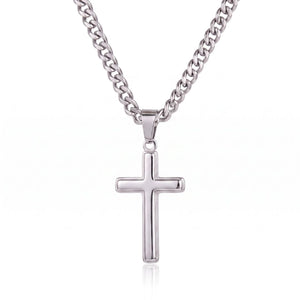

The piece they're describing → Men's Cross Necklace — Adjustable Cuban Link Chain, 316L Stainless Steel
Personalize Yours


