


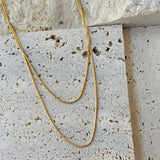
Related reading: combining both metal tones in one piece instead of choosing between them.
Gold and silver chain necklaces are different visual tools. One isn't objectively better than the other — but one will work better for your skin tone, wardrobe, and existing jewelry. Here's the full comparison.
How They Look Differently
| Factor | Gold Chain | Silver Chain |
|---|---|---|
| Tone | Warm — yellow, rose, champagne | Cool — bright white, gunmetal |
| Best skin undertone | Warm (yellow/olive), neutral | Cool (pink/blue), neutral |
| Fashion trend 2026 | Dominant — gold is the prevailing trend | Rising — silver resurgence is underway |
| Pairs with | Warm tones, earthy colors, beige, brown | Cool tones, blues, blacks, whites |
| Layering | All gold layers | All silver layers |
Skin Tone Guide
This is the most useful first filter. Check the veins on your inner wrist in natural light:
- Green or olive veins → warm undertone → gold chains suit you best. Yellow and rose gold both work; yellow gold is more flattering on deeper warm tones, rose gold on lighter warm tones.
- Blue or purple veins → cool undertone → silver chains suit you best. Sterling silver, white gold, and rhodium-plated chains all work beautifully.
- Blue-green or can't tell → neutral undertone → you can wear both equally well. This is actually the most useful answer because it gives you freedom: choose based on your wardrobe and existing accessories instead.
Durability: Gold-Plated vs Sterling Silver
This is where people get confused. "Gold" and "silver" can mean very different things depending on the base metal:
Gold-Plated Sterling Silver
The base is 925 sterling silver (strong, hypoallergenic) with a layer of 18K gold on top. The plating is what gives it the gold color — it will wear over time, especially at the clasp and high-friction points. With daily wear: 1–3 years before visible plating wear. Can be replated for $20–40.
925 Sterling Silver (No Plating)
The same base metal — 925 sterling silver — with no plating. The silver color is the natural metal itself, not a coating. It doesn't plate-wear. However, sterling silver does tarnish (oxidize) faster than gold plating, particularly in humid environments or when exposed to chlorine. Regular polishing with a silver cloth prevents and reverses tarnish.
Solid Gold (14K or 18K)
Neither gold color fades nor silver-equivalent tarnishes. Solid gold is inherently the most maintenance-free option — it doesn't tarnish, plate-wear, or discolor. The trade-off is cost: a 14K solid gold chain is 4–10× the price of a gold-plated sterling silver equivalent.
Care Differences
Gold-plated chains: Avoid chlorine (pools, hot tubs), avoid sleeping in them, avoid perfume directly on the chain, wipe with a soft cloth after wearing. These precautions extend the plating life.
Sterling silver chains: Store in an airtight bag or anti-tarnish pouch when not wearing. Polish with a silver cloth when dull (takes 30 seconds). Silver recovers its shine more completely than plated gold — tarnish is surface-level and comes off with light polishing.
Which Should You Actually Buy?
Follow this decision tree:
- What other jewelry do you own? Match the metal. Wearing silver rings and a silver watch? Buy silver. Wearing gold earrings and a gold bracelet? Buy gold. Consistency with existing jewelry is the most important rule.
- What color is most of your wardrobe? Earth tones, warm whites, beige, brown → gold. Blues, blacks, greys, cool whites → silver.
- What's your skin undertone? Use the vein test above.
- Still can't decide? Gold. Yellow gold is currently the dominant jewelry trend globally, and gold-plated sterling silver is the easiest entry point at a low price with high visual impact.
Can You Mix Gold and Silver Chains?
Mixed metals in jewelry have gone from a style faux pas to an accepted, even celebrated approach in 2022–2026. The rule is intentionality: if you're mixing metals, each piece should look like you chose it that way, not like you forgot to match. Mixing works best when one metal is dominant (70%) and the other is accent (30%), and when the chain styles are clearly different (one thin gold, one chunky silver, for example).
For a layered necklace stack: mixing metals is harder to pull off than matching. When in doubt, match.
Related reading: 925 Silver vs 999 Silver: Which Is Better for Jewelry?
Popular Gold Chain Styles — and What Actually Makes One "Good Gold"
The five gold chain styles that show up most in 2026 are cuban link, rope, box, figaro, and herringbone — they differ in how much they weigh, how they catch light, and how well they layer, which matters more for gold than silver because gold's warm tone makes texture and shine more visually prominent. Beyond style, the other question worth answering before you buy is what's actually under the gold color: plating thickness and base metal determine how a chain wears, not the style name.
| Chain Style | Look & Feel | Best Worn As |
|---|---|---|
| Cuban link | Bold, interlocking flat links; heavier-looking even when lightweight | Statement piece, worn solo |
| Rope | Twisted texture that catches light from every angle | Everyday wear, layers well with pendants |
| Box | Square links, smooth and structured | Minimalist base layer, holds pendants well |
| Figaro | Alternating small and elongated links | Classic solo wear, vintage-leaning outfits |
| Herringbone | Flat, tightly woven links that lie smooth against skin | Delicate everyday layering |
Style is the visual choice; plating thickness is the quality choice. Gold plating is measured in microns — the thicker the layer of 18K gold over the base metal, the longer it resists wear before the base shows through at friction points like the clasp. This is a separate question from base metal purity (covered above under durability): two chains can use the same 18K gold and the same 925 sterling silver base, but one holds its color noticeably longer simply because more gold was deposited on it. AJLuxe's chains use an 18K gold plating over a 925 sterling silver base across every style above, priced $24.99–$79.99 depending on chain weight and design complexity — heavier styles like cuban link sit at the higher end of that range, delicate herringbone and box chains at the lower end.
If you want the look of a specific style without committing to solid gold pricing, gold-plated sterling silver is the practical middle ground: you get the same visual style, the hypoallergenic base of solid silver, and a fraction of the cost of a solid 14K or 18K version in the same design.
Related reading: Gold vs silver initial necklace.
Related reading: JAXXON vs GLD: Which Gold Chain Brand Is Actually Worth It? (2026).
Related reading: Best Bangle Bracelets for Women (2026): Styles, Sizing & How to Choose.
Related reading: Snake Chain Necklace Guide (2026): What It Is, What It Means, and How to Choose One.
Related reading: Can You Wear Gold and Silver Together? The 2:1:1 Rule Explained.
Frequently Asked Questions
- Is gold or silver chain better?
- Neither inherently — depends on skin undertone, existing jewelry, and wardrobe. Match the metal to your most-worn existing jewelry first.
- Does gold or silver last longer?
- Similar longevity at the same quality tier. Gold-plated plating wears (1–3 years). Sterling silver tarnishes but recovers fully with polishing.
- What skin tone suits gold chains?
- Warm undertone (green/olive veins) → gold. Cool undertone (blue/purple veins) → silver. Neutral undertone → either works.
- Can you mix gold and silver chains?
- Yes — make one metal dominant (70%), use different chain styles, keep it intentional. Matching metals is still easier for layered stacks.
The Decision
Match your existing jewelry. If you don't have existing jewelry: check your skin undertone (green veins = gold, blue veins = silver). If you have neutral undertone and no strong preference: gold — it's the dominant 2026 trend and the most popular starting point for building a chain necklace collection.
Browse our chain necklaces in both gold and silver, or read our guides on types of chain necklaces and chain necklace lengths.
Written by the AJLuxe team — specialists in 925 sterling silver and 18K gold-plated jewelry. Last updated: June 2026.
All third-party trademarks, brand names and product names are the property of their respective owners. AJLuxe is not affiliated with, endorsed by, sponsored by, or otherwise connected to any third-party brand referenced in this article. Brand names are used solely for accurate comparative reference, and material descriptions reflect each brand's own published product specifications at the time of writing.
You Might Also Like
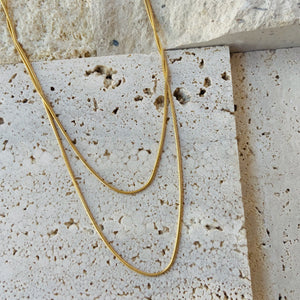
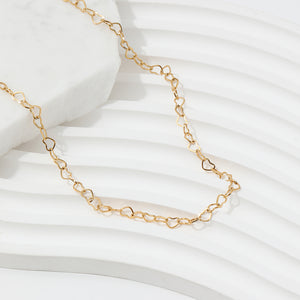
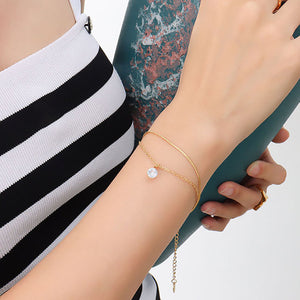
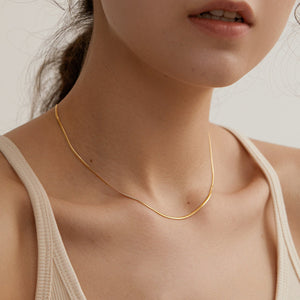
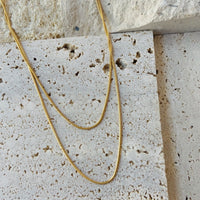
The piece they're describing → Double Chain Necklace for Women — 18K Gold Plated Snake Chain, Layered Look
Personalize Yours


