


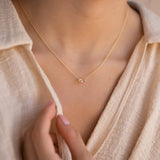
- Y2K jewelry means the loud, maximalist accessory style of roughly 1998-2007: heart and butterfly chokers, chunky hoops, layered chains, and rhinestone/CZ pieces worn all at once, not one at a time.
- It's genuinely trending again in 2026 — search interest, social media volume, and mainstream retailers (big-box stores, fast-fashion sites, and mall jewelry chains) all confirm it's more than a nostalgia blip.
- The honest problem with the originals: most were pot-metal or zinc-alloy costume jewelry that turned skin green and tarnished within weeks — a materials issue, not a style issue.
- The fix is a metal swap, not a style compromise: the same chunky, layered, rhinestone-heavy look built in 925 sterling silver and 18K gold plating skips the green-skin problem entirely.
- How to wear it in 2026 without reading costume-y: pick one Y2K-coded "hero" piece (a heart choker, a stack of hoops) and let everything else in the outfit stay quiet — the trend reads as intentional revival, not thrift-store leftover, when it's not competing with itself.
Y2K jewelry is back — chunky hoops, heart chokers, butterfly motifs, and rhinestone-covered everything, the exact maximalist accessory pile that defined the paparazzi era and every fashion doll's accessory drawer. Search interest in "y2k jewelry" has climbed for two straight years as the minimalist, single-pendant jewelry of the 2020s gives way to something louder. This guide breaks down what actually counts as Y2K jewelry (not just "anything sparkly"), why the original pieces had a real materials problem nobody talks about, how to wear the look in 2026 without it reading costume-y, and where the trend is actually holding versus fading.
What Is Y2K Jewelry, Actually?
"Y2K" as a style label covers roughly 1998 to 2007 — the pre-smartphone, early-camera-phone, low-rise-jeans era that ran from the millennium bug panic through the early social-network years. Jewelry-wise, it was defined by volume and shine rather than restraint: the opposite of the "one delicate pendant" minimalism that dominated jewelry trends from around 2015 through the early 2020s.
Five motifs show up in almost every genuine Y2K reference point:
- Chokers. Tight-fitting necklaces worn high on the throat — velvet ribbon chokers carried over from the late '90s, but also metal tennis chokers and heart-pendant chokers, worn stacked with longer chains rather than alone.
- Butterfly motifs. Butterfly hair clips, butterfly pendants, and butterfly rings exploded after Mariah Carey's 1997 Butterfly album pushed the motif into pop culture, and it stayed a signature Y2K symbol through the early 2000s.
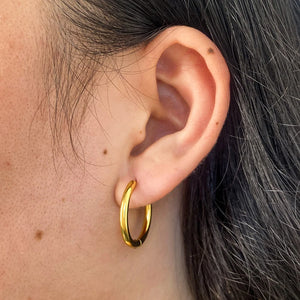
- Chunky hoops. Bold, oversized hoop earrings — bigger and more attention-grabbing than the thin huggie hoops that came back into fashion in the 2010s.
- Layered chains. Multiple necklaces of different lengths worn at once, often mixing a dog-tag or name necklace with a finer chain — a deliberately "more" look rather than one considered piece.
- Rhinestone and CZ excess. Cubic zirconia and rhinestones weren't a subtle accent; they covered clasps, hoops, and heart pendants edge to edge. Sparkle was the point, not a detail.
What ties all five together is volume: Y2K styling piles pieces on rather than choosing one. That's the exact opposite instinct of the quiet luxury and old-money jewelry trends currently running alongside it — see our coquette jewelry guide for the softer, pearls-and-bows sibling trend that shares some of Y2K's sentimental heart-and-charm DNA without the maximalist volume.
Y2K Jewelry Then vs. Now: The Honest Comparison
The trend is a full revival of the look, but the material underneath it has quietly changed for the better — most coverage of the Y2K jewelry revival skips this entirely and just shows the styling. Here's the real comparison:
| Signal | Original Y2K (early 2000s mall jewelry) | Y2K revival, done right |
|---|---|---|
| Base metal | Pot metal, zinc alloy, or brass — cheap and often undisclosed | 925 sterling silver, 18K gold plated |
| Skin reaction | Common — copper/zinc alloys turn skin green with everyday wear | Hypoallergenic; no copper-alloy skin reaction |
| Plating life | Wore through in weeks to months with daily wear | Tarnish-resistant; holds color for 1-3+ years with basic care |
| Stones | Glued rhinestones, often falling out or clouding | Prong or bezel-set cubic zirconia, doesn't cloud |
| Price | $3-$15 (disposable-jewelry pricing) | $24.99-$32.99 (worn daily, not thrown out) |
That's the actual trade being made by anyone buying into the revival seriously rather than for a single costume moment: a small price increase over true disposable costume jewelry, in exchange for pieces that don't discolor skin or fall apart after a season.
Where to Buy Y2K Jewelry That Won't Turn Your Skin Green
This is the real gap in most Y2K jewelry content: search "y2k jewelry" and the results are almost entirely marketplace listing pages — large marketplaces storefronts, independent marketplaces shops, fast-fashion sites and online auction marketplaces category pages — selling the exact same low-cost costume metal that caused the original problem, with zero mention of what the jewelry is actually made of. None of the current top-ranking pages address material quality at all.
A few things worth checking before buying any Y2K-style piece, whether from AJLuxe or anywhere else:
- Look for a stated base metal. "925" (sterling silver) or a disclosed plating base is a good sign. Listings that only say "gold jewelry" or "silver jewelry" with no metal spec are usually pot metal or zinc alloy.
- Check for a hypoallergenic claim. Reputable sellers state it because nickel and cheap alloy sensitivity is common enough that it matters to buyers.
- Read reviews for "turned green" or "turned my skin." It's one of the most common complaints on true costume-tier Y2K listings, and it's a fast way to filter out the worst offenders before buying.
- Expect a price floor. Genuinely tarnish-resistant plated jewelry has a real cost floor around $20-25; anything priced at $3-8 for a "gold" chunky choker is costume metal by default.
It was never the "gold" or "silver" color that caused it — it was what was underneath. Most early-2000s mall and costume jewelry (the $5 chokers, the clip-on hoops, the layered charm necklaces) was made from pot metal or a zinc-copper alloy with a thin, fast-wearing gold or silver finish. Sweat is mildly acidic, and when it reaches free copper atoms in a loose alloy like brass, it produces copper salts — the same green compound that turns a copper penny or a copper roof green over time. Once the thin plating wore through (often within weeks of daily wear), that base metal touched skin directly and the green followed.
Sterling silver solves this differently than people assume: 925 silver is 92.5% silver and 7.5% copper by weight — roughly the same copper percentage some cheap alloys carry. The difference is bonding, not quantity. In sterling silver, that copper is locked into a stable crystalline silver lattice, not sitting as loose, reactive atoms the way it does in brass or pot metal — so it doesn't react with skin acids the same way. Add a real 18K gold plating layer on top of a sterling silver base (rather than a thin flash coat on zinc alloy), and you get the exact chunky, layered, rhinestone-loaded Y2K look with none of the green-skin problem that made the original trend a running joke. For the full materials breakdown, see our deep dive on why gold-plated jewelry turns skin green.
How to Wear Y2K Jewelry Without Looking Costume-y
The most common mistake with the Y2K revival — and the biggest content gap in current coverage, which mostly just shows product photos with no styling guidance — is treating every piece as equally loud. Genuine Y2K maximalism from 2000-2004 actually had an internal logic: it piled on volume through repetition (many thin chains, several hoops up one ear) rather than piling on several different loud statement pieces at once.
- Pick one hero piece. A heart choker or a stack of hoops should be the loudest thing in the outfit — let everything else stay simple so the Y2K piece reads as an intentional callback, not a costume-box grab.
- Layer within one family, not across five. Three thin chains at different lengths reads as Y2K-considered. One chunky choker plus a statement cuff plus oversized hoops plus a rhinestone belt reads as Halloween.
- Keep the rest of the outfit modern. Y2K jewelry against a current silhouette (a plain tank, straight-leg denim) reads as trend-fluent. Paired with an actual 2003 outfit head to toe, it reads as a costume rather than a style reference.
- Use butterfly and heart motifs sparingly. One butterfly clip or one heart pendant is a wink. Three motifs stacked together is where it tips into costume territory.
- Master layered chains before adding anything else. If there's one Y2K skill worth actually learning, it's chain layering — see our guide to layering necklaces for chain-length pairing that avoids tangling.

Is Y2K Jewelry Still Trending in 2026?
Yes — and the signals go beyond a single viral social media sound. Mainstream retailers, including big-box and mall jewelry chains, now run dedicated Y2K jewelry collections rather than treating it as a niche costume category, and Y2K-tagged content continues pulling hundreds of thousands of engagements on social media. That's a meaningfully different signal than a single-season microtrend, which typically shows up in niche sellers and then disappears from mainstream retail within a year.
The trend also has a structural tailwind: nostalgia cycles in fashion generally run on a roughly 20-25 year loop, and 2000-2004 is now squarely inside that window the same way '90s grunge came back around 2015-2020. That timing, combined with the ongoing pushback against several years of ultra-minimalist "quiet luxury" jewelry, points to Y2K holding through at least the next few seasons rather than fading as a single-summer moment.
Is Y2K Jewelry Hypoallergenic?
Not automatically — and this is exactly the question most Y2K shopping guides skip. Genuine vintage or ultra-budget Y2K-style costume jewelry is frequently made from nickel-containing alloys, which is one of the most common metal allergens and a completely separate issue from the copper-based green-skin reaction. If a chunky hoop or layered choker doesn't disclose its base metal, there's a real chance it contains nickel, brass, or another reactive alloy.
Look specifically for 925 sterling silver or genuine 18K gold plating over sterling silver, both of which are standard hypoallergenic choices for sensitive skin — that's the material AJLuxe builds its Y2K-coded pieces from, including the heart choker and CZ hoops featured above, specifically so the revival doesn't come with the same skin reactions the originals did.

Related reading: Hypoallergenic Nose Jewelry: The Metals That Actually Won't Irritate Your Skin (2026).
Related reading: Hypoallergenic Belly Button Jewelry: Which Metals Actually Won't Irritate Your Skin (2026).
Related reading: Old money jewelry guide.
Related reading: Does Sterling Silver Turn Green? The Real Reason (2026).
Related reading: Does Brass Turn Your Skin Green? Yes — Here's Why (2026).
Related reading: 4 Best Anklets Under $40 (2026): Sterling Silver Picks That Won't Turn Green.
Frequently Asked Questions
What is Y2K jewelry?
Y2K jewelry is the maximalist accessory style of roughly 1998-2007 — chokers, butterfly motifs, chunky hoop earrings, layered chains, and rhinestone or cubic zirconia pieces worn piled on rather than one at a time. It's the opposite instinct of the minimalist, single-pendant jewelry that dominated the 2015-2022 era.
Is Y2K jewelry still in style in 2026?
Yes. Mainstream retailers, including big-box and mall jewelry chains, now carry dedicated Y2K jewelry collections rather than treating it as a niche category, and Y2K-tagged social content continues pulling major engagement — signals that point to a real, multi-season trend rather than a single viral moment.
What jewelry is considered Y2K?
Heart and butterfly-motif chokers, chunky hoop earrings, layered dog-tag or name-chain necklaces, and rhinestone or CZ-covered pieces (hoops, chokers, clasps) are the core Y2K signals. The common thread is volume and shine, worn in combination rather than as a single statement piece.
What makes jewelry Y2K style?
Maximalism worn deliberately: multiple pieces layered together, bold shine (rhinestones, CZ, high-polish metal), and playful, sentimental motifs like hearts and butterflies rather than the restrained, single-pendant minimalism of more recent jewelry trends.
How do I wear Y2K jewelry without looking costume-y?
Pick one hero piece — a heart choker or a stack of hoops — and let the rest of the outfit stay simple. Layering within one family (several thin chains) reads as intentional; stacking five different loud pieces at once reads as a costume rather than a style reference.
Is Y2K jewelry hypoallergenic?
Not automatically. Cheap, undisclosed-metal Y2K-style pieces frequently contain nickel or other reactive alloys. Look specifically for 925 sterling silver or 18K gold plating over sterling silver, which are standard hypoallergenic choices, rather than assuming any "gold" or "silver" colored piece is safe for sensitive skin.
Where can I buy Y2K jewelry?
Mainstream retailers (big-box stores, fast-fashion sites, and mall jewelry chains) and marketplaces (large marketplaces, independent marketplaces, online auction marketplaces) all carry Y2K-style pieces, but material quality varies enormously. Check for a stated base metal (925 sterling silver is a strong signal) and a hypoallergenic claim before buying, since most listings at the very bottom of the price range are undisclosed pot metal or zinc alloy.
What are Y2K accessories?
Beyond jewelry specifically, Y2K accessories include butterfly hair clips, tinted sunglasses, mini shoulder bags, and rhinestone-covered belts and hair accessories — but jewelry (chokers, chunky hoops, layered chains) is the category with the deepest and most consistent 2026 revival.
What were the jewelry trends in the 2000s?
Chokers (velvet and metal), butterfly pendants and clips, chunky hoop earrings, layered chain necklaces including dog-tag styles, and rhinestone-heavy pieces across nearly every category — earrings, chokers, belts, and hair accessories all leaned into maximum sparkle.
Does Y2K jewelry turn your skin green?
The original mall-era pieces often did, because most were made from pot metal or zinc-copper alloy with a thin plating that wore through fast. That's a base-metal issue, not a style issue — the same chunky, layered, rhinestone-heavy Y2K look built in 925 sterling silver with real 18K gold plating doesn't cause the reaction.
What's the difference between Y2K jewelry and coquette jewelry?
Y2K is maximalist and worn in volume — multiple loud pieces stacked together. Coquette jewelry shares some of the same sentimental heart-and-bow motifs but is styled with restraint, usually one or two delicate pieces rather than a full stack. See our coquette jewelry guide for the softer sibling trend.
Is Y2K jewelry cheaply made?
The original pieces often were, since disposable costume-jewelry pricing ($3-$15) rarely leaves room for real sterling silver or genuine plating. Revival pieces don't have to be — a 925 sterling silver or 18K gold-plated version of the same chunky, layered look typically runs $25-35 and holds up to daily wear rather than being a single-use costume piece.
Final Thoughts
The Y2K jewelry revival is the real thing — mainstream retail adoption and sustained social engagement both point to a multi-season trend, not a single viral summer. The part worth taking seriously that most coverage skips entirely is the materials story underneath the styling: the original pieces were disposable costume metal that greened skin and fell apart within a season, and none of that was ever actually part of the "look" — it was just what cheap manufacturing produced. Building the same chunky, layered, rhinestone-loaded silhouette in 925 sterling silver and 18K gold plating keeps everything that made Y2K jewelry fun and drops the part that made it a punchline.
Shop AJLuxe's Y2K pick
Shop the Heart Choker NecklaceShop This Guide
Pair the heart choker above with the round brilliant CZ hoop earrings for the full Y2K stack, or browse the full AJLuxe collection for more chunky, layered, rhinestone-coded pieces.
Another Y2K-coded accessory worth knowing: the hand chain, a draping bracelet-to-ring style that peaked in the same era.
AJLuxe Team. Last updated: July 2026. Sources: Jewelers of America.
All third-party trademarks, brand names and product names are the property of their respective owners. AJLuxe is not affiliated with, endorsed by, sponsored by, or otherwise connected to any third-party brand referenced in this article. Brand names are used solely for accurate comparative reference, and material descriptions reflect each brand's own published product specifications at the time of writing.
You Might Also Like
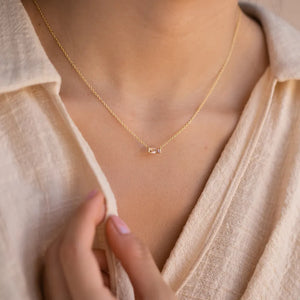

The piece they're describing → Birthstone Charm Necklace for Women — Baguette CZ Pendant, 18K Gold Plated
Personalize Yours


