


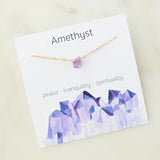
Labradorite doesn't look like much in the dark. Hold it under fluorescent light and it reads as a dull grey-green stone, unremarkable. Then turn it toward natural light and the surface erupts — electric blue, emerald green, gold, violet, sometimes all at once, shifting with every degree of movement. No other stone in the world does this. The phenomenon has a name — labradorescence — and a real optical explanation. It has also generated one of the most beautiful origin myths in gemstone history.
This guide covers what labradorite actually means and why it's consistently associated with transformation, the science behind its extraordinary light play, what different flash colors symbolize, how quality varies (and why spectrolite is in a different category), and how labradorite compares to moonstone — the stone it's most frequently confused with.
The Inuit Legend and the Aurora Borealis
Labradorite was first documented by Western scientists in 1770, when Moravian missionaries encountered it along the coast of the Labrador Peninsula in Canada. They named it after the location. But the Inuit people of that region had known the stone for far longer, and they had their own explanation for where it came from.
The legend: the Northern Lights — the Aurora Borealis — had fallen from the sky and become trapped in the rocks along the Labrador coast. A warrior, coming upon these rocks, struck them with his spear to free the lights. Most of the aurora burst upward and returned to the sky. But some lights remained trapped in the stone, visible only when the light struck it at the right angle: the shifting blue and green and gold of a midnight sky frozen inside grey rock.
This legend captures something true about labradorite — not geologically, but phenomenologically. The stone's labradorescence does look like trapped light. It moves, shifts, appears and disappears depending on angle and illumination. It feels alive in a way that a static gemstone doesn't. That quality — the light hidden inside the ordinary — became the foundation of labradorite's meaning.
The Science of Labradorescence
Labradorescence isn't magic, but the physics behind it are genuinely interesting — and the explanation makes the phenomenon more impressive, not less.
Labradorite belongs to the feldspar mineral family — specifically, it sits between albite (sodium feldspar) and anorthite (calcium feldspar) in composition. During the stone's formation, the feldspar crystallizes in microscopic alternating layers of slightly different composition. These thin lamellae — just 100–300 nanometres thick — sit parallel to each other throughout the stone's interior.
When light enters labradorite, it hits these boundaries. At each interface, some light reflects and some passes through to the next layer. The reflected waves interfere with each other — constructively (amplifying) or destructively (cancelling) depending on their wavelength relative to the layer thickness. The result is that only specific wavelengths (colors) reflect back to your eye. This is called thin-film interference — the same physics that makes soap bubbles, butterfly wings, and oil slicks iridescent.
What determines the color? The thickness of the lamellae:
- Thicker layers (around 240nm) reflect blue
- Moderate layers reflect green
- Thinner layers (around 160nm) reflect gold and orange
- Very thin layers reflect violet and purple
High-quality labradorite contains layers of varying thickness, which is why fine specimens flash multiple colors as you tilt them. Low-quality material has fewer or less uniform layers, producing a single muted color or no flash at all. This is not metaphysics — it's measurable, reproducible optical physics. The stone earns its visual drama through structural complexity.
What Labradorite Means
Labradorite's meaning flows directly from its appearance: light hidden within darkness, magic within the mundane, the extraordinary within the ordinary stone. This is why it's consistently described as the stone of transformation — it embodies the idea that surface appearances don't reveal what something truly is.
In crystal healing traditions, labradorite's core meanings center on four themes:
- Transformation: The belief that labradorite supports fundamental change — not surface adjustment, but genuine inner shift. It's the stone most recommended for people at genuine crossroads: ending a relationship, changing careers, moving through grief, completing a major life phase. The message is that change doesn't destroy — it reveals.
- Intuition and psychic awareness: Labradorite is one of the primary third eye stones. It's associated with the ability to see through surface appearances to underlying truth — pattern recognition, gut instinct elevated to something more precise, access to knowledge that didn't come through conventional channels.
- Protection of the aura: Like black tourmaline, labradorite is considered a protective stone — but its protection works differently. Where tourmaline absorbs negativity, labradorite is said to seal the aura against energy leaks, preventing the wearer from absorbing others' emotional states and draining themselves in social situations.
- Magic and possibility: More than any other crystal, labradorite is associated with what might be called the liminal — the space between what is and what could be. It's the stone of artists, writers, visionaries, and anyone whose work requires access to imaginative possibility.

What the Flash Color Means
Not all labradorite shows the same flash, and in crystal healing the specific color that dominates a piece is considered significant. Here's what each color traditionally represents:
| Flash color | Meaning | Chakra | Best for |
|---|---|---|---|
| Blue (most common) | Communication, calm, mental clarity, truth | Throat + Third Eye | Writers, speakers, anyone in communication; anxiety and mental overwhelm |
| Green | Growth, healing, abundance, connection to nature | Heart | New projects, relationship healing, physical wellbeing |
| Gold / Yellow | Confidence, abundance, intellectual power, solar energy | Solar Plexus | Career ambition, self-confidence, creative projects |
| Purple / Violet | Spiritual transformation, psychic awakening, deep inner work | Third Eye + Crown | Meditation, spiritual practice, major life transformation |
| Orange / Copper | Creativity, passion, emotional vitality | Sacral | Artistic work, sexual energy, overcoming creative blocks |
| Full spectrum (all colors) | Complete transformation, highest vibration labradorite — "aurora in the stone" | All chakras | Major life transitions; spiritual work requiring full energetic activation |
Labradorite Quality — Spectrolite vs Standard
Not all labradorite is equal. Quality varies enormously, and understanding what to look for saves you from buying a stone that barely shows its defining feature.
Spectrolite is the name given to the finest quality labradorite, found almost exclusively in Ylämaa, Finland. Finnish spectrolite was first discovered in 1940 during the construction of anti-tank barriers — ironically, the stone that now commands premium prices was literally used as rubble fill.
Spectrolite differs from regular labradorite in one critical way: it consistently shows the full color spectrum — blue, green, gold, orange, red, and violet — all in a single stone. The background is typically a rich dark grey to black, which makes the color flash far more dramatic. Regular commercial labradorite from Madagascar, Canada, or Mexico usually shows primarily blue-green flash with occasional gold, against a lighter grey-green background.
| Type | Origin | Flash quality | Background color | Value |
|---|---|---|---|---|
| Spectrolite | Ylämaa, Finland | Full spectrum — all colors, intense flash | Dark grey to black | Highest — premium mineral market |
| Madagascar labradorite | Madagascar | Strong blue-green, some gold, occasional violet | Grey-green to beige | High — standard for quality jewelry |
| Canadian (original) | Labrador, Canada | Blue-green, moderate intensity | Grey | Moderate — historical origin, not the main jewelry source |
| Mexico / Commercial | Various | Weak to moderate, mainly blue-grey | Light grey-beige | Budget — most affordable jewelry market |
When buying labradorite jewelry, ask about flash intensity and coverage. A piece described simply as "labradorite" without qualifier is likely Madagascar commercial grade — still beautiful, but a different experience than spectrolite. For raw specimens, always examine under direct light before purchasing: a stone that shows no flash under the shop lights rarely improves at home.

Labradorite vs Moonstone
Both are feldspar gems, but the feldspar family is broader. Sunstone is another member of the feldspar group — it shows aventurescence (a warm golden sparkle from copper or hematite inclusions) instead of labradorescence. Read our Sunstone Meaning guide to compare all three feldspar gems side by side.
Labradorite and moonstone are the two most commonly confused optical phenomenon stones. Both belong to the feldspar family, both display a moving light effect, and both are associated with intuition and feminine energy. But they're meaningfully different:
| Property | Labradorite | Moonstone |
|---|---|---|
| Optical effect | Labradorescence — multiple flash colors, directional | Adularescence — floating blue-white glow, diffuse |
| Background color | Dark grey to black | White to cream (sometimes peach or grey) |
| Core meaning | Transformation, magic, psychic protection | New beginnings, feminine cycles, intuition |
| Energy | More intense, activating, boundary-setting | Gentler, receptive, emotionally soft |
| Chakra | Third eye (primarily), throat, crown | Crown (primarily), sacral |
| Zodiac | Scorpio, Sagittarius, Leo | Cancer, Libra, Scorpio |
| Best for | Transformation, creative activation, psychic work, major change | New beginnings, pregnancy, emotional healing, feminine cycles |
| Hardness | Mohs 6–6.5 | Mohs 6–6.5 |
The simplest distinction: if the stone has a dark body and flashes distinct colors (blue, green, gold), it's labradorite. If it has a light, milky body with a floating blue-white glow, it's moonstone. If you're drawn to transformation and psychic clarity, choose labradorite. If you're drawn to new beginnings and emotional intuition, choose moonstone.
Chakra Connections
Labradorite primarily activates the third eye chakra (Ajna) — the center of intuition, inner vision, and the ability to perceive what isn't immediately visible. It's the chakra associated with seeing through illusion, connecting to higher guidance, and processing experience at a deeper level than rational analysis allows.
It also connects to the throat chakra (Vishuddha) through its blue flash — supporting communication of psychic insights and spiritual truths that are otherwise difficult to put into words. And strong full-spectrum specimens connect to the crown chakra (Sahasrara), opening the channel between personal awareness and universal intelligence.
In crystal healing, labradorite is most recommended for people who already have strong intuitive abilities but doubt them — those who receive gut feelings and override them with logic, or who have psychic experiences they suppress because they don't fit their rational worldview. The stone doesn't create intuition; it validates and amplifies what's already there.
Healing Properties
Emotional: Labradorite is specifically recommended for people going through significant life transitions — particularly those marked by grief, loss, fear, or the dissolution of a previous identity. Its transformation meaning doesn't minimize the difficulty of change; it reframes it. What looks like loss is also becoming. What looks like ending is also revealing. People navigating career upheaval, relationship endings, loss of a parent, or identity crises often report finding labradorite particularly resonant.
Mental: Associated with enhanced analytical ability alongside intuition — the capacity to see patterns, synthesize disparate information, and trust unconventional connections. It's considered particularly useful for creative professionals, researchers, and strategists. It's also recommended for people with overactive, anxiety-prone minds as a grounding tool for the third eye — reducing psychic noise and filtering what actually matters from what doesn't.
Protective: In crystal healing, labradorite is believed to form a protective barrier around the aura — specifically sealing energy leaks that cause the wearer to absorb others' emotions involuntarily. Empaths and highly sensitive people report finding it particularly useful in social situations where they typically become depleted. The protection isn't aggressive (like black tourmaline's shield) — it's more like a membrane: permeable to what you choose, sealed against what you don't.
Spiritual: Labradorite is considered by many practitioners to be the most powerful stone for accessing psychic gifts — clairvoyance, clairsentience, telepathy, past-life memory. Whether you interpret this literally or metaphorically (as enhanced pattern recognition and intuitive processing), the stone's third eye activation is its most consistently reported property.
Zodiac Associations
Labradorite is most aligned with Scorpio, Sagittarius, and Leo.
- Scorpio (October 23–November 21): Scorpio's depth, intensity, and capacity for transformation align perfectly with labradorite's core themes. Scorpios are drawn to what lies beneath the surface — labradorite is literally the stone that reveals hidden depth. It supports Scorpio's shadow work and amplifies their already strong intuitive powers.
- Sagittarius (November 22–December 21): Sagittarius's philosophical nature and quest for wisdom make labradorite's truth-revealing properties highly relevant. It helps Sagittarius distinguish genuine insight from wishful thinking.
- Leo (July 23–August 22): The gold and yellow flash of labradorite aligns with Leo's solar confidence. It supports Leo's natural leadership while grounding the ego enough to access genuine wisdom rather than performance.
How to Use Labradorite
As jewelry: Labradorite pendants worn at the chest or earrings near the face bring the stone into the energy field of the upper chakras it activates. Because labradorescence depends on angle, labradorite jewelry is particularly alive when worn — it shifts and changes with movement in a way most stones can't. A labradorite piece that looks understated at rest can be spectacular in motion. Our labradorite charm necklace uses a single raw labradorite chip on a silver-tone chain, so the flash still shows even in this smaller, simpler format.
For meditation: Hold labradorite in the non-dominant hand (receiving) or place against the forehead at the third eye. Its properties are considered most accessible in quiet, dim lighting — less ironic than it sounds, since the stone's visual effect is also more dramatic in natural light than artificial. Meditate with an intention around seeing clearly, accessing deeper knowing, or navigating a specific transition.
For creative work: Keep a piece at your workspace. Labradorite is one of the stones most consistently recommended for writers, artists, and musicians who work at the intersection of intuition and craft. Its association with accessing the liminal — the space between conscious thought and something deeper — makes it a meaningful anchor for creative flow.
Crystal pairings:
- Amethyst: Deepens the third eye activation, enhances spiritual clarity and protection
- Lapis lazuli: Combines psychic intuition (labradorite) with intellectual wisdom (lapis) — a powerful pairing for creative and intellectual work
- Black tourmaline: Grounds labradorite's activating energy — useful for people who find labradorite's intensity too stimulating alone
- Rose quartz: Adds emotional warmth and heart-opening to labradorite's third eye work — transformation with compassion
How to Care for Labradorite
- Cleaning: Warm water and a soft cloth. The feldspar cleavage planes that create labradorescence make the stone vulnerable to cleavage fractures from sharp impact — gentle cleaning only. Never ultrasonic cleaners.
- Chemicals: Avoid acids, harsh cleaning products, and prolonged chemical exposure. Labradorite is moderately sensitive to acid, which affects the calcite-adjacent mineral layers.
- Storage: At Mohs 6–6.5, it can be scratched by quartz, topaz, and harder stones. Store separately or in a soft pouch.
- Energy cleansing: Moonlight (particularly full moon) is the most traditional cleansing method — appropriate given the Aurora/moon associations. Smoke (sage, palo santo) is also effective. Avoid extended water submersion.
Related reading: Sodalite meaning.
Related reading: Chalcedony meaning.
Related reading: Prehnite meaning.
Related reading: Seraphinite meaning.
Related reading: Howlite meaning.
Frequently Asked Questions About Labradorite
What is labradorite good for?
Labradorite is primarily used for transformation, intuition, and psychic protection. In crystal healing it is recommended for people going through major life transitions, those who want to develop or trust their intuitive abilities, and empaths who absorb others' emotions involuntarily. Its third eye activation makes it useful for any work requiring pattern recognition and inner clarity. Many creative professionals — writers, artists, musicians — use it specifically to support the access to imaginative depth that their work requires.
What does labradorite symbolize?
Labradorite symbolizes transformation, inner magic, and the hidden depths beneath ordinary surfaces — exactly what its visual appearance embodies. A dark grey stone that reveals extraordinary light when seen from the right angle is a perfect physical representation of the idea that things are not what they appear, and that extraordinary possibility exists within the ordinary. It symbolizes the Inuit belief that aurora light is trapped within stone — magic made tangible, the invisible made momentarily visible.
What chakra is labradorite for?
Labradorite primarily activates the third eye chakra (Ajna) — the center of intuition, inner vision, and the ability to see beyond surface appearances. Depending on the dominant flash color, it also connects to the throat chakra (blue flash — communication), the heart chakra (green flash — growth and healing), the solar plexus (gold flash — confidence), and the crown chakra (violet/full-spectrum — spiritual connection). Strong full-spectrum spectrolite is considered a multi-chakra activator.
What is the difference between labradorite and moonstone?
Both are feldspar minerals with optical effects, but they're different minerals producing different phenomena. Labradorite has a dark grey-black background and flashes distinct colors (blue, green, gold, purple) when light hits it — the effect is dramatic and directional. Moonstone has a white/cream background with a soft, floating blue-white glow called adularescence. Labradorite's meaning centers on transformation, psychic activation, and protection; moonstone centers on new beginnings, feminine cycles, and emotional intuition. They're complementary rather than interchangeable.
What is spectrolite?
Spectrolite is the highest-quality labradorite, found almost exclusively in Ylämaa, Finland. It's distinguished by showing the full color spectrum — blue, green, gold, orange, red, and violet — all in a single piece, against a dark almost-black background. This makes spectrolite visually far more dramatic than regular commercial labradorite, which usually shows primarily blue-green flash. Spectrolite was discovered in 1940 during wartime construction and is now considered a premium mineral with significant collector and jewelry value.
Is labradorite a protective stone?
Yes, though its protective mechanism is described differently from stones like black tourmaline or obsidian. Labradorite is believed to seal the aura — creating a protective membrane that prevents the wearer from involuntarily absorbing others' energy. It doesn't aggressively block or reflect (as obsidian does); it strengthens boundaries. This makes it particularly recommended for highly sensitive people and empaths in draining social environments. Many people wear it daily as a preventive measure rather than a crisis response.
How can you tell if labradorite is real?
Genuine labradorite will always show labradorescence — the color flash — when viewed under natural light at the right angle. If a stone labeled labradorite shows no flash at all under direct light, it is low quality or not labradorite. The flash should move and shift as you tilt the stone; it should not be a static coating. Glass imitations sometimes have painted or foiled backs that approximate the color flash, but the effect is static and doesn't move. Real labradorite feels cool, slightly heavy, and the flash appears to come from within the stone rather than from its surface.
What are the best crystals to pair with labradorite?
Amethyst deepens labradorite's third eye work. Lapis lazuli pairs intuitive knowing (labradorite) with intellectual wisdom (lapis) — a powerful combination for creative and analytical work. Black tourmaline grounds labradorite's intensity, particularly useful for people who find it overstimulating. Rose quartz adds heart-centered compassion to labradorite's transformation energy. Selenite cleanses and charges labradorite while amplifying its protective properties.
Can labradorite go in water?
Brief contact with water is fine — a quick rinse for cleaning won't damage labradorite. Extended submersion is not recommended. Labradorite has feldspar cleavage that can be weakened by water absorption over time, and the stone is sensitive to acids (which natural water can contain). Salt water is particularly inadvisable. For energy cleansing, moonlight, smoke, or selenite are preferable to water methods.
Who should wear labradorite?
Labradorite is particularly recommended for creative professionals (writers, artists, musicians) who work from intuition; people undergoing significant life transitions; empaths and highly sensitive people who absorb others' emotions involuntarily; those working to develop or trust their psychic and intuitive gifts; and anyone who finds themselves at a crossroads and needs the clarity to see what's actually happening beneath the surface of their life. In zodiac terms, Scorpio and Sagittarius have the strongest affinity.
Is labradorite expensive?
Standard commercial labradorite (Madagascar, Mexico) is very accessible — polished cabochons suitable for jewelry typically range from a few dollars to $30–50 for better quality pieces. Sterling silver labradorite jewelry in high street and online stores generally ranges from $30–$150. Spectrolite from Finland commands significantly higher prices — fine spectrolite cabochons showing the full color spectrum can range from $50–$500+ depending on size and flash quality. Investment-grade collector specimens can be more. The stone's relatively affordable price point for quality jewelry is one of its appeals.
Does labradorite lose its flash over time?
No — labradorescence is structural, not a coating or treatment that can fade. The color flash comes from the stone's internal layer structure, which doesn't change. However, surface scratches and abrasion can obscure the flash by disrupting the smooth surface through which light enters. Keeping labradorite polished and scratch-free preserves the visual effect. A dulled piece can often be re-polished to restore its flash.
Moonstone and labradorite are both feldspar minerals with optical effects, but they differ significantly in energy, appearance, and use. Read our full comparison in the Moonstone vs Labradorite guide — including the important distinction about rainbow moonstone being technically a labradorite.
Shop AJLuxe Crystal Jewelry
Birthstone & gemstone necklaces · 925 sterling silver · from $22.99
Browse Crystal Jewelry →Final Thoughts
Labradorite is unusual among gemstones in that its meaning is inseparable from its physical reality. The stone that hides extraordinary light within an ordinary grey exterior is exactly what it symbolizes: transformation is possible, depth exists beneath what's visible, and what appears ordinary often isn't. The Inuit were right — there is aurora in the stone.
If you're choosing between labradorite and moonstone, the question is whether you need transformation or new beginnings — intensity or gentleness. If you're choosing labradorite specifically, the question is what color you're drawn to, because the flash color narrows the specific energy the stone offers.
At AJLuxe, we create personalized sterling silver jewelry — hypoallergenic, 18K gold plated over 925 sterling silver, with gift-ready packaging and free US shipping. Explore our personalized jewelry collection or our sterling silver jewelry for everyday pieces that carry real meaning.
Labradorite care tip: Before cleaning your labradorite, read our full guide on can labradorite go in water — including how to protect its iridescent flash and the best water-free cleansing methods.
Written by the AJLuxe team. Last updated: June 2026.
Labradorite is one of our top picks in the guide to best crystals for manifestation.
Labradorite is one of 7 crystals in our guide to crystals for clarity — the complete guide to stones for clear thinking and difficult decisions.
Labradorite is one of our top picks in the guide to crystals for creativity.
Labradorite is the magic companion for transitions — see our guide to crystals for new beginnings — the 7 best transition stones for graduation, career changes, and fresh starts.
- Labradorite Healing Properties — Third Eye chakra work, psychic protection, and dream work
- Labradorite Zodiac Sign — Scorpio, Sagittarius, and which signs should wear it
- Labradorite Buying Guide — how to choose quality, spot fakes, and price ranges
Explore more: Crystal Jewelry: Meanings & Guides
All third-party trademarks, brand names and product names are the property of their respective owners. AJLuxe is not affiliated with, endorsed by, sponsored by, or otherwise connected to any third-party brand referenced in this article. Brand names are used solely for accurate comparative reference, and material descriptions reflect each brand's own published product specifications at the time of writing.
You Might Also Like

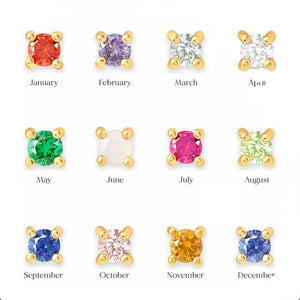
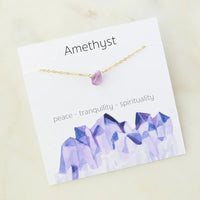
The piece they're describing → Stone Charm Necklace for Women — Raw Natural Gemstone Pendant
Personalize Yours


