


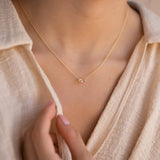
Creativity is not a fixed trait — it's a state we move in and out of. Some days ideas flow easily; other days the blank page, the empty canvas, the silent instrument feels like a wall. Crystal traditions offer one approach to shifting that state: working with stones that are associated with the sacral chakra, the creative energy center, to help unlock flow, clear blocks, and reconnect with artistic vision.
This is not a new idea. Lapis lazuli — the deep blue stone in this guide — was ground into the pigment that gave Renaissance painters ultramarine blue, the rarest and most prized color in 15th-century art. Michelangelo used it. Vermeer used it. The stone was so associated with artistic mastery that it was literally more valuable than gold by weight. Carnelian was worn by ancient Egyptian scribes and artists as a stone of creative action and bold expression. Turquoise has a millennia-long tradition in Native American artistic practice.
Whether you approach crystals as energetic tools or as meaningful symbolic objects, working with them as part of your creative practice is a tradition with real depth.
Crystals and the Creative Process

In crystal healing traditions, the sacral chakra — located below the navel — governs creativity, pleasure, and creative flow. It's the energy center associated with generating new ideas, taking creative risks, and finding joy in the making process. When the sacral chakra is blocked or underactive, creativity feels forced, joyless, or absent.
But creativity doesn't live in the sacral chakra alone. A full creative state requires a progression through three energy centers:
- Root chakra — groundedness, safety, stability. You can't create freely if you feel existentially unsafe.
- Sacral chakra — creative flow, pleasure in the process, willingness to play and make.
- Solar plexus chakra — confidence to share, willingness to be seen, belief in the value of your work.
The crystals in this guide address different parts of this chain. Carnelian activates the sacral. Citrine activates the solar plexus — especially useful if your block is about confidence rather than ideas. Labradorite and lapis lazuli open the third eye for vision and depth. Understanding which part of the chain is blocked helps you choose the right stone.
The 7 Best Crystals for Creativity
1. Carnelian — The Artist's Stone
Carnelian is the most universally recommended crystal for creativity — and it's been that way for thousands of years. This warm orange-red stone is associated with the sacral chakra, the center of creative energy, motivation, and bold action. Where many stones work subtly, carnelian is associated with a direct, physical push: getting out of your head and into the work.
Ancient Egyptian scribes wore carnelian while writing. The stone appears in protective amulets used by artists and craftspeople throughout the ancient Mediterranean. In crystal practice today, it's the first recommendation for anyone who is stuck, stalled, or simply can't seem to START.
Carnelian is best for: writers, painters, dancers, musicians — anyone whose creative block is characterized by inaction or self-doubt. It's also excellent for people who have great ideas but struggle to execute. Keep a piece of carnelian on your desk or hold it in your non-dominant hand while beginning a creative session.
2. Lapis Lazuli — The Stone of Creative Wisdom
Lapis lazuli is a deep blue stone flecked with gold pyrite, associated with the throat chakra and third eye chakra. It's one of the most historically significant creative stones in existence — the deep blue pigment ultramarine was made from ground lapis lazuli, and it was the most expensive pigment in Renaissance Europe. Michelangelo, Vermeer, Fra Angelico, and countless others used it for their most precious works.
In crystal practice, lapis lazuli is associated with deep creative wisdom and artistic vision — not just the impulse to create but the capacity to see the depth and meaning of what you're making. It's associated with the kind of creativity that comes from a deep place: the creative vision of a mature artist rather than the excitement of a first idea.
Lapis lazuli is best for: visual artists, writers seeking depth and resonance, anyone working with complex ideas or long creative projects. It's particularly recommended for people who feel creatively competent but creatively unfulfilled — who can make things but can't seem to access their deepest voice.
3. Citrine — Creative Confidence
Citrine is a yellow-to-golden quartz crystal associated with the solar plexus chakra — the energy center of confidence, personal power, and the willingness to be seen. In the context of creativity, citrine addresses a specific and very common block: not the inability to create, but the inability to share what you've created.
Many creative people have full journals, finished canvases, unreleased songs, and unsubmitted manuscripts. The creative act is complete, but the solar plexus block prevents them from putting their work into the world. Citrine's energy is associated with dissolving the "I'm not good enough" voice and replacing it with the confidence to let your work speak for itself.
Citrine is also excellent for brainstorming — its bright, solar energy is associated with inspired ideas and enthusiastic creative thinking. Learn more in our citrine meaning guide.
4. Labradorite — The Imagination Stone
Labradorite is a feldspar mineral famous for its iridescent labradorescence — the dramatic flash of blue, green, gold, and violet light that moves across the stone's surface. In crystal practice, it is associated with the third eye chakra and described as a stone of magic, imagination, and the unconscious mind.
Labradorite is the crystal for the kind of creativity that comes from dreams, intuition, and unexpected associations — the surreal leap, the image that comes from nowhere, the metaphor that makes the entire poem work. It's associated with accessing parts of the mind that don't respond to effort and intention, but to openness and receptivity.
Labradorite is best for: writers working in fiction or poetry, abstract artists, any creative whose work draws from imagination rather than observation. It's also recommended for anyone experiencing creative stagnation — when you've worked too hard and the well feels dry, labradorite's energy is associated with reconnecting to the unconscious creative source. Learn more in our labradorite meaning guide.
5. Turquoise — The Voice of the Creator
Turquoise is one of the oldest known gemstones in human history, worn and worked by cultures from ancient Egypt to the American Southwest. Its association with the throat chakra — the energy center of communication and authentic self-expression — makes it a powerful creative ally for anyone whose creativity involves finding and using their voice.
In Native American artistic traditions, turquoise has a deeply sacred status as a stone of connection, creation, and the expression of cultural identity through craft. In crystal practice, it is associated with helping you communicate authentically — saying what you actually mean, in the way that is uniquely yours.
Turquoise is best for: writers, communicators, musicians, anyone whose creative work involves expressing something personal. It's particularly recommended for people who feel they have something to say but can't find the right words or form. Learn more in our turquoise meaning guide.
6. Amethyst — Creative Vision
7. Orange Calcite — The Playfulness Stone
Orange calcite is a bright, translucent orange carbonate mineral associated with the sacral chakra. While carnelian is about bold creative action, orange calcite is about playful, spontaneous creative energy — the joy of making for its own sake, without attachment to outcome or quality.
Orange calcite is the most direct antidote to creative burnout. When you have worked so hard and so seriously at your craft that you've forgotten why you love it, orange calcite is associated with reconnecting to the childlike delight in simply making things. It breaks creative blocks not through discipline or willpower but through joy.
Orange calcite is best for: anyone who has lost the fun in their creative practice, people experiencing creative burnout, anyone who has become too precious about their process. Keep a piece on your desk and let it remind you: creativity is play.
Creativity Crystal Comparison Table
| Crystal | Creative Use | Chakra | Best For (Creative Type) | How to Use |
|---|---|---|---|---|
| Carnelian | Getting started, action, execution | Sacral | Writers, painters, musicians | Hold in non-dominant hand while beginning |
| Lapis Lazuli | Depth, vision, artistic mastery | Throat + Third Eye | Visual artists, writers | On desk or worn as pendant |
| Citrine | Confidence to share, inspired ideas | Solar Plexus | Perfectionists, brainstorming | Near workspace, in pocket |
| Labradorite | Imagination, unconscious creativity | Third Eye | Fiction writers, abstract artists | Hold during meditation or before creating |
| Turquoise | Authentic voice, self-expression | Throat | Writers, musicians, communicators | Wear as jewelry while creating |
| Amethyst | Big-picture vision, creative decisions | Third Eye + Crown | Directors, designers, architects | On desk, visible during work |
| Orange Calcite | Playfulness, joy, creative burnout | Sacral | Anyone stuck or burned out | Hold, play with it — be unserious |
How to Use Creativity Crystals
Place on Your Desk While Working
The simplest and most effective approach. Position carnelian or citrine in your line of sight while working — to the left (intuitive side) for receptive creative work, to the right for active, output-focused work. The visual presence of the stone serves as a constant environmental anchor for the creative state.
Hold During Brainstorming
Keep a carnelian or lapis lazuli palm stone in your hand during brainstorming sessions. The tactile weight and temperature of the stone can serve as a grounding anchor that keeps you in generative mode rather than evaluative mode. Don't judge ideas — just generate, with the stone in hand.
Wear During Creative Practice
Wearing crystal jewelry during creative practice is an elegant integration of the stones into your process. A lapis lazuli or turquoise pendant worn while writing or painting serves as a continuous energetic reminder of your creative intention. The stone becomes associated, through ritual repetition, with the creative state.
Crystal Grid for Your Studio or Workspace
Place four carnelian stones at the corners of your desk or studio space to create a simple creative grid. Add a lapis lazuli or labradorite in the center as the focal point. This establishes your workspace as a designated creative field with intentional energetic structure.
Touch When Blocked as a Reset Signal
Keep a crystal dedicated specifically to creative block — orange calcite works well for this. When you feel blocked, pick up the stone, hold it for 30 seconds, and give yourself permission to make something bad. The tactile ritual signals permission to the nervous system: you don't have to be good right now, you just have to begin.
Full Moon Charging for Creative Intention
Place your creativity crystals on a windowsill under the full moon once a month. As you set them out, state a creative intention — a project you want to complete, a habit you want to establish, a creative risk you want to take. This monthly ritual keeps your creative practice intentional and alive.
Gifting Creativity Crystals
Creativity crystals are among the most universally appreciated gifts for any maker, artist, or creative person in your life. They're thoughtful, personal, and carry a message: I see your creativity, and I believe in it.
Best gift candidates:
- Artists, writers, musicians — carnelian or lapis lazuli for the working creative
- Architects and designers — amethyst for creative vision and decision-making
- Anyone pursuing a creative dream — citrine for the confidence to start and share
- Someone starting a creative business — carnelian (action) + citrine (confidence) as a set
- A friend who has lost their spark — orange calcite to rekindle joy in the creative process
| Crystal | Best Gift For | Average Price (tumbled) |
|---|---|---|
| Carnelian | Any creative person | $5–$20 |
| Lapis Lazuli | Visual artists, writers | $10–$35 |
| Citrine | Perfectionists, new creators | $8–$25 |
| Labradorite | Fiction writers, dreamers | $8–$30 |
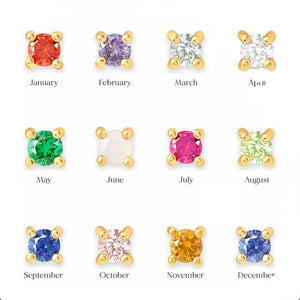
For a wearable creativity gift, a birthstone necklace in sterling silver — paired with the recipient's personal birthstone or a creativity crystal like carnelian or lapis lazuli — makes a meaningful piece they'll wear while they work.
Frequently Asked Questions
What is the best crystal for writers?
Carnelian is the top recommendation for writers who struggle to begin or maintain momentum — its energy is associated with bold creative action and getting out of your head. For writers seeking depth and resonance, lapis lazuli is the choice. Labradorite is recommended for fiction writers accessing imagination and dream-logic. Turquoise helps writers find their authentic voice.
What crystal removes creative blocks?
Carnelian is the most direct recommendation for creative blocks caused by inaction or paralysis. Orange calcite is best for blocks caused by burnout or loss of joy. Citrine addresses blocks caused by confidence issues and the fear of sharing your work. Labradorite helps when the block stems from creative stagnation and depletion of imagination.
Does carnelian help with creativity?
Carnelian is the most widely recommended stone for creative action in crystal traditions, and it has been associated with artistic practice since ancient Egypt. Whether it works through energetic resonance or through the psychological power of intentional ritual, many creatives report that keeping carnelian in their workspace supports more consistent creative momentum.
What crystal is good for musicians?
Carnelian supports the physicality of musical performance and getting out of your head to play. Turquoise supports authentic musical voice and communication. Labradorite supports improvisation and the spontaneous creative connection. Citrine supports the confidence to perform and share music. Many musicians combine carnelian and turquoise as their primary creative pair.
Carnelian vs lapis lazuli for creativity — which is better?
Carnelian is better for activation — getting started, taking action, breaking through inaction. Lapis lazuli is better for depth — accessing creative wisdom, finding artistic vision, creating work with resonance and meaning. If you're stuck and need to begin, choose carnelian. If you can create but feel your work lacks depth or authenticity, choose lapis lazuli. Many creatives keep both.
What crystal helps with artistic inspiration?
Labradorite is most specifically associated with inspiration — it accesses the unconscious mind, dream logic, and the unexpected creative leap. Amethyst supports creative vision and the big-picture perspective. Lapis lazuli deepens the creative well. For pure inspiration, many artists recommend sitting quietly with a labradorite stone and allowing — rather than forcing — the creative impulse to arise.
Where should I place crystals for creativity in my workspace?
Carnelian works well placed to your right (action side) for output-focused work. Lapis lazuli or labradorite placed to your left (intuitive side) supports receptive, imaginative work. A crystal grid at the four corners of your desk establishes the space as intentionally creative. Citrine is most effective in your line of sight as a confidence anchor. Some creatives keep a small stone that they hold when blocked — orange calcite works well for this.
What crystal is good for brainstorming ideas?
Citrine is the top recommendation for brainstorming — its bright solar energy is associated with inspired, enthusiastic ideation. Carnelian keeps the momentum moving. For brainstorming that involves connecting disparate ideas in unusual ways, labradorite's associative, unconscious energy is particularly helpful. Keep citrine and carnelian together during brainstorming sessions.
Can crystals help with creative burnout?
Orange calcite is the most direct antidote to creative burnout in crystal practice — its playful, joyful energy rekindles the love of making for its own sake. Lepidolite (typically associated with sleep) is also useful for burnout with an anxiety or emotional exhaustion component. For burnout caused by overworking a project, labradorite can help reconnect to fresh imagination.
What crystal helps you focus while creating?
Amethyst supports focused creative vision and sustained concentration. Fluorite (not covered in this guide) is the most widely recommended focus crystal. Lapis lazuli supports sustained engagement with deep creative work. For focus during high-output, physically demanding creative work (painting, instrumental practice, dancing), carnelian maintains energy and momentum.
Shop AJLuxe Crystal Jewelry
Birthstone & gemstone necklaces · 925 sterling silver · from $22.99
Browse Crystal Jewelry →Final Thoughts
Creativity is not a fixed gift — it is a practiced state, and it responds to the conditions you create for it. The crystals in this guide each address a different part of the creative challenge: carnelian for starting, lapis lazuli for depth, citrine for confidence, labradorite for imagination, turquoise for voice, amethyst for vision, orange calcite for joy.
The right crystal for you depends on where your creative energy is blocked. Most creatives find one primary stone that becomes a trusted part of their practice — a physical anchor for the creative state that they reach for when they need to begin, when the ideas won't come, or when the confidence wavers.
Whatever stone you choose, the act of choosing it, of placing it on your desk or holding it in your hand, is itself a creative intention. And intention, consistently practiced, is how the creative life is built.
Written by the AJLuxe team. Last updated June 2026.
For a complete overview of crystals by intention, visit our Healing Crystals Guide — the full beginner's resource covering all 20 crystal intentions, chakras, cleansing methods, and how to use crystals daily.
Explore more: Crystal Jewelry: Meanings & Guides
All third-party trademarks, brand names and product names are the property of their respective owners. AJLuxe is not affiliated with, endorsed by, sponsored by, or otherwise connected to any third-party brand referenced in this article. Brand names are used solely for accurate comparative reference, and material descriptions reflect each brand's own published product specifications at the time of writing.
You Might Also Like
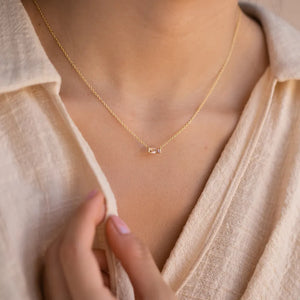
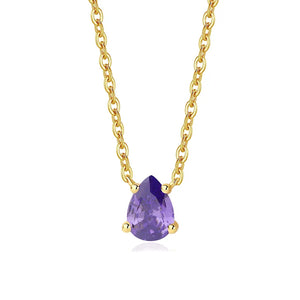
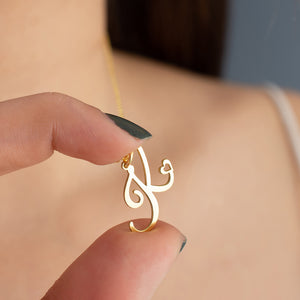

The piece they're describing → Birthstone Charm Necklace for Women — Baguette CZ Pendant, 18K Gold Plated
Personalize Yours


