


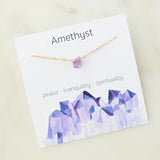
- Mineral: Calcium borosilicate hydroxide — not a silicate; rare boron mineral
- Hardness: 3–3.5 on the Mohs scale — relatively soft, handle with care in jewelry
- Chakras: Crown, Third Eye
- Core meaning: Calm, patience, stress relief, sleep, awareness
- Named after: Geologist Henry How, who discovered it in Nova Scotia, 1868
- Key buyer alert: Dyed howlite is one of the most common turquoise imitations — knowing the difference saves money
- Water: Brief contact is fine; avoid prolonged soaking as it can dull dyed surfaces
Howlite is the quiet stone in a collection full of bold ones. Where pyrite demands attention with gold-metallic flash and amethyst commands with deep purple, howlite does its work in white and grey — patterned like a calm winter sky, or a stone smoothed by a slow river. That visual quietness maps directly to what howlite is used for: slowing down, releasing tension, finding stillness in a high-noise world.
It's also the stone most likely to be something else entirely. Dyed blue howlite has been sold as turquoise for decades — and much of the "affordable turquoise" on the market today is exactly that. This guide covers the full picture: what howlite actually is, how it was discovered, what it does energetically, and how to tell it from the stone it most often impersonates.
Henry How and the 1868 Nova Scotia Discovery
Howlite was discovered in 1868 in Windsor, Nova Scotia, Canada — found in gypsum deposits in the Tennycape area by Henry How, a British-born chemist and geologist who was professor of chemistry and natural science at King's College, Windsor. How recognized it as a new mineral species and described its unusual composition: a calcium borosilicate hydroxide unlike most common minerals, which are silicates.
The formal naming came from James Dwight Dana — the most influential American mineralogist of the 19th century, editor of the foundational System of Mineralogy — who named the mineral Howlite in Henry How's honor after How's death in 1879. Dana's naming convention was a tribute to a colleague who had identified a genuinely unusual mineral: a boron-containing stone formed in desert evaporite deposits, found as irregular nodules and rare tabular crystals that look strikingly like cauliflower heads when fresh-broken.
The etymology is simple — it's a person's name, not a Latin or Greek descriptor. But the story matters because it grounds howlite in specific scientific history rather than vague metaphysical lore. It was a real discovery by a real scientist, named by one of the most credentialed mineralogists of his era. That origin gives howlite a concrete identity that goes beyond its crystal shop reputation.
What Is Howlite, Scientifically?
Howlite is a calcium borosilicate hydroxide with the chemical formula Ca₂B₅SiO₉(OH)₅. This places it in a relatively rare category — it's a borate mineral, not a silicate, which makes it chemically distinct from most of the gemstones and crystals commonly found in shops. Most crystals — quartz, amethyst, tourmaline, labradorite — are silicates. Howlite belongs to a smaller, less common mineral family that includes borax and ulexite.
It forms in evaporite deposits — sedimentary formations created when mineral-rich water evaporates, leaving concentrated mineral layers behind. Howlite grows as irregular nodules and masses within these formations, often in association with gypsum, anhydrite, and other evaporite minerals. The characteristic white color with grey or black veining comes from its microcrystalline texture — the veins are darker mineral inclusions running through the white calcium borosilicate matrix.
Key physical properties:
- Hardness: 3–3.5 Mohs — softer than most crystals; a copper coin (Mohs 3.5) will scratch it or just barely not; a steel nail or knife will scratch it easily
- Porous surface — howlite's porosity is what makes it so receptive to dyes. The same open structure that absorbs color also absorbs skin oils, perfumes, and lotions over time, which can alter natural howlite's surface appearance
- Chalky to waxy luster — polished howlite has a smooth, slightly matte sheen different from the glassy vitreous luster of quartz or the metallic flash of pyrite
- Specific gravity: 2.53–2.59 — relatively light for a stone
Where it comes from: The overwhelming majority of commercial howlite comes from a single location — Tick Canyon, Los Angeles County, California, where large deposits were discovered in the early 20th century. Howlite is sometimes called the "California stone" because this one site has supplied essentially the entire world market for decades. Secondary deposits exist in Nova Scotia (the original discovery site), Newfoundland, and small occurrences in Turkey and Mexico, but California dominates.
Howlite Meaning: The Calming Stone
Howlite's core metaphysical meaning is organized around a single quality: calm. Not the energized clarity of fluorite or the action-oriented drive of pyrite — but genuine, sustained stillness. Patience. The ability to wait without anxiety. The capacity to be present in a difficult moment without being overwhelmed by it.
In crystal tradition, howlite is consistently placed in the category of stones for people who need to slow down — those whose minds run faster than their circumstances warrant, who lie awake processing thoughts that could wait until morning, who find themselves reacting to situations before fully understanding them. Howlite is said to address all three: the racing mind, the sleeplessness, and the reactive impulse.
The complete meaning cluster around howlite:
- Calm and stress relief — the primary and most universally cited property; howlite absorbs anxiety the way its porous surface absorbs dye
- Patience — specifically with situations that can't be rushed; howlite is recommended for people in waiting periods — job searches, relationship transitions, health recoveries
- Sleep and insomnia — one of the most commonly recommended crystals for sleep; placed under the pillow or on the nightstand
- Emotional expression — howlite is said to help articulate feelings that have been suppressed or difficult to put into words; a calmer nervous system communicates more clearly
- Awareness and mindfulness — the Crown and Third Eye activation brings clarity of perception alongside the emotional calm
- Releasing attachment — howlite is associated with letting go of what you can't control; acceptance without resignation
- Memory and learning — a quieter mind retains more; howlite is sometimes used alongside fluorite for study support
At AJLuxe, howlite is one of our most requested stones from customers who describe needing "something that helps with anxiety." A howlite pendant worn during high-stress periods — major life transitions, demanding work seasons, health challenges — keeps that calming energy in your field without requiring you to stop and meditate. The white-and-grey natural patterning also makes it one of the most versatile stones aesthetically: it pairs with everything, which is why it works as an everyday-wear piece in 925 sterling silver settings.
Howlite and the Chakras
Howlite's primary chakra is the Crown (Sahasrara) — the energy center at the top of the head governing spiritual connection, higher awareness, and the experience of consciousness beyond the individual self. The Crown Chakra connection gives howlite its association with expanded perspective: the calming effect isn't just emotional, it's cognitive — howlite is said to help you see situations from a higher vantage point, reducing the charge of immediate reactions by widening the field of view.
It also works with the Third Eye (Ajna) — the center governing intuition, inner vision, and mental clarity. The combination of Crown and Third Eye activation is what makes howlite particularly useful during periods of confusion or decision-making: it doesn't just calm the emotions, it clarifies the mind simultaneously.
A practical chakra practice: place howlite at the Crown (top of head) during lying-down meditation or Savasana. Hold the intention of releasing mental chatter — not by forcing thoughts away, but by observing them with detached calm, as howlite's energy is said to facilitate. Many practitioners report this is particularly effective for the kind of looping, repetitive thoughts that keep people awake at night.
For sleep specifically: Place a piece of howlite under your pillow or on the nightstand before sleep. Set the intention as you place it — you're not just putting a stone down, you're creating a deliberate signal to your nervous system that this is a space for rest. The ritual itself has value, independent of whether you believe in crystal energy, because intention-setting before sleep is a documented part of effective sleep hygiene.

Howlite vs. Turquoise: The Identification Guide the Industry Ignores
Here is the fact that the crystal industry rarely volunteers: a large percentage of inexpensive "turquoise" sold as tumbled stones, beads, and jewelry is dyed howlite. This has been true for decades. Tick Canyon howlite from California has been dyed blue and sold as turquoise since at least the 1970s — sometimes honestly labeled as "howlite" or "dyed howlite," often not labeled at all, and occasionally sold explicitly as turquoise.
Howlite is the perfect turquoise imitator: its white matrix and grey-black veining, when dyed blue, produces a stone visually indistinguishable from natural turquoise to the untrained eye. Its porosity ensures the dye penetrates deeply. Its relative softness means it cuts and polishes easily into the same shapes as turquoise. And at $2–5 per stone versus $20–200+ for genuine turquoise, the economic incentive for mislabeling is obvious.
How to tell them apart:
| Test | Dyed Howlite | Real Turquoise |
|---|---|---|
|
Acetone test (nail polish remover on cotton swab) |
Blue dye transfers to the swab immediately | No color transfer — color is structural, not applied |
| Price | Very inexpensive — $2–10 per stone or bead | Genuine natural turquoise starts at $20–40+ per stone; high-grade Sleeping Beauty or Bisbee turquoise much higher |
| Scratch test | Scratches easily with a steel nail (Mohs 3–3.5); white powder at scratch site | Harder (Mohs 5–6); more resistant to scratching; no white powder |
| Color uniformity | Often uniformly vivid blue; dye may be deeper in matrix veins than surface | Natural color variation; matrix veins typically darker than surrounding stone; color never perfectly uniform |
| Weight | Light (SG ~2.5) | Slightly heavier (SG 2.6–2.9) |
The acetone test is by far the most reliable and takes ten seconds. Dab a cotton swab with nail polish remover, press it gently against a hidden area of the stone. If any blue transfers to the swab, it's dyed — almost certainly howlite or magnesite. Real turquoise doesn't bleed color under acetone.
Is dyed howlite bad? Not inherently. It's a beautiful stone on its own merits, and when sold honestly as dyed howlite at howlite prices, there's nothing wrong with it. The problem is paying turquoise prices for a $3 stone, or making purchasing decisions based on false provenance. Knowing the difference is buyer literacy, not snobbery.
Natural white howlite — undyed — has its own distinctive appeal. The grey-veined white patterning is elegant and versatile, and it doesn't pretend to be anything other than what it is. Many collectors and jewelers specifically prefer natural howlite for exactly this reason.
Howlite Color Varieties
White/natural howlite — the authentic form; white to off-white with grey or black veining in irregular patterns. Each piece is unique. The veining resembles birch bark, cracked ice, or a topographic map. Crown and Third Eye energies at full expression.
Blue howlite — dyed to imitate turquoise; the most commercially common form. When sold honestly, it's an affordable way to work with the visual and energetic qualities of a blue stone. In crystal tradition, the blue-dyed version is sometimes associated with added Throat Chakra energy — though practitioners who work strictly with natural stones prefer undyed howlite for its unaltered energy.
Other dyed colors — howlite takes virtually any dye evenly due to its porosity. Pink, green, black, and purple howlite are all commercially available. These are always dyed; howlite doesn't occur naturally in those colors.
Howlite Healing Properties
Emotional and mental:
- Anxiety and stress reduction — the most consistent and widely reported use across traditions and practitioners
- Sleep support — placed under the pillow or on the nightstand; howlite's calming Crown energy is said to quiet the mental activity that prevents sleep
- Patience during difficult waiting periods — job changes, relationship uncertainty, medical situations; howlite supports equanimity when outcomes are out of your control
- Anger reduction — howlite is specifically associated with cooling hot emotional reactions; recommended for people who recognize they react faster than they want to
- Grief and emotional processing — the calming properties create space to feel difficult emotions without being overwhelmed
Physical associations in crystal tradition:
- Teeth and bones — howlite's calcium content has historically led to associations with skeletal health
- Circulatory system — the calming properties extend, in some traditions, to reducing physical tension in the cardiovascular system
- Pain management — the stress-relieving energy is sometimes applied to pain that has a psychosomatic or tension-based component

How to Use Howlite
For sleep: Place a piece of howlite under your pillow or on your nightstand. Before sleep, hold it briefly and set a clear intention — "I release what I can't control tonight" or simply "rest." The combination of ritual and howlite's calming energy creates a sleep environment signal your nervous system recognizes over time. Wearing it through the day works the same way — our howlite charm necklace keeps one raw howlite chip at the collarbone as a low-key touchstone.
For stress and anxiety during the day: Hold a howlite tumbled stone in your non-dominant hand when anxiety spikes. The smooth, cool surface combined with the sensory focus of holding something is itself a grounding technique; howlite adds an energetic layer to a practice that already works physically.
Meditation: Place howlite at the Crown during lying-down meditation. Focus on releasing the specific thought or worry that's been most persistent. Howlite's energy is said to work with the Crown to create perspective — the sense that most concerns are smaller than they feel at close range.
Wearing howlite: A howlite pendant worn daily keeps its calming field in your energy throughout the day. Given its Mohs 3–3.5 hardness, it's softer than ideal for rings or bracelets worn against hard surfaces — pendants and earrings are the better choice for everyday wear. The natural white-and-grey patterning pairs with virtually any outfit and metal tone.
Crystal combinations:
- Howlite + amethyst — both are calming stones; amethyst adds the Third Eye intuitive clarity that helps identify what's actually worth worrying about
- Howlite + lepidolite — both recommended for anxiety and sleep; a powerful pairing for high-anxiety periods
- Howlite + selenite — selenite clears the energy field while howlite calms what remains; use together before bed
- Howlite + fluorite — fluorite's clarity organizes thoughts that howlite has calmed; useful for study periods that follow stressful days
Howlite Care
At Mohs 3–3.5, howlite is one of the softer stones in common jewelry use — harder than selenite but softer than fluorite. This determines how you wear and store it.
Water: Natural undyed howlite can handle brief water contact — a quick rinse is fine. However, because howlite is porous, avoid prolonged soaking, saltwater, and water cleansing for dyed howlite — extended water exposure can cause the dye to fade or bleed. When in doubt (if you're not sure whether yours is natural or dyed), use dry cleansing methods only.
Cleansing methods:
- Moonlight — place on a windowsill overnight; safe for all howlite regardless of color
- Sound — singing bowls, tuning forks; no moisture risk
- Smudging — sage or palo santo smoke; works well
- Selenite charging plate — place on selenite overnight
- Brief cool water rinse — for natural undyed howlite only; dry immediately and thoroughly
Sunlight: Avoid extended direct sunlight — both natural and dyed howlite can fade with prolonged UV exposure. Morning light for 20–30 minutes is fine; leaving it in a sunny window all day is not.
Storage: Wrap in a soft cloth and store away from harder stones like quartz, amethyst, or pyrite — any of those will scratch a Mohs 3.5 stone on contact. Avoid storing with selenite (which is softer and can be scratched by howlite). A dedicated soft pouch is the cleanest storage solution.
Perfumes and lotions: Keep howlite away from perfumes, lotions, and oils. Its porous surface absorbs these readily, which can alter the surface appearance of natural white howlite over time and cause dyed versions to streak.
Zodiac and Planetary Associations
Howlite's primary zodiac associations are Gemini and Virgo.
The Gemini connection maps to howlite's communication properties — Gemini's domain of words, expression, and the transmission of ideas resonates with howlite's role in helping articulate difficult emotions. Howlite is sometimes called a stone for writers and speakers who need to find the right words for things that resist easy description.
The Virgo connection is through howlite's calming and organizing qualities — Virgo's attention to detail and tendency toward anxiety (from over-analysis) aligns with howlite's specific gift of quieting the overactive analytical mind without dulling its precision.
Planetary association: Moon — the calming, receptive, sleep-governing lunar energy maps closely to howlite's core properties. Like selenite (also moon-associated), howlite's white color and calming character carry clear lunar symbolism.
Frequently Asked Questions About Howlite
What does howlite mean spiritually?
Howlite is the calming stone — spiritually, it represents patience, stillness, and the release of what you can't control. It activates the Crown and Third Eye Chakras, promoting a higher perspective on difficult situations and quieting the mental noise that blocks both peace and clear perception. It's one of the most consistently recommended stones for anxiety, stress, and sleep difficulties.
Is howlite good for sleep?
Yes — it's one of the most widely recommended crystals for sleep and insomnia. Howlite's calming Crown Chakra energy is said to quiet the looping thoughts and low-grade anxiety that keep people awake. The standard practice is to place howlite under your pillow or on your nightstand with a clear intention set before sleep. Many practitioners combine it with amethyst or selenite for enhanced effect.
What chakra is howlite?
Howlite's primary chakra is the Crown (Sahasrara), governing spiritual connection, higher consciousness, and expanded perspective. It also activates the Third Eye (Ajna) for intuition and mental clarity. The combination makes howlite particularly useful during periods of confusion or high stress, where both emotional calm and cognitive clarity are needed simultaneously.
Is howlite the same as turquoise?
No. Howlite and turquoise are completely different minerals. Howlite is a calcium borosilicate; turquoise is a copper aluminum phosphate. They share no chemical similarity. However, dyed howlite is one of the most common turquoise imitations — its white-with-grey-veining surface, when dyed blue, closely resembles natural turquoise. The acetone test (nail polish remover on a cotton swab) is the fastest way to identify dyed howlite: it bleeds blue immediately, while real turquoise shows no color transfer.
Can howlite go in water?
Natural undyed howlite can handle brief water contact — a quick rinse is fine. Dyed howlite should be kept away from water, as extended exposure causes the dye to bleed or fade. For any howlite where you're unsure if it's dyed, use dry cleansing methods: moonlight, sound, smudging, or a selenite charging plate. Avoid saltwater and prolonged soaking for all varieties.
How do I know if my howlite is real?
Natural undyed howlite is white to off-white with grey or black veining and a chalky-to-waxy matte luster. It scratches with a steel nail or key (Mohs 3–3.5). For blue "howlite" — test with acetone on a hidden area. If it bleeds blue, it's dyed howlite (still real howlite, just colored). If you've been sold blue howlite as turquoise, the acetone test confirms the mislabeling instantly.
What crystals pair well with howlite?
Howlite pairs best with amethyst (both calming — amethyst adds intuitive clarity), lepidolite (both recommended for anxiety and sleep; a powerful pairing for high-anxiety periods), selenite (selenite clears the energy field while howlite calms what remains), and fluorite (fluorite organizes thoughts that howlite has quieted, useful for study after stressful days).
What is blue howlite?
Blue howlite is natural white howlite that has been dyed blue, typically to imitate turquoise. The porosity of howlite makes it exceptionally receptive to dyes, producing a deeply colored blue stone with the same grey veining pattern as the natural white version. When honestly sold as "blue howlite" or "dyed howlite," it's a legitimate and affordable stone. The issue arises when it's sold as turquoise at turquoise prices.
Where does howlite come from?
The majority of the world's commercial howlite comes from Tick Canyon in Los Angeles County, California — a single deposit that has supplied the global market for decades. Howlite is sometimes called the California stone for this reason. Secondary deposits exist in Nova Scotia (the original 1868 discovery site), Newfoundland, and small occurrences in Turkey and Mexico, but none approach California in commercial significance.
Is howlite toxic?
Natural howlite (calcium borosilicate hydroxide) is non-toxic in solid form and safe to handle and wear. The primary consideration for dyed howlite is that some dye compounds vary in quality — keep dyed stones away from your mouth and wash hands after handling as a general practice. The boron content is not a concern at the level of handling a polished stone or wearing jewelry.
What is the difference between howlite and magnesite?
Both are white stones with grey veining that are used to imitate turquoise when dyed blue, and they're frequently confused with each other. Magnesite is magnesium carbonate (MgCO₃); howlite is a calcium borosilicate. Magnesite tends to have a more pronounced, irregular veining pattern; howlite's veining is typically finer and more consistent. Both have similar hardness (~3.5). In practice, both are sold interchangeably in the trade as "howlite" — the distinction matters for collectors but is rarely significant for crystal practice.
Shop AJLuxe Crystal Jewelry
Birthstone & gemstone necklaces · 925 sterling silver · from $22.99
Browse Crystal Jewelry →Final Thoughts: The Stone for the Overactive Mind
Howlite is specifically for the person who already knows what they need to do but can't stop thinking long enough to do it. Who has the answer but can't quiet the noise around it. Who needs to sleep but lies awake problem-solving. That's the niche howlite occupies — and it fills it completely.
In a collection full of activating, energizing, amplifying stones, howlite is the one that knows when to do nothing. Patient as the Nova Scotia gypsum deposits where Henry How first found it in 1868. Calm as the California desert where most of it is mined today. White as cleared snow.
If you're buying a "turquoise" stone and the price is under $10, do the acetone test first. And if it turns out to be howlite — that's not a disappointment. It's one of the most underrated stones in the category, doing genuinely useful work quietly, in white and grey, without needing to be anything else.
Explore our howlite and gemstone crystal jewelry in 925 sterling silver with 18K gold plating — hypoallergenic, gift-ready, free US shipping.
Howlite is also featured in our guide to the best crystals for anxiety — alongside 7 other calming stones.
Written by the AJLuxe team. Last updated: July 2026. | Sources: GIA — Howlite
Since howlite is so commonly dyed to imitate turquoise, our turquoise meaning guide has a full natural vs treated vs dyed identification section — worth reading if you've ever wondered whether your "turquoise" is actually howlite.
Once you've confirmed a piece is the real thing, see our turquoise and gold jewelry guide for how to style it and what it should cost.
Howlite is specifically associated with quieting an overactive mind — see our full crystals for sleep guide.
Explore more: Crystal Jewelry: Meanings & Guides
All third-party trademarks, brand names and product names are the property of their respective owners. AJLuxe is not affiliated with, endorsed by, sponsored by, or otherwise connected to any third-party brand referenced in this article. Brand names are used solely for accurate comparative reference, and material descriptions reflect each brand's own published product specifications at the time of writing.
You Might Also Like
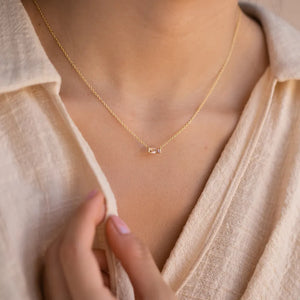
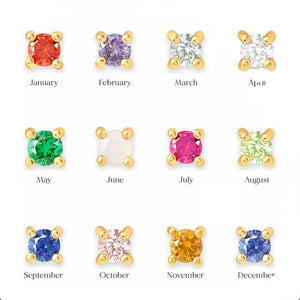
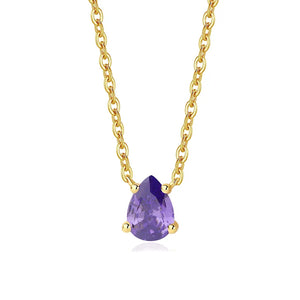
The piece they're describing → Stone Charm Necklace for Women — Raw Natural Gemstone Pendant
Personalize Yours


