


Lapis lazuli is among the oldest traded luxury materials in human history. The mines in Badakhshan, Afghanistan, in the mountains of what is now Sar-e-Sang, have been worked for thousands of years, making them among the oldest gem mines on earth. The deep blue rock from those mountains travelled across ancient trade routes to Egypt, Mesopotamia, and eventually across the entire known world.
In this guide, you'll learn what lapis lazuli means and why that meaning has stayed remarkably consistent across thousands of years of human history, the stone's extraordinary role in Renaissance art, the quality grading system every buyer needs to know, and how to tell genuine high-grade lapis from the pale or dyed material that floods the market.
A Stone That Shaped History
No gemstone has a more documented history than lapis lazuli. The evidence is literally carved into the walls of civilization:
Ancient Egypt (from about 3000 BCE): Lapis lazuli was among the most prized stones in ancient Egypt. Powdered lapis was used for blue eye cosmetics, and royal funeral masks and sarcophagi were inlaid with it to represent the heavens. Amulets and scarabs were carved from it too. The color was tied to the sun and sky deities and to the divine blue of the heavens.
Mesopotamia and Sumer (from about 3500 BCE): Sumerians wore lapis in cylinder seals and jewelry as a symbol of royal authority, and the stone appears in some of the oldest surviving written stories as a sign of wealth and the divine.
Renaissance Europe, the most expensive paint in the world: This is the part most guides skip entirely. When lapis lazuli arrived in medieval Europe via the spice routes, artists discovered that the stone, when purified and ground, produced a pigment of an impossible, brilliant blue that no other material could match. They called it ultramarine, "from beyond the sea," because it had to be imported across the Mediterranean from Afghanistan.
For several centuries, ultramarine was among the most expensive materials an artist could buy, at times costing more than gold by weight. Patrons commissioning religious paintings often specified ultramarine for the Virgin Mary's robes, since blue was the color of heaven, purity, and the divine, and some works were left unfinished when the pigment became unaffordable. The invention of synthetic ultramarine in the 1820s finally made the color accessible and ended lapis lazuli's reign as liquid gold.
This history is not incidental to lapis lazuli's meaning, it IS the meaning. A stone that kings, priests, and Renaissance painters all treated as among the most precious materials available carries a weight that no modern marketing can manufacture.
What Lapis Lazuli Means
Across every culture that worked with lapis lazuli, three themes emerge consistently: wisdom, truth, and power. The deep, unwavering blue, the color of the night sky, the deep ocean, the heavens, represented knowledge that comes from above, truth that cannot be altered, and authority that is earned rather than seized.
In ancient Egypt, blue was the color of the divine. The gods had blue skin or hair. Priests wore lapis to access divine wisdom. The stone was placed near the throat and the third eye, the centers of speaking truth and seeing clearly, in amulets.
In Buddhist tradition, lapis lazuli is counted among the Seven Treasures and is associated with wisdom, clarity, and freedom from inner conflict.
In Western crystal healing traditions, lapis lazuli's meaning centers on five interlocking ideas:
- Inner truth: The belief that it strips away pretense and brings the wearer into alignment with their authentic self, saying what they mean, living without performance
- Intellectual power: Associated with mental clarity, learning, memory, and the ability to think through complexity, historically given to scholars and teachers
- Spiritual insight: Connected to the third eye chakra, it's linked to intuition, psychic awareness, and the ability to see patterns others miss
- Communication: The throat chakra connection makes it the stone of articulation, expressing difficult truths, finding the right words, being heard
- Royalty and authority: Every ancient civilization that had lapis used it for royal and sacred objects. The meaning of legitimate power, earned through knowledge, is embedded in the stone's history
Third Eye and Throat Chakra
Lapis lazuli sits at the junction of two chakras, and this dual connection gives it a distinctive quality that most single-chakra stones don't have.
Third eye chakra (Ajna): The center of intuition, inner vision, and spiritual insight. A balanced third eye allows you to see through confusion, trust your instincts, and perceive the deeper patterns behind surface events. In crystal healing, lapis is considered one of the three primary third eye stones (alongside amethyst and labradorite) because its deep blue-indigo color maps to the indigo energy of the sixth chakra.
Throat chakra (Vishuddha): The center of communication, truth, and self-expression. When the throat chakra is blocked, the symptoms show up as difficulty saying what you really mean, swallowing words, people-pleasing at the expense of honesty, or an inability to ask for what you need. Lapis lazuli's throat chakra connection is specifically about truth-telling, not just speaking, but speaking authentically, even when it's uncomfortable.
The combination of these two chakras is what makes lapis particularly recommended for people in creative or intellectual fields: writers, teachers, public speakers, researchers, analysts. It aligns the knowing (third eye) with the telling (throat), seeing clearly and having the courage to say what you see.
In meditation, place lapis at the center of the forehead (third eye) or hold it against the throat. Focus on the color, not just blue, but the specific blue of lapis: the deep blue shot through with gold pyrite flecks, like a midnight sky with stars. That visual is itself part of the stone's meaning: inner light in the darkness, wisdom visible even at night.

The Quality Grading Guide: What You Need to Know Before Buying
Lapis lazuli quality varies more dramatically than almost any other gemstone. At the top end, fine Afghan lapis is one of the most beautiful materials in existence. At the low end, pale chalky material, dyed howlite, or "denim lapis" is almost unrecognizable as the same stone. Understanding the grading system protects your investment.
The A/AA/AAA Grade System
The informal trade grading system rates lapis by color depth and calcite content:
| Grade | Color | Pyrite | Calcite | Value |
|---|---|---|---|---|
| AAA (Persian/Afghan) | Deep, uniform, slightly violet-blue, no patchiness or pale areas | Evenly distributed gold flecks, minimal or absent | None visible, pure blue throughout | Highest, the standard for fine jewelry |
| AA | Deep to medium blue, mostly uniform, slight variation acceptable | Some pyrite present, generally evenly distributed | Minimal, small amount acceptable | High, suitable for quality jewelry |
| A | Medium blue, noticeable variation, patches of lighter color | Variable, can be clustered or absent | Visible white/grey streaks or dust | Moderate, budget jewelry and beads |
| Commercial / "Denim Lapis" | Pale, washed-out blue, heavy grey or white mottling throughout | Often absent or concentrated in uneven patches | Dominant, stone is mostly calcite with lapis patches | Low, frequently dyed to deepen color |
Origin Quality Guide
Where lapis comes from matters enormously for quality. Three main sources dominate the market:
| Origin | Quality level | Characteristics | Notes |
|---|---|---|---|
| Afghanistan (Badakhshan) | Finest in the world, the benchmark | Deep, slightly violet-blue; pyrite flecks like stars; very low calcite in top grades | Mines worked for thousands of years; "Persian" and "Afghan" grades are the same stone, different marketing terms |
| Chile (Ovalle) | Moderate, commercial grade | Lighter blue, more calcite, often greener-blue than Afghan. Significant pyrite in some pieces. | Most affordable lapis in the market; frequently dyed to deepen color; largest current production volume |
| Russia (Siberia/Baikal) | Moderate to good | Often more uniform color than Chilean; tends toward cornflower blue rather than violet-blue. Less pyrite. | Smaller production; not the standard benchmark for fine jewelry |
How to spot dyed or fake lapis
- Acetone test (decisive): Dab acetone (nail polish remover) on an inconspicuous spot with a cotton swab. If blue color transfers to the swab, the stone is dyed. Real lapis won't bleed color. Test a loose or spare stone rather than a finished piece, since acetone can damage polish and adhesives.
- Calcite streaks: Real lapis typically has some white calcite (exception: top AAA grade). Completely uniform deep blue with no variation can signal dyed lower-grade material or dyed howlite (a white stone commonly used as a lapis simulant).
- Weight: Lapis lazuli is relatively dense (about 2.7 to 2.9 g/cm³). Plastic and dyed howlite feel lighter. Lapis feels solidly heavy for its size.
- Price reality check: Fine, deep-blue lapis is not cheap. A very low price for a large, deeply colored stone usually signals dye, treated lower-grade material, or a simulant rather than a bargain.
- Pyrite flecks are real; painted-on dots are not: In genuine lapis, pyrite inclusions are three-dimensional, slightly raised, and randomly distributed. In some fakes, gold-colored dots are painted on the surface and sit flat on the stone. Close inspection with a loupe reveals the difference.

Lapis Lazuli vs Similar Blue Stones
Several blue stones are confused with lapis lazuli or sold as alternatives. Here's how they actually differ:
| Stone | Color | Meaning | Key distinction |
|---|---|---|---|
| Lapis lazuli | Deep violet-blue, pyrite flecks, opaque | Wisdom, truth, royal power, third eye + throat chakra | A rock rather than a single mineral (lazurite, pyrite, and calcite); a very long history |
| Sodalite | Medium blue with white veining, no pyrite, opaque | Logic, rational thought, clarity, emotional calm | No pyrite flecks (this is the easiest distinction); gentler, lighter blue; less expensive |
| Azurite | Intense royal blue, sometimes green (from malachite), opaque | Psychic awakening, spiritual transformation, vision | Brighter, purer blue than lapis; often occurs with green malachite; copper-based mineral; softer (hardness 3.5 to 4) |
| Blue kyanite | Blue, often with grey or white blades, translucent to opaque | Alignment, communication, channeling higher guidance | Bladed crystal structure, no pyrite; believed to never need cleansing; primarily throat/third eye |
| Howlite (dyed) | Deep blue when dyed, often sold as "lapis" | Peace, patience, calming (natural howlite is white) | Acetone test reveals dye immediately; no pyrite inclusions; lighter weight than genuine lapis |
Zodiac and Birthstone
Lapis lazuli appears in some older birthstone lists for September, from before the modern list assigned sapphire to that month, and in some traditions for December. It is best treated as a traditional alternative rather than an official modern birthstone.
In Western astrology, lapis lazuli is most strongly associated with:
- Sagittarius (November 22 to December 21): Sagittarius' quest for truth, philosophy, and wisdom aligns directly with lapis lazuli's core themes. The archer seeks understanding; lapis is the stone of understanding. It amplifies Sagittarius's natural intellectual gifts while grounding the tendency to scatter across too many ideas at once.
- Libra (September 23 to October 22): Libra's need for truth in communication and fairness in relationships makes lapis a natural fit. The throat chakra connection supports Libra in speaking difficult truths with grace rather than avoiding conflict.
- Aquarius (January 20 to February 18): Aquarius's visionary, unconventional thinking and deep humanitarian perspective align with lapis lazuli's third eye properties.
Healing Properties
Emotional: Lapis lazuli is considered a stone of emotional sovereignty, the belief that it helps the wearer stop suppressing what they truly think and feel in favour of what others want to hear. This connects directly to its throat chakra function. People who find themselves chronically people-pleasing, swallowing anger, or unable to set clear boundaries often find lapis meaningful as a symbol of committing to truth.
Mental: Throughout history, lapis has been associated with the intellectual virtues: learning, memory, analysis, and the ability to see through complexity to essential truth. Ancient scholars and scribes kept lapis close. In crystal healing, it's recommended for students, researchers, writers, and anyone whose work requires sustained intellectual clarity.
Spiritual: The third eye activation is lapis lazuli's primary spiritual function, deepening intuition, expanding awareness, and quieting the noise that prevents genuine inner knowing. In meditation, it's used to access higher guidance, enhance dream recall, and develop the discernment to tell intuition from fear.
Physical (traditional belief only): Traditional healing attributed lapis to the throat, thyroid, and vocal cords, consistent with its throat chakra association. It was historically used for headaches and eye conditions, and powdered lapis was used as an eye cosmetic. No clinical evidence exists for any of these effects.
How to Use Lapis Lazuli
As jewelry: Lapis lazuli pendants worn at the throat are the most traditional form, placing the stone at the chakra it activates. Earrings place it near the third eye area. Bracelets on the left wrist (the receiving side) are used for general wisdom and intuition support. For people who want its meaning without its intensity, smaller pieces allow for subtler, more daily-wear-appropriate connection.
For study and focus: Place a piece of lapis on your desk or hold it while thinking through a difficult problem. The association with intellectual clarity is particularly useful as a tangible anchor when your thinking needs to be precise and uncluttered.
For communication: Holding lapis before a difficult conversation, speech, or presentation is a common practice in crystal work. The intention is to align what you say with what you actually mean, to speak from your truth rather than your fear.
Crystal pairings: Lapis lazuli pairs well with:
- Clear quartz: Amplifies lapis's clarity and intention-setting
- Amethyst: Deepens spiritual insight, crown and third eye working together
- Citrine: Balances lapis's serious intellectual energy with confidence and joy
- Rose quartz: Softens lapis's intensity with emotional warmth, wisdom and love together
How to Care for Lapis Lazuli
Lapis lazuli is relatively soft at about 5 to 5.5 on the 10-point hardness scale, softer than most common gemstones and vulnerable to scratching from quartz, glass, and harder stones. It also has moderate sensitivity to chemicals:
- Clean gently: Warm water and a soft cloth only. Never use ultrasonic cleaners, because the vibrations can loosen pyrite inclusions and worsen fractures. Never steam cleaning.
- Avoid acid and chemicals: Lapis lazuli contains calcite, which reacts with mild acids. Perfume, hairspray, sweat, and cleaning products all degrade the surface over time. Remove before applying cosmetics, exercising, or doing household cleaning.
- Protect from sunlight: Prolonged direct sun can cause the colour to fade slightly, particularly in lower-grade material that has been surface-treated or dyed. Store out of direct light.
- Store separately: Harder stones (quartz, topaz, sapphire) will scratch lapis if stored in contact. Use a soft pouch or lined compartment.
- Cleansing in crystal tradition: Smoke (sage, palo santo), moonlight, or selenite charging plate. Avoid long water submersion; lapis can absorb water and the calcite component is mildly water-soluble over extended periods.
Related reading: sodalite meaning and amethyst meaning.
Frequently Asked Questions About Lapis Lazuli
What is lapis lazuli good for?
Lapis lazuli is primarily used for wisdom, truth, and communication in crystal healing traditions. It activates the throat and third eye chakras, making it the stone most recommended for intellectuals, teachers, writers, and anyone who needs to think clearly and speak honestly. Its history of thousands of years of use by royalty, scholars, and sacred craftspeople gives it a cultural weight that few stones can match. Many people use it specifically when facing situations where they need the courage to say what they actually think.
What does lapis lazuli symbolize?
Lapis lazuli symbolizes wisdom, truth, royal authority, and divine connection across every culture that has worked with it for the past several thousand years. Egyptian pharaohs used it to represent the heavens. Mesopotamian kings wore it as a symbol of sacred authority. Medieval and Renaissance artists reserved the blue paint made from lapis exclusively for the Virgin Mary and divine figures. In crystal healing, it symbolizes inner truth, the courage to know and speak what is genuinely real.
What chakra is lapis lazuli?
Lapis lazuli is associated with two chakras: the throat chakra (Vishuddha) and the third eye chakra (Ajna). The throat chakra governs communication, truth, and self-expression. The third eye governs intuition, inner vision, and spiritual insight. This dual activation makes lapis particularly effective for people whose work requires both clear thinking (third eye) and clear communication (throat), and specifically for situations where speaking the truth is difficult.
How can you tell if lapis lazuli is real?
The most reliable home test is acetone (nail polish remover): apply a small amount to an inconspicuous area on a cotton swab. If blue color transfers to the swab, the stone has been dyed, either low-grade lapis or howlite/marble dyed to look like lapis. Real lapis won't bleed color. Other signs: real lapis feels cold and heavy; dyed howlite feels lighter. Real lapis has genuine three-dimensional pyrite flecks, not painted-on dots. Complete uniformity of color, no calcite at all, in an inexpensive piece suggests heavy dyeing.
What is the difference between lapis lazuli and sodalite?
Sodalite is the stone most commonly confused with lapis lazuli. The easiest distinction: lapis lazuli typically contains golden pyrite flecks (the "stars") and white calcite streaks. Sodalite has neither: it's a medium blue with white veining but no metallic inclusions. Lapis is usually a deeper, more violet-blue. Sodalite is gentler in both appearance and energy, associated with logic and calm rather than wisdom and power. Both are opaque blue stones, but lapis is more historically significant and generally more valuable for equivalent quality.
Is lapis lazuli a birthstone?
Lapis lazuli appears in some older birthstone lists for September, from before the modern list assigned sapphire to that month, and in some traditions for December. It is best treated as a traditional alternative rather than an official modern birthstone. In astrology, it is most associated with Sagittarius, Libra, and Aquarius.
Where does the best lapis lazuli come from?
The finest lapis lazuli in the world comes from the Sar-e-Sang mines in Badakhshan province, Afghanistan, mines that have been worked for thousands of years. Afghan-grade lapis has a deep, slightly violet-blue color with minimal calcite and evenly distributed pyrite. It is the benchmark against which all other lapis is measured. Chilean lapis (from Ovalle) is lighter in color, has more calcite, and is more commonly treated or dyed; it represents most of the budget lapis market.
Can lapis lazuli get wet?
Brief water contact for cleaning is fine: a quick rinse under cool water and gentle pat dry won't damage lapis lazuli. However, extended water submersion is not recommended. Lapis contains calcite, which is mildly water-soluble over time, and the stone can absorb water through its porous structure, which affects both the calcite and any surface treatments applied to lower-grade material. Remove lapis jewelry before swimming, bathing, or doing dishes.
What is the rarest form of lapis lazuli?
The rarest and most valuable lapis lazuli is AAA-grade Afghan material with a deep, uniform, slightly violet-blue color, zero calcite, and evenly distributed fine pyrite flecks, sometimes called "Persian" grade (a historical trade term for top Afghan quality). This material is genuinely scarce. Most commercially available lapis, including much of what's sold in jewelry, is lower grade, Chilean A-grade material, often treated or dyed to deepen its natural pale blue.
Can you wear lapis lazuli every day?
With care, yes. For crystal care, see our complete guide: can lapis lazuli go in water. At about 5 to 5.5 on the hardness scale, lapis is softer than many common stones (quartz is 7, topaz is 8) and will scratch if in contact with harder materials. For daily wear, a protective bezel setting rather than a prong setting helps prevent chipping of the stone's edges. Remove before gym, household cleaning, swimming, or using harsh chemicals. The main precaution is avoiding impact and abrasive contact. With that care, lapis can be an everyday piece.
How do you activate lapis lazuli?
In crystal healing traditions, "activating" a stone means programming it with a clear intention. After cleansing (see the care section above), hold the stone in both hands and state clearly, aloud or in thought, what you're asking it to support: clarity, truth-telling, intellectual focus, spiritual insight. The more specific the intention, the more meaningful the stone becomes as a daily reminder. Some practitioners also activate by placing it under direct moonlight during a full moon with a written intention. The activation is fundamentally about conscious attention and intention, the stone as a physical anchor for something you've decided to work on.
Is lapis lazuli associated with any religion or tradition?
Yes. In ancient Egypt, lapis was used in royal burial rites and temple decoration. In Buddhism, it is counted among the Seven Treasures. In medieval Christian painting, ultramarine pigment made from lapis was so prized that it was reserved for the Virgin Mary and other divine figures. Its meaning varies by tradition, but the themes of the heavens, wisdom, and the sacred recur.
Final Thoughts
Lapis lazuli is the rare stone where the history does more work than the metaphysics. You don't need to believe in chakras or crystal energy to understand why this particular blue rock, buried with pharaohs, reserved for the Virgin Mary's robes by Renaissance painters, carries a different weight than most gemstones. It represents thousands of years of humanity's best minds choosing this stone to represent their highest values: truth, wisdom, divine knowledge, royal authority.
If you're drawn to lapis lazuli, start with quality. The difference between AAA Afghan lapis and dyed commercial grade is enormous, in beauty, in meaning, and in durability. Get what it actually is. The stone's history does the rest.
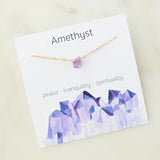
AJLuxe does not currently sell lapis lazuli jewelry. If you are drawn to a third eye or throat stone from our range, our Stone Charm Necklace carries one raw, wire-wrapped natural gemstone chip in 15 stones, including amethyst and labradorite, from $24.99. For everyday pieces with lasting meaning, explore our personalized jewelry collection or our sterling silver jewelry, made in 925 sterling silver with 18K gold plating.
Written by the AJLuxe team. Last updated: October 2026.
All third-party trademarks, brand names and product names are the property of their respective owners. AJLuxe is not affiliated with, endorsed by, sponsored by, or otherwise connected to any third-party brand referenced in this article. Brand names are used solely for accurate comparative reference, and material descriptions reflect each brand's own published product specifications at the time of writing.
You Might Also Like
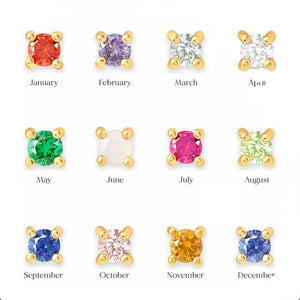
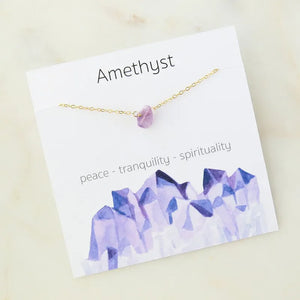
The piece they're describing → Stone Charm Necklace for Women — Raw Natural Gemstone Pendant
Personalize Yours


