


- Confirmation is a teen sacrament — distinct from First Communion's ~7–8-year-old age bracket — so the gift should read as a genuine first "grown-up" jewelry piece, not a scaled-up version of a communion gift.
- Two honest gift directions cover almost every confirmand: faith-symbolic (a cross ring, cross earrings, or a layered cross set) for the family that wants visible religious meaning, or universally-wearable (birthstone studs or a plain dainty piece) for the teen who'll actually wear it every day regardless of how devotional the household is.
- $25–$75 is the realistic budget range for a well-made sterling silver or gold-plated piece, with sponsors and godparents typically landing at the higher end.
- The specialty Catholic-goods stores (rosaries, saint medals, communion missals) own the deeply devotional end of this search — this guide doesn't try to out-religious-retail them, it covers the honest, wearable-jewelry lane instead.
- Confirmation and First Communion are frequently confused online — they're different sacraments at different ages, and buying the wrong style of gift for the wrong age is the single most common mistake.
Search "confirmation gift" and you'll land almost entirely on Catholic supply stores selling rosaries, saint medals, and devotional missals — which makes sense, since those are genuinely great gifts for the family that wants something deeply traditional. But if you're a parent, godparent, or sponsor who wants something more personal than a card and isn't a specialty Catholic-goods shopper, there's a second honest answer: a piece of jewelry the teen will actually keep wearing. This guide covers both directions — the faith-symbolic pieces (cross rings, cross earrings, dove and cross combinations) and the universally-wearable alternative (birthstone studs, a plain dainty piece) — plus the details most confirmation gift guides skip: how Confirmation differs from First Communion, what a sponsor's role actually is, realistic budgets, and whether a non-religious gift is even appropriate for the occasion.
For a teenage boy specifically, a men's cross necklace on a Cuban link chain reads more grown-up than a thin chain.
Confirmation vs. First Communion: Get the Age Bracket Right First
Before picking a gift, it's worth being clear on which sacrament you're actually shopping for, because Confirmation and First Communion get confused constantly online and the two calls for very different jewelry.
First Communion happens around age seven or eight, typically in second grade, when a child receives the Eucharist for the first time. It calls for small, child-sized pieces — a delicate cross on a short chain, a rosary bracelet sized for a small wrist. Our First Communion jewelry gift guide covers that age bracket in full, including sizing for a seven- or eight-year-old.
Confirmation is a different sacrament entirely, and it happens years later. In most U.S. Catholic dioceses, Confirmation is administered sometime in the early-to-mid teens — commonly somewhere between 7th and 10th grade, so roughly ages 13 to 16, though the exact timing is set by each diocese and varies by parish and tradition. (Eastern Catholic and Orthodox practice differs and often confirms — or "chrismates" — infants alongside baptism, but that's a separate tradition from the Latin Rite timeline most U.S. searches are asking about.) Confirmation is considered the sacrament that "completes" or "seals" the grace first received at baptism, traditionally understood as strengthening the confirmand with the gifts of the Holy Spirit.
That six-to-nine-year age gap matters more than most gift guides admit. A piece sized and styled for a second grader — a tiny pendant on a twelve-inch chain — reads as childish on a fifteen-year-old, and a full-size adult statement piece can feel oddly formal on someone just starting to build their own jewelry box. The right confirmation gift sits in between: real, adult-proportioned jewelry, but still modest enough for a teenager who's likely new to wearing fine jewelry daily.
Two Honest Gift Directions — and Why Both Are Right
Almost every confirmation gift-giver falls into one of two camps, and neither one is wrong:
- The faith-symbolic reader. You want the gift to visibly connect to the occasion — a cross, a dove, a piece that says "this marks a religious milestone" the moment someone sees it. This is the traditional lane, and it's genuinely the more popular one for a sacrament gift.
- The universally-wearable reader. You want something the confirmand will wear constantly afterward, regardless of how the household expresses faith day to day — a birthstone piece, a plain dainty design, something that reads as "your first real piece of grown-up jewelry" more than a religious marker.
Both directions are appropriate. Nothing about giving a non-religious piece at a religious milestone is disrespectful — plenty of families, especially for a teenager who already owns a childhood cross or medal from their First Communion, want the confirmation gift to mark growing up more than it marks doctrine. The honest answer to "which one should I buy" is: know your specific teen and family, not a rule that applies to everyone.
Faith-Symbolic Confirmation Gifts
If you want the piece to visibly carry the meaning of the day, three real, in-stock options cover most of this ground without pushing into devotional-store territory (rosaries, saint medals, and communion missals are genuinely better sourced from a dedicated Catholic-goods retailer — we're not going to pretend otherwise):
CZ Cross Ring — the primary pick
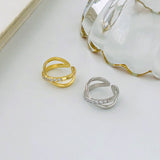
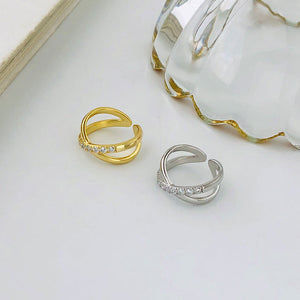
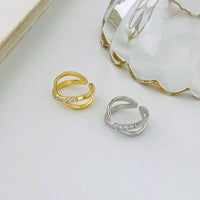
An adjustable 925 sterling silver ring with 18K gold plating and a cubic zirconia-set cross design. A ring solves the sizing problem a lot of confirmation jewelry runs into — an adjustable band works whether the confirmand's ring size is still changing, unlike a fixed necklace chain length. It reads as clearly faith-symbolic while still looking like a piece a teenager would choose for themselves, not something bought exclusively "for church."
Cross Ear Cuff Earrings — no piercing required
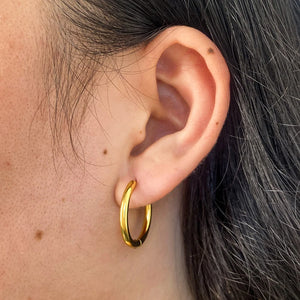
A meaningful gap in a lot of confirmation gift advice: not every teen has pierced ears yet, and guessing wrong on that detail turns a thoughtful gift into an unusable one. A cross ear cuff clips on without a piercing, so it's a safe faith-symbolic choice when you're not sure, or when the confirmand simply hasn't gotten piercings yet.
Layered Cross Rings — a sponsor-and-confirmand matching set
AJLuxe's adjustable layered cross ring is sold as a two-ring set, which opens up a gift angle most confirmation guides don't mention: a sponsor or godparent giving one ring to the confirmand and keeping the matching ring for themselves, as a small, ongoing reminder of the sponsor relationship. It's a more personal spin than a single standalone piece, and it doesn't require the set to be framed as a romantic "couple ring" to work — a confirmation sponsorship is its own kind of pair.

Universally-Wearable Confirmation Gifts
Not every family wants — or needs — the gift itself to be religious. Confirmation is still a real milestone worth marking even for a teen who'll wear a cross to Mass and nothing else the rest of the week. For that reader, the honest move is a piece with no religious symbolism at all, chosen because it's genuinely nice, not because it's a compromise.
Birthstone stud earrings are the strongest fit here: personal (tied to the confirmand's own birth month, not a generic design), appropriate for daily wear starting immediately, and priced in the same realistic range as the faith-symbolic pieces. Framed honestly, the pitch to a teen isn't "this represents your faith" — it's "this is your first real piece of jewelry, and it's yours." That's precisely the angle the First Communion jewelry guide takes with its pearl necklace pick, extended into the teen years: a meaningful milestone gift doesn't have to be a religious symbol to be the right gift for a religious occasion.
A plain dainty pendant or a simple stud in sterling silver works the same way if birthstone styling isn't a fit — the through-line is a piece sized and priced like a genuine first grown-up jewelry purchase, not a kids' accessory and not an adult statement piece either.
Confirmation Name, Sponsor, and the Gift's Meaning
Two Confirmation-specific details are worth understanding, since they don't come up in a First Communion gift and they change how you might personalize a piece.
The Confirmation name
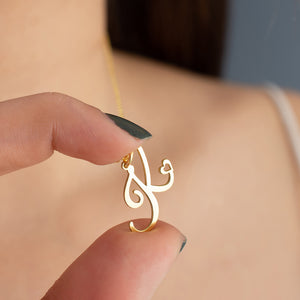
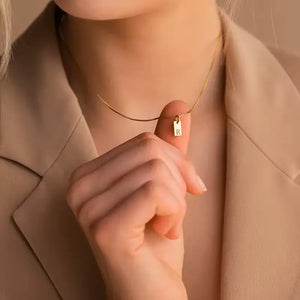
Many confirmands choose a Confirmation name — often the name of a saint they feel a connection to — in addition to their given name, as part of preparing for the sacrament. If you want to personalize a piece specifically for Confirmation rather than reusing a generic engraving idea, the confirmand's chosen Confirmation name (rather than their everyday first name) is a detail that makes the gift read as specific to this exact sacrament, not just "a nice necklace."
The sponsor
A Confirmation sponsor is an adult — sometimes the same person as a godparent from baptism, sometimes a different relative or family friend — who presents the confirmand during the rite and, traditionally, supports their continued faith formation afterward. Sponsors are one of the two most common gift-givers for this occasion (alongside parents), which is part of why the "sponsor-and-confirmand matching set" angle on the layered cross rings above works so naturally — it mirrors a relationship the sacrament itself is built around.

Budget Guide: What to Actually Spend on a Confirmation Gift
| Gift-giver | Realistic range | Best fit |
|---|---|---|
| Extended family / family friend | $20–$35 | A single earring or ring piece, faith-symbolic or birthstone |
| Parent | $25–$50 | Either direction — often paired with the outfit or a card, not meant to be the single "big" gift |
| Sponsor or godparent | $40–$75 | The faith-symbolic set, engraved with the Confirmation name, or a matching sponsor-and-confirmand pair |
| Grandparent / multiple contributors combining gifts | $75+ | A small jewelry "set" — ring plus earrings — rather than one larger single piece |
As with First Communion, the real risk isn't spending too little — it's duplication. If a sponsor, both sets of grandparents, and a godparent all reach for a plain cross pendant independently, the confirmand ends up with four nearly identical necklaces and one unworn. A quick check-in between the sponsor and parents before buying (the same coordination the First Communion guide recommends) avoids that far more reliably than any specific price point does.
Confirmation Gift Etiquette: Boy vs. Girl, and Is Non-Religious Okay?
Two questions come up constantly enough to address directly rather than leaving to guesswork.
Boy vs. girl: the faith-symbolic pieces above — the cross ring, the layered cross set — read as unisex and work for either a boy or a girl confirmand without modification; a cross ring or cross earring isn't styled as gender-specific. Where the gift genuinely splits by gender is mainly the delivery format: earrings assume pierced ears, which is a fair-enough assumption for a lot of girl confirmands and a much less safe one for boys, which is exactly why the no-piercing cross ear cuff exists as a faith-symbolic option that sidesteps the assumption entirely. Birthstone studs, similarly, lean toward a pierced-ear gift more often given to girls, though there's no rule against a boy confirmand having pierced ears and wanting the same gift.
Is a non-religious gift okay? Yes, plainly. Confirmation is a real sacrament and deserves a gift that acknowledges the day, but "acknowledging the day" doesn't require the object itself to carry religious iconography — showing up with a genuinely thoughtful, well-made piece of jewelry does that on its own. Families vary widely in how devotionally they mark the occasion, and a jewelry gift-giver's job is to read the specific family and teen in front of them, not to assume the most traditional option is automatically the most appropriate one.
Related reading: Bat Mitzvah Gift Jewelry.
Frequently Asked Questions
What is a typical confirmation gift?
A typical confirmation gift is either a faith-symbolic piece — a cross necklace, cross ring, or medal, often depicting the Holy Spirit as a dove — or a devotional item like a rosary or engraved Bible from the specialty Catholic-goods retailers that dominate this category. A well-made piece of jewelry in the $25–$75 range, sized for a teenager rather than a young child, covers the gift expectation for most families whether or not the piece itself is religious.
What are the 7 gifts for confirmation?
This is one of the most commonly misread searches in the category: the "7 gifts" don't refer to material presents at all. They're the traditional Seven Gifts of the Holy Spirit — Wisdom, Understanding, Counsel, Fortitude, Knowledge, Piety, and Fear of the Lord — that Confirmation is traditionally understood to strengthen in the confirmand. If you're shopping for an actual present, this list isn't it; it's part of why cross and dove-themed jewelry is such a popular material gift, since both symbols connect back to this same theology.
What do you buy someone for their confirmation?
Most gift-givers land on one of two honest directions: a faith-symbolic piece of jewelry (a cross ring, cross earrings, or a medal) for a visibly meaningful gift, or a universally-wearable piece like birthstone studs for a confirmand who'll wear it daily regardless of how religiously the household expresses faith. Cash or a gift card is also common and perfectly acceptable, though jewelry tends to be kept as a keepsake of the specific day in a way spent gift-card money isn't.
Should you give a gift for confirmation?
Yes — Confirmation is one of the three sacraments of Christian initiation in the Catholic Church, and it's customary for close family, sponsors, and godparents to mark it with a gift, similar to a baptism or First Communion. It doesn't need to be extravagant; a modest, well-made piece in the $25–$50 range from a parent or extended family member is entirely appropriate, with sponsors and godparents typically giving somewhat more.
What is a good confirmation gift budget?
$20–$35 is a comfortable range for extended family or a family friend, $25–$50 for parents, and $40–$75 for a sponsor or godparent giving the more significant keepsake piece. Combined family gifts (several relatives contributing to one larger piece, such as a small jewelry set) can reasonably go higher, but there's rarely a reason to spend past $75–$100 on a single confirmation jewelry gift.
What are some non-religious confirmation gift ideas?
Birthstone jewelry — studs, a pendant, or a ring tied to the confirmand's birth month — is the strongest non-religious option, since it's personal without being generic. A plain dainty necklace, a simple stud earring set, or any well-made sterling silver or gold-plated piece the teen would genuinely choose for themselves also works; the goal is a piece that reads as "your first real jewelry" rather than a substitute for a religious symbol.
What's a good confirmation gift for a boy vs. a girl?
Faith-symbolic pieces like a cross ring or a cross ear cuff work for either a boy or girl confirmand without any adjustment, since they aren't styled to one gender. The main practical difference is pierced-ear items: stud earrings assume the confirmand has pierced ears, which is worth confirming before buying regardless of gender, and a no-piercing cross ear cuff sidesteps the guesswork entirely when you're not sure.
What's the difference between a First Communion gift and a Confirmation gift?
The core difference is the age bracket, not the gift category. First Communion happens around age seven or eight and calls for small, child-proportioned pieces — a short chain, a child-sized bracelet. Confirmation happens years later, typically in the early-to-mid teens, and calls for adult-proportioned (though still modest) jewelry a teenager could plausibly choose for themselves — see our First Communion jewelry guide for that earlier age bracket specifically.
Who typically gives a confirmation gift — parents, godparents, or the sponsor?
Sponsors and parents are the two most common gift-givers, with godparents (who are sometimes the same person as the sponsor) also frequently contributing. There's no strict rule, but a sponsor giving the more significant keepsake piece — such as an engraved ring or a matching sponsor-and-confirmand set — while parents handle a smaller piece or the day's other expenses is a pattern that shows up consistently.
Should you engrave a confirmation gift, and with what?
Yes, if the piece allows for it — engraving turns a generic cross or ring into a specific keepsake of the day. The confirmand's Confirmation name (the saint's name many confirmands choose as part of preparing for the sacrament) is a more occasion-specific choice than their everyday first name, and the Confirmation date alongside it is a simple, traditional option that doesn't clutter a small piece.
What age do Catholics get confirmed?
In most U.S. Catholic dioceses, Confirmation happens in the early-to-mid teens — commonly somewhere between 7th and 10th grade, roughly ages 13 to 16 — though the exact age is set by each diocese and can vary by parish. This is a meaningfully older age bracket than First Communion's roughly seven-to-eight-year-old range, which is why the two occasions call for different styles and sizes of jewelry gift.
Final Thoughts: A Confirmation Gift That Gets Worn, Not Boxed Away
The specialty Catholic-goods retailers do the deeply devotional side of this occasion well — rosaries, saint medals, and communion missals genuinely are better sourced there. But if you want a gift that reads as personal rather than purely doctrinal, and that the confirmand will still be wearing a year from now, the honest answer sits in one of two lanes: a faith-symbolic piece like a cross ring or cross earrings, or a universally-wearable piece like birthstone studs, both sized and priced like a genuine first grown-up jewelry purchase rather than a kids' accessory. Get the age bracket right — Confirmation is a teen milestone, not a First Communion do-over — and let the specific teen and family in front of you decide which of the two honest directions fits, rather than assuming the most traditional option is automatically the right one.
For the earlier sacrament in the same family of milestones, see our First Communion jewelry gift guide. For the sacrament that comes before both, see baptism jewelry gifts. And if you're a godparent or sponsor shopping for milestone gifts more broadly, our jewelry gift for goddaughter guide covers that same relationship across birthdays and other occasions, not just sacraments.
Shop the faith-symbolic pick
Shop the CZ Cross RingShop This Guide
Prefer the universally-wearable direction? Shop the birthstone stud earrings. Need a no-piercing faith-symbolic option? Shop the cross ear cuff earrings, or the layered cross ring set for a matching sponsor-and-confirmand gift. Browse the full AJLuxe collection for more milestone-gift pieces.
AJLuxe Team. Last updated: July 2026.
All third-party trademarks, brand names and product names are the property of their respective owners. AJLuxe is not affiliated with, endorsed by, sponsored by, or otherwise connected to any third-party brand referenced in this article. Brand names are used solely for accurate comparative reference, and material descriptions reflect each brand's own published product specifications at the time of writing.
You Might Also Like
The piece they're describing → CZ Cross Ring for Women — 925 Sterling Silver, 18K Gold Plated, Zircon Adjustable Band
Personalize Yours


