

What Makes a Good Birthstone Necklace Choice?
A good birthstone necklace choice comes down to three things: the right stone for the birth month (or the wearer's color preference), a setting and chain length that fits how it'll be worn, and a metal that matches both the wearer's skin tone and how often the piece comes off and on. Get those three right and the necklace works for years. Get them wrong — too heavy a setting for daily wear, too long a chain for layering, a metal that tarnishes fast — and even the correct birthstone ends up sitting in a drawer.
Picking a birthstone necklace gets complicated fast once more than one person or occasion is involved. A necklace for your own birth month is a simple choice: look up the stone, pick a color you like, done. A necklace for your mom representing three kids' birth months, a graduation gift that also needs to work as a daily piece, or a push present that might get added to later — those all come with decisions the month table alone doesn't answer.
This guide is built around the situations people actually run into when shopping for a birthstone necklace: what to do when someone was born on a cusp date, how to arrange multiple birthstones on one piece, which necklace style fits which occasion, and how to layer a birthstone necklace with jewelry someone already owns. For the meaning and history behind each month's stone, our birthstone jewelry guide covers that in depth. For the full mechanics of metal, chain sizing, and setting types, see our birthstone necklace buying guide. This page sits between the two: it's about matching the necklace to the person and the moment.
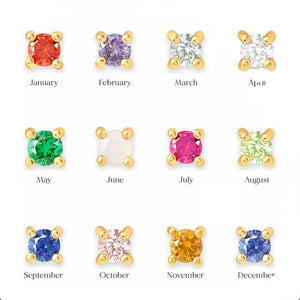
Birthstone Necklace Quick Reference: All 12 Months
Use this table to confirm a birth month stone and get a fast read on which metal typically suits it best before you start browsing.
| Month | Birthstone(s) | Color | Best Paired Metal |
|---|---|---|---|
| January | Garnet | Deep red | Sterling silver or gold vermeil |
| February | Amethyst | Purple | Sterling silver |
| March | Aquamarine, Bloodstone | Pale blue, green-red | Sterling silver or white gold |
| April | Diamond | Clear/white | Any metal |
| May | Emerald | Green | Gold vermeil or 14k gold |
| June | Pearl, Alexandrite, Moonstone | White, color-change, iridescent | Sterling silver |
| July | Ruby | Red | Gold vermeil or 14k gold |
| August | Peridot, Spinel | Lime green, various | Sterling silver |
| September | Sapphire | Blue | White gold or sterling silver |
| October | Opal, Tourmaline | Iridescent, pink/green | Sterling silver |
| November | Topaz, Citrine | Golden yellow | Gold vermeil |
| December | Turquoise, Zircon, Tanzanite | Blue | Sterling silver |
Note that several months have more than one accepted stone. That's a modern addition to the birthstone list, not a disagreement — jewelry trade groups added alternates over the past century to give more color and price-point options. Pick whichever version fits the budget or the color the wearer prefers.
Common Birthstone Necklace Buying Scenarios
Most birthstone necklace questions aren't really about the stone. They're about a specific situation: a birthday on the wrong side of a month boundary, a family with more kids than fit neatly on one pendant, or a necklace that needs to look right at a wedding and still make sense for the school run the next morning. Here's how to handle the ones that come up most.
Born on the Cusp of Two Months
If a birthday falls in the last few days of one month, either the outgoing or the incoming month's stone works. There's no governing body that assigns a hard cutoff date, so this comes down to preference. Most people choose based on color rather than the calendar — someone born January 31 might prefer February's amethyst purple to January's garnet red, and that's a completely valid choice. If in doubt, ask the person directly rather than guessing; birthstone attachment is often more about which color someone likes than which technical month they were born in.
Buying for a Mother or Grandmother With Multiple Children
A mother's birthstone necklace typically strings one small stone per child on a single pendant, bar, or circle setting. Arrange the stones in birth order for sentimental accuracy — oldest to youngest, left to right — or arrange by color balance if the goal is a more cohesive, less busy look. When two children share similar-toned birthstones (say, a January garnet and a July ruby, both red), spacing them with a small clear stone like a diamond simulant or white topaz keeps each one visually distinct instead of blending into one red blob. Four or five stones is usually the practical limit on a single pendant before it starts to look cluttered; beyond that, a two-tier necklace or a matching bracelet as a second piece keeps the design clean.
Choosing Between a Simple Pendant, a Charm, or a Cluster Setting
A single-stone pendant on a thin chain is the most versatile option for daily wear or as a first birthstone piece — it goes with everything and doesn't compete with other jewelry. A charm-style birthstone necklace, where the stone sits in a small bezel that hangs slightly looser than a fixed pendant, reads more casual and pairs naturally with layered stacks. A cluster or halo setting, where the birthstone is ringed by small accent stones, throws more light and draws more attention, which makes it a better fit for a milestone gift — an anniversary, a big birthday — than for something worn to the gym or the office every day.
Matching a Necklace Style to the Occasion
The right birthstone necklace style depends heavily on what the occasion signals. A first birthday gift from a new partner sends a different message than a 25th-anniversary gift from a spouse, and the necklace should match that weight.
| Occasion | Best Style | Why It Works |
|---|---|---|
| Birthday | Simple solitaire pendant | Wearable immediately, works with any outfit, low pressure as a gift |
| Graduation | Pendant + small initial or year charm | Marks the milestone without looking overly formal or event-specific |
| Push present (new baby) | Mother's necklace with baby's birthstone | Becomes more meaningful as more children's stones are added later |
| Anniversary | Cluster or halo setting | Reads as a bigger, more formal gift appropriate to a milestone year |
| Just-because gift | Charm-style pendant | Lower cost, casual tone, easy to add to an existing layered stack |
| Retirement or career milestone | Bar pendant with birthstone accent | Understated, professional-looking, not overtly sentimental |
Layering a Birthstone Necklace With Existing Jewelry

Birthstone pendants layer best at the shortest position in a stack, sitting closest to the collarbone at 14 to 16 inches. Pair it with one slightly longer plain chain at 18 inches, and, if a third piece is wanted, an initial or bar necklace at 20 inches or longer. Keep the birthstone piece thin relative to the others in the stack — a bulky birthstone pendant competes with everything else instead of anchoring the look. If the stack already includes a chunkier chain-link piece, choose a birthstone charm rather than a larger cluster setting so the birthstone still reads as the focal point instead of getting visually crowded out.
Buying a Birthstone Necklace as a Gift vs. for Yourself
Buying for yourself removes most of the guesswork — you already know your comfort with layering, your metal preference, and how often you'll actually wear the piece. Buying as a gift means erring toward the safer, more versatile choice unless you know the recipient's existing collection well. A simple solitaire pendant in sterling silver is the closest thing to a universally safe birthstone gift: it suits nearly every wardrobe, doesn't assume a layering habit the recipient may not have, and is easy to resize or exchange if the chain length isn't quite right. Save the charm-style or cluster settings for recipients whose jewelry style you already know, since those choices lean more toward personal taste.
Necklace Style Comparison: Pendant vs. Charm vs. Cluster
These three setting families cover almost every birthstone necklace on the market. The right one depends on how often it'll be worn and what job it needs to do.
| Style | Best For | Everyday Wear | Typical Price Range |
|---|---|---|---|
| Simple solitaire pendant | First birthstone piece, daily wear, gifting to someone whose taste you don't know well | Excellent | Lower |
| Charm-style bezel | Layering, casual everyday looks, younger recipients | Very good | Lower to mid |
| Halo or cluster setting | Milestone gifts, anniversaries, pieces meant to make a statement | Good, but more delicate prongs need more care | Mid to higher |
Metal, Chain Length, and Setting Style in Brief
Sterling silver and gold vermeil are the two most common metals for birthstone necklaces, with gold-filled and solid gold as longer-lasting upgrades. Sterling silver tends to suit cooler-toned stones like amethyst, sapphire, and aquamarine, while gold vermeil suits warmer stones like citrine, garnet, and ruby — though this is a styling preference, not a rule.
For durability, the distinction matters more than the color pairing. Gold vermeil is a thin layer of gold electroplated over sterling silver; it looks like solid gold at a fraction of the price but typically wears down within two to five years of regular use. Gold-filled jewelry uses a much thicker, mechanically bonded gold layer — often 5% of the total weight compared to vermeil's microns-thin coating — and can last ten to thirty years without flaking or rubbing off, making it the better choice for a birthstone necklace that's meant to stay on every day rather than come off at night.
Chain length depends on where the pendant should sit: 14 to 16 inches works for layering or a choker-style fit, 16 to 18 inches sits at or just below the collarbone for the most common single-pendant look, and 20 inches or longer works well under a collared shirt or as the back layer in a stack. Bezel settings wrap fully around the stone's edge, which protects it from chips and suits daily wear. Prong settings hold the stone with thin metal claws that let in more light from the sides, which makes the stone look brighter but leaves it slightly more exposed. Halo settings ring the center stone with a circle of smaller accent stones, adding visual size without the cost of a larger center stone — useful for a gift that needs to look bigger than its price tag.
For the full breakdown of metal durability testing, chain-length sizing by neckline and body type, and setting mechanics in more depth, see our complete birthstone necklace buying guide.
Caring for a Birthstone Necklace
Softer stones need gentler handling than harder ones. Opal, pearl, and emerald sit lower on the Mohs hardness scale and can scratch, crack, or cloud if knocked against a hard surface or exposed to household chemicals. Garnet, amethyst, citrine, topaz, and sapphire sit higher on the scale and hold up better to daily wear, including light exercise and regular hand-washing.
- Take the necklace off before showering, swimming, or applying lotion, perfume, or hairspray
- Store it flat or hanging separately from other jewelry that could scratch the setting or tangle the chain
- Wipe the stone and metal with a soft, dry cloth after each wear to remove skin oils and product residue
- Have prongs checked once a year by a jeweler if the necklace is worn daily — loose prongs are the most common cause of a lost stone
The Jewelers of America care guide recommends an annual professional check for any piece worn regularly, which catches a loose setting before a stone falls out and gets lost.
If the necklace is a gift for someone with sensitive skin, sterling silver and 14k-or-higher gold are safer bets than lower-karat alloys or base-metal plating. The American Academy of Dermatology notes that nickel is the most common metal allergen found in jewelry, so a nickel-free setting is worth confirming for anyone who's had a reaction to costume jewelry in the past. Reputable sources on gemstone identification and grading, like the Gemological Institute of America's birthstone reference, are a good cross-check if a stone's authenticity or care needs are unclear.
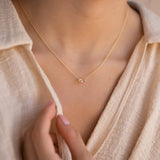
Shop the look: our Baguette Birthstone Charm Necklace comes in all 12 birth months on a sterling silver chain — a simple, daily-wear pendant that works for gifting or wearing yourself.
Related reading: Best birthstone necklace.
Related reading: Garnet birthstone guide.
Related reading: How to care for birthstone jewelry.
Related reading: Peridot birthstone.
Frequently Asked Questions
What if my birthday falls in a month with two accepted birthstones?
Pick whichever stone you like better. Jewelers and trade groups list both alternates as equally valid, and there's no formal rule about which one takes priority for a given birthday. Color and budget usually decide it in practice — bloodstone, for example, is typically less expensive than aquamarine for March birthdays, while both are accepted March stones.
Can I wear a birthstone necklace that isn't my birth month?
Yes. Birthstones carry tradition, not restriction, and there's no rule against wearing one that doesn't match your own birth month. Plenty of people choose a stone for its color or meaning rather than the calendar, and gifting someone a stone that isn't technically "theirs" is common when the color simply suits them better or matches an outfit they already wear often.
How many birthstones can fit on one mother's necklace before it looks crowded?
Four or five small stones on a single pendant or bar setting is usually the practical limit before the piece starts to look cluttered rather than cohesive. Beyond that, a two-tier necklace, a wider bar setting, or a second matching piece like a bracelet keeps the design clean while still representing every child.
Is gold vermeil or gold-filled better for a birthstone necklace worn every day?
Gold-filled lasts significantly longer under daily wear. It uses a thicker, mechanically bonded gold layer that resists tarnish and rub-off for ten to thirty years, while vermeil's thinner electroplated layer typically wears down within two to five years of regular use. If the necklace comes off every night and goes into a jewelry box, vermeil holds up fine; if it's staying on around the clock, gold-filled is the more durable investment.
What's the right chain length for a birthstone pendant?
Sixteen to 18 inches is the standard range for a single birthstone pendant worn alone, sitting at or just below the collarbone for most body types. If it's going into a layered stack with other necklaces, keep it at the shortest length in that stack — 14 to 16 inches — so it sits in front and doesn't get lost behind longer chains.
Should I buy a birthstone necklace for a push present, or wait until the baby is born?
Most people wait until after the birth to be certain the baby's birthstone applies correctly, since due dates can shift by weeks. A push present for the mother herself, though, can use her own birthstone or a placeholder stone right away, with the baby's birthstone added to the piece — or a matching piece — once they arrive. Both approaches are common, and there's no fixed etiquette that requires one over the other.
Do birthstone necklaces work well as graduation gifts?
Yes, especially paired with a small initial or class-year charm. A birthstone pendant reads as more personal than a generic gift card or accessory and functions as an everyday piece the graduate can keep wearing well past the ceremony, unlike gifts tied narrowly to one event, like a cap-and-gown ornament.
What's the difference between a birthstone necklace and a birthstone jewelry guide?
A birthstone necklace guide, like this page, focuses on choosing and buying a specific necklace — matching style, occasion, and family combinations to the right piece. A birthstone jewelry guide covers the meaning, history, and symbolism behind each month's stone across all jewelry types, not just necklaces. See our full birthstone jewelry guide for the meanings and history behind every month.
Can two different birthstones be combined on one necklace without clashing?
Yes, as long as the setting keeps them visually separated — side by side on a bar pendant, or spaced apart with a neutral stone between them on a longer design. Stones with similar undertones, like garnet and ruby (both red), blend together more naturally than high-contrast pairs, like emerald and ruby, which can look busy when placed close together on a small pendant.
Does a birthstone necklace need to match other jewelry the person already wears?
Not strictly, but matching metal tones (all silver, or all gold) makes a birthstone necklace look intentional rather than mismatched when worn alongside other pieces. If someone primarily wears gold jewelry, a gold-vermeil birthstone necklace will integrate more naturally into their existing collection than a sterling silver one, even if silver would otherwise suit the stone's color better.
Final Thoughts
The right birthstone necklace depends more on who it's for and when it's being worn than on any single fixed rule. Use the month table to confirm the stone, the scenario sections to match style to occasion, the style comparison to pick between a pendant, charm, or cluster, and the care notes to keep it looking good for years. If you're ready to shop, our Baguette Birthstone Charm Necklace covers all 12 months on a simple sterling silver chain built for daily wear.
All third-party trademarks, brand names and product names are the property of their respective owners. AJLuxe is not affiliated with, endorsed by, sponsored by, or otherwise connected to any third-party brand referenced in this article. Brand names are used solely for accurate comparative reference, and material descriptions reflect each brand's own published product specifications at the time of writing.
You Might Also Like
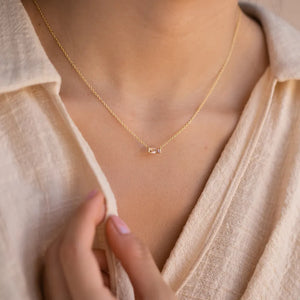

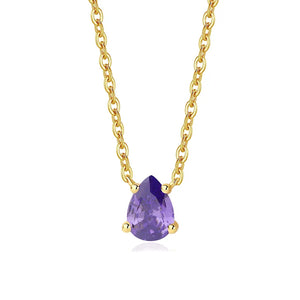

The piece they're describing → Birthstone Charm Necklace for Women — Baguette CZ Pendant, 18K Gold Plated
Personalize Yours


