


The name says everything: aqua marinus — water of the sea. Aquamarine is one of the few gemstones where the name alone communicates the meaning. The stone is the colour of the sea on a clear day — blue-green at its palest, deep ocean blue at its finest — and its symbolism maps directly onto what water has always represented: clarity, flow, calm, and the courage to keep moving through whatever lies ahead.
Ancient sailors carried aquamarine as protection at sea. Romans believed it was the treasure of mermaids washed ashore as a gift to travellers. Medieval physicians used it to calm anxiety. In 1953, Queen Elizabeth II received a suite of aquamarine jewels as a coronation gift from Brazil — a country that still produces the world's finest aquamarine. The stone's association with royalty, courage, and enduring clarity spans cultures and millennia.
Less widely known: aquamarine is part of the beryl mineral family — the same family as emerald and morganite. Same crystal structure, different trace elements producing the colour. That geological kinship has influenced how multiple traditions frame aquamarine's energy: where emerald brings abundance and heart-centred growth, aquamarine brings clarity and flow. Same family, complementary energies.
What Is Aquamarine?
Aquamarine is a variety of beryl (beryllium aluminium silicate) coloured by trace amounts of iron. The blue-green to deep blue colour comes specifically from iron in a reduced oxidation state — Fe²⁺ (ferrous iron) produces blue-green, while a mix of Fe²⁺ and Fe³⁺ produces the deeper blue tones. This is why heat treatment (which drives off the yellow component of Fe³⁺) can deepen a blue-green aquamarine to a purer, more valuable blue.
Related reading: light blue gemstones compared — a full breakdown of aquamarine, sky blue topaz, blue chalcedony, larimar, and celestite on hardness, price, and meaning.
Key properties:
- Hardness: Mohs 7.5–8 — harder than rose quartz and garnet; excellent for rings and all daily-wear formats
- Density: 2.72 g/cm³ — slightly heavier than quartz varieties
- Cleavage: Imperfect — more durable in daily wear than stones with perfect cleavage (like topaz)
- Transparency: Typically eye-clean — aquamarine rarely shows visible inclusions, unlike most coloured gems
- Treatment: Most aquamarine is heat-treated to reduce yellow-green tones and produce a purer blue. This is industry-standard, permanent, and widely accepted

Aquamarine Quality & Origin Guide
This is the section most articles skip entirely — but colour quality and origin affect both the stone's value and (in crystal tradition) its energetic intensity. Not all aquamarine is the same.
| Origin / Grade | Colour | Quality Level | Notes |
|---|---|---|---|
| Santa Maria (Brazil) | Deep, vivid, pure blue | Premium — "Santa Maria blue" | Named after the Santa Maria de Itabira mine in Minas Gerais. The most valuable aquamarine colour grade. Less blue-green, more pure blue. |
| Espirito Santo (Brazil) | Medium blue, sometimes lighter | Good — slightly less saturated than Santa Maria | Brazil produces the majority of the world's aquamarine. Espirito Santo stones are beautiful but less intensely saturated than Santa Maria grade. |
| Pakistan (Karakoram) | Very pale to medium blue-green | Good quality crystals, less saturated colour | Pakistani aquamarine is often found as large, clear crystals used for collector specimens. Colour is typically lighter and more blue-green. |
| Mozambique / Madagascar | Medium blue, good saturation | Good — growing supply of quality stones | African aquamarine has grown in prominence as Brazilian production has become more variable. Can produce fine, well-saturated stones. |
| Heat-Treated (any origin) | Purer blue (yellow-green removed) | Standard — industry-accepted treatment | The vast majority of commercially available aquamarine is heat-treated to remove the yellow-green component and produce a purer, more stable blue. Permanent and undetectable without lab testing. Widely accepted and expected. |
| Untreated Natural Blue | Blue-green (natural, unenhanced) | Collector/premium — commands a premium for certified untreated | Some buyers prefer unheated stones for both collector value and purity. A GIA certificate confirming "no heat treatment" adds significant value. |
The colour rule: Deeper, more saturated blue = more valuable, both commercially and in the crystal tradition where colour intensity correlates with energetic intensity. A pale, washed-out aquamarine carries the same symbolism as a deep Santa Maria blue — but the connection to that meaning is more visceral with the richer stone. When choosing for meaning and jewellery quality both, aim for medium to deeply saturated blue over pale blue-green.
Aquamarine Meaning & Symbolism
Aquamarine's meaning has been consistent across every culture that has prized it — which is remarkable given the geographic range. From ancient Sumer to Rome to the Royal Family of England, the stone means the same thing: the water's qualities applied to the inner life.
Calm and Serenity
The most universal meaning. A calm sea allows for clear navigation; a stormy one obscures everything. Aquamarine carries the energy of the calm sea — not absence of depth or danger, but mastery of it. The stone's colour is physiologically calming: blue-green wavelengths have the lowest arousal effect of any colour in the visible spectrum. The stone's visual nature reinforces its symbolic nature.
Clarity and Communication
Aquamarine is perhaps the primary crystal for the throat chakra — the energy centre governing authentic expression, clear communication, and the ability to speak one's truth without distortion by fear or confusion. This is the meaning most directly applicable to daily life: wearing aquamarine as a reminder to communicate clearly, listen openly, and speak from a place of centred calm rather than reactivity.
Courage and Steadiness
This is the less-discussed meaning that the historical record supports clearly. Roman soldiers carried aquamarine before battles — not for aggression, but for steadiness. The stone's energy is the courage of the open sea: the sailor who commits to the voyage, who keeps going through bad weather, who trusts the horizon. It's not reckless bravery but calm, grounded resolve. Aquamarine is recommended for people facing difficult transitions, sustained challenges, or situations that require sustained courage over time.
Protection and Safe Passage
The most ancient layer of aquamarine's meaning. Sailors have carried this stone for at least 4,000 years — Greek, Roman, and Egyptian sailors alike believed it would ensure safe passage across water. In practice, "protection during travel" has expanded to encompass protection during any major life transition — not just physical journeys but emotional ones. The stone is often recommended to people embarking on significant changes.
Love, Fidelity, and Long Partnership
Aquamarine is associated with the 19th wedding anniversary (see below) and with love that has the qualities of deep water: enduring, clear, and not easily disturbed by surface turbulence. It's the love stone for long relationships — not the fire of early passion but the steady, deep loyalty of genuine partnership. Roman couples exchanged aquamarine as a symbol of the love that would remain calm and clear through the full arc of a life together.

Aquamarine and the Throat Chakra
Aquamarine is the primary gemstone of the throat chakra (Vishuddha in Sanskrit) — the fifth energy centre, located at the base of the throat, governing authentic communication, self-expression, speaking one's truth, active listening, and creative expression through words, voice, and writing.
A balanced throat chakra means you can say what you mean clearly and kindly, listen to others without needing to control the narrative, express creativity through your voice and words, and set verbal boundaries without aggression. An imbalanced throat chakra manifests as chronic difficulty speaking up, fear of honest conversation, talking too much to compensate for not saying what you mean, or the opposite — silencing yourself habitually.
The blue colour family is the throat chakra's colour — and aquamarine's blue-green is the most direct visual correspondence. Wearing aquamarine at the throat level (as a pendant or choker necklace) is the most traditional application in chakra work.
Aquamarine also has secondary associations with the heart chakra — the beryl family connection to emerald's heart energy. This makes aquamarine a bridging stone between heart-centred intention and voiced expression: feeling something clearly and being able to communicate it.
Aquamarine Through History
Ancient world (3000+ BC): The oldest documented aquamarine use comes from ancient Sumer and Egypt, where the stone appeared in jewellery and amulets. Egyptian connection to water — as the source of all life via the Nile — made aquamarine sacred. It appeared in the pectoral ornaments of high priests and in burial jewellery.
Ancient Rome: Roman soldiers and sailors carried aquamarine as both protection and good luck. The Roman belief was specific: the stone would appease Neptune (god of the sea) and ensure safe passage. Aquamarine was also used as a corrective lens — the Romans discovered that looking through polished aquamarine improved vision, making it the world's first eyeglass material. (The blue-green tint reduced glare similarly to modern tinted lenses.)
Art Deco era (1920s–1930s): Aquamarine had a significant artistic renaissance during Art Deco. The movement's emphasis on geometric form, cool tones, and clarity of design found natural expression in aquamarine. The large, step-cut aquamarines that defined Art Deco jewellery remain among the most admired aquamarine pieces ever made. Eleanor Roosevelt received an Art Deco aquamarine suite that became one of her most famous jewels.
Queen Elizabeth II (1953): Brazil gifted Queen Elizabeth II a complete parure of aquamarine jewellery for her coronation in 1953 — necklace, earrings, and bracelet. The gift was received with such enthusiasm that Brazil added a tiara to the suite in 1957. The Brazilian Aquamarine Parure became one of the most recognisable pieces in the Royal Collection. Brazil's association with the finest aquamarine, and the royal association with this stone, contributed significantly to aquamarine's 20th-century prestige.
Aquamarine as the March Birthstone — and 19th Anniversary Stone
Aquamarine is the primary birthstone for March, officially recognised by the American Gem Society and Jewelers of America. It shares the month with bloodstone — an older, traditional assignment — but aquamarine is the dominant modern choice. As a March birthstone, it sits in an interesting position: March marks the transition from winter to spring, the moment when ice becomes water, when things begin to move and flow again. Aquamarine's energy of clarity and forward movement is particularly apt for this transition point.
Aquamarine is also the traditional gemstone for the 19th wedding anniversary. The 19th anniversary is a less-celebrated milestone than 20th, but the aquamarine symbolism makes it meaningful: 19 years of partnership is deep water — the relationship has navigated real weather and has the clarity and calm of seasoned love. The "aqua" anniversary stone captures this perfectly.
For Pisces birthdays specifically (February 19–March 20), aquamarine has additional resonance — Pisces is the water sign, governed by Neptune, and aquamarine is literally the stone of the sea. For Pisces, the March birthstone is also the zodiac stone, which is rare and gives the connection extra weight.
Aquamarine and the Zodiac
| Sign | Association | Why It Works |
|---|---|---|
| Pisces (Feb 19–Mar 20) | Primary — water sign, Neptune-ruled, March birthstone | The complete alignment: water element, March birth month, Neptune ruling. Aquamarine amplifies Pisces' intuition and emotional depth while grounding their tendency toward drift and confusion with the stone's clarity energy |
| Aquarius (Jan 20–Feb 18) | Secondary — "water-bearer" (though an air sign) | Despite being an air sign, Aquarius is the water-bearer and has long been paired with aquamarine. The stone's clarity and communication energy aligns with Aquarius's intellectual idealism and desire for clear-eyed truth |
| Gemini (May 21–Jun 20) | Secondary — communication-focused, Mercury-ruled | Mercury governs communication, and Gemini is the sign most associated with language, expression, and exchange. Aquamarine's throat chakra energy supports Gemini's natural communicative gifts while helping with their tendency toward superficial expression |
| Scorpio (Oct 23–Nov 21) | Complementary — water sign, depth resonance | Scorpio shares aquamarine's association with depth and the unconscious. Aquamarine's clarity energy can help Scorpio communicate their deep knowing without the habitual withholding or intensity that creates distance |
Aquamarine Crystal Pairings
| Crystal Pairing | Combined Energy | Best For |
|---|---|---|
| Aquamarine + Rose Quartz | Clarity of communication + unconditional love — speaking truth from the heart | Difficult conversations in relationships, emotional honesty work |
| Aquamarine + Amethyst | Communication + spiritual wisdom — expressing what you intuitively know | Creative or spiritual expression, writing and speaking work, decision-making |
| Aquamarine + Moonstone | Clarity + intuition — the sea plus the moon that governs tides | Emotional intelligence, intuitive communication, feminine energy work |
| Aquamarine + Blue Lace Agate | Double throat chakra — amplified communication support | Public speaking, presentations, important conversations, fear of speaking |
| Aquamarine + Clear Quartz | Clarity amplified — clear quartz magnifies whatever stone it's paired with | Deepening any aquamarine intention; manifestation work around clarity and communication |
Aquamarine vs Blue Topaz: What's the Difference?
Blue topaz and aquamarine are frequently confused — both are blue, both are used in fine jewellery, and they can look similar in photographs. Here's the practical comparison:
| Feature | Aquamarine | Blue Topaz |
|---|---|---|
| Hardness | Mohs 7.5–8 | Mohs 8 — similar durability |
| Colour range | Blue-green to deep blue; naturally occurring colour | Sky blue to vivid Swiss blue to London blue; virtually all treated (irradiated) |
| Treatment | Heat treatment (common, accepted) | Irradiation + heat (virtually all commercial blue topaz — colourless topaz is irradiated to produce blue) |
| Price | More expensive per carat — especially fine, deeply saturated stones | Generally more affordable — irradiation treatment makes blue topaz abundant |
| Birthstone | March | December (alongside tanzanite and turquoise) |
| Symbolic meaning | Calm, clarity, communication, courage, protection at sea | Truth, forgiveness, strength, wisdom — different tradition, same blue family |
The choice between them is mainly about colour preference and budget. Blue topaz is more vivid and uniform in colour; aquamarine is softer and more luminous, with the natural variation of a stone that earned its colour without radiation.
How to Choose Aquamarine Jewellery
Colour is everything. The most important factor in aquamarine quality is colour saturation — the deeper and more purely blue (as opposed to blue-green), the more valuable. The "Santa Maria" colour designation refers to the vivid, saturated blue of the finest Brazilian material. When choosing aquamarine for its meaning and beauty both, look for medium to deeply saturated blue, not pale or washed-out blue-green.
Clarity is usually not an issue. Unlike emerald (which almost always has visible inclusions), aquamarine is typically eye-clean — free of visible inclusions. This is one of aquamarine's most practical advantages: you can often get a large, clear stone at an accessible price because inclusions aren't the limiting factor for most commercial material.
Metal pairings by aquamarine colour:
- Deep blue aquamarine: white gold and platinum create a jewellery-magazine contrast — cold blue against cool silver-white. Yellow gold adds warmth and creates a more vintage feel.
- Blue-green aquamarine: yellow gold or rose gold warms the cooler blue-green and prevents the combination from feeling icy. Sterling silver works for everyday minimalist wear.
- Pale aquamarine: rose gold is the most flattering — the warmth of rose gold fills in what the stone's lightness lacks.
Aquamarine Care Guide
Aquamarine is one of the more durable jewellery stones — Mohs 7.5–8, no special vulnerabilities to common household chemicals, and good resistance to impact (imperfect cleavage means it doesn't shatter along planes the way topaz can).
Cleaning: Warm water, mild dish soap, and a soft brush. Rinse thoroughly. Dry with a soft cloth. Safe for ultrasonic cleaners (no inclusions, no treatments that ultrasonic would disturb). Steam cleaning is safe for untreated stones but should be avoided for heat-treated aquamarine if there are any internal fractures (though most commercial aquamarine is fine).
What to avoid: Prolonged strong sunlight can fade the colour over years (same UV mechanism as other coloured stones). Avoid contact with harsh chemical solvents, bleach, or acetone. Store separately from harder stones (diamond, sapphire) that can scratch the surface.
Energetic cleansing: Aquamarine is a water-element stone — running it briefly under cool flowing water is the most traditional energetic cleansing method. Moonlight overnight is also recommended. Avoid prolonged strong sunlight (fading risk). The water cleansing connection is natural: the stone of the sea, returned to water, reset.
Shop at AJLuxe: Aquamarine Pendant Necklace — aquamarine-blue teardrop stone, 925 sterling silver ($34.99) · March Birthstone Necklace — aquamarine infinity pendant ($59.99)
If you love the blue-green color family but want something at a more accessible price point, consider blue apatite. It's often confused with aquamarine for good reason — both share vivid teal-blue tones — but apatite's neon quality is distinctly its own, and it carries a powerful motivation and manifestation energy.
If you're a Pisces (February 19 – March 20), see our dedicated Pisces birthstone guide for the full aquamarine, bloodstone, and jade stone profile for this water sign.
If you're an Aries (March 21 – April 19), aquamarine sits right at the boundary of your birth season — explore our Aries birthstone guide for the full stone profile for this fire sign.
Browse our crystal jewelry collection — sterling silver pendants set with real gemstones, each chosen for meaning and quality.
Shop Aquamarine Jewelry at AJLuxe
Our aquamarine water drop pendant necklace in 925 sterling silver keeps this stone close every day. Ready to shop? Browse all aquamarine necklaces and birthstone jewelry — every piece hypoallergenic, gift-ready, and backed by our 30-day returns.
Ready to explore deeper? Start with the aquamarine healing properties guide for physical, emotional, and spiritual benefits — or read the aquamarine zodiac sign guide to find out which signs benefit most. If you're buying, our aquamarine buying guide covers color grades, treatments, origins, and pricing.
What Are the Birthstones for March? Aquamarine and Bloodstone Compared
March is one of only a few months with two official birthstones: aquamarine, the modern and far more widely worn choice, and bloodstone, the older, traditional stone that predates it by centuries. Both are recognised on the modern birthstone list standardised in the early 20th century by the U.S. jewelry trade, which is why you'll see March jewelry sold under either name — aquamarine dominates today's fine jewelry counters, while bloodstone remains the historical, more collector-oriented option.
Bloodstone (also called heliotrope) is a variety of chalcedony — a cryptocrystalline quartz, unrelated to aquamarine's beryl family. It's dark green, flecked with small red or reddish-brown spots caused by iron oxide inclusions, which is where both its common name and its old legend come from: medieval Christian tradition held that the red flecks represented drops of Christ's blood on stones at the foot of the cross. Long before that, Babylonian and Egyptian carvers prized it as a seal and amulet stone, valued for courage, strength, and vitality — a more grounded, protective energy than aquamarine's calm-water symbolism.
| Feature | Aquamarine | Bloodstone |
|---|---|---|
| Mineral family | Beryl | Chalcedony (quartz) |
| Colour | Blue-green to deep blue, translucent | Opaque dark green with red iron-oxide flecks |
| Hardness (Mohs) | 7.5–8 | 6.5–7 — slightly softer, still durable for daily wear |
| Core symbolism | Calm, clarity, clear communication | Courage, strength, vitality, protection |
| Birthstone status | Modern / primary — the default choice for March jewelry today | Traditional / secondary — older assignment, still valid but less commonly worn |
| Best jewelry use | Necklaces, earrings, rings — faceted, light-catching | Cabochons, seal rings, men's jewelry — opaque, carved |
If you're buying for a March birthday and want one stone that covers both the modern and traditional birthstone, aquamarine is the practical choice — it's more widely available in fine jewelry, easier to pair with everyday metals, and, unlike opaque bloodstone, comes in the faceted, light-catching cuts most people picture when they think "birthstone necklace." Bloodstone is worth seeking out specifically for its deeper historical association and grounding symbolism, particularly in signet rings or carved pieces, but it's a niche rather than an everyday jewelry stone.
Related reading: March Birthstone: Aquamarine vs Bloodstone Guide (2026).
Related reading: March Birthstone: Aquamarine vs Bloodstone Explained (2026).
Frequently Asked Questions
What does aquamarine mean?
Aquamarine means calm, clarity, clear communication, and courage. Its name comes from the Latin "aqua marinus" — water of the sea — and its symbolism maps directly onto the sea's qualities applied to the inner life. The five dimensions of its meaning are: calm and serenity, clarity of mind and vision, authentic communication (throat chakra), steady courage through transitions, and protection during journeys. These meanings have been consistent across ancient Egyptian, Roman, Greek, and modern crystal traditions.
What is the spiritual meaning of aquamarine?
Spiritually, aquamarine is the stone of the throat chakra — governing authentic communication, speaking one's truth, and clear self-expression. It's also associated with connection to the divine through clarity: historically, aquamarine was used as a scrying stone (a tool for seeing truth). Its water element connection aligns it with the realm of intuition, emotion, and the unconscious. Aquamarine is recommended for spiritual practices involving honest self-examination, authentic expression, or clearing communication blocks between yourself and others.
Is aquamarine a good birthstone for March?
Yes — aquamarine is the primary birthstone for March, officially recognised by the American Gem Society and Jewelers of America. The symbolism fits the month well: March is the transition from winter to spring, when things start to move and flow again. Aquamarine's energy of clarity and forward movement — the calm after the storm, the sea on a clear day — is particularly apt for the month when the year begins to open up. For Pisces birthdays specifically, the alignment is even stronger: aquamarine is also the zodiac stone for Pisces.
What chakra is aquamarine associated with?
Aquamarine is the primary stone of the throat chakra (Vishuddha) — the fifth energy centre governing authentic communication, self-expression, and speaking one's truth. Its blue-green colour is the classic throat chakra colour correspondence. Wearing aquamarine as a pendant at the throat level is the most traditional application. It also has secondary heart chakra associations through its beryl family connection to emerald — bridging what you feel in your heart with what you express through your words.
Who should wear aquamarine?
Aquamarine is particularly recommended for Pisces (March birthdays) and has strong secondary zodiac associations with Aquarius, Gemini, and Scorpio. Beyond astrology, it's ideal for anyone who struggles with clear communication or saying what they mean, anyone facing a significant transition or life change, anyone who needs the quality of calm steadiness over an extended challenge, or anyone who responds to the stone's visual energy of clear, open water. There are no traditional restrictions on who can wear aquamarine.
What is the difference between aquamarine and blue topaz?
Both are blue gemstones used in fine jewellery, but they're different minerals with different origins and meanings. Aquamarine is a beryl variety coloured by natural iron — related to emerald and morganite. Blue topaz is colourless topaz that has been irradiated to produce blue colour (virtually all commercial blue topaz is treated this way). Aquamarine tends to be more expensive and has a softer, more luminous blue; blue topaz can be more vivid and uniform. Aquamarine is the March birthstone; blue topaz is the December birthstone.
Is aquamarine a good anniversary gift?
Yes — aquamarine is the traditional gemstone for the 19th wedding anniversary. Nineteen years of partnership is deep water: the couple has navigated real weather together and has the calm clarity of seasoned love. The aquamarine meaning of steady, enduring love and clear-eyed partnership makes it ideal for this milestone. An aquamarine necklace, ring, or earrings in gold or silver is a meaningful choice that connects to both the anniversary tradition and the stone's deeper symbolism of love that flows deep and clear.
What does aquamarine do for communication?
In crystal tradition, aquamarine is used to clear communication blocks, reduce fear of speaking, support honest and direct expression, and help align what you feel internally with what you express externally. It's recommended for public speaking, difficult conversations, creative writing and expression, and any situation where clarity of communication matters. The secular framing: wearing a stone chosen for its association with clear, calm communication — and returning attention to that intention during challenging conversations — is a valid mindfulness practice.
Can aquamarine be worn every day?
Yes. Aquamarine has Mohs hardness 7.5–8 — one of the more durable gemstones, suitable for all jewellery formats including rings. It's more durable for rings than rose quartz, garnet, or pearls. Remove before heavy physical labour or activities where impact is likely. Clean periodically with warm water and mild soap. Avoid prolonged strong sunlight (can fade colour over extended time). Store separately from diamonds or corundum (sapphire/ruby) which can scratch the surface.
What colour is the best aquamarine?
Deeply saturated pure blue is the most valuable and desirable colour — especially the "Santa Maria blue" grade from Minas Gerais, Brazil. The deeper and more purely blue (less blue-green), the higher the value. Pale, washed-out blue-green aquamarine is the most common commercial material. Medium to deep blue is the sweet spot for both beauty and value. For jewellery that balances meaning and quality, choose the most saturated blue in your budget rather than a larger pale stone.
Is aquamarine the same as beryl?
Aquamarine is a variety of beryl — the mineral family that also includes emerald (green beryl), morganite (pink beryl), heliodor (yellow beryl), and goshenite (colourless beryl). All share the same crystal structure; the different colours come from different trace element impurities. Aquamarine's blue-green colour comes from iron. This beryl family kinship is why some traditions associate aquamarine with both the throat chakra (its own energy) and heart chakra qualities borrowed from emerald.
Does aquamarine fade in sunlight?
Prolonged strong direct sunlight can fade aquamarine colour over time — the UV component gradually affects the iron-based colour centres. This isn't a concern for normal wear, but you shouldn't leave aquamarine jewellery in direct sun on a windowsill regularly or wear it to extended outdoor activities in strong sunlight. The fading is slow and cumulative, not immediate. Store out of strong direct light. For energetic cleansing, running water is safer and more thematically appropriate for aquamarine than sunlight methods.
How do I tell if aquamarine is real?
Several tests: (1) Temperature — real aquamarine (a beryl) stays noticeably cool; glass warms quickly to body temperature. (2) Colour uniformity — natural aquamarine has gentle colour gradation; dyed glass or synthetic stones often have perfectly uniform colour throughout. (3) Hardness — aquamarine scratches glass easily (Mohs 7.5–8 vs glass at 5.5); glass does not scratch glass well with a crystal. (4) Clarity — aquamarine is almost always eye-clean with no visible inclusions, but bubbles in glass are spherical and round, never present in real aquamarine. (5) For certainty, a GIA certificate or lab report confirms identity. Most reputable jewellers offer certified stones for higher-value purchases.
Shop Aquamarine Jewelry at AJLuxe
All pieces are 18K gold plated over 925 sterling silver — hypoallergenic and gift-ready with free US shipping.
- Personalized jewelry — birthstone necklaces and custom gemstone pieces
- Gemstone necklaces — aquamarine and crystal pendants
- Gemstone earrings — everyday crystal earrings
- Gifts for mom — meaningful gemstone gifts
Free US shipping · 30-day returns · Gift-ready packaging included
Aquamarine is the primary birthstone for March. Our March birthstone guide covers aquamarine alongside March's second stone, bloodstone — including the Dom Pedro aquamarine (10,363 carats, Smithsonian), how to choose quality, and gift ideas for March birthdays.
Written by the AJLuxe team. Last updated: July 2026.
Aquamarine is the birthstone of Pisces — one of the three water signs in astrology.
All third-party trademarks, brand names and product names are the property of their respective owners. AJLuxe is not affiliated with, endorsed by, sponsored by, or otherwise connected to any third-party brand referenced in this article. Brand names are used solely for accurate comparative reference, and material descriptions reflect each brand's own published product specifications at the time of writing.
You Might Also Like
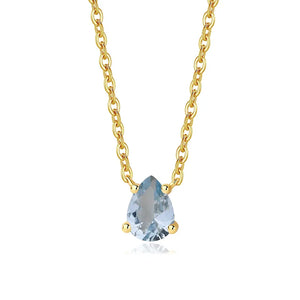
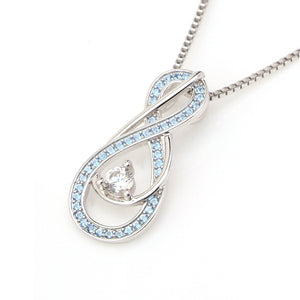
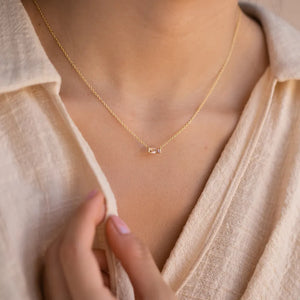

The piece they're describing → Aquamarine Pendant Necklace for Women — Teardrop Aquamarine Stone, 925 Sterling Silver
Personalize Yours


