


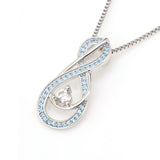
- Aquamarine, sky blue topaz, blue chalcedony, larimar, and celestite are the main light blue gemstones.
- Aquamarine (Mohs 7.5–8) is the only official light blue birthstone (March) and gets its blue-green color naturally from trace iron, though most is heat-treated to purify the tone.
- Sky blue topaz (Mohs 8) is the palest of topaz's three blue grades — swiss blue and london blue are darker and belong to a different "blue gemstone" conversation.
- Larimar is the rarest: it comes from one location on Earth, the Dominican Republic, per GemSelect's gemologist-reviewed guide.
- Celestite is the palest, softest of the five (Mohs 3–3.5) — genuinely sky blue, but too fragile for daily wear.
- Blue chalcedony and larimar and celestite aren't tied to any official birthstone month.
"Light blue gemstone" covers more ground than most shoppers expect — it isn't one gemstone, it's a color family spanning five genuinely different minerals at very different price points and hardness levels. Aquamarine is the one with real birthstone credentials. Sky blue topaz is its more affordable, lab-enhanced cousin. Blue chalcedony brings a soft, translucent glow. Larimar and celestite are the rarest and most delicate of the group — one found in a single place on the planet, the other almost too soft to wear. This guide compares all five on hardness, price, and meaning, and clears up which one is actually a birthstone.
Light Blue Gemstones Compared
The table below lines up the five light blue gemstones most likely to show up when you're shopping — mineral family, Mohs hardness (how well a stone resists scratching), typical price range, and what each one is actually known for.
| Gemstone | Mineral Family | Mohs Hardness | Typical Price | Known For |
|---|---|---|---|---|
| Aquamarine | Beryl | 7.5–8 | $$ — rises with size and saturation | March birthstone; naturally blue-green |
| Sky Blue Topaz | Topaz (silicate) | 8 | $ — very affordable | Palest of topaz's 3 blue grades; associated with December |
| Blue Chalcedony | Chalcedony (quartz), translucent | 6.5–7 | $ — affordable | Soft powder-blue glow; not a birthstone |
| Larimar | Pectolite | 4.5–5 | $$–$$$ — genuinely rare | Found in one location on Earth; volcanic-blue swirls |
| Celestite | Strontium sulfate | 3–3.5 | Collector pricing, not jewelry-grade | Palest true sky blue; too soft for daily wear |
Aquamarine
Aquamarine is the most widely available true light blue gemstone, and the only one on this list with official birthstone status. It's a variety of beryl — the same mineral family as emerald — colored a pale blue to blue-green by trace iron. Per the American Gem Society, aquamarine's color is typically light in tone, with more intense saturation showing up mainly in larger stones, which is part of why the palest, most delicate shades are so closely tied to the "light blue gemstone" search in the first place. Unlike blue topaz, which gets its color from lab irradiation of a colorless stone, aquamarine starts out naturally blue-green from trace iron — though most aquamarine on the market is still heat-treated to drive off a yellow tint and purify the blue, an industry-standard, permanent, and widely disclosed process. At Mohs 7.5–8, it's durable enough for daily-wear rings and necklaces. Aquamarine is the official March birthstone and a traditional 19th-anniversary gift. Its name comes from the Latin for "water of the sea."
Sky Blue Topaz
Sky blue topaz is the palest of the three shades blue topaz comes in — swiss blue sits in the middle, and london blue is the deepest and most valuable, closer to the darker "blue gemstone" family than to this one. Almost none of it reaches the market in its natural color: per GemSelect's guide, virtually all blue topaz sold today started as colorless topaz and was turned blue through irradiation and heat treatment, a well-established and disclosed industry process, not a defect. At Mohs 8, it's actually harder than aquamarine, and per GemSelect it's one of the most affordable gemstones on the market regardless of shade. Blue topaz is one of the stones associated with the December birthstone list alongside turquoise and tanzanite — see AJLuxe's December birthstone guide for the full picture.
Blue Chalcedony
Blue chalcedony is a translucent variety of chalcedony, the same microcrystalline quartz family behind red jasper and carnelian, just in a soft powder-blue instead of red. Per GemSelect's guide, it typically reads as translucent light white-to-bluish, and takes an excellent polish, which gives well-cut pieces a gentle inner glow rather than sharp brilliance. At Mohs 6.5–7, it's tough enough for regular wear. It isn't tied to any official birthstone month, but it's one of the more affordable and widely available light blue stones, valued for its soft, understated color rather than rarity.
Larimar
Larimar is the rarest stone on this list by a wide margin: per GemSelect's guide, it's found in only one location on the entire planet — a mountainous stretch of the Dominican Republic — making it "extremely hard to find in any other area of the world." It's a blue variety of the mineral pectolite, with color that ranges from a pale white-blue through medium sky-blue to a deeper volcanic blue, often swirled together in the same stone the way ocean water shifts shade over a reef. At Mohs 4.5–5, it's noticeably softer than aquamarine or topaz, so it suits pendants and earrings better than daily-wear rings. It isn't an official birthstone for any month, but its single-source rarity makes it one of the most distinctive light blue stones in jewelry. For its full symbolism and metaphysical meaning, see our dedicated larimar meaning guide.

Celestite
Celestite, also called celestine, is arguably the palest, truest "sky blue" of every stone on this list — and the one you're least likely to see set in jewelry. Chemically it's strontium sulfate, a mineral prized by collectors for pale blue crystal clusters (Madagascar specimens are especially sought after) rather than as a cut gem. At Mohs 3.0–3.5 with perfect cleavage, it's genuinely fragile: soft enough to scratch easily and prone to splitting along flat planes under normal wear-and-tear pressure. Some pieces are cut as pendants or cabochons, but it's better suited to display than to a ring or bracelet worn daily. It carries no official birthstone status.
Which Light Blue Stone Is Actually a Birthstone?
Only aquamarine has unambiguous, universally recognized light blue birthstone status — it's officially assigned to March by both the American Gem Society and the broader jewelry trade. Sky blue topaz sits in a real but slightly less clear-cut spot: it's long been associated with December alongside turquoise and tanzanite in jewelry-industry birthstone lists, including AJLuxe's own December birthstone guide, even though the more recent official add-on to that month was tanzanite specifically. Blue chalcedony, larimar, and celestite aren't assigned to any month at all — they're genuinely light blue and worth owning on their own merits, just not as a birthstone gift. If you're shopping by birth month specifically, AJLuxe's March birthstone guide covers aquamarine in full.
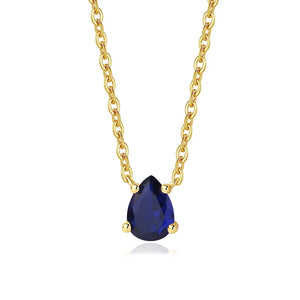
If you like the classic look of a light blue gemstone, AJLuxe's March Aquamarine Infinity Necklace ($59.99) sets a genuine aquamarine-toned pendant in 925 sterling silver — hypoallergenic, built for daily wear, and a real March-birthstone piece rather than a generic blue crystal. Want a single teardrop stone instead of the infinity shape? AJLuxe's Aquamarine Pendant Necklace ($34.99) sets the same pale blue stone in a plain prong setting. Prefer a deeper, more traditional blue instead of pale aquamarine? AJLuxe's September Sapphire Infinity Necklace and December Turquoise Infinity Necklace both sit further into the richer end of the blue spectrum.
Frequently Asked Questions
What is the sky blue stone called?
A few different stones go by "sky blue." Aquamarine is the classic naturally light blue gemstone, and "sky blue topaz" is the specific trade name for the palest of blue topaz's three treated shades (versus the darker swiss blue and london blue). Celestite is named directly for its pale, sky-like blue color, though it's rarely cut for jewelry.
What is the name of the light blue birthstone?
Aquamarine. It's the official March birthstone according to the American Gem Society, with a hardness of 7.5 to 8 on the Mohs scale and a color that runs from pale blue to blue-green.
What is the pale blue stone?
Several stones qualify as genuinely pale blue: aquamarine, blue chalcedony, sky blue topaz, and celestite all present in soft, light blue tones, though they're unrelated minerals from different families rather than variations of one "pale blue stone."
What is the rarest light blue stone?
Larimar, by a wide margin. Per GemSelect's gemologist-reviewed guide, it's found in only one location on Earth — a specific region of the Dominican Republic — which makes genuine larimar significantly harder to source than aquamarine, topaz, or chalcedony.
Which gems are light blue?
Aquamarine, sky blue topaz, blue chalcedony, larimar, and celestite are the main light blue gemstones used in jewelry and mineral collecting. They're unrelated minerals from different families that simply share a color family, not variations of one "light blue stone" species.
Is blue topaz a real birthstone?
Yes, in the sense that it's long appeared on December's birthstone list alongside turquoise and tanzanite in jewelry-industry charts, including AJLuxe's own December birthstone guide — though the more recently added official December stone specifically is tanzanite. Blue topaz has no birthstone tie for any other month.
Can celestite be worn as jewelry?
Not for everyday wear. At Mohs 3.0 to 3.5 with perfect cleavage, celestite is soft and prone to splitting along flat planes under normal pressure, which is why it's collected mainly as a display mineral rather than cut for rings or bracelets. Occasional pendants or cabochons exist, but they need far gentler handling than a stone like aquamarine or topaz.
All third-party trademarks, brand names and product names are the property of their respective owners. AJLuxe is not affiliated with, endorsed by, sponsored by, or otherwise connected to any third-party brand referenced in this article. Brand names are used solely for accurate comparative reference, and material descriptions reflect each brand's own published product specifications at the time of writing.
You Might Also Like
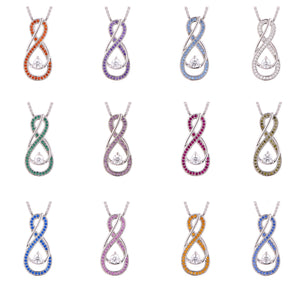
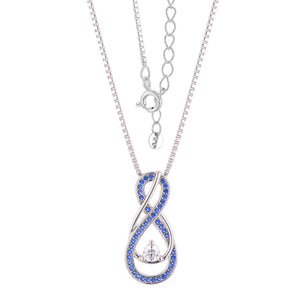
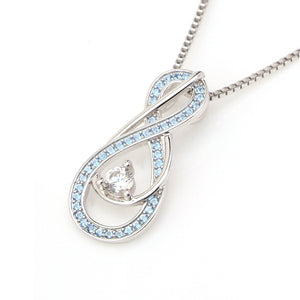
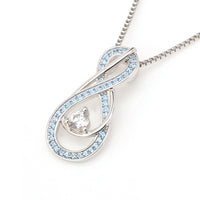
The piece they're describing → March Birthstone Necklace for Women — Aquamarine Infinity Pendant, 925 Sterling Silver
Personalize Yours


