


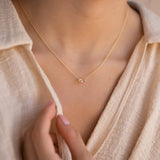
A birthstone necklace is a pendant necklace set with the gemstone for the wearer's birth month, usually in a simple bezel or prong setting on a chain. It symbolizes identity, protection and connection, and each month's stone has its own meaning: garnet for protection in January, ruby for passion in July, sapphire for wisdom in September.

The question "what does a birthstone necklace mean?" has a short answer and a long one. The short answer: it's a piece of jewelry tied to the month you were born, and each stone carries its own symbolic meaning. The long answer involves thousands of years of human history, ancient beliefs about gemstone power, and a surprisingly recent standardization process that most people don't know about. This guide covers all of it, the history, what each stone symbolizes, what your stone says about you, and why birthstone necklaces have become one of the most meaningful gifts you can give or receive.
What Is a Birthstone Necklace?
A birthstone necklace is a pendant necklace featuring the gemstone associated with the wearer's birth month. The stone is set in a pendant, usually a simple bezel or prong setting, and hung on a chain. That's the physical description. The meaning goes deeper.
Choosing one? Our guides to how to choose a birthstone necklace and the best birthstone necklaces cover styles and settings.
Birthstones are assigned to each of the twelve calendar months. Wearing your birthstone is a tradition that spans cultures and centuries. It connects you to a gemstone that carries specific symbolic qualities, qualities that generations of people have associated with that stone through art, religion, and mythology.
Today, a birthstone necklace serves two purposes. It's a piece of personal identity, something that represents you specifically, not just anyone. And it's a gift language. When you give someone their birthstone, you're communicating that you know something personal about them, and that you chose this gift because of who they are.

What Your Birthstone Necklace Says About You
A birthstone necklace isn't just jewelry, it's a declaration of identity. Each stone carries centuries of meaning tied to the month you were born, and wearing yours is a quiet statement about who you are.
| Month | Birthstone | What It Says About You |
|---|---|---|
| January | Garnet | Passionate, loyal, deep, you love fiercely and protect what matters |
| February | Amethyst | Intuitive, calm, spiritual, you see what others miss |
| March | Aquamarine | Flowing, brave, clear-headed, you move through change with grace |
| April | Diamond | Resilient, brilliant, unbreakable, you shine under pressure |
| May | Emerald | Abundant, growth-oriented, wise, you bloom in every season |
| June | Alexandrite | Adaptable, rare, multi-faceted, you contain multitudes |
| July | Ruby | Bold, passionate, courageous, you lead from the heart |
| August | Peridot | Optimistic, light-bringer, joyful, you make every room brighter |
| September | Sapphire | Wise, faithful, focused, you play the long game |
| October | Tourmaline | Creative, expressive, multi-dimensional, you defy easy labels |
| November | Citrine | Warm, magnetic, abundant, you attract what you focus on |
| December | Tanzanite | Rare, transformative, visionary, you see the future first |
The History of Birthstones: Where Did This Tradition Come From?
The birthstone tradition is older than most people realize, and its origin isn't what most people expect.
The Biblical breastplate (circa 1200 BCE): The oldest connection between gemstones and calendar systems appears in the Book of Exodus. The High Priest Aaron wore a breastplate embedded with twelve gemstones, each representing one of the twelve tribes of Israel. Ancient scholars, including the historian Josephus in the first century CE, connected these twelve stones to the twelve months of the year and the twelve signs of the zodiac.
Ancient civilizations: Egyptians, Greeks, and Romans all believed gemstones carried mystical properties. They wore specific stones to invoke protection, luck, and favor from the gods. The stone you wore changed depending on the season, not unlike a modern wardrobe rotating by occasion.
Medieval Europe: Astrologers in the 8th and 9th centuries began assigning specific gems to birth months as a formalized system. Wearing your birth month's stone was believed to amplify its powers at the time of year most connected to it.
The 1912 standardization: Everything changed when a national jewelers' trade association published the first official standardized birthstone list in 1912. That list established the stone-to-month pairings still used today. It was updated in 2002 to add tanzanite for December and spinel for August, but the core list has remained stable for over a century.
What's notable about 1912 is that the association wasn't creating tradition, it was documenting one that already existed. It was formalizing centuries of practice into a single agreed-upon list.
What Each Birthstone Symbolizes: The Complete Guide
Each stone's symbolism comes from centuries of accumulated meaning, mythology, religious symbolism, and the physical properties of the stone itself (color, rarity, hardness). Here is the complete breakdown:
| Month | Birthstone | Core Symbolism | Historical Association |
|---|---|---|---|
| January | Garnet | Protection, strength, safe travel | Medieval warriors carried garnet into battle for protection |
| February | Amethyst | Peace, clarity, sobriety | Ancient Greeks believed amethyst prevented intoxication |
| March | Aquamarine | Serenity, courage, clear communication | Sailors carried aquamarine for calm seas and safe voyages |
| April | Diamond | Love, purity, invincibility | Ancient Romans believed diamonds were fragments of falling stars |
| May | Emerald | Growth, fertility, hope, renewal | Cleopatra famously prized emeralds above all other gems |
| June | Pearl / Alexandrite | Wisdom, purity, new beginnings | Ancient Greeks believed pearls were tears of the gods |
| July | Ruby | Passion, vitality, protection from evil | Ancient Hindus called ruby "the king of precious stones" |
| August | Peridot / Spinel | Renewal, positivity, protection from nightmares | Ancient Egyptians called peridot "the gem of the sun" |
| September | Sapphire | Loyalty, wisdom, divine favor | Medieval clergy wore sapphires to symbolize heaven |
| October | Opal / Tourmaline | Creativity, inspiration, hope | Romans considered opal the most precious of all gems |
| November | Citrine / Topaz | Joy, abundance, healing | Ancient Egyptians believed citrine was a gift from the sun god Ra |
| December | Turquoise / Tanzanite / Blue Zircon | Healing, protection, good fortune | Native Americans used turquoise in sacred ceremonies for centuries |
Want to go deeper on any specific stone? Our complete guide to birthstone jewelry explores each gem's properties in detail, along with styling tips for each month.
What Your Birthstone Says About You
Beyond general symbolism, each birthstone has long been associated with distinct personality traits, a kind of gemstone character portrait. These associations come from centuries of cultural mythology and remain one of the most popular ways people connect with their stone today.
- Garnet (January): Loyal, protective, energetic. You're the person people call when things get difficult, dependable to the core.
- Amethyst (February): Thoughtful, intuitive, calm under pressure. You process deeply before you act, and people trust your judgment.
- Aquamarine (March): Communicative, peaceful, adaptable. You navigate conflict with grace and have a gift for making people feel heard.
- Diamond (April): Strong, clear-minded, driven. You don't bend easily, and you pursue what matters with focus others admire.
- Emerald (May): Growth-oriented, hopeful, generous. You're drawn to new beginnings and have an innate belief that things can always get better.
- Pearl / Alexandrite (June): Wise, balanced, adaptable. Like alexandrite's color-changing nature, you read the room and adjust, while keeping your core values intact.
- Ruby (July): Passionate, courageous, magnetic. You feel everything deeply and bring intensity to whatever you care about.
- Peridot (August): Optimistic, confident, resilient. Difficulties don't stop you, they become the next thing you overcome.
- Sapphire (September): Wise, principled, trustworthy. You think before you speak, and when you do speak, people listen.
- Opal / Tourmaline (October): Creative, expressive, multi-dimensional. You see the world in more colors than most people, and you bring that vision into everything you make.
- Citrine / Topaz (November): Joyful, generous, abundant. Your optimism is genuine, you genuinely believe good things are coming, and often they do.
- Turquoise / Tanzanite (December): Healing, grounded, protective. You bring calm to chaotic spaces and have a rare ability to make others feel safe.
These aren't horoscopes, they're centuries-old cultural associations passed down through mythology, art, and tradition. Whether you hold them literally or treat them as poetic shorthand, they add a layer of intention to wearing and gifting birthstone jewelry.
Healing and Metaphysical Properties of Birthstones
Across cultures and centuries, birthstones have been credited with specific healing and metaphysical properties. These beliefs span ancient Egyptian, Greek, Hindu, and Native American traditions, long before modern gemology existed as a field.
Some of the most historically documented associations:
- Garnet: Believed to regulate circulation and promote energy. Medieval physicians prescribed it for blood disorders.
- Amethyst: Associated with calming anxiety and promoting sleep. Ancient Greeks drank from amethyst cups believing it prevented intoxication.
- Aquamarine: Linked to throat and communication issues in many traditions. Sailors carried it for protection at sea.
- Emerald: Associated with eyesight and fertility in ancient Egypt. Cleopatra's emerald mines were among her most prized possessions.
- Ruby: Believed to protect against evil and disease. Ancient Hindus buried rubies under building foundations for good fortune.
- Sapphire: Associated with wisdom and mental clarity. Medieval clergy wore sapphires as symbols of heaven and divine favor.
- Turquoise: One of the oldest healing stones in human history. Native American and Persian traditions both credit it with protection and good fortune.
Modern science doesn't validate gemstone healing properties. But that doesn't diminish their cultural weight, the symbolism embedded in these stones spans thousands of years of human belief, and that accumulated meaning is real regardless of its metaphysical basis. When you give someone their birthstone, you're also giving them that entire history.


What It Means to Give Someone a Birthstone Necklace
Giving a birthstone necklace is a specific kind of gift. It communicates something words often can't: I know you. Not just your name, your face, your tastes in general, your birth month. Something specific.
That specificity is what separates a birthstone necklace from a generic jewelry gift. When you give someone their stone, you're giving them something no one else receives. Someone born in July gets a ruby. That's theirs. It's not transferable to a different person without changing its meaning entirely.
Personalized pieces are popular because people have grown tired of gifts that feel interchangeable. A birthstone necklace solves that problem at its root: it's personalized by definition.
There's also an emotional layering at work. When someone wears a birthstone necklace every day, they carry a symbol of their identity with them. When a partner gives their own birthstone instead of the recipient's, it works as a romantic token, "wear a piece of me." Parents often give their children their own birthstones as a milestone gift. Friends exchange them as symbols of knowing each other.
Natural vs. Lab-Created Birthstones: Does It Change the Meaning?
This question comes up often and the answer is simpler than people expect: no, it doesn't change the meaning.
A lab-created ruby carries exactly the same chemical composition as a mined ruby. The color is identical. The hardness is the same. The symbolism, passion, protection, vitality, is entirely intact. What differs is the origin and typically the price.
Natural gemstones form over millions of years under geological pressure. Lab-created stones are grown in controlled environments over weeks using the same chemical process. Both are real gemstones. Gemological labs grade both natural and lab-created stones on the same quality standards.
For a birthstone necklace, particularly one given as a gift, lab-created stones make a lot of sense. The color is often more vivid, the price is significantly lower, and the symbolic meaning is completely preserved. The difference matters most to collectors and investors in fine jewelry. For everyday wear and gifting, the stone is the stone.
Can You Wear Someone Else's Birthstone?
Yes, and this practice has deep roots in how people use birthstone jewelry today.
Many people wear the birthstone of someone they love: a parent, a child, a partner. The stone becomes a way of carrying that person with you. A mother wearing all her children's birthstones on a single necklace is one of the most common personalized jewelry requests.
Some traditions hold that wearing your own birthstone brings its symbolic benefits to you, protection, clarity, vitality. Wearing someone else's stone is a different kind of intention: you're honoring that person, not invoking the stone's properties for yourself. Both are valid. The meaning is in the intention you bring to it.
For couples, some choose to wear each other's birthstones as a visible symbol of their bond. This works particularly well as a necklace, both partners wear the other's stone, and together they carry each other.
Browse our birthstone necklace collection for pieces designed for everyday wear, gifting, and stacking.
Why the Metal Matters for Birthstone Jewelry
The stone carries the symbolism. The metal carries the stone, and it determines how long the piece stays beautiful.
925 sterling silver is the long-standing standard for quality silver jewelry. The "925" mark means the piece is 92.5% pure silver, which is durable and holds its finish well, and it is a common choice for people with sensitive skin. No alloy should be assumed nickel-free, so if your allergy is severe, check the details first.
The base metal and finish differ by piece. Some AJLuxe birthstone necklaces are 925 sterling silver and others are 18K gold plated, and a plated finish is a surface layer that wears over time, so keep it dry and away from perfume. Each product page names the base metal, so read it before you buy. See our full range in the personalized jewelry collection.
How to Care for a Birthstone Necklace
A birthstone necklace built to last only lasts if you treat it right. The stone and the silver each have specific vulnerabilities, here's how to protect both.
Daily habits that protect your necklace:
- Remove before swimming or showering. Chlorine (pools) and saltwater (ocean) accelerate tarnishing on silver and can damage softer stones like opal, pearl, and turquoise. Even hard stones like sapphire are better kept dry during swimming.
- Apply perfume and lotion before putting it on. The chemicals in fragrances and cosmetics dull sterling silver and weaken plating faster than almost anything else. Let products dry first, then put on your necklace.
- Store separately. Chains tangle and metals scratch each other. A fabric pouch or individual compartment in a jewelry box is all you need.
Cleaning your birthstone necklace:
- For most stones: a soft cloth dampened with warm water and a drop of mild dish soap. Gentle circular motion on the stone and chain. Rinse with clean water. Pat dry completely before storing.
- For opal and pearl: dry cleaning only, a soft cloth, no water. These stones are porous and absorb moisture.
- Avoid ultrasonic cleaners on any stone in a prong setting, the vibration can loosen the setting over time.
Stone hardness matters for daily wear: Sapphire (9 on the hardness scale), ruby (9), and garnet (7 to 7.5) are excellent for everyday wear. Opal (5.5 to 6.5), pearl (2.5 to 4.5), and turquoise (5 to 6) require more careful handling, avoid hard impacts and keep them away from acids and chemicals.
Birthstone Necklaces in the Modern Gifting Context
The tradition is ancient. The gifting behavior is very current.
Birthstone necklaces are now given across a much wider range of relationships and occasions than the traditional "birthday gift" framing suggests. They appear as:
- Mother's Day gifts: Children gifting mothers their birthstones, or mothers wearing all their children's stones on a single piece
- Anniversary gifts: Partners choosing the stone of the year they met, or the month of their anniversary
- Graduation gifts: A birthstone necklace marks the transition to adulthood in a way a cash gift doesn't
- Memorial jewelry: Wearing the birthstone of someone who has passed as a way of keeping them close
- Self-purchase: Women increasingly buy their own birthstone as a personal symbol of identity
The universality of the gifting context, anyone has a birth month, every birth month has a stone, means birthstone jewelry works across every relationship type and every budget. It scales from a modest everyday pendant to a $2,000 diamond solitaire without losing its meaning. The meaning is in the stone, not the price.
For a deeper exploration of specific gifting occasions and how to choose the right piece, see our birthstone necklace guide.
Related reading: Anklet meaning symbolism.
Related reading: Palm tree symbolism.
Related reading: What does wearing a bracelet mean.
Related reading: September Birthstone Guide: Sapphire, Lapis Lazuli & What They Mean (2026).
Frequently Asked Questions
Does wearing your birthstone mean anything?
Traditionally, yes. Many cultures hold that wearing your birth month's stone brings its symbolic qualities, such as protection, clarity or vitality. There is no scientific evidence for any effect, so most people wear it as a personal symbol of identity.
What does the Bible say about birthstones?
The oldest link between gemstones and the calendar is the High Priest's breastplate in the Book of Exodus, set with twelve stones for the twelve tribes of Israel. Later scholars connected those twelve stones to the twelve months, but the Bible itself does not assign stones to months.
What is the most powerful birthstone?
No birthstone is scientifically more powerful than another. In tradition, ruby is linked to vitality and passion, diamond to strength, and garnet to protection, but the most meaningful stone is simply the one tied to the person wearing it.
What does it mean when someone gives you a birthstone necklace?
It means they know your birth month and chose a gift specifically tied to who you are. Unlike generic jewelry, a birthstone necklace can't be given to anyone, it's connected to you specifically. The act of giving it communicates personal attention and intentionality, which is why it's one of the most emotionally impactful jewelry gifts.
What does it mean to wear your own birthstone?
Wearing your own birthstone is a personal symbol of identity. Historically, it was believed to amplify the protective and positive qualities of the stone, wearing your garnet in January, for instance, was thought to maximize its protective powers. Today, it's more commonly understood as a statement of self, a piece of jewelry that represents you specifically, not just anyone.
Is it bad luck to wear a birthstone that isn't yours?
No. This is a common question, and the short answer is there is no credible tradition that assigns bad luck to wearing someone else's birthstone. Many cultures actively encourage wearing the stones of loved ones as a form of connection. The "bad luck" idea is modern folklore without historical basis.
Why are birthstones assigned to months?
The connection between gemstones and months traces to the twelve stones on Aaron's biblical breastplate, which ancient scholars linked to the twelve months and zodiac signs. The formal month-to-stone assignments used today were standardized in 1912 by a national jewelers' trade association, though the underlying tradition is thousands of years old.
What is the most meaningful birthstone to give as a gift?
The most meaningful birthstone is always the recipient's own. The meaning comes from the specificity, it's their stone, tied to their birth month. If you're choosing between two options for the same month (like opal or tourmaline for October), pick the one that matches their personality: opal for creative, expressive personalities; tourmaline for someone who loves vivid color.
Can a birthstone necklace be worn every day?
Yes, especially if it's set in 925 sterling silver. Most birthstones are durable enough for daily wear, sapphire, ruby, garnet, aquamarine, and amethyst are all hard stones that hold up well. Softer stones like opal and pearl require more care (avoid water, chemicals, and hard impacts). A simple sterling silver setting protects the stone from most daily wear.
What do birthstones mean spiritually?
Spiritually, birthstones are believed to amplify specific energies, garnet for protection and strength, amethyst for calm and clarity, emerald for growth and abundance. These associations come from thousands of years of human experience with these stones across multiple cultures. Whether you hold these beliefs literally or treat them as poetic symbolism, the tradition adds a layer of intention to wearing and giving birthstone jewelry.
Are birthstones the same across all cultures?
Not entirely. The Western birthstone list standardized in 1912 is the most widely used today, especially in the U.S. and Europe. But there are also traditional Hindu gemstone systems (Navaratna), Tibetan birthstones, and astrological systems that assign stones to zodiac signs rather than calendar months. Some months have different stones in different traditions. The 1912 list is the global commercial standard, but it isn't the only valid system.
Does the color of a birthstone have meaning?
Yes, color is central to birthstone symbolism. Red stones (ruby, garnet) are universally associated with passion, energy, and protection. Blue stones (sapphire, aquamarine, turquoise) carry connotations of calm, wisdom, and loyalty. Green stones (emerald, peridot) connect to growth, nature, and renewal. Purple stones (amethyst) link to peace, spirituality, and clarity. The color meanings are consistent across most cultural traditions.
How do I choose a birthstone necklace for someone else?
Match the stone to their birth month, that's the foundation. Then choose the metal based on their skin sensitivity (925 sterling silver is a common choice for sensitive skin). For chain length, 18 inches works for nearly everyone. For the setting, simple and minimal works best for everyday wear; more elaborate settings work for special occasions. If their month has two options, choose the one that matches their personal color preferences.
What's the difference between a birthstone and a zodiac stone?
Birthstones are assigned by calendar month, one stone per birth month, based on the 1912 standardized list. Zodiac stones are assigned by astrological sign, which overlaps two months (Aries runs mid-March through mid-April, for example). The stones assigned to zodiac signs come from older astrological traditions and sometimes differ from the modern month-based list. Most people today use the monthly birthstone list; zodiac stones are more common in astrological or crystal healing contexts.
Final Thoughts
A birthstone necklace means something because it's tied to a specific person at a specific moment in time, their birth month, their stone, their symbolism. The tradition is thousands of years old, but the reason it persists is straightforward: people want jewelry that means something. A piece connected to who you are will always carry more weight than one that could belong to anyone.
Browse our birthstone necklace collection to find every birth month, and check each product page for its base metal and finish. Each order ships gift-ready, no extra wrapping needed.
Written by the AJLuxe team, specialists in personalized jewelry. Last updated: October 2026.
Want the full picture? Our birthstone jewelry guide covers all 12 months, the traditional vs. modern stone list, a hardness durability table, care instructions by stone type, and how to choose the right metal and jewelry style for any birthstone.
Choosing the right length? See our Necklace Length Guide for the full breakdown from 14 to 36 inch.
Explore more: Birthstone Jewelry by Month
All third-party trademarks, brand names and product names are the property of their respective owners. AJLuxe is not affiliated with, endorsed by, sponsored by, or otherwise connected to any third-party brand referenced in this article. Brand names are used solely for accurate comparative reference, and material descriptions reflect each brand's own published product specifications at the time of writing.
You Might Also Like
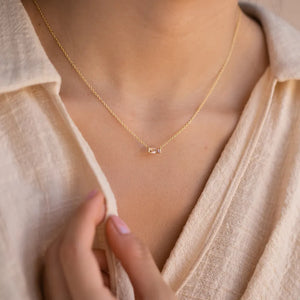
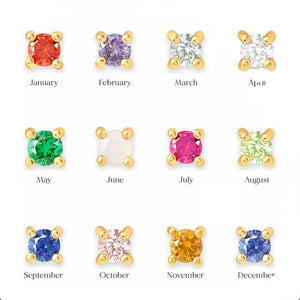
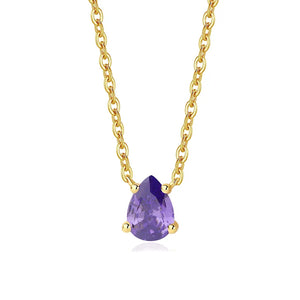
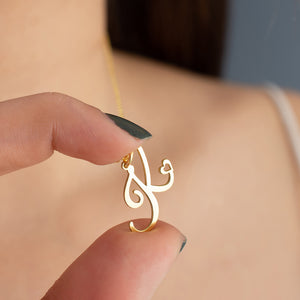

The piece they're describing → Birthstone Charm Necklace for Women — Baguette CZ Pendant, 18K Gold Plated
Personalize Yours


