

• Stone type: Hydrated silica (SiO₂·nH₂O) — a mineraloid, not a true crystalline mineral
• Mohs hardness: 5.5–6 — softer than most jewelry stones; needs careful handling
• Water content: 3–21% — this is what makes opal fragile and unique
• Primary meaning: Creativity, hope, emotional truth, transformation
• Chakra: Crown · Third Eye · Heart (varies by color variety)
• Zodiac: Libra (primary) · Scorpio (secondary)
• Birthstone: October
• Key fact: Australia produces 95–97% of the world's precious opal
No gemstone plays with light like opal does. Hold one under a lamp and it shifts — green to blue to orange to red, all from within the same stone. Pliny the Elder called it "the queen of gems" in 77 AD because it held the colors of every other precious stone in one. That hasn't changed. What has changed is our understanding of exactly why it does what it does — and the answer is more extraordinary than the magic it was once thought to be.
What Is Opal? Science, Structure, and Why It's Unique
Opal is classified as a mineraloid — not a true mineral — because it lacks the ordered crystalline structure that defines minerals. It's hydrated amorphous silica: SiO₂·nH₂O. The "n" represents a variable amount of water, and that water is the key to everything about opal — its color, its fragility, and its care requirements.
| Property | Value |
|---|---|
| Chemical formula | SiO₂·nH₂O (hydrated silica) |
| Classification | Mineraloid (amorphous — no crystal structure) |
| Mohs hardness | 5.5–6 |
| Water content | 3–21% by weight (typically 6–10%) |
| Specific gravity | 2.15 |
| Refractive index | 1.450 (±0.020) |
| Luster | Waxy to resinous |
| Water safe? | Brief contact only — prolonged soaking causes crazing |
Opal forms at relatively low temperatures in rock fissures, where silica-rich groundwater seeps into gaps and slowly evaporates over millions of years — leaving behind a silica gel that hardens into opal. This slow formation over vast timescales is why fine opal is so rare.
How Opal Gets Its Colors: The Science Behind the Magic
The iridescence in precious opal — called play-of-color — isn't caused by pigment or dye. It's pure physics. Precious opal contains millions of microscopic silica spheres, each between 150 and 300 nanometers in diameter, arranged in a near-perfect hexagonal or cubic close-packed lattice. When light enters the stone and hits these evenly-spaced planes of spheres, it diffracts — bending and scattering — according to Bragg's law of diffraction.
Different sphere sizes produce different colors. Spheres around 150nm produce violet. Larger spheres around 300nm produce red. Most precious opals contain a range of sphere sizes, which is why the colors shift as you tilt the stone — different angles reveal different sphere planes. Common opal (with no play-of-color) simply lacks the ordered sphere lattice.
This is what Pliny saw in 77 AD and attributed to divine magic. It's still one of the most visually complex optical phenomena produced by any natural material on earth.
Opal Meaning and Symbolism
Opal's symbolism is anchored in its visual nature. A stone that contains every color is understood — across cultures that never spoke to each other — as a stone that holds every truth, every emotion, every possibility. Its meanings are expansive rather than singular.
| Meaning | What it represents |
|---|---|
| Creativity | Stimulates imagination and original thought; long associated with artists, writers, and inventors |
| Hope | Its ever-shifting color is read as possibility — nothing is fixed, everything can change |
| Emotional truth | Amplifies whatever emotion you bring to it — joy becomes more joyful; grief, more grief-like. Use with intention. |
| Transformation | Supports major life changes and periods of reinvention; the stone of people becoming someone new |
| Prophecy | Ancient Greek and Roman belief that opal granted the gift of foresight and the ability to see clearly |
| Love and desire | Associated with passion, romantic feeling, and attraction — used in love talismans across multiple cultures |
One important note: opal is understood to be an amplifier in many traditions, not a stabilizer. Unlike grounding stones like onyx or obsidian, opal magnifies what's already present. This is why some crystal practitioners suggest wearing it when you're in a good emotional state, and setting it aside during extremely turbulent periods — unless you're consciously using it to surface and process difficult emotions.
The Bad Luck Myth: How One Novel Crashed Opal Sales by 50%
For much of the 19th century, opal had a widespread reputation for bringing bad luck — a reputation that was almost entirely manufactured by a single work of fiction.
In 1829, Scottish novelist Sir Walter Scott published Anne of Geierstein, a historical novel featuring a character named Lady Hermione who wore an enchanted opal that lost its fire when touched by holy water — and whose death followed shortly after. The novel was enormously popular. Within one year of its publication, European opal sales collapsed by roughly 50%, and the market didn't fully recover for decades.
This is one of the most dramatic examples of a single cultural artifact reshaping a gemstone's market in history. The irony is that opal had been considered extraordinarily lucky for most of recorded history before 1829 — Roman senators fought over them, Greek oracles treasured them, and Victorian Queen Victoria actively championed them to push back against the superstition.
The verdict: Opal is not bad luck. The association was invented by a novelist and amplified by a nervous market. If anything, its historical reputation before Scott is one of good fortune, love, and prophetic vision.
Opal Through History and Culture
Ancient Rome: The Queen of Gems
Roman admiration for opal bordered on obsession. Pliny the Elder wrote in 77 AD that opal was the most precious of all gems because it combined "the fire of ruby, the purple of amethyst, the sea-green of emerald" — making it a single stone that contained all others. Roman senators wore opal rings as status symbols. One famous story involves Mark Antony and Senator Nonius: Antony coveted Nonius's 2-carat opal so intensely that he attempted to acquire it by force. Nonius chose exile rather than surrender the stone — and fled Rome with the ring still on his finger.
Ancient Greece: The Stone of Prophecy
Greeks called opal opallios, meaning "to see a change in color," and linked it to the gift of prophecy. Wearing opal was believed to sharpen foresight and protect the wearer from disease. Greek oracles prized it for its association with clear vision and truth-revealing.
Bedouin and Arab Tradition
Bedouin peoples of the Arabian Peninsula believed opal fell from the sky during lightning storms — that it literally carried a fragment of the storm within it. This belief in opal as a "sky stone" made it a powerful protective amulet against lightning strikes, and its use in amulets was widespread across the Islamic world.
Australian Aboriginal: The Rainbow Serpent
In Aboriginal Australian tradition, opal is connected to the Rainbow Serpent — a creator deity whose body carved the rivers and waterholes across the continent. One tradition holds that when the Rainbow Serpent first touched the earth, the ground burst into color beneath it, creating opal. Australia's Lightning Ridge and Coober Pedy are still the world's most significant opal sources — not coincidentally, landscapes of extraordinary geological drama.
Queen Victoria's Opal Campaign
When Walter Scott's novel damaged opal's reputation across Europe, Queen Victoria fought back deliberately. She gifted opals to each of her five daughters at their weddings, wore opal jewelry publicly throughout her reign, and helped reestablish opal's status as a stone of love and good fortune rather than bad luck. Her patronage of Australian opal also helped establish the trade that now supplies most of the world's supply.
Opal Healing Properties
Opal's healing associations reflect its amplifying nature. Unlike protective or grounding stones, opal is used for emotional work, creative expansion, and spiritual opening — not for shielding or stabilizing.
Emotional healing
Opal is used to surface and process buried emotions — the ones you've been avoiding rather than facing. This makes it a powerful tool in emotional healing work but one that requires preparation. People who use opal intentionally often report that things come up faster and feel more intense than expected. That's not a side effect — that's the stone working. The key is having support structures in place when you work with it.
Creative support
More than any other gemstone, opal has a consistent association with creative people — artists, musicians, writers, and inventors. Its ever-changing visual quality mirrors the creative mind: never fixed, always in motion, seeing what could be rather than what is. Keeping opal at a workspace or wearing it during creative sessions is a long-standing practice among people who take their intuition seriously.
Spiritual opening
Opal is associated with the crown and third eye chakras in most crystal systems — the centers of higher consciousness, intuition, and connection to something larger than the individual self. It's used in meditation for accessing deeper states and in spiritual practices for enhancing receptivity and psychic awareness.
Opal and the Chakras
Opal's chakra associations vary meaningfully by color variety — more so than most other gemstones:
White and grey opal → Third Eye Chakra (Ajna). The third eye governs intuition, inner vision, and pattern recognition. Opal's historical connection to prophecy and foresight maps directly onto this chakra. It's used for developing intuitive abilities and deepening self-knowledge.
Pink opal → Heart Chakra (Anahata). Pink opal is specifically a heart stone — associated with emotional healing, self-love, compassion, and gentle transformation. It's softer in energy than most heart chakra stones and is especially recommended during grief and heartbreak recovery.
Fire opal → Sacral Chakra (Svadhisthana). Orange and red fire opal connects to the sacral chakra of creativity, desire, and pleasure. It's used to reignite passion, motivation, and creative drive.
Black opal → Root and Sacral Chakras. The rarest and most expensive variety. Its dark body combined with vivid play-of-color makes it a grounding stone with expansive qualities — rooting you in the present while opening perception.

Opal Varieties: What They Are and What They Mean
Precious Opal
Any opal showing play-of-color. The defining feature is that mesmerizing iridescence caused by its silica sphere lattice. White, black, crystal, and boulder opals are all "precious" if they show this quality. Australia produces 95–97% of the world's precious opal.
Fire Opal
Transparent to translucent opal in warm yellow, orange, or red tones — named for its color, not for play-of-color (though some fire opals show both). Mexico's Querétaro state is the primary source. Fire opal is associated with passion, courage, and the sacral chakra. It's the one variety where "opal from Mexico" is the gold standard rather than Australia.
Black Opal
Black opals have a dark body tone — grey to jet black — against which the play-of-color appears explosively vivid. Lightning Ridge in New South Wales is the primary source. Black opal is the rarest and most expensive variety, with museum-quality specimens reaching tens of thousands of dollars per carat. Its energy is both grounding and expansive — protection and perception in one stone.
Pink Opal
Pink opal is common opal (no play-of-color) in pale pink tones, most famously from the Andes mountains of Peru. It's the gentlest variety energetically — associated with the heart chakra, emotional healing, and unconditional love. Its softness in energy makes it one of the most accessible opals for people new to working with the stone. Search volume for "pink opal meaning" alone is 1,300/mo — it has its own distinct audience.
Ethiopian Opal
Ethiopia's Wollo Province was confirmed as a significant opal source in 2008 — a relatively recent discovery that changed the supply landscape. Ethiopian opals are typically crystal or white opals with vivid play-of-color, and they're now widely used in jewelry. They have one important quirk: they're more porous than Australian opals and can absorb water, temporarily changing their appearance. This isn't damage — the play-of-color typically returns as the water evaporates. Store away from prolonged moisture.
Boulder Opal
Opal found within ironstone host rock in Queensland, Australia. The opal forms in thin seams and veins within the boulder matrix. Boulder opals are cut with their host rock deliberately included — creating stones with dark ironstone backing that enhances the play-of-color and gives each piece a uniquely dramatic, landscape-like appearance.

Opal vs Moonstone: The Complete Difference
Both opal and moonstone show iridescence and are associated with feminine energy, intuition, and the moon — so confusion is understandable. They're fundamentally different materials with different phenomena, origins, and properties.
| Feature | Opal | Moonstone |
|---|---|---|
| What it is | Hydrated silica mineraloid (SiO₂·nH₂O) | Feldspar mineral (KAlSi₃O₈ / NaAlSi₃O₈) |
| Iridescence type | Play-of-color — full rainbow spectral flash | Adularescence — soft blue-white glow that rolls across the surface |
| Mohs hardness | 5.5–6 | 6–6.5 |
| Colors produced | Full spectrum — red, orange, green, blue, violet | Primarily blue-white; sometimes peach or green tones |
| Water sensitivity | Higher — can craze if it dries out; avoid prolonged soaking | Lower — brief water contact is fine |
| Primary energy | Creativity, emotion amplification, transformation | Intuition, emotional balance, feminine cycles, inner knowing |
| Birthstone | October | June (alongside pearl and alexandrite) |
| Durability for daily wear | Needs more care — softer and more brittle | Slightly more durable but still a soft stone |
The simplest visual test: if the iridescence produces vivid flashes of multiple distinct colors, it's opal. If it produces a single soft glow that seems to float inside the stone — usually blue-white — it's moonstone. Both are beautiful; they just do different things optically and energetically.
Opal Zodiac and Birthstone
Opal is October's primary birthstone — a designation that dates back to ancient Roman lists and was formalized in the modern American National Jewelers Association list in 1912 (updated 2002). If you were born in October, opal is your stone by every historical and modern reckoning.
Libra (September 23 – October 22) is opal's primary zodiac sign. The connection runs deeper than the calendar overlap. Libra is ruled by Venus — the planet of beauty, love, and creativity — and governed by an inherent drive toward balance and harmony. Opal's multicolor nature and association with emotional truth resonate directly with Libra's need to see all sides, weigh all colors, and find the equilibrium between them.
Scorpio (October 23 – November 21) has a secondary connection, particularly to black opal. Scorpio's affinity for depth, transformation, and what lives beneath the surface aligns with opal's amplifying and revealing qualities.
How to Use Opal
Wear it as jewelry — thoughtfully. Opal necklaces and earrings get less impact than rings and bracelets. Because opal is softer (Mohs 5.5–6), rings and bracelets face more daily contact with surfaces. A bezel setting — where metal wraps the full edge of the stone — protects opal far better than prong settings. Reserve opal rings for occasional rather than everyday wear unless they're set in protective bezels.
Hold it during creative work. Writers, artists, and musicians who work with crystals often keep opal nearby during creative sessions. Hold it in your non-dominant hand for 2–3 minutes before starting work to activate the stone's connection to imagination and flow.
Use it in meditation for emotional depth. Place opal over your heart or hold it while setting a clear intention about what emotion you want to examine or release. Opal's amplifying energy works best when you go in with a specific purpose, not an open-ended "I'll see what comes up."
Place it near creative workspaces. A tumbled opal on your desk, near your art supplies, or beside your writing space is a simple, no-ritual way to keep its creative energy in your field.
Opal Care and the Crazing Warning
Opal requires more careful handling than most gemstones. Its combination of softness and water content makes it vulnerable to specific risks that other stones don't share.
Crazing: the most important opal risk
When opal loses its internal water content — through heat, dry air, or prolonged exposure to low humidity — it can develop a network of tiny cracks called crazing. This can permanently damage a stone's appearance. Crazing is the reason opal needs to be stored with some ambient humidity and kept away from heat sources, hot car interiors, and direct sunlight for extended periods. Ethiopian opals, which are more porous than Australian varieties, are especially susceptible.
Cleaning opal
Clean with a soft, slightly damp cloth. No ultrasonic cleaners — the vibration can cause or worsen cracking. No steam cleaners — the heat and moisture combination is risky. No commercial jewelry cleaning solutions — chemicals can damage the stone. Warm water and a gentle wipe is all opal needs.
Storage
Store opal in a soft cloth pouch separately from harder stones. Diamonds, sapphires, and rubies (Mohs 9–10) will scratch opal's surface easily. In very dry climates, some collectors store loose opals with a slightly damp cloth in the container — not touching the stone, just maintaining ambient moisture.
Sun and heat
Avoid leaving opal in direct sunlight for hours (car dashboards, window ledges in summer). The heat accelerates water loss. Brief sunlight is fine; prolonged exposure is not.
Opal is often compared to another softly glowing stone, moonstone — see our moonstone vs opal comparison guide for the full breakdown of play-of-color vs adularescence, hardness, price, and which stone suits daily wear.
Natural vs Synthetic Opal: How to Tell the Difference
Synthetic opal exists and is sold both honestly and deceptively. Knowing the difference matters, especially for higher-value purchases.
The column test. Look at the stone at a steep angle — almost parallel to the surface. Natural opal's play-of-color appears in irregular, flowing patterns. Synthetic opal, created by compressing silica spheres in a lab, often shows a uniform "snakeskin" or "lizardskin" grid pattern — regular columns of color visible from a low angle. This is the fastest non-instrument check.
The flame check. Natural opal won't react to a brief touch of a very hot needle tip (though never try this on a set stone). Many synthetic opals — especially polymer-based ones — will show slight surface melting.
Price as a signal. A "precious opal" selling for under $5 per carat in jewelry is almost certainly synthetic or composite (a thin opal layer glued over dark backing glass). Fine natural Australian black opal can reach $10,000–$20,000 per carat. Price should reflect origin and quality — if it seems too cheap, it probably is.
Composite opals. Doublets (opal + dark backing) and triplets (opal + backing + protective dome) look like natural stones but are made from thin opal slices. These are sold legitimately but should always be disclosed. They're significantly less valuable than solid natural opals and cannot be wet-cleaned — water can seep into the layers and cloud them permanently.
Opal in Jewelry
At AJLuxe, we design with opal's softness in mind. Our opal pieces are set in 925 sterling silver with 18K gold plating — hypoallergenic and safe for sensitive skin — using protective bezel settings where possible to minimize edge contact. The warmth of 18K gold plating against opal's iridescent play-of-color creates a combination that looks like fine jewelry at an accessible price point.
Because opal is the October birthstone, it's a natural fit for birthday gifts — a gift you can explain with history, meaning, and the knowledge that Pliny the Elder would have approved.
Shop This Guide
AJLuxe Jewelry — 925 Sterling Silver · 18K Gold Plated · Hypoallergenic
- Necklaces — birthstone and gemstone pendants
- Earrings — studs, hoops, and drops
- Rings — stackable and statement styles
- Bracelets — stacking and charm styles
Free US shipping · 30-day returns · Gift-ready box included
Browse our crystal jewelry collection — sterling silver pendants set with real gemstones, each chosen for meaning and quality.
Related reading: Howlite meaning.
Frequently Asked Questions About Opal
What does opal symbolize?
Opal symbolizes creativity, hope, emotional truth, and transformation. Its play-of-color — showing every hue of the spectrum — has made it a stone of prophecy across Greek and Roman traditions, a symbol of love and desire across the Islamic and European worlds, and a creation stone in Australian Aboriginal belief. Its core symbolic theme is possibility: nothing is fixed, every color is present, everything can change.
Is opal bad luck?
No. This superstition originated with a single work of fiction — Walter Scott's 1829 novel Anne of Geierstein, which featured an opal with a curse. The novel caused European opal sales to drop approximately 50% within a year. Before 1829, opal was considered one of the luckiest gems in existence — Roman senators fought over them, Greek oracles wore them, and Queen Victoria deliberately campaigned to restore their positive reputation. The bad-luck association is a 19th-century literary creation, not an ancient tradition.
What does opal mean in love?
Opal has strong associations with romantic love and desire. Romans called it "Cupid's stone" and gave it to partners as a symbol of hope and faithfulness. Bedouin traditions used it in love talismans. Its association with Venus means it carries the planet's themes of beauty, attraction, and romantic feeling. Pink opal in particular is used for heart healing, self-love, and opening to romantic connection after loss.
What emotion does opal represent?
Opal is an amplifier — it represents the full spectrum of emotion rather than a single feeling. It's associated with emotional truth (surfacing what's real), creativity (the emotion of inspiration and flow), and hope (the felt sense that change is possible). Unlike stones associated with specific emotions like joy (citrine) or love (rose quartz), opal reflects the complexity of emotional life itself.
What are the benefits of wearing an opal?
People report enhanced creativity, emotional clarity, heightened intuition, and a general sense of openness when wearing opal consistently. It's particularly popular among creative professionals. Because opal amplifies emotional states, it works best when you're in a relatively stable place and want to go deeper — into creative work, into emotional processing, or into spiritual practice.
What chakra is opal?
Opal's chakra varies by variety. White opal works with the Crown and Third Eye chakras — consciousness, intuition, and spiritual awareness. Pink opal works with the Heart chakra — love, compassion, and emotional healing. Fire opal connects to the Sacral chakra — passion, creativity, and desire. Black opal engages the Root and Sacral chakras — grounding combined with perceptive expansion.
What is October's birthstone?
October has two birthstones: opal (traditional) and tourmaline (modern alternative added in 1952). Opal is the more historically significant choice — it has been associated with October and with Libra in Roman and medieval gem traditions for thousands of years. Tourmaline was added as a more affordable alternative due to opal's fragility and price. Both are legitimate October birthstones.
What zodiac sign is opal for?
Opal is primarily associated with Libra (September 23 – October 22), ruled by Venus — the planet of beauty, love, and creativity. It has a secondary connection to Scorpio (October 23 – November 21), particularly black opal, which resonates with Scorpio's depth and transformative nature.
Can opal go in water?
Brief contact with water is fine for most opals. Prolonged soaking is not — opal contains 3–21% water by weight, and soaking can cause water absorption that temporarily alters the stone's appearance, especially in Ethiopian opals. More critically, rapid drying after soaking can accelerate the loss of water content that causes crazing (surface cracking). Clean with a damp cloth rather than immersion, and dry promptly after any water contact.
What is the difference between opal and moonstone?
Opal and moonstone both show iridescence but through completely different phenomena. Opal's play-of-color is caused by silica sphere diffraction — it produces vivid multicolor flashes across the full spectrum. Moonstone's adularescence is caused by light scattering between feldspar layers — it produces a soft, rolling blue-white glow. Opal (SiO₂·nH₂O, Mohs 5.5–6) is a mineraloid; moonstone (feldspar, Mohs 6–6.5) is a true mineral. Both are October-adjacent birthstones but serve different energetic purposes.
What is pink opal and what does it mean?
Pink opal is a common opal (no play-of-color) in pale pink to rose tones, mined primarily in the Andes mountains of Peru. It's associated with the Heart chakra and carries gentle, loving energy — used for emotional healing, self-compassion, grief recovery, and opening to love. It's one of the softest and most accessible opals energetically, and its pastel pink tone makes it a popular choice in jewelry for gifts marking emotional milestones.
Opal is one of October's two birthstones (alongside tourmaline). Our October birthstone guide covers both stones in depth — including tourmaline's full color spectrum, paraíba tourmaline rarity, and how to choose between opal and tourmaline for an October birthday gift.
Final Thoughts
Opal is the only gemstone that produces its color through a purely optical phenomenon — not pigment, not trace elements, but the physics of diffraction from millions of microscopic silica spheres. That's extraordinary. And it's been extraordinary to every culture that ever encountered it: the Romans who would rather go into exile than give it up, the Greeks who believed it held the gift of prophecy, the Aboriginal Australians who saw the Rainbow Serpent's touch in its colors, and the Victorian queen who campaigned to restore its reputation.
If you're drawn to opal, you're in good company across five millennia of human history. Wear it with intention, care for it properly, and don't believe what you read in 19th-century novels.
Written by the AJLuxe team. Last updated: May 2026.
Sources:
• GIA — Opal History and Lore
• Wikipedia: Opal — chemical formula, physical properties, play-of-color mechanism
• Pliny the Elder, Naturalis Historia (77 AD) — "queen of gems" description
• International Gem Society — Opal History and Legend
If you're a Libra exploring your zodiac stones, see our complete Libra birthstone guide covering opal, pink tourmaline, and the personality match behind each stone.
All third-party trademarks, brand names and product names are the property of their respective owners. AJLuxe is not affiliated with, endorsed by, sponsored by, or otherwise connected to any third-party brand referenced in this article. Brand names are used solely for accurate comparative reference, and material descriptions reflect each brand's own published product specifications at the time of writing.
You Might Also Like
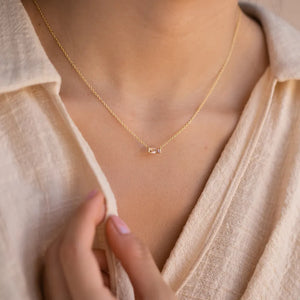

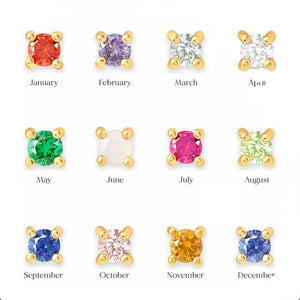
The piece they're describing → Stone Charm Necklace for Women — Raw Natural Gemstone Pendant
Personalize Yours


