


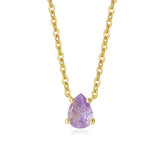
• Color change: Green in daylight → red/purple under incandescent light — caused by chromium's unusual light absorption
• June birthstone: Alexandrite is June's modern birthstone, shared with pearl and moonstone
• Meaning: Duality, adaptability, luck, transformation, and balance between worlds
• Rarity: Natural alexandrite fetches $5,000–$15,000+ per carat — among the rarest gems on Earth
• Lab-grown: Lab alexandrite shows the same color-change for a fraction of the price — a smart option for daily wear
Pick up an alexandrite and something strange happens. In sunlight, the stone glows a rich forest green. Walk inside, flip on a lamp — and it shifts to red or purple right before your eyes. That color change is real, it's repeatable, and it's why alexandrite meaning runs so deep. The stone literally exists in two states at once. No wonder people have tied it to duality, luck, and transformation for nearly two centuries.
What Is Alexandrite?
Alexandrite is a variety of chrysoberyl — a mineral made of beryllium aluminum oxide with traces of chromium. That chromium is everything. It's the same element that makes rubies red and emeralds green. In alexandrite, chromium absorbs light in a very specific way that sits right at the boundary between red and green wavelengths — which means the stone's color depends entirely on which wavelengths are in the light hitting it.
The gem was first discovered in 1830 in the Ural Mountains of Russia. Legend says miners originally mistook it for emeralds — until they brought it near their campfires that night and watched it turn red. It was named after Tsar Alexander II of Russia, whose imperial colors happened to be green and red. That royal origin is one reason alexandrite has always carried associations with prestige and rarity.
Today, alexandrite comes primarily from Brazil, Sri Lanka, East Africa, and India. Russian alexandrite — the original source — is almost entirely depleted and commands significant premium prices. The GIA (Gemological Institute of America) considers alexandrite one of the most remarkable gems in existence specifically because of its color-change phenomenon.

The Color Change: Science and Spiritual Meaning
Here's the science most competitors gloss over. Chromium absorbs light in two bands — yellow-green and deep red. In daylight (which is rich in blue-green wavelengths), the green transmission wins. The stone looks green. Under incandescent light (which is richer in red and yellow wavelengths), the red transmission dominates. The stone looks red or purple. Your eye sees whichever wavelength gets through more strongly.
What makes alexandrite uniquely dramatic is that its chromium content sits right at the tipping point. Even a small shift in light source flips the stone's apparent color. Most color-change gems shift slightly. Alexandrite can shift completely — from a vivid emerald green to a raspberry red, with no overlap. The stronger and more complete the shift, the more valuable the stone.
The color change also explains alexandrite's deep spiritual resonance. A stone that exists as two things simultaneously — green and red, earth and fire, day and night — naturally maps onto ideas about duality and adaptability. Crystal tradition holds that alexandrite teaches you to exist fully in whatever environment you're in, just as the stone does.
Alexandrite Color Meanings by Light Source
| Light Source | Color Seen | Symbolic Meaning | Energy Focus |
|---|---|---|---|
| Natural daylight / sunlight | Vivid green to blue-green | Growth, vitality, abundance, nature | Heart chakra activation |
| Incandescent / candlelight / lamp | Red to raspberry purple | Passion, transformation, inner fire | Root chakra and sacral energy |
| Fluorescent office light | Olive green to greyish purple | Balance, neutrality, transition | Grounding during change |
| Mixed or transitional light | Teal, slate, or mauve | Duality, holding two truths at once | Crown chakra integration |
Alexandrite Meaning and Symbolism
Alexandrite's core symbolism is duality — the capacity to hold opposites simultaneously. Green and red. Day and night. The rational and the emotional. People drawn to alexandrite often describe themselves as adaptable, complex, or at a turning point. The stone resonates with anyone navigating a transition — a new chapter, a career shift, a relationship evolving into something different.
In Russian tradition, alexandrite was considered a stone of great luck and good omens, partly because of its connection to the Tsar and partly because its two colors represented the country's imperial strength. British and Victorian gem lore extended this to a general association with good fortune, particularly for those in positions of leadership or decision-making.
Modern crystal tradition adds several layers:
- Transformation: The color-shift itself is a symbol of change — alexandrite supports those going through major life transitions
- Adaptability: Like the stone, you can be fully yourself in any environment without losing your identity
- Luck: Particularly associated with unexpected good fortune — the lucky break that comes from being in the right place at the right time
- Balance: The tension between green and red reflects the balance between heart and passion, nature and fire
- Creativity: Artists, writers, and musicians have traditionally favored alexandrite as a stone of inspiration and creative transformation
Alexandrite Healing Properties
Alexandrite healing properties center on emotional resilience and adaptability. Crystal practitioners associate it with the ability to change your perspective — to see the same situation from a completely different angle, much as the stone shows two faces under two types of light. This makes it particularly useful for people stuck in rigid thinking or going through periods of conflict and contradiction.
Physical healing associations (these are spiritual tradition, not medical claims) include the nervous system, circulatory health, and regenerative processes. The stone's connection to both green (heart, healing) and red (blood, vitality) wavelengths gives it a dual energy that practitioners say supports both emotional and physical renewal.
Chakra-wise, alexandrite primarily activates the heart chakra in its green state and the root and crown chakras in its red-purple state. This gives it a rare versatility — it works across multiple energy centers depending on the intention you bring to it. Meditating with alexandrite is most effective during times of decision-making, when you need to hold competing truths and find a path forward.
Alexandrite is also connected to self-esteem and confidence. The stone's extreme rarity — combined with its dramatic visual impact — makes it a powerfully affirming piece. Wearing something that most people have never seen in person tends to remind you of your own distinctiveness.
Alexandrite as the June Birthstone
Alexandrite is June's modern birthstone, added to the official birthstone list in 1952 by the American National Retail Jewelers Association. June is one of only three months with three birthstones — pearl, alexandrite, and moonstone each offer something completely different. Pearl is timeless and traditional. Moonstone is mystical and luminous. Alexandrite is rare, scientific, and dramatic.
For June birthdays, alexandrite carries special resonance as a gift. June sits at the cusp of two seasons in the northern hemisphere — the end of spring and the beginning of summer — which mirrors alexandrite's dual nature perfectly. It's a birthstone that reflects the complexity of its month: long days meeting short nights, endings becoming beginnings.
If you're buying a June birthday gift and want something genuinely rare, alexandrite is the choice. A lab-grown alexandrite pendant in sterling silver is an accessible way to give someone a stone with centuries of symbolism and a visual trick no other gemstone can match.

Natural vs Lab-Grown vs Synthetic Alexandrite
This is where most buyers get confused — and most competitor articles don't explain it clearly. There are three types of alexandrite on the market, and they are not the same thing.
Natural alexandrite formed in the Earth over millions of years in the original chrysoberyl deposits. It shows true chromium-driven color change. It is extraordinarily rare — rarer than diamonds by some estimates. Prices for natural alexandrite run $3,000–$15,000+ per carat for fine-quality stones, and top Russian specimens can exceed $70,000 per carat. The Jewelers of America consistently lists alexandrite among the hardest-to-source gemstones.
Lab-grown alexandrite is real alexandrite — same chemical composition (BeAl₂O₄ with chromium), same hardness (8.5 on the Mohs scale), same true color change. It's grown in a lab using the flux or hydrothermal method, which replicates the same conditions that created the natural stone. The only difference is time — lab-grown takes weeks, not millions of years. Lab alexandrite costs $100–$500 per carat and is indistinguishable from natural without lab testing.
Simulants (sometimes mislabeled as alexandrite) are completely different minerals — usually color-change sapphire, synthetic corundum, or even glass — that change color but are NOT chrysoberyl and have no chemical relationship to real alexandrite. They're worth far less. Many cheap "alexandrite" pieces online are simulants.
| Type | Real Alexandrite? | Color Change | Hardness (Mohs) | Price per Carat | Best For |
|---|---|---|---|---|---|
| Natural alexandrite | Yes | True (green → red) | 8.5 | $3,000–$70,000+ | Investment, heirloom |
| Lab-grown alexandrite | Yes (same chemistry) | True (green → red) | 8.5 | $100–$500 | Daily wear, gifts |
| Color-change sapphire | No (different mineral) | Partial (blue → purple) | 9 | $200–$2,000 | Budget alt. to natural |
| Glass simulant | No | Weak (often purple only) | 5–6 | Under $5 | Costume only |
How to Tell If Your Alexandrite Is Real
The single most important test is the color-change test — and most people don't do it properly. You need two very different light sources: natural daylight or a daylight-spectrum LED, and a traditional incandescent bulb or candlelight. Phone torches often won't show the full shift because modern LEDs are engineered to mimic daylight.
Real alexandrite shifts from green to red or raspberry purple. The shift should be noticeable and clear — not a subtle grey-to-purple change, which is common in simulants. If your stone only shifts slightly, or shifts from purple to blue, it's likely a simulant or color-change sapphire, not alexandrite.
Three additional checks:
- Hardness: Real alexandrite scratches glass and is itself scratch-resistant (Mohs 8.5). A glass simulant scratches easily.
- GIA or lab certificate: Any natural alexandrite worth buying should come with a grading certificate from GIA, AGL, or another recognized lab. Lab-grown alexandrite can also be certified.
- Price: If a "natural alexandrite" ring costs $30, it's not natural alexandrite. It's a simulant. Natural alexandrite is genuinely rare — even small, lower-quality stones run $500–$1,000+.
How to Choose Alexandrite Jewelry
The most important factor when buying alexandrite jewelry is the color-change quality — how strong, complete, and vivid the shift is. A stone that shifts from brownish-green to murky purple is technically alexandrite but lacks the drama that makes the gem special. Look for stones where the green is bright and saturated in daylight and the red-purple is clear under incandescent light.
For metal settings, white gold, platinum, or sterling silver all complement alexandrite well because they don't compete with the stone's color. Yellow gold can be beautiful but can slightly warm the green and mute the red. A bezel or four-prong solitaire setting shows the most stone surface — and maximum surface area means maximum color-change effect.
For everyday wear, lab-grown alexandrite in 925 sterling silver is the practical choice. The Mohs 8.5 hardness means it resists scratching well — more durable than opal, moonstone, or pearl. You can wear it daily without worrying about the stone chipping or clouding. Browse our gemstone necklaces and birthstone necklaces to find alexandrite pieces in sterling silver settings built for real daily wear.
Caring for Alexandrite Jewelry
Alexandrite is one of the easier gemstones to care for. Its 8.5 Mohs hardness makes it resistant to everyday scratching, and chrysoberyl has no cleavage planes, which means it doesn't split easily when knocked. It's significantly more durable than softer stones like opal (5.5–6.5) or moonstone (6–6.5).
Clean alexandrite with warm water, a mild soap, and a soft brush. An old toothbrush works well for getting into settings. Rinse thoroughly and dry with a lint-free cloth. Ultrasonic cleaners are generally safe for alexandrite that isn't fracture-filled, but check with the seller if you're unsure whether your stone has any treatments.
Avoid harsh chemicals — bleach, chlorine, and acetone can damage any metal setting, even if the stone itself is resistant. Take alexandrite jewelry off before swimming, cleaning, or using beauty products. Store it separately from harder stones like diamonds to prevent scratching the setting metal.
Who Should Wear Alexandrite?
Alexandrite resonates strongly with people going through transitions. If you're changing careers, ending or beginning a relationship, moving to a new city, or navigating a period where you feel pulled in two directions at once — alexandrite is one of the few gemstones that specifically speaks to that experience. It doesn't promise resolution. It says you can hold both states at once and still be whole.
By zodiac, alexandrite connects most strongly with Gemini and Scorpio — Gemini because of the dual nature and adaptability, Scorpio because of the transformative and intense energy. It's also associated with Sagittarius for its lucky, expansive energy. As a June birthstone, it belongs especially to Geminis born in early June and Cancers born in late June.
Alexandrite is the perfect Gemini gem — learn more in our air signs astrology guide.
Creative people — artists, writers, musicians, designers — have a long tradition of wearing alexandrite. The stone's unusual visual quality makes it a constant conversation starter, and its associations with inspiration and creative transformation resonate with anyone whose work involves seeing things differently.
Alexandrite Gift Occasions
Alexandrite is traditionally given for the 55th wedding anniversary, but it works beautifully for much earlier occasions. Its rarity and visual drama make it feel genuinely special — not a generic gift, but something the recipient will remember the first time they see it change color in different light.
Best occasions to give alexandrite:
- June birthdays: As June's modern birthstone, it's the most meaningful birthstone gift for anyone born this month
- Graduations: The color change symbolizes transition — perfect for marking a major life step
- New job or career change: Adaptability and transformation make alexandrite a perfect professional milestone gift
- 55th anniversary: Traditional gemstone for this milestone
- Self-purchase: Many people buy alexandrite for themselves during or after a major life change — it's one of the few stones that genuinely captures the complexity of those moments
- Pushing someone into a new chapter: The "lucky stone" energy of alexandrite makes it meaningful for someone starting a new venture or taking a big risk
Related reading: Zircon meaning.
Frequently Asked Questions About Alexandrite
Is alexandrite a real gemstone?
Yes, alexandrite is a real gemstone — a variety of the mineral chrysoberyl. Its chemical formula is BeAl₂O₄ with chromium impurities. It's mined from the Earth (primarily in Brazil, Sri Lanka, East Africa, and Madagascar) and recognized by the GIA as one of the world's most remarkable gems. Lab-grown alexandrite is also real alexandrite — same chemistry, same hardness, same color-change — just grown in a controlled environment instead of over millions of years underground.
Why is alexandrite so rare?
Alexandrite requires two rare conditions to occur simultaneously: the presence of beryllium (which forms chrysoberyl) and chromium (which causes the color-change) in the same geological environment. Beryllium and chromium don't usually form in the same rocks — their geochemistry pushes them apart. The specific overlap that creates alexandrite is geologically unusual, which is why high-quality natural alexandrite is rarer than diamonds. The original Russian deposits in the Ural Mountains are now largely depleted, making fine Russian alexandrite among the most valuable gems on Earth.
What does alexandrite symbolize?
Alexandrite symbolizes duality, adaptability, transformation, and luck. Its core meaning comes from its ability to exist in two states — green and red — simultaneously, depending on the light. This maps onto the human capacity to navigate opposites: reason and emotion, constancy and change, the person you are and the person you're becoming. In Russian tradition, it was a stone of imperial fortune. In modern crystal practice, it supports people in transition and those who need to adapt to new circumstances.
How do you tell if alexandrite is real?
The key test is the color-change check: take the stone into natural daylight and note its color, then view it under a traditional incandescent bulb. Real alexandrite shifts from green (daylight) to red or raspberry purple (incandescent). The shift should be clear and significant. Simulants often only shift from grey-purple to blue-purple, or show only a faint change. Real alexandrite is also Mohs 8.5 — it won't scratch easily. Any natural alexandrite worth buying should come with a GIA or AGL lab certificate confirming the species and color-change quality.
Is lab alexandrite worth buying?
Yes — lab-grown alexandrite is an excellent purchase, especially for jewelry meant for daily wear. It has identical chemical properties to natural alexandrite (BeAl₂O₄ with chromium), the same 8.5 Mohs hardness, and the same true green-to-red color change. The only difference from natural alexandrite is origin — it was grown in a lab over weeks rather than formed in the Earth over millions of years. Lab alexandrite costs a fraction of the natural price, making it the smart choice for anyone who wants to wear the real color-change experience without the $5,000+ per carat price tag.
What color is alexandrite in sunlight vs light?
In natural sunlight or daylight-spectrum lighting, alexandrite appears vivid green to blue-green. Under incandescent light — traditional bulbs, candlelight, or warm-toned lamps — it shifts to red, raspberry, or purple. The shift happens because chromium in alexandrite absorbs light differently depending on whether the source is blue-green rich (daylight) or red-yellow rich (incandescent). The stronger and more complete the shift, the higher the quality and value of the stone.
What is the alexandrite color change caused by?
The color change is caused by chromium atoms in the crystal structure. Chromium absorbs light in two bands — the yellow-green range and the deep red range. This leaves a transmission window that sits right at the boundary between green and red. In daylight, which has more blue-green energy, the stone transmits green. Under incandescent light, which is richer in red-yellow energy, the stone transmits red. This precise positioning at the green-red boundary is extraordinarily rare in nature — most chromium-bearing gems (like rubies and emeralds) sit clearly on one side or the other.
What chakra is alexandrite associated with?
Alexandrite activates multiple chakras depending on the light — which is unusual for a gemstone. In its green state, it connects to the heart chakra (Anahata), promoting compassion, emotional balance, and healing. In its red-purple state, it activates root chakra energy (grounding, stability) and crown chakra energy (higher consciousness, integration). This dual-chakra quality makes alexandrite particularly powerful for meditation work during periods of transition, when you need to stay grounded while remaining open to change.
Can I wear alexandrite every day?
Yes — alexandrite is one of the best gemstones for daily wear. Its Mohs hardness of 8.5 makes it more scratch-resistant than most jewelry stones (tourmaline, garnet, and citrine are all softer). It has no cleavage, so it doesn't split when knocked. The main care requirement is avoiding harsh chemicals and removing the piece before swimming or cleaning. Lab-grown alexandrite in a sterling silver setting is especially practical for everyday wear — the stone is durable enough to handle real life.
How much does alexandrite cost?
Natural alexandrite is one of the most expensive gemstones on Earth. Fine-quality stones with strong color change sell for $5,000–$15,000+ per carat; exceptional Russian alexandrite can reach $70,000 per carat or more. Lower-quality natural stones (weak color change, inclusions) run $500–$3,000 per carat. Lab-grown alexandrite — chemically identical but created in a lab — costs $100–$500 per carat, making it far more accessible. Simulants (not real alexandrite) can cost under $10 per stone but don't offer the same gemological properties.
Is alexandrite the same as amethyst?
No — alexandrite and amethyst are completely different gemstones. Amethyst is a variety of quartz (silicon dioxide) and appears purple to violet in all lighting. Alexandrite is a variety of chrysoberyl (beryllium aluminum oxide) and changes color from green to red depending on the light source. They have different chemical compositions, different crystal structures, different hardness levels (amethyst is Mohs 7, alexandrite is 8.5), and completely different meanings and properties. They're occasionally confused because some low-quality alexandrite simulants have an amethyst-like purple color.
What is alexandrite's Mohs hardness?
Alexandrite has a Mohs hardness of 8.5, making it one of the hardest commonly available gemstones. It's harder than most jewelry stones — tanzanite (6.5), tourmaline (7–7.5), garnet (6.5–7.5), and moonstone (6–6.5) are all softer. The only gemstones harder than alexandrite are corundum (ruby and sapphire, at 9) and diamond (10). This hardness, combined with no cleavage planes, makes alexandrite highly durable for rings, pendants, and everyday wear pieces.
Final Thoughts
Alexandrite is unlike any other gemstone. It doesn't just sit there looking beautiful — it actively changes, shifts, and reveals something different depending on how the light hits it. That's not a gimmick. It's the result of chromium absorbing light right at the precise boundary between two colors, a geological accident so unusual it almost never happens.
The meaning follows from the stone's nature. Duality. Adaptability. Transformation. Luck that comes from being open to seeing things differently. If you're at a turning point — or you want to give someone a gift that genuinely marks one — there's no more fitting stone.
Natural alexandrite is one of the rarest gems on Earth. Lab-grown alexandrite gives you the same color-change experience, the same chemistry, and the same symbolism for everyday wear. Either way, the first time someone sees that green stone turn red under a lamp, they won't forget it.
Shop This Guide
Ready to wear alexandrite? Browse our collections for pieces set in 925 sterling silver with free shipping on every order:
- Gemstone necklaces — alexandrite and other color-change stones in sterling silver
- Birthstone necklaces — June birthstone jewelry including alexandrite pendants
Written by the AJLuxe team, specialists in personalized sterling silver jewelry. Last updated: May 2026.
Planning a gift for a Gemini birthday? Our Gemini birthstone guide explains why pearl, alexandrite, and emerald all connect to the Twins sign — and which stone fits each Gemini personality type best.
See also: Alexandrite vs Emerald: Full Comparison
All third-party trademarks, brand names and product names are the property of their respective owners. AJLuxe is not affiliated with, endorsed by, sponsored by, or otherwise connected to any third-party brand referenced in this article. Brand names are used solely for accurate comparative reference, and material descriptions reflect each brand's own published product specifications at the time of writing.
You Might Also Like
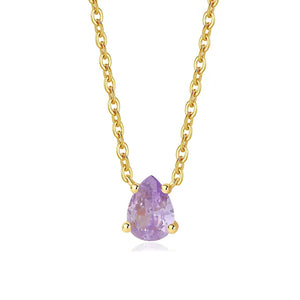

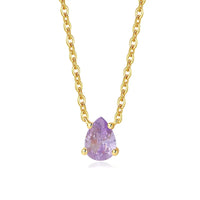
The piece they're describing → Alexandrite Teardrop Pendant Necklace for Women — 925 Sterling Silver, Gold Plated
Personalize Yours


