

• Birthstone: Emerald — green beryl (Be₃Al₂Si₆O₁₈) colored by chromium and/or vanadium
• Hardness: Mohs 7.5–8 — but inclusions weaken structure; handle with more care than raw hardness suggests
• Finest source: Colombia (Muzo, Coscuez, Chivor mines); Zambia is second-finest; Brazil produces lighter green
• Key fact: 90%+ of commercial emeralds are oiled or resin-filled — this is standard and accepted
• Inclusions: Called jardin in the trade — accepted as normal; eye-clean emerald commands a premium
• Notable stones: Gachala Emerald (858 ct, Smithsonian); Chalk Emerald (37.82 ct, Smithsonian)
• Key meaning: Love, growth, renewal, spring, fertility, wisdom
• Internal link: See our full emerald meaning guide
• Shop: May birthstone necklaces in sterling silver
Emerald is May's birthstone and one of the most revered gemstones in human history. It was the stone of Cleopatra, who owned the mines in Egypt's Eastern Desert and gave emeralds as diplomatic gifts to foreign rulers. It was worn by Aztec priests, traded by ancient Romans, and used by medieval healers as a cure for everything from poor eyesight to epilepsy. Today emerald remains one of the world's most desirable precious stones — its vivid green associated universally with life, spring, growth, and hope. This guide covers everything from the geology of Colombian emerald to why almost every emerald you'll ever see has been treated, and why that's perfectly fine.
At AJLuxe, our birthstone necklaces use genuine semi-precious stones set in 925 sterling silver — not glass or synthetic substitutes.
What Is the May Birthstone?
Emerald is green beryl — the same mineral species as aquamarine (March birthstone), heliodor, and morganite. The chemical formula for beryl is Be₃Al₂Si₆O₁₈ (beryllium aluminum silicate). In its pure form, beryl is colorless (goshenite). Add chromium (Cr³⁺) and the stone turns vivid green — emerald. Vanadium can also cause green color in beryl; some gem labs (notably GIA) classify vanadium-colored beryl as emerald, while others (like the SSEF) require chromium for the true emerald designation. In commercial practice, both chromium and vanadium-colored green beryls are sold as emerald.
The chromium that colors emerald is the same element that colors ruby red and alexandrite. Different minerals respond differently to chromium: in corundum (ruby), it creates red; in beryl (emerald), it creates green. This is caused by the different crystal field geometry of each mineral's aluminum atom positions.

Emerald Sources — Colombia, Zambia, Brazil, and the World
Why Colombian Emeralds Are the Finest
The Muzo, Coscuez, and Chivor mines in the Boyacá department of Colombia have produced the world's most prized emeralds for over 500 years. What makes Colombian emerald special is the specific combination of chromium and vanadium coloring agents, combined with a geological formation process that produces stones with a distinctive warm, slightly yellow-green to pure green hue. The gem trade calls the finest Colombian color "Colombian green" — it's warmer and more vivid than the cool blue-green of Zambian stones.
Colombian emeralds also frequently show a distinctive "garden" (jardin) of inclusions that serve as origin fingerprints — three-phase inclusions containing a solid, a liquid, and a gas bubble are diagnostic of Colombian origin.
Emerald Source Comparison
| Source | Color Character | Typical Clarity | Market Position |
|---|---|---|---|
| Colombia (Muzo) | Warm vivid green; slightly yellow-green; most "Colombian green" | Heavily included typical | Highest — premium for origin cert |
| Colombia (Chivor) | Slightly cooler blue-green than Muzo, often purer green | Heavily included typical | High — prized for "Chivor blue" |
| Zambia (Kafubu) | Cool blue-green; often good saturation; iron-influenced | Often cleaner than Colombian | Second-highest — excellent value |
| Brazil | Lighter green, often more yellow-green; less saturated | Variable | Commercial grade; most affordable |
| Afghanistan | Vivid green; similar to Colombian in some stones | Variable; some excellent clarity | Growing reputation; less common market |
| Zimbabwe (Sandawana) | Intense small crystals; very saturated green | Typically small; heavily included | Collector interest; unique intense color |

Why Almost Every Emerald Has Been Treated
This is the single most important thing to understand about emerald before any purchase. Unlike ruby and sapphire — where heat treatment is common but not universal — emerald treatment is nearly universal in the commercial market. The GIA estimates that over 90% of emeralds reaching the gem market have been treated, most commonly with oil or resin filling.
Why? Emerald's growth process creates stones riddled with fractures, inclusions, and fissures. Unlike aquamarine (also beryl), which routinely grows clean, emerald's chromium content actually interferes with crystal growth, creating these characteristic fractures — the jardin. When a fracture reaches the surface, a thin liquid can wick into it by capillary action. Gem treaters apply cedar oil, synthetic resin (most commonly Opticon), or other substances under vacuum to fill surface-reaching fractures, making them less visible and improving the apparent clarity of the stone.
This treatment is accepted by the industry but must be disclosed. The GIA grades emerald treatment on a scale from "None" to "Faint," "Minor," "Moderate," and "Significant." The more significant the treatment, the lower the value and the greater the care needed (avoid ultrasonic cleaners, avoid solvents, avoid steam).
What "None" means: An untreated emerald is extraordinarily rare. When GIA grades an emerald as "None/No indications of clarity enhancement," that stone commands a very significant premium — sometimes doubling or tripling the value compared to an equivalent treated stone. For investment-grade emerald (1ct+, fine color), always seek a GIA or Gübelin report.
Emerald Jardin — Why Inclusions Are Beautiful, Not Flaws
The word jardin — French for "garden" — is the gem trade's poetic name for emerald inclusions. While diamond grading penalizes any visible inclusion, emerald operates by different standards. Emerald without inclusions (eye-clean to the naked eye) is genuinely exceptional and priced accordingly. Most fine emeralds show a visible "garden" of needles, fractures, clouds, and mineral crystals when viewed under 10x magnification.
The jardin is now understood as a feature, not a flaw, for several reasons:
- It authenticates the stone as natural (synthetic emeralds also have inclusions, but different ones)
- Characteristic inclusions identify origin — Colombian three-phase inclusions, Zambian inclusions with iron oxides
- It is so universally expected in emerald that a completely eye-clean stone of fine color is more suspicious than one with inclusions
The gem trade accepts visible inclusions in emerald more readily than in ruby, sapphire, or other colored stones. An emerald with an excellent vivid green color and minor inclusions is vastly preferable to a pale, washed-out stone of perfect clarity.
Cleopatra's Emerald Mines
The oldest known emerald mines in the world are located in Egypt's Eastern Desert, in Wadi Sikait (Sikait-Zabara area), southwest of Hurghada. These mines were worked extensively under Ptolemaic and Roman rule — Cleopatra was historically documented as having a personal affinity for emeralds and using them as diplomatic gifts. The Roman scholar Pliny the Elder wrote extensively about Egyptian emeralds in his Naturalis Historia.
Egyptian emeralds are typically pale by modern standards — they lack the intense chromium and vanadium of Colombian stones — but their historical significance is immense. Archaeological expeditions to Wadi Sikait in the 20th and 21st centuries have confirmed large-scale mining operations dating back at least 2,000 years. Visiting the site today, you can still see ancient mining tunnels and the ruins of the workers' settlement.
May Birthstone Meaning and Symbolism
Emerald has one of the richest and most consistent meaning traditions of any gemstone across world cultures:
- Egypt: Symbol of eternal youth, fertility, and the goddess Isis; given as gifts of eternal love
- Ancient Rome: Associated with Venus (goddess of love and beauty); believed to strengthen memory and prevent eye strain
- Aztec/Inca: Sacred to the god Quetzalcoatl; used in ritual and tribute to Spanish conquistadors
- Medieval Europe: Believed to reveal truth, protect against evil spells, and cure diseases including malaria and epilepsy; placed under the tongue, it was said to compel truthfulness
- Crystal healing tradition: Heart chakra stone; promotes love, compassion, growth, abundance, and hope; one of the most universally recommended stones for the heart
For the complete history and healing properties of emerald, see our emerald meaning guide.
What Color Is the May Birthstone?
Emerald is green — specifically, a vivid, saturated green that is the defining color benchmark for all other green gemstones. The finest emerald color is a pure medium green to slightly bluish-green with a slightly warm tone (Colombian green) or a cooler blue-green (Zambian). Both are considered fine quality in the gem trade.
The May birthstone color is the most distinctly "green" of any birthstone month. If you think of the richest, most vivid grass-green you can imagine — that's fine emerald green. It's distinct from tsavorite garnet (which can compete), peridot (more yellow-green), or tourmaline green (varies widely).
How to Choose May Birthstone Jewelry
| Priority | What to Look For | What to Avoid |
|---|---|---|
| Color first | Vivid, saturated green — the most important quality factor | Pale, washed-out green; yellowish or brownish modifiers |
| Treatment disclosure | Ask: what type of treatment and what degree? "Minor" oil is standard; "Significant" resin filling is concerning | Sellers who can't or won't disclose treatment status |
| Significant purchase ($500+) | GIA, Gübelin, or SSEF lab certificate for origin and treatment grade | No documentation for stones above commercial grade |
| Budget birthstone jewelry | Brazilian or Zambian commercial grade with good color and "minor" treatment | Very cheap stones with "significant" resin filling — these require very careful care |
| Setting recommendation | Protective settings (bezel, halo) reduce chipping risk; avoid prong settings for emerald rings worn heavily | Settings that leave large areas of exposed girdle |
How to Care for Emerald Jewelry
Emerald care is more involved than most birthstones because of the oiling treatment that most stones receive:
- Clean with: Warm water and soft brush — nothing more aggressive
- Never use: Ultrasonic cleaners (vibration can fracture treated emeralds and remove oil/resin); steam cleaners (heat removes oil); harsh chemicals; solvents (acetone, nail polish remover)
- Re-oiling: Emerald oil treatment is not permanent. Over years of wear, the oil can dry out, making previously invisible fractures more visible. High-end jewelers can re-oil emeralds professionally if this occurs.
- Storing: Soft cloth bag or box; emerald's Mohs 7.5–8 is scratched by sapphire and diamond
- Remove before: Household cleaning (chemicals), gardening, sports, hot tubs
Gifting May Birthstone Jewelry
| Occasion | Best Choice | Why |
|---|---|---|
| May Birthday | Emerald pendant or earrings in silver or gold | Classic birthstone gift — one of the "Big Four" precious stones |
| 55th wedding anniversary | Emerald ring or earrings (traditional 55th gem) | Emerald is the gemstone of the 55th anniversary |
| Romantic/love gift | Emerald pendant — "stone of Venus" association | Green = growth, love, heart; ancient gift of eternal love |
| Budget-conscious | Zambian emerald or Brazilian emerald in sterling silver | Real emerald at accessible price — genuine precious stone |
| Milestone birthday (40+) | Colombian emerald with GIA cert (1ct+) | Investment-quality; one of the four great precious gemstones |
Browse our May birthstone emerald collection:
• Emerald birthstone necklaces in sterling silver
• Gemstone necklaces — full collection
• May birthday gifts — curated gift ideas
Does May Have Two Birthstones? Emerald and Agate
Yes — May has two birthstones. Emerald is the modern May birthstone and the one almost every jeweler features today. Agate is the traditional May birthstone, carried over from older birthstone lists used long before the modern standard. A few historical and mystical lists also name chrysoprase, a bright apple-green chalcedony, as a May alternative.
So why two? The modern birthstone chart standardized in 1912 named emerald for May. But older traditional and ancient systems each assigned their own stones — and agate stuck as May's traditional alternate. If you were born in May, emerald is the official pick, while agate is a meaningful and far more affordable choice.
| May Birthstone | Type | Mineral | Color | Relative Cost |
|---|---|---|---|---|
| Emerald (modern) | Precious gemstone | Beryl | Vivid green | $$$ – $$$$ |
| Agate (traditional) | Chalcedony | Microcrystalline quartz | Banded earth tones | $ |
| Chrysoprase (alternate) | Chalcedony | Microcrystalline quartz | Apple green | $ – $$ |
Prefer the classic green? Shop our birthstone necklaces. The two-stone tradition also means a May baby can be gifted either the precious emerald or the everyday-wearable agate.
Frequently Asked Questions About the May Birthstone
What is the May birthstone?
May's birthstone is emerald — green beryl (Be₃Al₂Si₆O₁₈) colored by chromium and/or vanadium. One of the "Big Four" precious gemstones alongside diamond, ruby, and sapphire, emerald is the most prized green gemstone in the world. The finest come from Colombia's Muzo, Coscuez, and Chivor mines.
What color is the May birthstone?
Emerald is vivid green — from a warm, slightly yellow-green (Colombian green) to a cooler, slightly blue-green (Zambian). The most prized May birthstone color is a pure, saturated medium green — the defining benchmark color for all other green gemstones.
Are all emeralds treated?
Over 90% of commercial emeralds have been oiled or resin-filled to improve clarity. This is standard industry practice and is disclosed on gem certificates. Completely untreated emeralds (graded "None" on GIA reports) are rare and command significant premiums. The type and degree of treatment matters: minor oil filling is standard and accepted; significant resin filling requires careful care and indicates lower-quality material.
What is jardin in emerald?
Jardin (French for "garden") is the gem trade's term for the natural inclusions inside emerald — needles, fractures, clouds, and mineral crystals that create a garden-like pattern visible under magnification. Unlike diamond, where inclusions are heavily penalized, inclusions are normal and expected in emerald. Eye-clean emerald commands a premium precisely because it's unusual.
What is the difference between Colombian and Zambian emerald?
Colombian emeralds (primarily Muzo mine) tend toward a warm vivid green with a slightly yellow overtone — the "Colombian green" benchmark. Zambian emeralds (Kafubu mine) tend toward a cooler, slightly bluish-green. Zambian emeralds are often cleaner (fewer inclusions) and less expensive than comparable Colombian stones. Both are considered fine quality; Colombian origin commands a premium for equivalent quality.
Why do emeralds crack more easily than other gemstones?
Emerald's chromium content actually inhibits crystal growth, creating natural fractures throughout the stone during formation. These fractures reduce the stone's toughness — its resistance to breaking — even though the hardness (Mohs 7.5–8) is similar to aquamarine. Aquamarine (also beryl) grows much more cleanly because it lacks the growth-disrupting chromium. This is why the gem trade accepts oiling (filling fractures) as standard for emerald.
How do I detect if an emerald is oiled?
Standard gemological tools: under 10x magnification, oiled fractures sometimes show a sheen or color different from surrounding areas. Under UV light, some oils or resins fluoresce (Opticon resin fluoresces yellowish-green under long-wave UV). A GIA or Gübelin gemological lab report is the definitive test — they use advanced spectroscopy to detect and grade treatment. For consumer purposes, always buy significant emeralds with a lab report from a reputable source.
What is the Gachala Emerald?
The Gachala Emerald is a famous 858-carat uncut emerald crystal found in 1967 in the Gachala mine, Colombia. It is now part of the Smithsonian Institution's National Gem Collection in Washington D.C., donated by Harry Winston. At 858 carats, it is one of the largest and finest emerald crystals ever found.
Is emerald suitable for everyday ring wear?
With care, yes. Emerald's inclusions make it less tough than ruby or sapphire, but millions of people wear emerald rings daily. The key is avoiding hard knocks to the stone, using a protective setting (bezel rather than prongs), and following care guidelines (no ultrasonic, no solvents). Pendants and earrings are safer for maximizing emerald longevity.
What metal works best with emerald?
Yellow gold is the traditional and most complementary metal for emerald — the warm gold harmonizes with the warm green tones of Colombian emerald. White gold and platinum create a dramatic contrast that makes emerald's green pop more intensely. Sterling silver is the most affordable pairing and still beautiful with emerald.
How is emerald related to aquamarine?
Both emerald and aquamarine are beryl (Be₃Al₂Si₆O₁₈). The color difference is caused by different trace elements: chromium creates emerald's green; iron creates aquamarine's blue. They have the same crystal structure and similar hardness. The difference is that aquamarine typically grows very clean, while emerald is almost always heavily included due to chromium's interference with crystal growth.
Shop at AJLuxe: Emerald Pendant Necklace — genuine emerald teardrop, 925 sterling silver ($34.99) · May Birthstone Necklace — emerald infinity pendant ($42.99)
May birthdays often fall under Taurus (April 20 – May 20). If you want to pair emerald with zodiac jewelry, see our Taurus birthstone guide for the full breakdown of stones connected to the Bull sign.
What are the two birthstones for May?
May's two birthstones are emerald and agate. Emerald is the modern birthstone used on today's official charts, and agate is the traditional birthstone from older lists. Some historical lists also include chrysoprase as a May alternative.
Why does May have two birthstones?
May has two birthstones because modern and traditional lists disagree. The modern chart standardized in 1912 assigned emerald, but older traditional systems used agate long before that. Both remain valid — emerald is the official choice, while agate offers an affordable, durable everyday alternative.
Are emeralds more expensive than diamonds?
Top-quality emeralds can cost as much as or more than diamonds per carat, because fine, richly saturated emeralds with minimal visible inclusions are rarer than comparable diamonds. That said, most commercial-grade emeralds are more affordable than diamonds, so a beautiful May birthstone piece fits a wide range of budgets.
Final Thoughts — Choosing Your May Birthstone Emerald
Emerald is one of the great gemstones — not simply by tradition and prestige, but because its color is genuinely extraordinary. A fine vivid green emerald has a quality of color that no synthetic can fully replicate and no other natural stone consistently achieves at the same price point. The jardin inside isn't a flaw — it's a fingerprint of natural origin, a map of the stone's journey through geological time.
When buying emerald, understanding treatment is the most important knowledge you can have. Minor oil is fine and accepted. Significant resin filling at low prices means the stone needs careful care and has limited investment value. For significant purchases, always get a GIA or Gübelin report. For birthstone jewelry, a beautiful, vivid-colored emerald with minor treatment in sterling silver is a meaningful, genuine gift that represents one of the oldest precious gemstones in human history.
Browse our May birthstone emerald necklaces in sterling silver — or read our complete emerald meaning and history guide for everything about this extraordinary May birthstone.
Written by Vaishakhi Ajmera — founder of AJLuxe, specialists in personalized sterling silver jewelry. Last updated: May 2026. | Sources: GIA Emerald · American Gem Society · Jewelers of America
Planning a gift for a Gemini birthday? Our Gemini birthstone guide explains why pearl, alexandrite, and emerald all connect to the Twins sign — and which stone fits each Gemini personality type best.
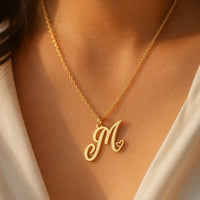
The piece they're describing → Heart Initial Necklace for Women — 18K Gold Plated, Personalized Letter + Heart Pendant
Personalize Yours
