


Written by the AJLuxe team — specialists in gemstone sterling silver jewelry. Last updated: June 2026.
- Emerald is the birthstone for May and one of the four precious gemstones alongside diamond, ruby, and sapphire.
- It's known as the "Stone of Successful Love" — a talisman for loyalty, devotion, and lasting partnerships.
- Emerald activates the heart chakra, making it a go-to crystal for emotional healing and compassion.
- Its rich green color symbolizes growth, renewal, and the vibrant energy of life itself.
Few gemstones carry as much weight as the emerald. Its deep, velvety green has captivated civilizations for over 4,000 years — and today, emerald meaning is still just as layered and alive. Whether you're drawn to its crystal energy, its role in love, or its stunning color, understanding what emerald represents gives you a whole new appreciation for this extraordinary stone.
Shop Emerald Jewelry
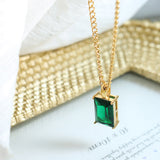
AJLuxe's Emerald Pendant Necklace features a dainty green emerald-cut stone in 18K gold plating, $30.99 — hypoallergenic and currently in stock.
What Does Emerald Mean?
Emerald is a symbol of growth, renewal, love, and wisdom. Its meaning runs through every culture that has ever prized it, and those themes are remarkably consistent across time and geography.
Growth is probably the most universal emerald meaning. The stone's green color mirrors new leaves, spring grass, and the constant cycle of nature pushing forward. It's associated with personal growth too — the kind that comes from reflection, patience, and learning.
Renewal ties in closely. Emerald is the stone you reach for during transitions — starting a new chapter, healing from a hard period, or setting fresh intentions. Its energy encourages you to release what's old and open up to what's possible.
Love is central to emerald's identity. Ancient traditions across multiple continents connected emerald to the heart, to loyalty, and to the deepest kind of partnership. This isn't surface-level romantic love — it's the enduring, committed bond that holds through difficulty.
Wisdom rounds out the core meaning. Emerald has long been considered a stone of foresight and clarity. Some traditions believed it could reveal truth and sharpen the mind, making it a symbol of knowledge as much as beauty.
Emerald as the Stone of Successful Love
The nickname "Stone of Successful Love" is one of emerald's oldest and most recognized titles — but what does it actually mean?
Successful love isn't just about romance. It means love that lasts, love that grows, and love that stays strong when life gets difficult. Emerald is said to carry the energy of unconditional commitment — the kind that doesn't waver when things get hard.
In crystal traditions, emerald is believed to bring balance to relationships. It's associated with honesty between partners, encouraging open communication rather than avoidance. When both people in a relationship operate from a place of truth and respect, the love becomes sustainable — and that's exactly what emerald is meant to support.
Emerald is also linked to domestic harmony. It's not just a stone for the excitement of new love — it's equally associated with long marriages, deep friendships, and family bonds. That's why it's been a popular choice for anniversary gifts for centuries.
In metaphysical traditions, wearing emerald is thought to attract and keep love by aligning your heart's energy with what you truly want. It's not a passive stone. It asks you to show up honestly in your relationships and rewards that with deeper connection.
Emerald and the Heart Chakra
Emerald is one of the most powerful stones for the heart chakra, known in Sanskrit as Anahata. The connection is almost immediate — the stone's green matches the chakra's color exactly, and its energy aligns with everything Anahata governs: love, compassion, forgiveness, and emotional balance.
When the heart chakra is blocked, you might feel guarded, resentful, or emotionally numb. Emerald is believed to gently dissolve those barriers and reconnect you to your capacity for both giving and receiving love.
Here's how to use emerald for heart chakra activation:
- Wear it at the chest level. A pendant that rests near your heart keeps the stone's energy close to the chakra all day. An emerald water drop pendant is ideal for this.
- Meditate with it. Hold the stone in your left hand (the receiving hand) or place it on your chest. Breathe slowly and visualize green light expanding outward from your heart center.
- Set an intention. Before putting it on, hold the emerald and name something you want to open your heart to — forgiveness, trust, a deeper relationship, or self-compassion.
- Combine with breathwork. Inhale for four counts, hold for four, exhale for four. Repeat while focusing on the stone's energy. This rhythm is said to sync with Anahata's natural frequency.
Many chakra teachings describe the heart chakra as the bridge between the lower physical chakras and the higher spiritual ones — and emerald, sitting right at that junction, serves as the perfect energetic companion.
Emerald Color Meaning — Why Emerald Green Symbolizes Life
Emerald green isn't just a color. It's one of the most emotionally loaded shades in the visible spectrum, and color psychology tells us exactly why it hits the way it does.
Green is the color most associated with nature, and our brains are hardwired to respond to it with calm and safety. Evolutionary theory suggests we're biologically primed to feel comfortable in green environments — they meant food, water, and shelter to our ancestors.
Emerald green takes that baseline and amplifies it. The depth and richness of the hue communicates abundance rather than scarcity, vitality rather than decay. It reads as lush, alive, and thriving.
Emotionally, emerald green is linked to:
- Hope — the color of spring, of things starting over
- Balance — green sits at the center of the visible spectrum, and that centrality translates psychologically to equilibrium
- Prosperity — across many cultures, green is connected to wealth and good fortune (think of currency, luck symbols, and abundance rituals)
- Healing — hospitals and medical settings have historically used green because of its calming, restorative effect on the nervous system
When you wear emerald green jewelry, you're not just making a fashion statement. You're signaling vitality, stability, and a connection to something larger than yourself.
Emerald Meaning in History and Culture
Emerald has been prized longer than almost any other gemstone on earth. The oldest known emerald mines date back to Egypt around 330 BCE, though evidence suggests the Egyptians sourced emeralds even earlier.
Cleopatra is perhaps history's most famous emerald enthusiast. She claimed the Egyptian mines as her own and wore emeralds as symbols of eternal youth, power, and divine protection. She even gifted emeralds engraved with her likeness to foreign dignitaries.
In ancient Rome, emerald was sacred to Venus, the goddess of love. Romans believed the stone could strengthen love and preserve relationships — an early version of the "Stone of Successful Love" concept.
The Incas and Aztecs considered emerald holy. When Spanish conquistadors arrived in South America in the 1500s, they found emeralds of extraordinary size and quality that had been revered for centuries. The Spanish traded these stones throughout Europe and Asia, where they quickly became symbols of royalty and divine favor.
In Islamic tradition, emerald is one of the stones of paradise. In Hindu astrology, it's associated with Mercury and is believed to enhance intellect and communication. The GIA (Gemological Institute of America) notes that emerald has been treasured across virtually every major civilization — a rare claim for any material object.
What Does Emerald Mean in an Engagement Ring?
Choosing an emerald engagement ring is a deliberate, meaningful decision — and it's one that more couples are making.
Emerald engagement rings carry a fundamentally different message than diamond ones. Where a diamond says "forever" in a timeless, conventional way, an emerald says something more specific: eternal growth, committed love, and a relationship built on more than tradition.
The stone's meaning maps directly onto what most people want from a lifelong partnership. Growth — you're committing to evolving together. Renewal — you're choosing each other through every season of life. Loyalty — the "Stone of Successful Love" energy is built right into the gem itself.
Emerald engagement rings also carry a sense of intentionality. You don't choose one by default. It's a stone that says you thought about what your relationship means and wanted a symbol that reflects that.
Historically, emerald rings have been associated with royalty and power couples. Jacqueline Kennedy famously received an emerald engagement ring from JFK. Halle Berry and Zoe Saldana have both worn emerald engagement stones.
From a practical standpoint, emeralds rank 7.5–8 on the Mohs hardness scale — durable enough for daily wear with proper care. The color also holds up beautifully in both vintage and modern settings, making emerald engagement rings as versatile as they are meaningful.
If you're drawn to an emerald engagement ring, you're choosing a stone that says love isn't static — it deepens, it grows, and it lasts.
When to Give Emerald as a Gift
Emerald is one of the most gift-appropriate gemstones because its meaning aligns with so many significant moments.
20th anniversary. Emerald is the traditional gift for a 20th wedding anniversary. Two decades of committed partnership is exactly what the "Stone of Successful Love" was made to honor.
35th anniversary. Emerald is also the modern gift for the 35th anniversary — a second milestone that cements the stone's connection to lasting love.
May birthdays. Emerald is the May birthstone. Giving emerald to someone born in May is both personally meaningful and astrologically aligned — it's their stone.
New beginnings. Starting a new job, moving to a new city, finishing a degree, beginning a healing journey — emerald's energy of growth and renewal makes it an ideal stone for any fresh start.
Milestones in a relationship. Not just marriage — first anniversaries, commitments of any kind, or moments where you want to say "I'm in this with you."
When you give someone emerald, you're communicating something specific: I see your growth. I honor what we've built. I believe in what's ahead. That's a powerful message wrapped in a beautiful stone.
Emerald Meaning by Zodiac Sign
Emerald has the strongest connection to Gemini and Virgo, both ruled by Mercury. For Gemini (May 21–June 20), emerald is a natural birthstone match — it's said to enhance communication, creativity, and mental clarity, all core Gemini strengths. For Virgo (August 23–September 22), emerald supports the sign's drive for improvement and its deep capacity for loyalty.
Taurus (April 20–May 20) also has a meaningful connection to emerald. As a Venus-ruled earth sign, Taurus resonates with emerald's themes of abundance, sensory beauty, and lasting love. May-born Taureans are doubly aligned.
Libra (September 23–October 22), also ruled by Venus, connects to emerald's harmony and relationship energy. Libras drawn to balance and partnership tend to feel the stone's resonance strongly.
Emerald vs. Other Green Gemstones — What the Color Means Spiritually
| Stone | Primary Meaning | Chakra | Best For |
|---|---|---|---|
| Emerald | Love, growth, loyalty, wisdom | Heart (Anahata) | Relationships, commitment, renewal |
| Green Aventurine | Luck, opportunity, confidence | Heart | New ventures, abundance mindset |
| Malachite | Transformation, protection, change | Heart & Solar Plexus | Breaking patterns, major life shifts |
| Peridot | Healing, positivity, release | Heart & Solar Plexus | Letting go, emotional cleansing |
| Green Tourmaline | Vitality, compassion, connection | Heart | Deepening empathy, physical energy |
The key difference between emerald and other green stones is the depth of its love symbolism. Other green stones carry powerful energy, but none carry the same specific association with committed, enduring romantic love. That's what makes emerald uniquely suited to partnerships, anniversaries, and engagement rings.
Related reading: Garnet or emerald.
Related reading: Alexandrite vs emerald.
Related reading: Peridot vs emerald.
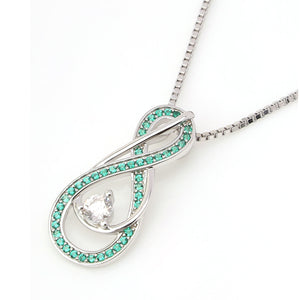
Shop the May Emerald Infinity Necklace
925 sterling silver with a rhodium finish, set with emerald-green cubic zirconia — disclosed as simulated, not sold as a treated natural stone.
Shop the May Birthstone Necklace →Frequently Asked Questions About Emerald Meaning
What does emerald symbolize?
Emerald symbolizes growth, renewal, love, wisdom, and prosperity. It's one of history's most consistently revered gemstones, valued across Egyptian, Roman, Incan, and many other cultures for its vibrant green color and powerful symbolism.
What is the spiritual meaning of emerald?
Spiritually, emerald is a stone of the heart. It's associated with unconditional love, compassion, emotional healing, and connection to higher wisdom. Many traditions believe it brings clarity, truth, and alignment between the heart and the mind.
What does emerald mean in love?
In love, emerald represents loyalty, devotion, and successful long-term partnership. It's called the "Stone of Successful Love" because it's associated with love that lasts — not just passion, but the deep, committed bond built over time.
Is emerald a good luck stone?
Yes. Emerald has been considered a good luck stone across many cultures, particularly for prosperity and love. The ancient Romans believed it could bring fortune, and many modern crystal traditions associate it with abundance and positive outcomes.
What does it mean when someone gives you emerald?
When someone gives you emerald, they're expressing deep affection, commitment, or celebration of a significant milestone. It carries meaning around loyalty, growth, and lasting connection — making it one of the most intentional gemstone gifts you can receive.
What chakra is emerald associated with?
Emerald is associated with the heart chakra (Anahata). Its green color aligns directly with this energy center, which governs love, compassion, forgiveness, and emotional balance.
What does wearing emerald do spiritually?
Wearing emerald is believed to keep the heart chakra open and balanced, attract loving relationships, promote emotional healing, and enhance your connection to truth and wisdom. It's also said to bring a sense of calm vitality and groundedness throughout the day.
Why is emerald called the Stone of Successful Love?
The title comes from emerald's deep historical and metaphysical association with loyal, enduring partnerships. Unlike stones linked to passionate but fleeting love, emerald represents love that grows, adapts, and holds — the "successful" kind that lasts through life's changes.
What does an emerald engagement ring mean?
An emerald engagement ring symbolizes eternal growth, committed love, and a partnership built on loyalty and intentionality. It's a non-traditional choice that says you want more than convention — you want a symbol that reflects the depth and meaning of your specific relationship.
What is the difference between emerald and other green gemstones spiritually?
While all green stones connect to the heart chakra and nature's energy, emerald carries the most specific association with enduring love and committed relationships. Green aventurine focuses on luck, malachite on transformation, peridot on emotional release — but emerald's core identity is love, loyalty, and wisdom in partnership.
Final Thoughts
Emerald is one of those rare stones where meaning and beauty reinforce each other completely. Its rich green color isn't just stunning — it's a visual expression of everything the stone represents: life, growth, love that deepens over time, and wisdom earned through genuine experience.
Whether you're drawn to emerald for its crystal energy, its role as the May birthstone, its heart chakra connection, or its long history as a symbol of committed love, you're working with a stone that has earned its place among the world's most meaningful gemstones.
It doesn't ask for grand gestures. It asks for genuine ones. And that's exactly what successful love is built on.
Ready to explore deeper? Start with the emerald healing properties guide for physical, emotional, and spiritual benefits — or read the emerald zodiac sign guide to find out which signs benefit most. If you're buying, our emerald buying guide covers color grades, jardin, treatments, and pricing.
Shop Emerald Jewelry at AJLuxe
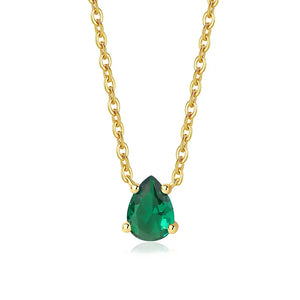
Our emerald water drop pendant necklace in 925 sterling silver captures the stone's lush green energy in a minimalist setting perfect for everyday wear.
Ready to shop? Browse all emerald necklaces and birthstone jewelry in 925 sterling silver — every piece hypoallergenic, gift-ready, and backed by our 30-day returns.
All third-party trademarks, brand names and product names are the property of their respective owners. AJLuxe is not affiliated with, endorsed by, sponsored by, or otherwise connected to any third-party brand referenced in this article. Brand names are used solely for accurate comparative reference, and material descriptions reflect each brand's own published product specifications at the time of writing.
You Might Also Like
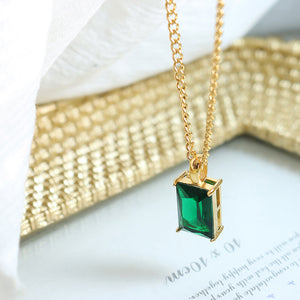
The piece they're describing → Emerald Pendant Necklace for Women — 18K Gold Plated, Dainty Green Stone
Personalize Yours


