


Check the hallmark first: stamps like 375, 417, 585, 750, 916, or 999 mean real solid gold. Wondering about the stones too? Learn how to spot the difference in our cubic zirconia vs diamond guide. GP, GEP, GF, HGE, or 925 alone means plated or silver — not solid gold. Then use the magnet test (real gold is not magnetic) and skin test (solid gold does not discolor skin). For anything valuable, get a professional XRF test — it is the only fully reliable method.
You have a piece of gold-colored jewelry and want to know: is this real gold? The answer matters — for value, for safety (some base metals cause skin reactions), and for understanding what you own. The good news is that most jewelry carries a hallmark stamp that tells you almost everything you need to know before running a single test. This guide covers all 7 ways to tell if jewelry is real gold at home, what every stamp means, and when to call in a professional.
Check the Hallmark First — It Tells You Almost Everything

The fastest and most reliable first step is to find the hallmark. Use a magnifying glass or your phone camera zoomed in — look at the clasp of necklaces and bracelets, the inner band of rings, and the back of pendants and earring posts.
| Stamp | What It Means | Is It Real (Solid) Gold? |
|---|---|---|
| 999 / 24K | 99.9% pure gold | Yes — solid gold (very soft) |
| 916 / 22K | 91.6% gold | Yes — solid gold |
| 750 / 18K / 18CT | 75% gold | Yes — solid gold |
| 585 / 14K / 14CT | 58.5% gold | Yes — solid gold |
| 417 / 10K | 41.7% gold (minimum legal karat in US) | Yes — solid gold |
| 375 / 9K | 37.5% gold (common in UK/Australia) | Yes — solid gold |
| 925 | Sterling silver base (92.5% silver) | No — silver, or gold-plated silver if gold-colored |
| GP / GEP / GF | Gold Plated / Gold Electroplated / Gold Filled | No — gold layer over base metal |
| HGE / RGP | Heavy Gold Electroplate / Rolled Gold Plate | No — thick plating, not solid gold |
| 14K GF / 1/20 14K GF | Gold filled: 14K gold bonded to base metal (1/20th of weight) | No — durable gold layer, but not solid gold throughout |
For more detail on what specific hallmarks mean, see our complete jewelry hallmarks guide.
7 Ways to Test Gold Jewelry at Home
Test 1: Hallmark Inspection (Most Reliable At-Home Method)
As covered above, the hallmark is your first stop. Use a jeweler's loupe (10x magnification) or your smartphone camera zoomed in on the piece. On rings, look at the interior band. On necklaces, check the clasp barrel. On pendants, look at the back of the bail. On earrings, look at the post or back.
Limitation: Some counterfeit pieces carry fake hallmarks. If you are buying from an unknown source and the piece has significant value, verify with a professional test.
Test 2: Magnet Test
Real gold is not magnetic. Hold a strong neodymium magnet close to the piece. If the piece is significantly attracted to the magnet, it contains ferrous (iron-based) metals and is not solid gold.
Limitation: Many base metals used in gold plating are also non-magnetic (brass, copper, bronze, stainless steel). Passing the magnet test only rules out iron-based fakes — it does not confirm the piece is real gold. A gold-plated brass piece will also pass the magnet test.
Test 3: Skin Discoloration Test
Base metals like copper and brass oxidize and leave green or black marks on skin. Real solid gold does not react with skin chemistry and leaves no color transfer.
How to use it: Wear the piece for several hours in warm conditions, or hold it firmly against your palm for 5 minutes after applying a small amount of hand lotion. Green or black marks indicate copper or brass base metals.
Limitation: Gold-plated sterling silver (925 base) will also pass this test — silver does not turn skin green either. This test is better for ruling out copper/brass base metals than confirming solid gold.
Test 4: Ceramic Scratch Test
Drag the jewelry piece across a piece of unglazed white ceramic (like the bottom of a mug or a ceramic tile). Real gold leaves a gold-colored streak; fake gold or gold-plated metals typically leave a black streak.
Limitation: This test scratches the surface of your jewelry. Reserve it only for less valuable pieces or an inconspicuous area. It is a rough field test, not a precision instrument.
Test 5: Float/Density Test
Gold is extremely dense (specific gravity 19.3 g/cm³ — about as dense as lead). Drop the piece into a glass of water. Real solid gold sinks immediately and decisively. Many base metals and alloys also sink quickly, so this test is primarily useful for very obvious fakes using low-density materials.
Limitation: Most metals used in jewelry are dense enough to sink. This test only catches very low-quality fakes and should be used alongside other methods.
Test 6: Vinegar Test
Apply a small amount of white vinegar to an inconspicuous area of the piece using a cotton swab. Real gold will not change color or react. Base metals may darken, discolor, or show a reaction within a few minutes.
Limitation: Vinegar can dull certain finishes and should be used carefully. Not reliable as a standalone test and may give false positives on plated pieces that have intact gold layers.
Test 7: Professional Testing (Most Accurate)
For anything with real monetary value, professional testing is the only reliable option:
- Acid test: A jeweler applies nitric acid to a small scratch of the metal. Different karats of gold react differently. This is the traditional professional test — destructive but accurate.
- XRF (X-ray fluorescence): A non-destructive device that uses X-rays to identify the precise metal composition of a piece in seconds. Most reputable jewelers have XRF machines. This is the gold standard (literally).
- Specific gravity test: Weighs the piece in air and submerged in water to calculate density, then compares to gold's known density. Highly accurate and non-destructive.
Gold Plated vs Gold Filled vs Solid Gold — What Is the Difference?
| Type | Gold Content | Durability | Price Range | Hallmark |
|---|---|---|---|---|
| Solid 24K gold | 99.9% gold throughout | Soft, dents easily | Very high ($$$) | 999 / 24K |
| Solid 18K gold | 75% gold throughout | Good, holds shape well | High ($$) | 750 / 18K |
| Solid 14K gold | 58.5% gold throughout | Excellent for daily wear | Medium-high ($$) | 585 / 14K |
| Gold filled | 1/20th of total weight is gold, heat-bonded | Good — will not wear off quickly | Medium ($) | 14K GF / 1/20 GF |
| Gold vermeil | 925 silver base + 2.5+ micron gold plating | Moderate — plating wears over years | Medium-low ($) | 925 + karat stamp |
| Gold plated (GP) | Micron-thin gold layer over base metal | Low — wears with use over months | Low ($) | GP / GEP / GF |
What Does "925" Mean on Gold-Looking Jewelry?
The 925 stamp indicates a sterling silver base — 92.5% silver and 7.5% copper alloy. If a gold-colored piece is stamped 925, it is gold-plated sterling silver (also called gold vermeil if the gold layer is at least 2.5 microns thick and the plating is 10K or higher).
This is not a fake — it is a legitimate, widely used jewelry category. The 925 stamp is a mark of quality for the silver base. AJLuxe's sterling silver collection uses a 925 sterling silver base with an 18K gold finish, which is stamped accordingly.
For a full breakdown of what 925 and other hallmarks mean, see our 18K gold hallmark guide and 14K gold hallmark guide.
When to Get Professional Gold Testing
Home tests are useful for ruling out obvious fakes, but professional testing is worth the cost in these situations:
- Buying vintage or estate jewelry: Hallmarks can be faked, worn off, or absent on pre-hallmarking-era pieces. An XRF test takes 60 seconds and gives you certainty.
- Selling or insuring jewelry: Any formal valuation requires professional testing. Home tests will not satisfy an appraiser or insurance company.
- Inherited pieces: You may not know the provenance. Professional testing establishes what you actually have.
- Significant purchases: If you are spending more than $200, get the piece tested. Most jewelers will test for free or a small fee.
- Pieces without hallmarks: No stamp does not mean fake — some vintage pieces pre-date mandatory hallmarking — but professional testing is the only way to confirm.
Frequently Asked Questions
How can I tell if my jewelry is real gold at home?
Start with the hallmark: look for stamps like 375, 417, 585, 750, 916, or 999 — these indicate real solid gold. Then use the magnet test (real gold is non-magnetic) and the skin test (real gold does not discolor skin). For anything valuable, a professional XRF test is the most reliable option.
What does 925 mean on gold jewelry?
The 925 stamp means the base metal is sterling silver (92.5% silver). If the piece looks gold, it is gold-plated sterling silver, also called gold vermeil. It is not solid gold but is a legitimate, high-quality jewelry category. The 925 is the quality mark for the silver base, not the gold layer.
How do you test gold with a magnet?
Hold a strong neodymium magnet near the piece. Real gold is not magnetic and will not be attracted. If the piece snaps toward the magnet strongly, it contains ferrous metals and is not solid gold. Note: many base metals used in plating are also non-magnetic, so passing this test does not guarantee gold — it only rules out iron-based fakes.
What hallmarks mean real gold?
Hallmarks indicating real solid gold: 375 (9K), 417 (10K), 585 (14K), 750 (18K), 916 (22K), 999 (24K). These numbers represent the gold content in parts per thousand. Stamps like GP, GEP, GF, HGE, RGP, and 925 indicate plated or silver jewelry, not solid gold.
Does real gold turn your skin green?
No. Real solid gold does not react with skin chemistry and will not cause discoloration. Green skin is caused by copper and copper alloys (like brass) in the jewelry reacting with skin moisture and acids. Lower-karat solid gold (10K, 14K) contains more copper alloy and very occasionally causes mild reactions in people with copper sensitivity.
What is the difference between gold plated and real gold?
Solid gold is the same composition all the way through — gold and alloy metals mixed uniformly. Gold plated has a thin micron-level gold coating over a base metal (brass, copper, or silver) core. Plating wears off with use; solid gold does not change composition. Gold filled (14K GF) is a middle ground: a thick gold layer mechanically bonded to a base metal.
Can gold plated jewelry test positive for gold?
Yes — gold-plated jewelry will test positive for gold on the surface because gold is genuinely present as the outer layer. The magnet test, skin test, and even a casual acid test on the surface may indicate gold. This is why hallmarks and professional XRF testing (which reads through the surface layer) are the most reliable methods.
How accurate is the magnet test for gold?
Partially accurate — it reliably detects iron-based metals. If a piece is strongly magnetic, it definitely contains ferrous metals and is not solid gold. But the test has a high false-positive rate for gold because many base metals used in jewelry (brass, bronze, copper, stainless steel) are also non-magnetic.
What does GP mean on jewelry?
GP stands for Gold Plated — a thin layer of gold electroplated over a base metal. Related stamps: GEP (Gold Electroplated), GF (Gold Filled — thicker than GP), HGE (Heavy Gold Electroplate), RGP (Rolled Gold Plate). None of these indicate solid gold.
Is 14K gold real gold?
Yes. 14K gold is real solid gold — it contains 58.5% pure gold alloyed with other metals (typically copper, silver, and zinc) for durability and color. It is the most popular karat for jewelry in the United States. The hallmarks 585 and 14K both indicate 14-karat solid gold.
How do jewelers test for real gold?
Professional jewelers use the acid test (applying nitric acid to a metal scratch — different karats react differently), XRF spectrometry (X-ray fluorescence — non-destructive, reads exact metal composition in seconds), or the specific gravity test (calculating density by weighing in air and water). XRF is the most common modern method and is definitive.
What does HGE mean on jewelry?
HGE stands for Heavy Gold Electroplate — a thick gold electroplating over a base metal, thicker than standard GP but still not solid gold. It is durable relative to thin plating but will eventually wear to reveal the base metal underneath. It is not valuable as gold.
Know What You Own — and What to Look For
The hallmark stamp is your most powerful tool. For new jewelry, it tells you exactly what you are buying. For inherited or vintage pieces, the combination of hallmark + magnet test + skin test gives you a strong at-home assessment. For anything with real monetary or sentimental value, an in-person XRF test at a reputable jeweler takes minutes and removes all guesswork.
At AJLuxe, all our sterling silver pieces are clearly stamped 925 with an 18K gold finish — genuine materials, no guessing required. Learn more in our complete jewelry hallmarks guide, or browse our collection of genuine sterling silver jewelry.
Written by the AJLuxe team — specialists in personalized sterling silver and gemstone jewelry. Last updated: June 2026.
Explore more: Complete Gold Jewelry Guide
Related Reading
You Might Also Like
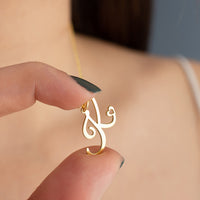
The piece they're describing → Heart Initial Necklace for Women — 18K Gold Plated, Personalized Letter + Heart Pendant
Personalize Yours

