



• Chemistry: Identical to mined diamonds — pure carbon, cubic crystal lattice
• Hardness: Mohs 10 — exactly the same as any natural diamond
• GIA certified: Yes — graded using the same 4Cs (cut, color, clarity, carat)
• FTC ruling (2018): Lab grown diamonds are legally classified as real diamonds
• Price: 70–80% less than natural diamonds (CVD technology has scaled rapidly)
• Resale value: Poor — but so are natural diamonds for most buyers
• The real debate: Not real vs fake — it's about value, rarity, and what "real" means to you

"Are lab grown diamonds real?" is one of the most searched questions in the jewelry world right now — and it makes sense. The stakes feel high. You're probably considering buying one, or someone told you they're fake, and you want the truth before spending any money.
Here's the honest breakdown. "Real" means different things to different people. To a chemist, lab grown diamonds are completely real — identical to mined diamonds at the atomic level. To an investor or traditionalist, they're less valuable because they don't carry rarity or natural origin. Neither answer is wrong. Both are worth understanding before you decide.
The Science: What "Real Diamond" Actually Means
A diamond is defined by its crystal structure, not its origin. Every diamond — lab grown or mined — is made of pure carbon atoms bonded in a cubic crystal lattice called the diamond cubic structure. (Lab-grown stones generally are also a lower-impact material choice, covered in our sustainable jewelry guide.) This arrangement is what gives diamond its extraordinary properties: Mohs 10 hardness (the hardest natural material), brilliant light refraction, and thermal conductivity that conducts heat like no other gemstone.
Lab grown diamonds share every one of these properties. When you hold a lab grown diamond, it conducts heat identically to a mined diamond — which is why a standard diamond tester reads both the same way. A basic heat-probe tester will say "diamond" for both, because they are both diamond.
The scientific consensus is unambiguous: lab grown diamonds are diamonds. Saying a lab grown diamond isn't "real" is like saying ice made in a freezer isn't real ice because it didn't form in a glacier. The water molecules are identical. The structure is identical. The properties are identical. The origin differs.
How Lab Grown Diamonds Are Made
There are two methods for growing diamonds in a laboratory. Both replicate the conditions that form diamonds in nature — they just do it faster and more controllably.
HPHT (High Pressure High Temperature) mimics the conditions deep in Earth's mantle, where natural diamonds form. A carbon source is placed in a chamber and subjected to extreme pressure (roughly 1.5 million PSI) and high heat (over 1,400°C / 2,550°F). Under these conditions, carbon atoms crystallize around a diamond seed into a new diamond. This is the older of the two methods and tends to produce yellow-tinted stones unless carefully controlled.
CVD (Chemical Vapor Deposition) is the technology that's transformed the industry. A diamond seed is placed in a sealed chamber filled with carbon-rich gas (typically methane). Microwaves ionize the gas into plasma — carbon atoms break free and deposit layer by layer onto the seed, growing a diamond from the top down. CVD diamonds tend to be colorless or near-colorless and have become dramatically cheaper as the technology has scaled. This is why lab grown diamond prices fell 70–80% between 2020 and 2026.
Growth time for either method: roughly 6 to 10 weeks. Compare that to natural diamond formation in Earth's mantle: approximately 1 to 3 billion years at depths of 100+ miles below the surface.
Lab Grown vs Natural Diamond: The Honest Comparison
| Attribute | Lab Grown Diamond | Natural Diamond |
|---|---|---|
| Chemical composition | Pure carbon (same) | Pure carbon (same) |
| Crystal structure | Cubic diamond lattice (identical) | Cubic diamond lattice (identical) |
| Mohs hardness | 10 (identical) | 10 (identical) |
| Sparkle and brilliance | Identical refractive index (2.42) | Identical refractive index (2.42) |
| Price (per carat, 2026) | ~$300–$800/ct (VS clarity, G color) | ~$2,000–$8,000/ct (same specs) |
| Resale value | Poor (50–70% loss) | Poor to moderate (varies widely) |
| Rarity | Not rare — scalable supply | Scarce (supply controlled by producers) |
| Origin | Laboratory (6–10 weeks) | Earth's mantle (1–3 billion years) |
The takeaway from that table: every physical property is the same. The differences are price, rarity, and origin — which are market and sentimental factors, not physical ones.
What Does the GIA Say? (And What the FTC Ruled)
In 2018, the Federal Trade Commission (FTC) updated its Jewelry Guides and officially removed the word "natural" from its definition of "diamond." The old definition required diamonds to be mined from the earth. The updated definition acknowledges that lab grown diamonds meet the scientific and physical criteria for the term — they are diamonds.
The Gemological Institute of America (GIA) grades lab grown diamonds using the same 4C system it uses for natural diamonds: Cut, Color, Clarity, and Carat weight. Lab grown diamonds receive GIA grading reports just like natural diamonds. The only difference is that the report is clearly labeled "Laboratory-Grown Diamond" so there's full transparency about origin.
IGI (International Gemological Institute) also certifies lab grown diamonds and is widely used by retailers. Both IGI and GIA grading reports on lab grown diamonds carry the same meaning — they're assessing the same qualities using the same standards.
If you're buying a lab grown diamond, always ask for a GIA or IGI certificate. This gives you an independent quality assessment and confirms the stone's specifications in writing.

Can Anyone Tell the Difference?
With the naked eye: no. Lab grown and natural diamonds are visually identical. There's no visual marker, no color difference, no surface texture difference that would let a person — even a trained gemologist — distinguish them by sight alone.
With a standard diamond tester: no. Both conduct heat identically, so a heat-probe tester reads both as diamond. Older "fake diamond" testers were designed to screen out cubic zirconia (CZ) and moissanite — they weren't built to distinguish lab grown from natural diamond because the chemistry is the same.
With specialized equipment: sometimes. A UV fluorescence spectrometer can identify subtle differences in the growth patterns left by HPHT or CVD processes — tiny inclusions or strain patterns that differ slightly from natural formation. The GIA uses instruments called DiamondView and IIDGR to distinguish lab grown from natural diamonds for certification purposes. But this requires expensive, specialized lab equipment not available to everyday jewelers.
Bottom line: your jeweler cannot tell by eye, and your guests definitely can't. The distinction exists only in documentation and specialized equipment.
The Investment Question: Honest Answer
Lab grown diamonds have poor resale value. If you buy a 1ct lab grown diamond for $500 and try to sell it a year later, you might recover $100–$200. That's a significant loss.
But here's what almost nobody says: natural diamonds also have poor resale value for most buyers. Unless you're buying exceptionally rare, large, or colored diamonds from prestigious auction houses, natural diamonds typically return 20–50 cents on the dollar when resold through a jeweler or secondhand market. The "diamonds hold their value" belief is largely a myth for the average retail purchase.
The difference is that lab grown diamonds are depreciating faster because supply is increasing — CVD technology is scaling, and the price of lab grown diamonds is expected to continue falling. Natural diamonds have controlled supply, which provides some price floor. But neither is a reliable investment vehicle for everyday buyers.
If you're buying a diamond as an investment: consult a specialized gemstone investment advisor and focus on certified natural stones with exceptional specs and provenance. If you're buying a diamond to wear and love: the lab grown option gives you significantly more stone for your money.
Are Lab Grown Diamonds Worth Buying?
Yes, a lab grown diamond makes sense when: You want the look and hardness of a diamond at a significantly lower price. You care about ethical sourcing and prefer a stone with no mining footprint. You're prioritizing size and quality specs over rarity or natural origin. The diamond is for personal wear, not a financial asset.
A natural diamond might make more sense when: Natural origin carries emotional or traditional significance for you — the geological story matters. You're buying a rare, large, or colored natural diamond where rarity contributes genuine value. You want the prestige associated with mined diamonds in certain social or cultural contexts.
Neither choice is objectively better. The question is what you value — and being honest with yourself about that is the whole point of understanding the difference.
What About Moissanite?
If the appeal of lab grown diamonds is getting the most brilliance for your budget, moissanite is worth knowing about. It's not a diamond — it's silicon carbide, a different material — but it has even more fire (light dispersion) than diamond and sells for a fraction of the cost. A 1ct moissanite equivalent typically runs $100–$300.
The tradeoff: moissanite has a slightly different sparkle (more rainbow "fire" than white light) and isn't a diamond in any chemical sense. For some buyers that's a dealbreaker; for others it's exactly the look they want. Check out our moissanite vs diamond guide and what is moissanite for a full comparison.
More from the AJLuxe Gemstone Guide
- Moissanite vs Diamond — Full Comparison
- Lab Diamond vs Moissanite — Which Is Better?
- What Is Moissanite? The Complete Guide
- Moissanite vs Cubic Zirconia — Key Differences
- Shop Gemstone Necklaces at AJLuxe
Frequently Asked Questions
Are lab grown diamonds fake?
No. Lab grown diamonds are real diamonds — not simulants, not imitations. They're made of pure carbon in a cubic crystal structure, identical to mined diamonds at the atomic level. Cubic zirconia (CZ) and moissanite are diamond simulants — they look similar but are different materials. Lab grown diamonds are chemically the same material as natural diamonds; only their origin differs.
Do lab grown diamonds hold their value?
Lab grown diamonds have poor resale value — typically 50–70% loss if sold within a year or two of purchase. Natural diamonds also have poor resale value for most retail purchases unless they're rare, large, or from a prestigious provenance. Neither is a reliable investment. Buy a diamond to wear, not as a financial asset.
Can a jeweler tell if a diamond is lab grown?
Not by eye, and not with a standard diamond tester. Both lab grown and natural diamonds conduct heat identically, so a heat-probe tester reads both as genuine diamonds. Only specialized laboratory equipment (like GIA's DiamondView or UV fluorescence spectrometers) can reliably distinguish them by subtle growth pattern differences — and this requires sending the stone to a grading lab.
Are lab grown diamonds GIA certified?
Yes. The Gemological Institute of America (GIA) grades lab grown diamonds using the same 4C system (Cut, Color, Clarity, Carat) used for natural diamonds. GIA reports for lab grown diamonds are clearly labeled "Laboratory-Grown Diamond." IGI (International Gemological Institute) also widely certifies lab grown diamonds. Always request a certificate when purchasing.
Do lab grown diamonds look the same as natural diamonds?
Yes — visually identical. Same refractive index (2.42), same dispersion, same sparkle. Lab grown diamonds often come in better clarity grades for the same price because you can grow them under controlled conditions that minimize inclusions. There is no visual difference the naked eye — or even a trained gemologist without specialized equipment — can detect.
Are lab grown diamonds ethical?
Lab grown diamonds have a significantly lower mining impact since no earth is excavated. However, they're energy-intensive to produce — HPHT and CVD both require large amounts of electricity. Some producers use renewable energy; others don't. If ethical sourcing matters to you, ask the retailer about the energy source used in production, not just whether the stone is lab grown.
Why are lab grown diamonds so cheap now?
CVD (Chemical Vapor Deposition) technology has scaled dramatically since 2020. As more facilities came online and the process became more efficient, the cost to grow a diamond dropped sharply — roughly 70–80% over five years. Lab grown diamonds are increasingly a commodity product, which is great for buyers but means prices are likely to continue falling.
What is the FTC's ruling on lab grown diamonds?
In 2018, the Federal Trade Commission (FTC) updated its Jewelry Guides and removed the word "natural" from its definition of "diamond." This means lab grown diamonds legally qualify as diamonds under US consumer protection guidelines. Sellers must still disclose that a diamond is lab grown, but they cannot legally call lab grown diamonds "fake" or "imitation."
Can lab grown diamonds have inclusions?
Yes. Lab grown diamonds can have inclusions — just like natural diamonds. CVD diamonds sometimes have a specific type of inclusion called "graining" or slight color strains from the deposition process. HPHT diamonds can have metallic flux inclusions. These are typically minor and may not be visible without magnification, but they're real quality variables that affect price — exactly like natural diamond inclusions.
Should I buy a lab grown diamond or a moissanite?
It depends on what you want. If you want an actual diamond (same material, certified, Mohs 10) at a lower price than mined diamonds — lab grown diamond. If you want maximum brilliance at an even lower price and don't need the stone to technically be diamond — moissanite. Moissanite costs significantly less and has more fire (rainbow light dispersion), but it's a different material (silicon carbide, not carbon) and some people can notice the difference in how the light behaves.
Final Thoughts
Lab grown diamonds are real diamonds. The science is settled, the FTC has ruled, and GIA grades them. If someone tells you they're fake, they're either misinformed or conflating "not mined" with "not real."
The more useful question isn't "are they real?" — it's "are they right for you?" That answer depends on how much you value natural origin, what your budget is, whether resale value matters, and what story you want the stone to carry. For most buyers who want a beautiful, durable gemstone to wear every day, lab grown diamonds offer exceptional value. For buyers who place meaning in rarity and natural origin — natural diamonds still hold something lab grown diamonds can't replicate.
Know what "real" means to you, and choose accordingly.
Written by the AJLuxe team — specialists in personalized sterling silver jewelry. Last updated: June 2026.
Sources:
• GIA — Laboratory-Grown Diamonds
• FTC Jewelry Guides 2018 Update
• International Gemological Institute (IGI)
All third-party trademarks, brand names and product names are the property of their respective owners. AJLuxe is not affiliated with, endorsed by, sponsored by, or otherwise connected to any third-party brand referenced in this article. Brand names are used solely for accurate comparative reference, and material descriptions reflect each brand's own published product specifications at the time of writing.
You Might Also Like
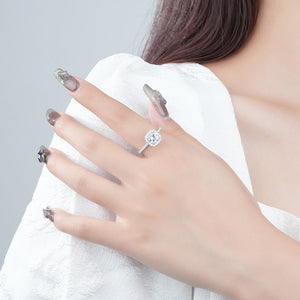

The piece they're describing → Moissanite Halo Ring — Sterling Silver, 18K White Gold, CZ
Personalize Yours


