


- The best stackable ring combinations follow three rules: anchor with one hero ring, mix textures intentionally, and spread rings across fingers unless going full maximalist.
- Seven specific combination recipes below — from a minimal three-ring stack to a bridal build to a birthstone trio — with exact ring types and the contrast principle behind each.
- Finger shape changes everything. Short fingers stack vertically on one finger; long fingers can go wide and bold.
- 18K gold-plated over 925 sterling silver is hypoallergenic and ideal for stacking — all AJLuxe rings start at $24.99.
Most ring stacks look cluttered for the same reason: no anchor, no contrast logic, and too many rings crammed onto one finger. Three specific rules fix that — and once you know them, you can build the best stackable ring combinations for your hand, your budget, and the occasion. This guide gives you seven named looks with exact ring types, a breakdown by finger shape, a metal-mixing comparison table, and answers to every question the internet's been asking about ring stacking. Whether you're starting from scratch or adding to a stack you already own, you'll leave here with a clear plan.
The combinations below work because they follow principles, not trends. Get the principles right and every stack you build looks intentional — not accidental.

The 3 Rules That Make Any Stack Work
Before you choose specific rings, lock in these three rules. They apply to every combination in this guide.
Rule 1: Anchor with one hero piece. Every strong stack has one ring that holds the eye — usually the widest band, the most textured ring, or the one with a stone. Everything else dresses around it. Without a hero, the eye jumps between rings with nowhere to land and the stack reads as busy.
Rule 2: Mix textures, not chaos. The formula that works every time: one smooth polished band + one twisted or hammered band + one plain thin band. That's three distinct textures reading as one intentional decision. All three textured at once is too much. All three plain and smooth is too safe. The middle path wins.
Rule 3: Spread across fingers, not just pile on one. Unless you're deliberately going maximalist, distributing rings across two or three fingers gives the stack breathing room. One ring on the middle finger + three on the ring finger reads as a considered look. Five rings on one finger reads as a pile-up — unless that's exactly the vibe you're after, in which case own it completely.
Those three rules are the foundation. Every combination below applies all three.
7 Best Stackable Ring Combinations
Each look below includes the exact ring types, the contrast principle at play, and the best finger placement. You can replicate any of these with rings from any brand — including our stacking rings collection at AJLuxe, where all rings are 18K gold-plated over 925 sterling silver.
1. The Minimalist Three
Ring types: A thin plain polished band + a thin twisted rope band + a thin hammered band — all in the same metal.
Why it works: Three textures (smooth, twisted, hammered) in one metal family creates maximum contrast with minimum noise. The matching metal tone unifies the stack so the textures do the work without competing against color differences.
Best finger: Ring finger or middle finger. All three rings on one finger, worn close together so the textures read as a unit rather than three separate rings.
Who it's for: Everyday wear, office environments, anyone building their first stack. This is the starting point most people come back to.
2. The Pink & Gold
Ring types: A pink tourmaline gemstone band + a thin plain yellow gold band + a delicate hammered accent band in yellow gold.
Why it works: The pink stone is the hero. The plain gold band lets it breathe. The hammered band adds texture without color competition. Warm gold tones frame the cool pink stone and the contrast between soft color and warm metal is what makes this combination photograph so well.
Best finger: Ring finger, all three stacked. The gemstone ring goes in the middle position — flanked by the plain band below and the hammered band above.
Who it's for: Anyone who wants a little color without going bold. Works for casual and formal settings equally.
3. The Mixed Metal
Ring types: A yellow gold thin band + a rose gold thin band + a white gold or sterling silver thin band — all the same width.
Why it works: Matching widths across three metal tones makes the mixing look intentional rather than mismatched. The warm-to-cool progression (yellow → rose → white) is a gradient the eye reads as deliberate. This is the 2026 trend look — mixed metals done with restraint.
Best finger: Middle finger. It's a bold combination that reads best on a finger that gets seen. Keep widths identical so nothing dominates.
Who it's for: Trend-forward wearers, people who already own rings in multiple metals and want to wear them together.
4. The Statement Stack
Ring types: A wider engraved or patterned band as the hero + one thin delicate plain band + one midi ring worn above the knuckle.
Why it works: Three different ring positions — below the knuckle, mid-finger, and above the knuckle — use the whole finger as a canvas. The engraved hero anchors the base. The midi ring at the top creates an intentional framing effect. The thin band in the middle gives the eye a place to rest between the two statement pieces.
Best finger: Index or ring finger. Midi rings sit more comfortably on fingers with slightly more taper. Check our adjustable rings for midi sizing — adjustable bands remove the guesswork when sizing above the knuckle.
Who it's for: Maximalist dressers, festival looks, anyone who wants their rings to start a conversation.
5. The Bridal Build
Ring types: A plain wedding band + a thin diamond or cubic zirconia eternity band + an engagement ring (the existing hero).
Why it works: This is about framing a ring you already own. The plain band sits closest to the palm, the eternity band sits between the plain band and the engagement ring, and the engagement ring stays on top as the focal point. Two thin flanking bands elevate the engagement ring without competing with it.
Best finger: Ring finger, left hand. Stack order from palm outward: plain band, eternity band, engagement ring.
Who it's for: Anyone adding to an engagement ring or building a bridal stack over time. For full technique details, see our guide on how to stack rings step by step.
6. The Birthstone Trio
Ring types: A birthstone ring (your stone, or a loved one's) + an initial or letter band + a plain thin band in the same metal.
Why it works: This stack tells a story. The birthstone and initial are the heroes — they carry meaning. The plain band is the neutral that prevents the two personalized pieces from competing. The stack becomes a wearable collection of significance rather than decoration.
Best finger: Ring finger or middle finger. The plain band goes at the base, the birthstone ring in the middle, the initial band at the top.
Who it's for: Anyone building a personalized stack — for themselves or as a gift set. This is the combination that photographs best for gift messaging because every ring means something specific.
7. The Asymmetric Edit
Ring types: Three rings on the ring finger (thin plain + twisted + thin plain) + one accent ring on the middle finger (a single hammered or gemstone band).
Why it works: The asymmetry is the point. Three rings on one finger and one on another creates visual weight on one side that the single accent ring balances from a neighboring finger. This is balanced asymmetry — not random placement but a considered 3:1 distribution that the eye resolves as intentional.
Best finger: Ring finger (three rings) + middle finger (one ring). Keep a small gap between fingers to let the asymmetry read clearly.
Who it's for: Anyone who has tried stacking on one finger and wants to expand without going full maximalist. This is the most photogenic casual stack.

Which Finger Shape Changes Everything
No competitor covers this. It's the single most common reason a stack that looks great on Instagram looks wrong on your hand — the rings were styled for a different finger shape. Here's how to choose combinations for your specific proportions.
Short or Wide Fingers
Avoid wide bands — they shorten the finger visually. Thin bands (under 2mm) elongate. Stack vertically on one finger rather than spreading across multiple fingers; spreading draws the eye horizontally, which emphasizes width. If you want a gemstone ring in the stack, oval or marquise stone cuts elongate more than round or square stones. The Minimalist Three (look #1) works particularly well for this finger shape.
Long, Slender Fingers
Any width works proportionally. Wide bands (4–6mm) look substantial rather than overwhelming. Knuckle rings and midi rings sit well and add visual interest along the full length of the finger. Bold, chunky stacks are flattering — this is the finger shape where the Statement Stack (#4) and Asymmetric Edit (#7) land best. You have the most flexibility of any finger type.
Wide Knuckles
Size up by half a size when stacking. Rings that fit at the base of the finger can feel tight when worn close to a wide knuckle. Leave slight spacing between rings rather than packing them flush — rings bunched at a wide knuckle look uncomfortable because they are. Our adjustable rings are the practical solution here: they expand to fit over the knuckle and settle at the base without sizing stress.
Average Proportions
All seven combinations in this guide were designed to work for average proportions — this is the majority. If you're unsure which category you're in, you probably fall here. Every look above works for you. Start with the one whose aesthetic appeals most and adjust from there.
Metal Mixing — What Works and What Doesn't
The short answer: intentional contrast always works. Accidental clashing doesn't. The difference between the two is deciding on one unifying element before you mix — metal tone, ring width, or finish — and letting that element hold the stack together while the other elements vary.
| Metal Pairing | Works? | Why |
|---|---|---|
| Yellow gold + rose gold | ✅ Yes | Warm tones complement each other — reads as a considered palette |
| Yellow gold + white gold/silver | ✅ Yes | Classic contrast; the cool-warm split is immediately legible as intentional |
| Rose gold + silver | ✅ Yes | Cool-warm contrast, very on-trend in 2026; soft pink against cool silver reads as feminine and modern |
| All yellow gold | ✅ Yes | Clean and classic — let textures do the variation work |
| All silver/white gold | ✅ Yes | Cool and minimalist — pairs with everything |
| Gold + oxidised black | ✅ Yes (bold) | High contrast; works as a statement look when used deliberately with 2–3 rings max |
| Mixed metals + mixed textures | ⚠️ Use with care | Limit to 3 rings or the stack reads as cluttered — too many variables competing at once |
The unifying thread principle: pick one element to keep consistent across all metals in your stack. If the metals vary, keep the widths the same. If the textures vary, keep the metals in the same tone family. If everything varies — different metals, different widths, different textures — nothing holds the eye and the stack reads as random. One constant element = one reason it looks like a decision and not an accident.
For most people, keeping widths identical across mixed metals (like in The Mixed Metal look, #3) is the easiest version of this principle to apply. Same width, different metal tones: always works.
Stacking by Occasion
The rule of thumb for work: wear what you'd keep on if a client shook your hand. That usually means 2–3 rings, one metal, nothing that catches or clinks. From there, the scale shifts upward as the occasion allows.
| Occasion | Stack Size | Metal | Ring Types |
|---|---|---|---|
| Work/office | 2–3 rings | Gold or silver (pick one) | Thin plain bands, subtle texture — nothing wide or gemstone-forward |
| Casual everyday | 3–4 rings | Mixed metals OK | Mix textures freely; one gemstone ring adds personality without effort |
| Formal/evening | 2–3 rings | Gold | Eternity band or gemstone ring as the hero; thin plain bands flanking |
| Wedding/bridal | 3–4 rings | Match engagement ring metal | Thin bands flanking the engagement ring; eternity band optional |
| Festival/maximalist | 5+ rings | Anything | Mix metals, widths, knuckle rings, thumb rings — fully intentional maximalism |
The formal/evening rule is worth noting: fewer rings, higher visual impact. A single eternity band flanked by two thin plain bands on a bare hand reads more formal than six mixed rings stacked high. Evening dressing is about restraint in scale and richness in detail.
For bridal stacks specifically, the engagement ring is always the hero. Every other ring in the stack dresses around it. The Bridal Build (#5) above applies exactly the right principle here — thin flanking bands that frame without competing.
Budget Stacking Guide
Building a stack doesn't require buying everything at once. The best stacks are built incrementally — start with the foundation and add deliberately over time.
Under $50 — The Foundation: Start with 2–3 thin plain bands in 18K gold-plated over 925 sterling silver. These are the most versatile pieces in any stack. They go with everything, work in any combination, and become the backbone you build on. This is where every stack should start — the Minimalist Three (#1) can be built entirely in this range.
$50–$150 — The Complete Everyday Look: Add a textured band (twisted, hammered, or braided) and one gemstone accent ring. This combination — two plain thin bands, one textured band, one gemstone — is the sweet spot for a complete everyday stack. It covers every contrast principle in this guide and works for work, casual, and low-key formal settings. Most people stop here and wear this stack daily.
$150+ — The Story Stack: Add a personalized piece as your hero. An initial ring, a birthstone ring, or an engraved band turns a collection of rings into a stack with meaning. The Birthstone Trio (#6) lives in this tier. The stack becomes a story — not a pile of metal, but a set of rings that each mean something specific to you or the person wearing them.
Note on value: 18K gold-plated over 925 sterling silver gives the look of solid gold at a fraction of the cost — and stays hypoallergenic throughout. The 925 sterling silver base is what makes that hypoallergenic claim hold regardless of the plating layer. All AJLuxe stackable rings are priced from $24.99.
Does Stacking Rings Damage Them?
Stacking rings does not damage most rings — but specific combinations require specific awareness. Here's what to know by material.
Soft gemstones (opals, pearls, turquoise): These sit at 5–6.5 on the Mohs hardness scale (GIA) — softer than most metals. When a soft gemstone ring sits flush against a metal band, the metal can scratch the stone over time. The fix: wear soft gemstone rings as the outermost ring in your stack (nothing pressing against the stone face), or leave a thin gap ring between the gemstone ring and its neighbor.
Hard stones (sapphires, diamonds, moissanite): These sit at 9–10 on the Mohs scale. They're harder than any metal in the stack and cause no scratching concern. Stack freely.
18K gold plating over 925 sterling silver: The plating on the contact surfaces between rings (where they touch) wears faster than the plating on exposed surfaces. This is normal wear. Two ways to slow it: rotate which rings sit adjacent to each other (distributing the contact wear), or choose rings with slightly different widths so they don't sit completely flush and air can circulate between them.
The edge test: If you feel sharp edges catching between rings when you rotate them, they're sitting wrong. Adjust the order until rings rotate smoothly past each other. Sharp edges catching = metal-on-metal friction that accelerates wear for both rings.
Cleaning stacked rings: Stacked rings trap lotion, soap residue, and debris in the gaps between bands faster than single rings. Clean your stack weekly with a soft dry cloth. For deeper cleaning, follow the guidance at jewelers.org — a warm water soak with mild dish soap, soft brush between rings, thorough rinse, and air dry before wearing.
Frequently Asked Questions
What are the rules for stacking rings?
Three rules cover most stacking decisions. First, anchor your stack with one hero piece — the widest, most textured, or most significant ring — and let everything else dress around it. Second, mix textures intentionally: one smooth band + one twisted or hammered band + one plain band works consistently. Third, spread rings across two or three fingers rather than piling everything on one, unless you're deliberately building a maximalist look. These rules apply regardless of metal type, ring size, or personal style.
How to stack rings for beginners?
Start with two or three thin plain bands in the same metal on one finger. This gives you the feel of stacking without commitment — if the fit or the look doesn't work, you've only invested in versatile pieces you'll keep wearing separately. Once you're comfortable with the fit and spacing, add a textured band (twisted or hammered) as a third ring. That three-ring combination — plain, textured, plain — is the most forgiving starting point for beginners and the foundation of several looks in this guide.
What is the correct order of ring stacking?
The hero or widest ring typically sits at the base of the stack (closest to the palm), with thinner bands layering above it. For the Bridal Build (#5), the order from palm outward is: plain wedding band, eternity band, engagement ring. For gemstone stacks, the gemstone ring usually goes in the middle position, flanked by plain bands above and below. There is no universal rule that overrides what looks balanced on your specific hand — these are starting positions, not laws.
Can you wear rings with arthritis?
Yes, but sizing matters more than usual. Arthritis often causes knuckle swelling, which means a ring sized to the base of the finger may be difficult to get over the knuckle, and vice versa. Adjustable rings solve this directly — they can be expanded to slide over a swollen knuckle and gently closed to fit the finger base. Wider bands can also be more comfortable for arthritic fingers than very narrow bands, which can feel like they cut into swollen tissue. Consult your doctor if swelling is severe or persistent.
Is 18K gold-plated OK for stacking?
Yes — 18K gold-plated over 925 sterling silver is one of the most practical choices for stacking. The sterling silver base is hypoallergenic, so even as the plating wears on contact surfaces between rings, the underlying metal remains safe for sensitive skin. The plating on exposed surfaces wears more slowly than the contact surfaces, so the visual appearance holds well with regular care. Rotating which rings sit adjacent to each other extends the life of the plating on all rings in the stack.
How many rings should you stack?
Two to four rings is the range that works for most everyday occasions without requiring active management. Three rings — one on each of two fingers, two on one finger, or all three together — is the most photographed and most consistently flattering number. Five or more rings works for maximalist looks but requires attention to balance so the stack reads as intentional. There is no upper limit if every ring is placed deliberately, but stacks of seven or more rings on one hand typically work best on long slender fingers.
Does stacking rings damage them?
Not for most ring materials — but soft gemstones (opals, pearls, turquoise) can be scratched by adjacent metal bands because they're softer than metal on the Mohs hardness scale. Hard stones like diamonds, sapphires, and moissanite cause no issue. For gold-plated rings, the plating on contact surfaces between rings wears faster than on open surfaces — this is normal, not damage. Rotating ring positions and cleaning the stack weekly with a soft cloth keeps all rings in better condition over time.
Can you mix gold and silver when stacking rings?
Yes. Mixing gold and silver is one of the most common stacking combinations in 2026 and works consistently when you keep one element consistent across all rings in the stack — usually width. Matching widths across yellow gold, rose gold, and silver bands makes the mixed-metal look intentional. The rule: intentional contrast always works; accidental mismatch never does. The difference is deciding on the contrast before you put the rings on, not after.
What finger is best for stacking rings?
The ring finger and the middle finger are the most common stacking fingers because they provide the most surface area and visual balance with the rest of the hand. The index finger works well for a single accent ring that balances a larger stack on the ring finger. The pinky finger suits thin bands and midi rings. The thumb is a statement position — one or two rings on the thumb immediately draws the eye. For finger shape guidance, the section above covers how short, long, and wide-knuckle fingers each require slightly different combination strategies.
Should stackable rings be the same size?
Not necessarily. Rings stacked on the same finger should all fit that finger at the intended wearing position — some people size up slightly to accommodate multiple rings sitting close together and creating a tighter fit collectively. Rings worn on different fingers should be sized to each finger independently. If you're stacking above the knuckle (midi rings), size to that position specifically — it's typically 1–2 sizes smaller than the base of the same finger. Adjustable rings remove this complexity entirely for any position above the knuckle.
If you're considering a promise ring, understanding the symbolism first makes all the difference. What Does a Promise Ring Mean? covers every style, finger placement, and how it differs from an engagement ring.
Not sure what size to order? Our ring size guide covers 4 measurement methods, a complete size chart, and how to find ring size as a gift buyer.
Deciding which finger to wear your ring on? Our complete guide to ring on each finger meaning covers every finger — thumb to pinky — and the left vs. right hand difference.
Looking for the full breakdown of every ring style? Our complete guide to types of rings for women covers all 16 ring types — from stacking and signet rings to cocktail and midi rings — with a style comparison table and occasion guide.
For the full picture on rings — types, finger meanings, stacking, metals, sizing and gifting — read The Complete Ring Guide.
Final Thoughts
The best stackable ring combinations aren't complicated. Anchor with one hero piece. Mix textures with intention — not at random. And spread rings across fingers unless you're going full maximalist on purpose. Those three rules apply to every combination in this guide, from the two-ring minimalist stack to the five-ring festival build. Get the rules right and you can build any look, with any budget, for any occasion.
Start where you are. Two thin plain bands in 18K gold-plated sterling silver is a complete stack. Add a textured band when you're ready. Add a birthstone or initial ring when the stack should mean something specific. The best stacks are built slowly — one ring at a time, each one chosen for a reason.
Explore our full stacking rings collection — all 18K gold-plated over 925 sterling silver, hypoallergenic, and priced from $24.99. Every ring is designed to work alone or in a stack.
Written by Vaishakhi Ajmera — founder and jewelry specialist at AJLuxe. Last updated: May 2026. For ring shopping inspiration, see our best stacking rings for women 2026 guide.
You Might Also Like

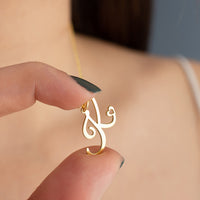
The piece they're describing → Heart Initial Necklace for Women — 18K Gold Plated, Personalized Letter + Heart Pendant
Personalize Yours

