


Malachite is one of the most visually unmistakable stones in the mineral world. Those concentric bands of deep forest green and pale mint — no two patterns ever the same — have made it recognizable across 6,000 years of human history. The ancient Egyptians ground it into eye paint. Russian tsars covered palace rooms with it. And today it sits at the intersection of mineralogy and crystal healing as one of the most widely worn transformation stones.
At AJLuxe, we set genuine gemstones in 925 sterling silver — every stone is inspected for consistent colour and natural character before it goes into a piece.
This guide covers the real chemistry behind malachite's banding and color, its deep history across cultures, how to evaluate quality, how it compares to similar green stones, and its crystal healing meaning — including the toxicity facts no one explains clearly enough.
The Chemistry Behind Malachite's Green
Malachite is a copper carbonate hydroxide mineral — chemical formula Cu₂(CO₃)(OH)₂. The copper content gives it its green color. More copper concentration = deeper, richer green. Less = the pale mint-green of the lighter bands.
Malachite forms where copper ore deposits meet oxygen, water, and carbon dioxide near the earth's surface. When copper sulfide minerals weather and oxidize, they react with carbonated groundwater to precipitate malachite. This happens slowly, over thousands to millions of years, in the oxidized zone above copper ore deposits.
The banding you see in polished malachite is a growth record. Each band represents a period of crystal growth at a slightly different copper concentration or growth rate. Faster growth = lighter band. Slower, copper-richer growth = darker band. The concentric rings you see in eye-pattern malachite formed around a nucleation point — the stone literally grew outward in rings, like tree rings but in geological time. The "peacock eye" and bull's-eye patterns form when stalactitic growth happens from multiple nucleation points that merge.
Malachite almost always forms alongside azurite (copper carbonate with slightly different chemistry, blue instead of green) and chrysocolla (copper silicate, blue-green). Finding all three together is a reliable sign of a major copper deposit. The world's greatest malachite sources — Congo, Russia's Ural Mountains, Zambia, and Australia — are all major copper-mining regions.
One practical consequence of malachite's copper chemistry: it is toxic in raw or powdered form. Copper compounds are poisonous — the same reason verdigris (oxidized copper) is toxic. This matters for two reasons anyone wearing malachite should know. See the Safety section for full details.
What Malachite Means
Malachite's core meaning is transformation — and not the comfortable kind. It's specifically associated with the courage to face what you've been avoiding: old emotional patterns, relationships that have run their course, habits or beliefs you've outgrown but haven't let go. Where rose quartz gently opens the heart, malachite forcefully clears it.
In crystal healing traditions, malachite centers on five interconnected themes:
- Transformation: Malachite doesn't preserve the status quo — it accelerates change. It's recommended for anyone stuck in a cycle, resistant to necessary change, or carrying emotional weight they've been unable to release. The stone's own formation — constant chemical transformation of copper ore into something new — mirrors this energy.
- Heart opening: As a heart chakra stone, malachite works on the emotional center — clearing blocked grief, resentment, and fear of vulnerability. It's the stone of people who've shut down emotionally and need a catalyst to open back up.
- Protection: One of the oldest protective amulet stones in recorded history. The "evil eye" association is documented from ancient Egypt through to modern use: the eye-like patterns in malachite were believed to see through deception and reflect harmful intentions back to their source.
- Amplification: Malachite is considered an amplifier — it intensifies what it touches, which means it can amplify both positive healing and intense emotional release. It's not a gentle stone. Many crystal healers recommend short initial sessions with malachite for this reason.
- Clarity of will: Malachite also works the solar plexus in many traditions — the seat of personal power and the ability to act decisively. It combines the heart's emotional intelligence with the will's capacity to act on what it knows.
History and Cultural Significance
Ancient Egypt (4000 BCE–): Malachite is one of the oldest documented minerals in human use. The Sinai Peninsula and Eastern Desert of Egypt contained rich copper deposits — and therefore rich malachite deposits — that Egyptian miners worked from at least 4000 BCE. Egyptians ground malachite into a fine powder and used it as kohl — the iconic green-black eye paint seen in hieroglyphs and on the face of Pharaoh Tutankhamun's golden death mask. The Egyptians associated the green with Hathor, goddess of beauty and the sky, and with the fertile lands of the Nile delta. The "Field of Malachite" was their term for paradise. Egyptian women also used malachite pigment in cosmetics — making it one of the earliest recorded cosmetic minerals on earth.
Ancient Greece and Rome: The Greeks named it molochitis lithos — "mallow-green stone" — for its resemblance to the color of mallow plant leaves. Roman soldiers wore malachite amulets engraved with the sun god Sol, believing the stone's eye-like pattern would watch over them in battle and detect deception in those around them. Roman physicians prescribed powdered malachite (mixed with other compounds) for eye ailments — continuing the Egyptian tradition of malachite as an eye-associated stone.
Russia and the Imperial Ural Collection: This is the chapter of malachite's history that no competitor article covers — and it is extraordinary. The Ural Mountains of Russia, particularly mines near Yekaterinburg, produced the world's largest malachite deposits from the mid-18th century through the late 19th century. Blocks weighing hundreds of kilograms were extracted — including the famous Demidov block of over 250 kg, now in the Mineralogical Museum in Moscow.
Russian craftsmen developed a technique called "Russian mosaic" (also called malachite veneer): rather than carve objects from solid malachite (too brittle and expensive), they cut the stone into thin slices, matched the banding patterns precisely, and veneered them onto stone or metal cores. The result looked like solid malachite while using the material efficiently. This technique was used for furniture, vases, columns, tabletops, and entire room decorations.
The crown jewel of this era: the Malachite Room of the Winter Palace (Hermitage Museum, St. Petersburg). Commissioned by Tsar Nicholas I and completed in 1839, after the great fire that destroyed the original Winter Palace, the room contains more than two tons of Ural malachite. Eight columns, four pilasters, two fireplaces, and decorative objects — all covered in Russian mosaic technique. The room served as the empress's formal reception room. In 1905, Tsar Nicholas II signed Russia's first constitution (the October Manifesto) at the malachite table in this room. The Ural malachite deposits were largely depleted by the early 20th century, making Imperial Russian malachite irreplaceable. You can still see the Malachite Room today at the State Hermitage Museum.
Victorian Europe: Malachite jewelry became fashionable across Europe in the 19th century, driven by Russia's exports and the opening of Congolese copper mines. Malachite cabochons set in gold were a mark of taste — bold, colorful, and distinctively patterned. Unlike the subtle stones favored in earlier eras, Victorian malachite jewelry made a statement.

Malachite Quality Guide
Malachite is evaluated on four factors: banding pattern, color contrast, origin, and surface quality.
Banding Patterns (most to least valuable)
| Pattern | What it looks like | Rarity |
|---|---|---|
| Peacock eye / bull's-eye | Perfect concentric circles centered on one point, like an eye or target | Rare — highest value |
| Kidney / botryoidal eye | Multiple overlapping circular patterns, like bubbles | Uncommon — high value |
| Stalactitic | Wavy, flowing bands like wood grain — the most common pattern | Common — standard value |
| Radiating / sunburst | Bands radiate outward from a central point like a starburst | Uncommon — high value |
| Uniform striped | Parallel straight bands — least distinctive pattern | Very common — lower value |
Origin Quality Guide
| Origin | Characteristics | Notes |
|---|---|---|
| Russia (Ural Mountains) | Finest bands, deepest color contrast, peacock-eye patterns most common | Deposits largely depleted — antique/estate pieces command premium |
| Congo (DRC) | Most of today's commercial supply — rich dark green, good banding | Best value for jewelry; most malachite sold today is Congolese |
| Zambia | Bright, saturated green — often found with azurite ("azurmalachite") | Smaller deposits; prized for color intensity |
| Australia (Queensland, South Australia) | Good quality, consistent banding | Burra mine (SA) historically significant; modest current production |
Color contrast: The best malachite has sharp, high-contrast bands — deep emerald alternating with bright pale mint. Low-quality malachite has muddy bands where the colors blend into each other. When buying, look for crisp, distinct banding lines.
Surface quality: Malachite is relatively soft (Mohs 3.5–4) and scratches easily. A properly polished stone should have a glassy surface with no scratches, pits, or dull patches. In jewelry, malachite is best protected in bezel settings rather than prong settings, which leave the surface exposed.

Malachite vs Similar Green Stones
Several green stones are regularly confused with malachite — or compared to it for healing purposes. Here's how they differ:
| Stone | Appearance | Mineral | Meaning | Key difference |
|---|---|---|---|---|
| Malachite | Banded green with concentric rings | Copper carbonate | Transformation, heart chakra | Unmistakable banding; avoid water |
| Chrysocolla | Turquoise-green, often with matrix | Copper silicate | Communication, calming | No banding; blue-green not forest green |
| Azurite | Deep blue — or blue-green when mixed with malachite | Copper carbonate | Intuition, third eye | Blue, not green; forms alongside malachite |
| Green aventurine | Translucent green with sparkle | Quartz with fuchsite | Luck, opportunity, heart | Translucent and glittery; no banding |
| Jade (nephrite) | Solid green, waxy luster, semi-translucent | Calcium magnesium silicate | Harmony, abundance, longevity | Much harder (Mohs 6–6.5); no banding |
The quick identification test: If the stone has distinct green and mint-green banding with concentric or wavy patterns, it's malachite. Malachite never sparkles, never has visible crystal structure on the surface (it's always opaque and banded), and its green is specifically a forest to emerald green — not blue-green.
Heart Chakra and Transformation Energy
Malachite is one of the primary heart chakra stones — assigned to Anahata, the fourth chakra, located at the center of the chest. The heart chakra governs how you give and receive love, your capacity for emotional openness, and your ability to form meaningful connections. When the heart chakra is blocked, the symptoms are recognizable: emotional numbness, difficulty trusting others, the habit of keeping people at arm's length, or the inability to let go of old hurts.
Malachite's role at the heart chakra is specifically about clearing, not opening. It's like a drain cleaner for emotional blockage — it pulls up what's been sitting stagnant and forces it into conscious awareness so it can be released. This is why some people find their first experiences with malachite emotionally intense: the stone does what it's supposed to do, which isn't always comfortable.
In some traditions, malachite also works the throat chakra — the seat of authentic expression. When transformation happens at the heart chakra, the throat chakra is next: once you've cleared what you've been suppressing emotionally, the throat chakra work is expressing your newly clarified truth. This is why malachite is recommended for people who know what they need to say but can't bring themselves to say it.
Malachite pairs powerfully with rose quartz (to balance its intensity with gentle heart energy), black tourmaline (for grounding during emotional release), and citrine (to convert transformed energy into forward momentum).
Zodiac Associations
Malachite is associated with four zodiac signs, though its connection to each differs in emphasis:
| Sign | Why malachite suits them | Specific benefit |
|---|---|---|
| Taurus (Apr 20–May 20) | Primary traditional birthstone. Taurus resists change — malachite counterbalances this with transformation energy | Breaks through stubborn patterns; encourages necessary change |
| Scorpio (Oct 23–Nov 21) | Scorpio is the sign of death and rebirth — malachite's transformation energy is deeply aligned | Supports the Scorpio tendency toward deep emotional excavation |
| Capricorn (Dec 22–Jan 19) | Capricorn can sacrifice emotional health for ambition — malachite protects the heart in high-achievement pursuit | Prevents emotional suppression; keeps ambition grounded in values |
| Libra (Sep 23–Oct 22) | Libra avoids conflict and can suppress authentic feelings to maintain harmony | Supports emotional honesty; encourages saying what's actually true |
Related: Malachite is the primary traditional birthstone for Taurus — read the complete Taurus birthstone guide for the full list of stones and what they mean for this sign.
How to Use Malachite
Jewelry: The most consistent way to benefit from malachite's energy is wearing it against the skin. A malachite pendant positioned at chest level sits close to the heart chakra. Malachite earrings and bracelets also work — the skin contact is the constant. AJLuxe malachite jewelry uses polished cabochons in sterling silver settings — the necklaces and earrings are hypoallergenic and safe for sensitive skin.
Meditation: Hold a malachite palm stone in your left hand (receiving hand) during meditation, or place it on your chest at the heart chakra. Start with 10–15 minutes — malachite is an amplifier, and longer initial sessions can bring up more emotion than you're prepared to work with. Increase the session length as you become familiar with how the stone affects you.
At home: Place malachite near your work area to absorb stress and negative energy. The stone is said to absorb electromagnetic pollution from electronics, making it a popular choice for placement near computers. Note the toxicity caveat below: rough/raw malachite should be kept away from moisture.
During major transitions: Malachite is specifically recommended during life changes — moving, career pivots, ending or beginning relationships, grief. The "stone of transformation" label is most meaningful in exactly these contexts. Keep it nearby when you're navigating a period that requires letting go of what was to make room for what's coming.
Safety, Toxicity, and Care
Most articles mention that you shouldn't put malachite in water — but very few explain why, leaving readers confused about whether their polished jewelry is safe. Here's the clear explanation:
Why raw malachite is toxic: Malachite is a copper compound. Copper is a heavy metal. When raw or powdered malachite contacts water, it can leach copper ions into the liquid. Ingesting copper-contaminated water causes copper poisoning. The dust from grinding or polishing raw malachite is also hazardous if inhaled — which is why professional lapidaries work with wet grinding and respirators when working malachite.
Is polished malachite jewelry safe to wear? Yes. The polishing process seals the surface and there is no leaching from a smooth, polished cabochon worn as jewelry. You can wear polished malachite pendants, earrings, and bracelets against your skin daily without any health concern.
The three rules:
- Never make gem water or crystal elixirs with malachite — not even with polished pieces. This is non-negotiable. The copper content makes any malachite-infused water potentially toxic to drink.
- Keep raw malachite dry — rough specimens should be stored away from humid environments (bathroom shelves, for example, are not ideal). A dry display shelf or box is fine.
- Wash hands after handling raw specimens — polished jewelry is fine, but if you're handling rough, unpolished malachite (raw crystals or specimens), wash your hands before eating or touching your face.
How to cleanse malachite energetically: Because water is off-limits, use dry cleansing methods. Smudging with sage or palo santo smoke works well. Placing malachite on a selenite charging plate overnight recharges it without risk. Moonlight cleansing (setting the stone on a windowsill under a full moon) is another effective dry option. Avoid salt water, which can damage the surface and create the same leaching risk as plain water.
Hardness: Malachite is soft at Mohs 3.5–4. It scratches easily — keep it stored separately from harder stones (almost all other jewelry). Clean with a dry or very slightly damp (not wet) soft cloth only.
Related: Learn why malachite is one of Scorpio's signature birthstones — read the complete Scorpio birthstone guide.
Malachite Crystal Combinations and Pairings
Malachite is an intense stone — its transformative energy moves quickly and can feel overwhelming when used alone or in unfocused settings. Pairing it thoughtfully with complementary crystals helps direct that energy productively.
Malachite + Clear Quartz (The Amplifier Pairing): Clear quartz amplifies whatever stone it is paired with. With malachite, this means deeper transformation and more active energy movement — suitable for intentional shadow work, breaking stubborn patterns, or periods where you need accelerated change. Use this combination with awareness; the intensity is not for sensitive moments or times of emotional fragility.
Malachite + Rose Quartz (The Transformation-with-Gentleness Pairing): This is one of the most recommended pairings for malachite, especially for emotional healing. Malachite surfaces hidden emotions and patterns; rose quartz ensures those revelations are processed with self-compassion rather than self-criticism. The two stones together create a Heart Chakra environment where transformation feels safe rather than brutal. This pairing is particularly useful for grief work, healing from relationships, and building self-worth.
Malachite + Black Tourmaline (The Protection Pairing): Malachite's amplifying properties can sometimes magnify negative patterns as readily as positive ones. Black tourmaline acts as a psychic shield, ensuring that malachite's energy-amplification works in one direction — forward and upward — rather than intensifying existing anxiety or fear. Keep both stones together during meditation or when working through deep emotional material.
Malachite + Rhodonite (The Emotional-Healing Pairing): Both are heart-centred stones, but they work differently. Malachite breaks open and reveals; rhodonite soothes and integrates. Using them together is like having both a surgeon and a healer — the malachite identifies and removes what needs to go, the rhodonite helps the heart recover and rebalance. This combination is frequently recommended after the immediate crisis phase of a difficult period has passed.
Important: Handle raw malachite with care. Raw or powdered malachite contains copper carbonate, which is mildly toxic if ingested or inhaled in dust form. Polished malachite in jewellery form is completely safe to wear against skin. Never use raw malachite in drinking water or crystal-infused water preparations. Tumbled and polished pieces are inert and safe for all normal crystal practices.
Related reading: Malachite vs jade.
Frequently Asked Questions
What does malachite mean spiritually?
Malachite is the stone of transformation — it's specifically associated with the courage to change: releasing emotional patterns, moving through stagnation, and opening the heart to what comes next. It works primarily on the heart chakra and is recommended for anyone feeling emotionally stuck, blocked, or resistant to a change they know is necessary. The intensity of its energy means it can bring buried emotions to the surface quickly, which is the point — it clears what's been suppressed so it can be released.
Is malachite toxic?
Raw malachite is toxic if ingested or if its dust is inhaled — it contains copper compounds that can cause copper poisoning. Polished malachite jewelry is completely safe to wear, as the smooth sealed surface does not leach copper. The key rules: never make gem water or elixirs with malachite (polished or raw), keep rough specimens dry, and wash hands after handling raw unpolished malachite before eating.
Can you put malachite in water?
No. Malachite should never be placed in water — not even polished pieces. The copper carbonate mineral can leach copper ions into water, making the water potentially toxic to drink. For energetic cleansing, use dry methods: smudging, selenite plate, or moonlight. For physical cleaning, use a dry or very slightly damp soft cloth only — never soak or submerge.
Who should wear malachite?
Malachite suits anyone navigating a significant life transition, working through emotional blocks, or feeling stuck in a pattern they can't break. It's specifically recommended for Taurus (its traditional birthstone), Scorpio, Capricorn, and Libra. People who tend to suppress emotions or avoid necessary change are considered ideal candidates. Because malachite is an amplifier — it intensifies what it touches — it's less suited for people already in the middle of an acute emotional crisis who need grounding rather than more intensity.
What chakra is malachite for?
Malachite is primarily a heart chakra stone (Anahata, the fourth chakra). It clears blockages in the emotional center — releasing suppressed grief, resentment, and fear of vulnerability. In some traditions it also works the throat chakra, supporting authentic expression once the heart has been cleared. Physically, it sits at chest level during meditation or when worn as a pendant.
What zodiac is malachite for?
Malachite's primary zodiac associations are Taurus (its traditional birthstone), Scorpio, Capricorn, and Libra. Taurus benefits most directly — the sign's resistance to change is directly counterbalanced by malachite's transformation energy. Scorpio's affinity for depth and rebirth aligns naturally with the stone's clearing properties. Capricorn benefits from malachite's heart protection during high-achievement pursuit, and Libra from its support for authentic expression over people-pleasing.
Is malachite good for anxiety?
Malachite addresses anxiety that is rooted in suppressed emotions or unresolved situations — it's effective for the kind of anxiety that comes from knowing something needs to change but being unable to take action on it. It is less suited for general anxiety or anxiety during an acute crisis, where calming stones like blue lace agate, lepidolite, or amethyst are more appropriate. If you're unsure, pair malachite with amethyst — the combination addresses both the root emotional cause (malachite) and the immediate anxious state (amethyst).
How do you cleanse malachite?
Use dry cleansing methods only — malachite cannot be placed in water. Sage or palo santo smudging is the most effective method: pass the stone through the smoke for 30–60 seconds while setting an intention to clear its energy. A selenite charging plate works passively — just leave malachite on it overnight. Full moonlight is another option: place the stone on a windowsill under a full moon for a 4–8 hour charge. Never use salt water, sound bowls filled with water, or any liquid cleansing method.
Where does malachite come from?
Today's commercial malachite comes primarily from the Democratic Republic of Congo, which supplies most of the jewelry and specimen market. Zambia is a secondary source, often producing azurmalachite (malachite mixed with azurite). Russia's Ural Mountains produced the world's finest historical malachite from the 18th to early 20th century, but those deposits are now largely depleted — making Imperial Russian malachite a collector's item. Smaller deposits exist in Australia (Queensland and South Australia), Chile, and the American Southwest (Arizona's copper belt).
Can malachite be worn every day?
Polished malachite jewelry is safe to wear every day from a health perspective. The consideration is physical rather than chemical: malachite is soft (Mohs 3.5–4) and scratches easily. Daily-wear rings and bracelets in malachite will show wear over time. Malachite pendants and earrings wear much better for daily use since they're less exposed to impact and abrasion. Store malachite separately from other jewelry, and clean only with a soft dry cloth.
What does malachite look like?
Malachite's appearance is distinctive enough that it's rarely confused once you've seen it: banded forest green and pale mint-green in concentric rings, wavy stripes, or eye-like circular patterns. The background is always opaque (never translucent) with a smooth waxy surface when polished. The banding — from dark emerald to bright pale green — is the defining visual characteristic. No two malachite stones have identical banding. High-quality pieces show sharp, high-contrast band lines with a glassy polish.
What stones pair well with malachite?
Rose quartz balances malachite's intensity with gentle heart energy — a powerful combination for emotional healing that doesn't feel overwhelming. Black tourmaline provides grounding during the emotional release malachite can trigger. Citrine converts the cleared energy into forward momentum and optimism. Amethyst calms the mind while malachite works the heart — useful if you're prone to overthinking emotional experiences. Chrysocolla (another copper mineral) pairs naturally with malachite for communication and expression work. Avoid pairing malachite with other high-intensity amplifiers like moldavite or phenacite unless you're experienced with strong crystal energy.
Shop AJLuxe Crystal Jewelry
Birthstone & gemstone necklaces · 925 sterling silver · from $22.99
Browse Crystal Jewelry →Final Thoughts
Malachite is one of the few stones with a claim to working on both the scientific and symbolic levels. Its chemistry — copper carbonate layers crystallized over geological time — explains both its distinctive appearance and its toxicity in raw form. Its history, from Egyptian eye paint to the Hermitage's 2-ton malachite room, reflects the way every civilization that encountered it recognized something remarkable about it. And its crystal healing reputation as the stone of transformation reflects the oldest use case: as a catalyst for change, in people who need one.
Wearing malachite as jewelry is the most practical way to keep its energy close. AJLuxe carries malachite pendants and earrings set in 18K gold-plated 925 sterling silver — hypoallergenic, polished, and safe for daily wear. Browse the necklace collection and earring collection. All orders include shipping calculated at checkout and arrive in a gift-ready box.
Written by the AJLuxe team. Last updated: May 2026.
Explore more: Crystal Jewelry: Meanings & Guides
All third-party trademarks, brand names and product names are the property of their respective owners. AJLuxe is not affiliated with, endorsed by, sponsored by, or otherwise connected to any third-party brand referenced in this article. Brand names are used solely for accurate comparative reference, and material descriptions reflect each brand's own published product specifications at the time of writing.
You Might Also Like

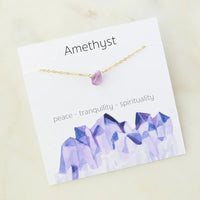
The piece they're describing → Stone Charm Necklace for Women — Raw Natural Gemstone Pendant
Personalize Yours


