


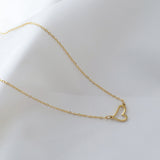
The Complete Guide to Pearl Jewelry: Types, Quality & How to Buy

Pearl jewelry has been worn for over 4,000 years — by ancient Chinese royalty, Egyptian pharaohs, and Renaissance nobility. Today, cultured pearls have made pearl jewelry accessible to everyone, but the sheer range of types, quality grades, and prices can make buying pearls feel overwhelming. This guide covers everything you need: the four main pearl types, how quality is graded, how to spot fakes, the best metal settings, and how to care for your pearls so they last for generations.
Shop pearl jewelry: AJLuxe Pearl Jewelry Collection — curated freshwater pearl pieces in sterling silver settings.
The 4 Main Types of Pearl Jewelry
All pearls — whether they cost $30 or $30,000 — are formed by the same biological process: a mollusk deposits layers of nacre (a crystalline substance made of aragonite and conchiolin) around an irritant. The type of mollusk, the location, and the farming techniques determine the pearl's characteristics.
| Type | Origin | Size | Color | Luster | Price Range | Best For |
|---|---|---|---|---|---|---|
| Akoya | Japan, China | 2–11mm | White, cream, pink | Very high (mirror-like) | $200–$1,000+ | Classic strands, bridal, formal |
| South Sea | Australia, Philippines, Indonesia | 8–20mm | White, silver, gold | Satiny, exceptional | $500–$10,000+ | Statement pieces, heirloom jewelry |
| Tahitian | French Polynesia | 8–18mm | Black, grey, green, peacock | High | $300–$3,000+ | Dramatic, exotic, statement wear |
| Freshwater | China, USA | 4–16mm | White, pink, lavender, peach | Good to excellent | $30–$300 | Everyday wear, gifts, first pearls |
A note on "natural" vs. "cultured": virtually all pearl jewelry sold today uses cultured pearls — pearls grown with human assistance by introducing an irritant into the mollusk. They are 100% real pearls, just farmed rather than wild. True natural pearls (no human intervention) are vanishingly rare and cost $1,000–$100,000+ for a strand. When a jeweler says "pearl jewelry," they almost always mean cultured pearls.
How to Choose Pearl Jewelry — The 4-Factor Framework
Whether you're shopping for yourself or as a gift, these four factors determine both quality and price.
1. Size
Pearl size is measured in millimeters. Every additional millimeter in diameter increases the price by roughly 50% — because larger pearls require longer growth time and represent a smaller percentage of the harvest. For everyday jewelry, 6–8mm is the most practical and flattering range. Anything above 10mm is a statement piece.
2. Luster
Luster is the single most important quality indicator. Hold the pearl up and look at your reflection in it — does it appear clear and sharp (high luster), or fuzzy and chalky (low luster)? High-luster pearls also show an "orient" — a deep iridescent glow beneath the surface. This is what makes a fine pearl look alive.
3. Shape
Round pearls command the highest prices because they're the rarest shape. But near-round, oval, and baroque (irregularly shaped) pearls have their own appeal. Baroque pearls in particular have become increasingly fashionable for contemporary jewelry. Unless you're buying a traditional strand, don't pay a premium for perfect roundness.
4. Setting
The setting frames and protects the pearl. 925 sterling silver is the classic choice — affordable, durable, and the cool tone complements pearl's natural colors. 18K gold-plated settings add warmth and suit cream or golden-toned pearls. See the metals table below for a full comparison.
Deep Dives: Pearl Jewelry Guides
Our cluster of pearl guides covers every major decision point in detail:
Pearl Necklace Buying Guide
The 6 quality factors that determine price — and how to get the most value at every budget from $30 to $3,000+.
Read full guide →Types of Pearls — Complete Reference
All 8 pearl types including lesser-known Keshi, Mabe, Biwa, and Baroque — with quality and price comparisons.
Read full guide →How to Care for Pearl Jewelry
The "last on, first off" rule and every household substance that damages nacre — plus proper storage and restringing advice.
Read full guide →Freshwater vs. Saltwater Pearls
The honest head-to-head comparison — which is actually better for everyday jewelry, and the surprising truth about modern freshwater quality.
Read full guide →Pearl Necklace Meaning & Symbolism
What pearls symbolize across cultures — purity, wisdom, prosperity — and the emotional significance of pearl jewelry as a gift.
Read full guide →Pearl Jewelry by Occasion
Different pearl types and styles suit different occasions. Use this table as a starting point when choosing pearl jewelry for a specific purpose.
| Occasion | Recommended Style | Setting | Size |
|---|---|---|---|
| Everyday office wear | Freshwater stud earrings or short strand | Sterling silver | 6–7mm |
| Casual / weekend | Single freshwater pearl pendant | Sterling silver | 7–9mm |
| Wedding (bride) | Akoya or premium freshwater strand + earring set | White gold or sterling silver | 7–8mm |
| Wedding (bridesmaid gift) | Freshwater pearl studs or simple pendant | Sterling silver | 6–7mm |
| Black tie / formal | South Sea or Tahitian statement necklace | Gold | 9mm+ |
| Gift under $75 | Freshwater pearl studs or dainty pendant | Sterling silver | 6–7mm |
| Milestone birthday | Premium freshwater or Akoya strand | Silver or gold | 7–9mm |
| Heirloom / investment | South Sea or Tahitian | Solid gold | 10mm+ |
How to Tell If Pearls Are Real (Quick Tests)
The market is flooded with imitation pearls — glass, plastic, and shell-based fakes that look convincing in photos. Here are four quick tests you can do at home.
- Tooth test (most reliable): Gently rub the pearl against the biting edge of your front teeth. Real pearls feel slightly gritty or sandy due to the microscopic ridges in the nacre layers. Imitation pearls feel perfectly smooth — like glass or plastic.
- Weight test: Real pearls are denser than most plastic imitations and feel noticeably heavier for their size. Glass fakes can be similar in weight — use the tooth test to confirm.
- Temperature test: Real pearls start cool to the touch and warm slowly against your skin. Plastic fakes warm up almost instantly. Glass fakes also start cool, so again, combine with the tooth test.
- Surface check: Examine the pearl under good light. Real pearls have minor surface irregularities — small ridges, bumps, or subtle blemishes. A perfectly smooth, perfectly uniform pearl is almost certainly fake. (Flawless pearls exist but they're rare and command premium prices.)

Pearl Jewelry Metals — Which Works Best?
The metal setting affects both the aesthetic and the durability of your pearl jewelry. Here's how the main options compare.
| Metal | Why It Works With Pearls | Durability | Price Level |
|---|---|---|---|
| 925 Sterling Silver | Classic cool-white tone complements all pearl colors; affordable; hypoallergenic for most people | Good with care (can tarnish — clean with soft cloth) | $$ |
| 18K Gold Plated | Warm complementary tone suits cream, gold, and South Sea pearls; more lustrous look | Good (plating wears over time — avoid harsh chemicals) | $$$ |
| Solid Gold (14K or 18K) | Heirloom quality; no tarnish; warm tone with excellent durability | Excellent (lasts a lifetime) | $$$$ |
| White Gold | Modern minimalist aesthetic; rhodium-plated surface resists tarnish | Excellent (may need re-plating every few years) | $$$$ |
| Base Metal / Brass | Lowest cost, but reacts with skin; often seen in fast-fashion pearl pieces | Poor (tarnishes quickly, may cause skin reactions) | $ |
At AJLuxe, our pearl jewelry uses 925 sterling silver settings — the most practical balance of quality, longevity, and value. See our pearl jewelry collection alongside our wider gemstone necklace and crystal jewelry ranges.
Pearl Care Basics
Pearls are organic gems with a Mohs hardness of only 2.5–4.5 — softer than most other commonly worn gemstones. The single most important care rule: last on, first off. Always put your pearl jewelry on after applying perfume, hairspray, and makeup, and remove it before swimming, showering, or doing housework. Perfume and chlorine are particularly damaging to nacre.
For cleaning, use only a soft damp cloth after each wear — never ultrasonic cleaners, steam cleaners, or jewelry-cleaning solutions. Store pearl strands flat in a soft pouch (not hanging — the cord stretches), away from harder gemstones that can scratch the nacre.
→ Full care guide: How to Care for Pearl Jewelry
Frequently Asked Questions
What are the 4 main types of pearl jewelry?
The 4 main types are: Akoya (classic white, high luster, $200–$1,000+), South Sea (largest, white or gold, $500–$10,000+), Tahitian (dark and exotic, $300–$3,000+), and Freshwater (most affordable and versatile, $30–$300). Freshwater pearls offer the best value for everyday jewelry.
How can you tell if pearls are real?
The tooth test is the most reliable quick check: gently rub the pearl against your tooth — real pearls feel slightly gritty due to nacre layers, while imitation pearls feel perfectly smooth. Real pearls are also heavier than most plastic imitations, start cool to the touch, and have minor surface irregularities.
What is the best metal for pearl jewelry?
925 sterling silver is the most popular and affordable choice — the cool white tone complements both white and colored pearls beautifully. 18K gold-plated settings add warmth and suit cream or golden-toned pearls. Solid gold or white gold is the premium choice for heirloom pieces.
Are freshwater pearls real pearls?
Yes, freshwater pearls are 100% real pearls. They are cultured in freshwater mussels and consist of genuine nacre throughout. Modern freshwater pearls have dramatically improved in quality and now rival Akoya pearls in roundness and luster at a fraction of the price.
What size pearl looks best for everyday wear?
For everyday wear, 6–8mm pearls are the most versatile — large enough to have presence but not so large they feel formal. Smaller pearls (4–6mm) work beautifully for dainty earrings. Larger pearls (9mm+) are typically reserved for statement pieces or special occasions.
How often should pearl jewelry be restrung?
Pearl necklaces and bracelets should be restrung every 1–3 years depending on how often they are worn. The silk or nylon cord degrades over time, and knots between pearls prevent them from rubbing together and protect against loss if the strand breaks.
What is luster in pearls?
Luster is the intensity and sharpness of light reflected from the pearl's surface. High-luster pearls show a mirror-like reflection and a deep inner glow called "orient." Low-luster pearls look chalky or dull. Luster is determined by the thickness and quality of the nacre layers and is the single most important quality factor to evaluate.
Can you wear pearl jewelry every day?
Yes, but with care. Pearls have a Mohs hardness of 2.5–4.5. For daily wear, freshwater pearls in sterling silver settings are the most practical choice. Always put pearls on after applying perfume, wipe them down after wearing, and store them flat in a soft pouch.
What is the difference between cultured and natural pearls?
Natural pearls form without human intervention and are extremely rare ($1,000–$100,000+). Cultured pearls are grown with human assistance by introducing an irritant into the mollusk. Virtually all pearl jewelry sold today uses cultured pearls — they are real pearls, just farmed rather than wild.
Do pearls come in colors other than white?
Yes. Freshwater pearls naturally occur in white, pink, lavender, and peach. Tahitian pearls are naturally dark — ranging from black and grey to green and peacock iridescence. South Sea pearls come in white, silver, and golden tones. Some jewelry also uses dyed freshwater pearls for bold colors.
How much should I spend on pearl jewelry as a gift?
For a meaningful gift, $50–150 buys a beautiful freshwater pearl necklace or earring set in sterling silver — genuinely impressive and well-made. $150–300 gets premium freshwater pearls (larger, rounder, higher luster). Akoya pearl pieces start around $200–300. South Sea and Tahitian begin at $300–500 for pendants.
Final Thoughts
Pearl jewelry rewards a little knowledge. Once you understand the four main types and what separates a $30 piece from a $3,000 one, buying pearls becomes straightforward — and you stop paying premiums for things that don't matter (like a brand name on the clasp) while investing in things that do (like luster and a quality setting).
For everyday wear at a real-world budget, freshwater pearls in sterling silver are hard to beat. For formal or milestone occasions, Akoya or South Sea pearls justify the higher cost. And if you're drawn to something more dramatic and contemporary, Tahitian pearls offer a striking alternative to the classic white strand. For their real colors and how to spot dyed ones, see our guide to black pearls and Tahitian pearls.
Shop pearl jewelry: AJLuxe Pearl Jewelry Collection — curated freshwater pearl pieces in sterling silver settings. Also explore our gemstone necklaces and crystal jewelry for pearl-adjacent styles.
Related guides: Pearl Necklace Buying Guide | Types of Pearls — All 8 Explained | How to Care for Pearl Jewelry | Freshwater vs. Saltwater Pearls | Pearl Necklace Meaning & Symbolism
All third-party trademarks, brand names and product names are the property of their respective owners. AJLuxe is not affiliated with, endorsed by, sponsored by, or otherwise connected to any third-party brand referenced in this article. Brand names are used solely for accurate comparative reference, and material descriptions reflect each brand's own published product specifications at the time of writing.
You Might Also Like
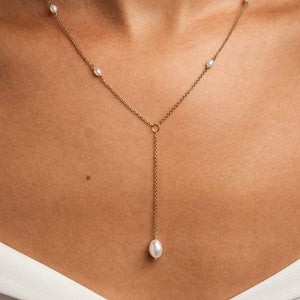
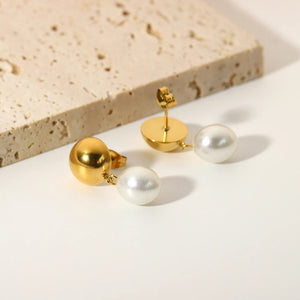
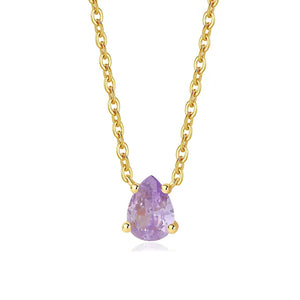

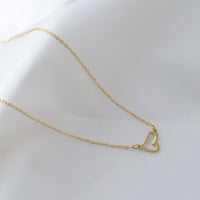
The piece they're describing → Dainty Heart Necklace for Women — 18K Gold Plated, Minimalist Gold Heart Pendant
Personalize Yours


