


Earrings work differently than every other piece of jewelry. Rings express personal style. Necklaces define your neckline. But earrings frame your face — they interact directly with your face shape, your jawline, and your overall proportions in a way nothing else does. The right earring shape can make a round face appear longer. The wrong length can visually shorten your neck.
Our earrings at AJLuxe use sterling silver posts throughout — hypoallergenic and comfortable for all-day wear, even for sensitive ears.
This is the complete earring guide: every type, hoop sizing, how to build a curated ear, which earrings suit your face shape, how to wear ear cuffs, how to manage sensitive ears, and how to care for what you own. Every section links to the in-depth guide on that topic.
Every Earring Type Explained
Understanding earring types helps you buy with intention rather than browsing by aesthetic alone. Our complete types of earrings guide covers every style with visual descriptions, occasion guidance, and face shape suitability. The overview:
Studs are the most universal earring — a small focal piece that sits flat at the earlobe. They read as polished and minimal in any context, from job interviews to formal events. Pearl studs, diamond studs, and small gemstone studs are the most classic. Studs are the ideal starting point for a curated ear because they don't compete with other pieces.
Hoops are the most versatile fashion earring. Their size determines their impact: small hoops (under 20mm) are subtle and versatile; medium hoops (20–40mm) are the most universally flattering; large hoops (40mm+) are statement pieces. Our hoop earring size guide has the complete diameter guide with face shape recommendations.
Drop earrings and dangle earrings hang below the earlobe — from just 2–3mm to full shoulder-grazing lengths. They elongate the face and neck and are the most formal earring type. Drops are for occasions; studs are for everyday.
Huggie earrings are small hoops that hug close to the earlobe — typically 8–14mm in diameter. They're the most comfortable hoop for daily wear because their low weight and close fit don't pull on the lobe. Our huggie earring guide explains every variation and why they're the first choice for sensitive or stretched lobes.
Ear cuffs clip onto the outer cartilage of the ear with no piercing required. They range from minimal thin bands to dramatic architectural pieces. No commitment, no pain, and stackable with any existing pierced earrings. Read the complete ear cuff styling guide for placement, sizing, and combination ideas.
Climbers and crawlers run upward along the earlobe and lower cartilage, creating the illusion of multiple piercings with one piece. They're among the more architectural earring types — best worn alone on each ear to let the design read clearly.
Threader earrings pass a thin chain through the piercing hole, with chain hanging on both sides of the lobe. They require a standard lobe piercing but look most dramatic with slightly stretched lobes. The chain swing creates movement that reads more casually than a formal drop.
Hoop Sizing — Getting the Diameter Right
Hoop diameter is measured across the inside of the circle — not the outside, and not the wire gauge. Getting this wrong is the most common hoop buying mistake. Our complete hoop earring size guide has the full chart. The quick reference:
| Diameter | Visual Effect | Best For | Occasion |
|---|---|---|---|
| Under 15mm (huggie) | Minimal, close-set | Daily wear, sensitive ears, curated ear base | Work, casual, everyday |
| 15–25mm (small) | Subtle, refined | Oval and heart faces; professional settings | Work, casual, smart-casual |
| 25–40mm (medium) | Balanced, universally flattering | All face shapes; the most versatile size | Any occasion |
| 40–60mm (large) | Statement, draws eye outward | Oval and oblong faces; adds width to long faces | Casual, fashion-forward, evening |
| 60mm+ (oversized) | Fashion statement | Oval faces; worn with minimal other jewelry | Evening, fashion occasions |
Wire gauge is the second dimension: thicker wire (18–20 gauge) reads as bolder and more modern; thinner wire (22–24 gauge) is more delicate and classic. For a full guide including how to measure your existing earrings and fit guidance by lobe size, read the hoop earring size guide.
Building a Curated Ear — Multiple Piercings Done Right
The curated ear is a deliberately styled collection of earrings across multiple ear piercings — creating a cohesive look that's more than the sum of its parts. Our complete curated ear guide covers placement maps, combination rules, and starter setups. The principles:
One anchor, supporting cast. Like ring stacking, a curated ear works best with one statement piece — typically a medium hoop or drop in the first lobe piercing — and smaller, simpler pieces in secondary positions (second lobe, helix, tragus). The anchor draws the eye; everything else adds texture.
Vary the shape, not just the size. A stud at the first lobe, a small hoop at the second lobe, and a thin bar at the helix creates visual variety through different shapes. Three studs of different sizes is less interesting because there's no shape contrast.
Stay in one metal family. Mixed metals in curated ears work for maximalist looks but require careful curation. For a cohesive first curated ear, all gold or all silver reads as intentional rather than mismatched.
Ear weight matters. Multiple heavy earrings cause lobe stretching and fatigue. For a full curated ear (4+ pieces), keep most pieces light (under 3 grams each) and reserve heavier pieces for single-wear occasions.

Which Earrings Suit Your Face Shape
Face shape is the single most useful guide for earring selection. Our earrings for round face guide covers the round face in depth — the most searched face shape question — and the same principles apply across shapes:
Round face: Long drops and angular shapes elongate. Avoid large circular hoops — they mirror and emphasize the roundness. Vertical earrings (drops, linear dangles, triangles pointing down) are the most flattering. Small to medium hoops that are oval rather than perfectly circular also work. Read the full round face earring guide for specific length guidance in centimeters and a hairstyle × earring pairing table.
Oval face: The most versatile face shape — almost any earring works. All hoop sizes, drops, and studs are flattering. The only caution: very long drops can over-elongate an already long oval face.
Square face: Curved shapes soften angular jawlines. Hoops, circular drops, and teardrop shapes work well. Avoid geometric shapes that echo the jaw's squareness.
Heart face: Wider at the top, narrow chin — earrings that add width at the lower half of the face balance it. Drop earrings that widen toward the bottom (chandelier, fan shapes) are ideal. Avoid heavy top-heavy designs.
Oblong / long face: Width-adding earrings balance length. Studs, button earrings, short hoops, and wide drops work best. Avoid very long drops that visually extend the face further.
Earrings for Sensitive Ears — What Actually Works
Sensitive ear reactions are almost always a metal allergy — specifically a nickel allergy, which affects an estimated 10–17% of the population according to the American Academy of Dermatology. The solution is simple: avoid nickel entirely.
Our guide to earrings for sensitive ears covers every safe metal in detail. The quick reference:
Implant-grade titanium is the gold standard for sensitive ears — zero nickel, biocompatible, used in medical implants. It's the most reliably safe choice for any level of sensitivity, including fresh piercings and healed piercings that react to everything else.
925 sterling silver is safe for most people with mild sensitivity. The 7.5% copper alloy causes minimal reaction in most wearers. Avoid if you know you're highly nickel-sensitive, as some lower-quality sterling silver uses nickel in the alloy rather than copper.
Solid 14K or 18K gold is safe for most sensitive ears. The higher the karat, the less alloy and the lower the risk. 18K (75% pure gold) is safer than 14K (58.3% pure gold). 9K gold has significant alloy content and can trigger reactions in sensitive wearers.
Hypoallergenic huggie earrings specifically address sensitive-ear daily wear — their light weight and implant-grade materials make them the safest everyday option. Read the dedicated hypoallergenic huggie earrings guide for material comparisons and specific recommendations.

Earring Care — How to Keep Posts, Hoops and Backs Working
Earrings are lost or broken far more often than they're worn out. The most common points of failure:
Butterfly backs (friction backs) are the most common earring back — and the one most easily lost. They loosen over time as the metal fatigues. Replace butterfly backs every 6–12 months of daily wear, or switch to screw backs (more secure) or latch backs for heavier earrings.
Hoop clasps — the hinged click-close mechanism — can weaken with repeated opening. Store hoops hanging rather than stacked to prevent distortion. If the clasp starts popping open during wear, a jeweler can tighten or replace it for a few dollars.
Post and hoop cleaning: Earring posts collect skin cells, product buildup, and bacteria that can cause reactions even in non-sensitive ears. Clean posts with a cotton swab dipped in rubbing alcohol before wearing, and after wearing if you've been sweating. Clean hoops with mild soapy water and dry immediately.
Storage: Store earrings in pairs, separated from each other. Tangled hoops cause kinking. Studs stored loose scratch each other. A divided earring tray or individual compartments protect both the finish and the clasp mechanisms.
For complete care instructions by metal type, see our how to clean jewelry at home guide.
Frequently Asked Questions About Earrings
What are the most flattering earrings for a round face?
Long drops and angular shapes that create vertical lines. Avoid large circular hoops that echo roundness. Read the full round face earring guide for specific length recommendations and a hairstyle pairing table.
What earrings are safe for sensitive ears?
Implant-grade titanium is the safest. Solid 14K–18K gold and 925 sterling silver work for most mild sensitivities. Avoid unspecified plated metals and surgical steel (often contains nickel). Full guide: earrings for sensitive ears.
What size hoop should I get?
25–40mm (medium) is universally flattering. Under 15mm (huggies) for daily comfort. For round faces, choose oval over circular. Full size-to-face chart in the hoop earring size guide.
Do ear cuffs require a piercing?
No — they clip onto the outer cartilage through tension, no piercing needed. Sizing matters for grip. Full placement and sizing guidance in the ear cuff guide.
What is a curated ear?
A deliberately styled collection of earrings across multiple piercing positions — the earring equivalent of ring stacking. One anchor piece + supporting smaller pieces + varied shapes + one metal family. See the curated ear guide for specific setups.
How do I keep earrings from turning my ears green?
Switch to sterling silver, solid gold, or implant-grade titanium — all low or zero copper content. Green comes from copper reacting with skin acids. Keeping earrings dry reduces the reaction.
What size huggie earring is most comfortable?
10–12mm diameter huggies with a thin wire gauge (22–24g) provide the best balance of comfort and visibility. They sit close to the lobe without pulling and are light enough for all-day wear. Read the full huggie earring guide.
Can I wear gold and silver earrings together?
Yes — intentional metal mixing is an established aesthetic. A gold hoop + silver stud reads as curated; random mixing reads as accidental. Stay consistent with your mixed-metal logic across the outfit.
Sensitive-ear shopping path
If comfort is the priority, use the sensitive-ear path
The best earring type is the one you can wear without soreness, redness, or itching. Metal and closure come first.
- Hypoallergenic jewelry guide — the complete metal safety breakdown
- Shop hypoallergenic jewelry — sensitive-skin friendly jewelry
- Shop huggie earrings — comfortable close-fitting everyday hoops
Final Thoughts
Earrings are the piece of jewelry that changes fastest with your mood, your outfit, and your life stage. A 16-year-old with her first ear piercing and a 40-year-old building her curated ear are making the same kind of choice — what to put next to their face, and what it says about them.
The guides linked throughout this article give you everything you need for each specific decision: size, shape, sensitivity, styling, and care. Start with what you wear every day. Build from there.
Explore our full earring range: all earrings | hoop earrings.
Written by Vaishakhi Ajmera — founder and jewelry specialist at AJLuxe. Last updated: May 2026.
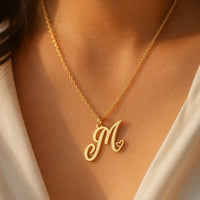
The piece they're describing → Heart Initial Necklace for Women — 18K Gold Plated, Personalized Letter + Heart Pendant
Personalize Yours

