


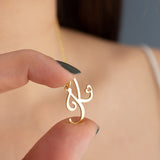
- First check the loop. The chain has to pass through the pendant's bail, so test the fit before you buy.
- Match weight to strength. Heavier pendants need thicker, sturdier chains, and a thin chain can kink under a heavy pendant.
- Match the look. Delicate pendant, delicate chain. Bold pendant, bolder chain.
- Length: 16 to 18 inches for most pendants, and see how to measure necklace length.
- Everyday wear: choose a sturdy link style and a secure clasp.
The chain is half of a pendant necklace, and a poor match shows. A chain that is too thin may kink or break under the pendant, one that is too heavy can swallow it, and one that does not fit the loop will not work at all. This guide explains how to match a chain to a pendant by loop size, weight, style, length and material, and which chain styles work best. If you are buying a pendant necklace, see our best pendant necklaces guide, and for the pieces themselves, our charms and pendants guide.
Step 1: Check the Pendant's Loop
The loop, called the bail, is the small ring at the top of the pendant, and the chain has to pass through it. Some bails are small and only fit a fine chain, and others are large enough for a thick one. Thread the chain through the bail before you commit, or compare the width of the chain with the opening. If the pendant does not come with a chain, ask the seller for the inner diameter of the bail. Many pendants also use a separate small ring, called a jump ring, to attach to a chain, and that can be swapped for a larger one if needed.
Step 2: Match the Chain to the Pendant's Weight
A heavier pendant needs a thicker, sturdier chain, and a lighter one suits a finer chain. Jewelry suppliers describe it the same way: heavier pendants call for robust styles such as belcher or twisted curb, while a thin snake chain can kink under a heavy pendant. As a practical rule, if the pendant feels substantial in your hand, choose a chain with stronger links. For the thickness numbers, see our chain thickness guide.
Step 3: Choose a Chain Style
- Cable or trace chain: a classic chain of simple oval links, suited to light and medium pendants, small charms and lockets. See types of necklace chains.
- Box chain: square links that sit smooth and resist twisting, good for small pendants.
- Snake chain: sleek and flat, comfortable against skin, best for light pendants. See snake chain necklaces.
- Curb chain: flat, interlocking links with more strength, suited to heavier or bolder pendants.
- Rope chain: a twisted, textured look with a little more sparkle.
- Paperclip chain: long, flat links that suit elongated pendants and layering. See paperclip chain necklaces.
Choose a style that matches the pendant's character. A delicate gemstone pendant suits a fine chain, and a bold cross or tag suits a stronger one.
Step 4: Choose the Length
For most pendants, 16 to 18 inches puts the pendant at or just below the collarbone where it is easy to see. A shorter chain suits a small pendant and a high neckline, and a longer chain suits a larger pendant or layering. The pendant hangs below the chain, so it sits lower than the chain length alone suggests. Our chain necklace length guide shows each length, and the necklace length visualizer helps you compare them.
Step 5: Choose the Metal
Match the chain to the pendant's metal, so the two read as one piece, and choose a metal you can wear every day. Sterling silver is classic and can tarnish in humid air, 316L stainless steel resists tarnish and is considered hypoallergenic for most wearers but is not nickel free, and gold plating wears gradually with friction. See our best sterling silver necklaces guide for silver chains and the gold chain necklace guide for gold.
Step 6: Check the Clasp
A secure clasp matters more for a pendant than for a plain chain, because a pendant is something you would not want to lose. A lobster clasp is the most secure everyday choice, and a spring ring is lighter but less secure on heavy pieces. If you wear the pendant daily, check the clasp occasionally, and keep an extender if you like to adjust the length.
An Example: Our Heart Initial Necklace
Our Heart Initial Necklace ($34.99) shows how the pieces fit together. The pendant is a small heart, about 12mm by 10mm, on a 16 inch chain with a 2 inch extender, so it adjusts from 16 to 18 inches. The pendant is light, so the fine chain suits it. It is 18K gold plated over a 316L stainless steel base.
Buying a Pendant Without a Chain
If you buy a pendant on its own, measure the bail first, and choose a chain that passes through it with a little room. Our guide to charms and pendants explains the attachments, and our necklace extender guide helps if the length is a little short. If you are not sure, a ready made pendant necklace removes the guesswork.
Common Mistakes
- Choosing a chain that is too thin for a heavy pendant. It can kink or break.
- Ignoring the loop. The chain has to pass through.
- Forgetting the pendant sits lower. Choose a length that places it where you want it.
- Mixing metals by accident. Match the chain to the pendant.
- Skipping the clasp check. A weak clasp risks the pendant.
More in this guide
Related reading: best pendant necklaces, types of necklace chains, chain thickness guide, chain necklace length guide and how to measure necklace length.
Frequently Asked Questions
What kind of chain is best for a pendant?
It depends on the pendant. A cable or box chain suits a small, light pendant, and a curb or rope chain suits a heavier one. Make sure the chain passes through the pendant's loop.
How thick should a chain be for a pendant?
A light pendant suits a fine chain and a heavy pendant needs a thicker, sturdier one. A thin snake chain can kink under a heavy pendant, so choose stronger links for heavy pieces.
What length chain should I use for a pendant?
16 to 18 inches suits most pendants, putting them at or just below the collarbone. The pendant hangs below the chain, so it sits lower than the length alone suggests.
Do pendants come with chains?
Some do and some do not. A pendant necklace includes a chain, while a loose pendant usually does not, so check the listing and the size of the loop.
How do I know if a chain fits my pendant?
Thread the chain through the pendant's loop. It should pass through with a little room and not be forced. If the pendant has a very small loop, choose a finer chain or ask the seller for the opening size.
Which metal is best for a pendant chain?
Match the pendant's metal. Sterling silver is classic, 316L stainless steel resists tarnish but is not nickel free, and gold plating wears gradually with friction.
Written by AJLuxe Team. Last updated: October 2026
All third-party trademarks, brand names and product names are the property of their respective owners. AJLuxe is not affiliated with, endorsed by, sponsored by, or otherwise connected to any third-party brand referenced in this article. Brand names are used solely for accurate comparative reference, and material descriptions reflect each brand's own published product specifications at the time of writing.
You Might Also Like
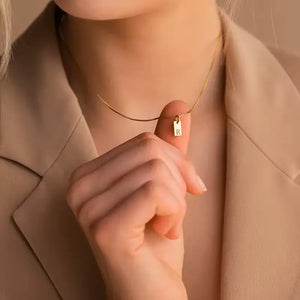
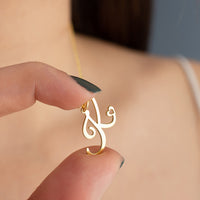
The piece they're describing → Heart Initial Necklace for Women — 18K Gold Plated, Personalized Letter + Heart Pendant
Personalize Yours


