


People buy one when they meant to buy the other all the time — and it matters, because black tourmaline and obsidian work very differently despite their similar appearance. This guide covers the 6 key differences so you can make the right choice for your needs.
Quick Comparison Table
| Feature | Black Tourmaline | Obsidian |
|---|---|---|
| Mineral type | Crystalline mineral (schorl/boron silicate) | Volcanic glass (amorphous) |
| Crystal structure | Trigonal crystal system | No crystal structure |
| Mohs hardness | 7–7.5 (jewelry-safe) | 5–5.5 (scratches more easily) |
| Surface texture | Striated (fine parallel ridges) | Smooth, glassy, reflective |
| Primary chakra | Root chakra | Root chakra + earth star |
| Energy type | Protective shield, absorbs negativity | Reflective mirror, reveals truth |
| Best for | Daily protection, EMF, grounding | Shadow work, emotional truth, scrying |
| Price (raw) | $3–15 | $2–12 |
| Durability for jewelry | Excellent (Mohs 7.5) | Fair (Mohs 5.5, chips more easily) |
Difference 1: Crystal Structure vs Volcanic Glass
This is the most fundamental difference. Black tourmaline is a true mineral — it has an ordered crystal structure (trigonal system) and specific chemical composition (NaFe²⁺₃Al₆(BO₃)₃Si₆O₁₈(OH)₄). Obsidian is volcanic glass — formed when lava cools so rapidly that crystals don't have time to form, resulting in a completely amorphous (non-crystalline) solid.
This matters for crystal healing: tourmaline's crystalline structure gives it the piezoelectric and pyroelectric properties that many healers believe underpin its energetic activity. Obsidian has no such measurable electrical properties. Their physical natures literally embody their energetic differences: tourmaline = structured protection, obsidian = fluid reflection.
Difference 2: Hardness and Durability
Black tourmaline rates 7–7.5 on the Mohs scale. Obsidian rates 5–5.5. This difference is significant for jewelry:
- Tourmaline: safe for rings, bracelets, and daily-wear pieces — won't scratch from everyday contact
- Obsidian: better suited for pendants and earrings where it won't be knocked or abraded. Obsidian also fractures in a distinctive conchoidal pattern (curved, shell-like fracture) — the same property that made it prized for ancient tools and arrowheads
For pocket carry or daily-wear jewelry, black tourmaline is more durable. For decorative pieces or spiritual work that doesn't involve physical wear, either works fine.
Difference 3: How to Tell Them Apart
In person, these two are usually easy to distinguish:
- Black tourmaline: Striated (fine parallel lines/ridges running lengthwise), often forms long columnar crystals, slightly rough texture on raw pieces, may have slight green-black color variation in strong light
- Obsidian: Perfectly smooth and glassy, highly reflective (like black glass), may show conchoidal fractures if raw, often translucent at thin edges
Run your fingernail along the surface: tourmaline has ridges you can feel; obsidian is smooth like glass. If a stone is marketed as "black tourmaline" but is perfectly smooth and reflective, it is likely obsidian or glass.
Difference 4: Energy and Intention — Shield vs Mirror
This is where the differences are most meaningful for crystal work:
Black tourmaline — the shield: Creates an energetic protective field around you. Absorbs and transmutes negative energy before it reaches you. The energy it absorbs is neutralized rather than returned. This makes it ideal for daily protection in challenging environments, around difficult people, or for general grounding.
Obsidian — the mirror: Rather than absorbing and neutralizing, obsidian reflects — both outward (sending other people's energy back to them) and inward (revealing your own shadow self, unprocessed emotions, and hidden truths). This makes obsidian powerful for inner work, shadow work, and deep emotional processing.
The key distinction: tourmaline protects you FROM energy; obsidian helps you LOOK AT energy — including your own.
Difference 5: Best Use Cases
Choose black tourmaline when you:
- Need daily protection from negative environments or people
- Want to shield against EMF from electronics
- Feel anxious, ungrounded, or disconnected from your body
- Are an empath who absorbs others' energy
- Want home protection (doorways, room corners)
Choose obsidian when you:
- Are doing shadow work or inner healing
- Want to identify and release deep-seated emotional patterns
- Feel you need truth revealed — about yourself or a situation
- Are working with a therapist or counselor on past trauma
- Want to use it for scrying or spiritual vision work
Difference 6: Intensity and How to Handle Each
Obsidian is considered an intense crystal that can surface buried emotions quickly — sometimes uncomfortably so. Beginners are often advised to start with black tourmaline for protection and grounding before working with obsidian's revealing energy. Black tourmaline provides a stable foundation; obsidian opens doors.
Crystal healers often recommend using black tourmaline during an obsidian session — wearing tourmaline while working with obsidian gives you the protective field you need to safely process what obsidian surfaces.
Can You Use Black Tourmaline and Obsidian Together?
Yes — and it is a recommended combination. Use them together for deep inner work where you need protection while also being open to emotional truth. The combination: obsidian surfaces what needs to be seen; black tourmaline protects your energy field while you process it.
For this pairing, wear or hold black tourmaline while keeping obsidian nearby rather than on your body.
Related reading: Is Zinc Alloy Hypoallergenic? What to Know Before You Buy.
Related reading: Moonstone Ring Jewelry: What to Know Before You Buy (2026).
Related reading: Best Charm Necklaces Under $30 (2026): What to Look For Before You Buy.
Related reading: 14 Karat Gold Rings for Women: What to Know Before You Buy (2026).
Frequently Asked Questions
Is black tourmaline stronger than obsidian?
For protection purposes, most crystal healers consider black tourmaline stronger and more consistent. Obsidian is more intense and penetrating but works differently — revealing rather than shielding. "Stronger" depends on your goal: tourmaline for protection, obsidian for deep emotional work.
Which is better for anxiety — tourmaline or obsidian?
Black tourmaline is better for anxiety. It grounds and stabilizes energy without surfacing buried issues. Obsidian can temporarily increase emotional intensity as it works, which may not be helpful during acute anxiety. Use tourmaline for daily anxiety management; consider obsidian only for intentional healing sessions.
Can obsidian be mistaken for black tourmaline?
Yes — frequently, especially in polished or tumbled form. The difference: tourmaline has vertical striations (ridges) on raw pieces and slightly rough texture. Obsidian is glassy smooth with possible conchoidal fractures. In jewelry, check the seller's description for "schorl" (tourmaline) or "volcanic glass" (obsidian).
What is black tourmaline good for that obsidian isn't?
Black tourmaline excels at: EMF protection (placed near electronics), daily energetic shielding, grounding anxiety and scattered thoughts, and room corner protection grids. Obsidian is not typically used for these purposes.
Which is more expensive?
Both are affordable. Raw black tourmaline costs $3–15 for a specimen; obsidian is similar at $2–12. Neither is significantly more expensive than the other for raw or tumbled pieces. Jewelry pieces range $20–80 for both.
Final Thoughts
Black tourmaline and obsidian are both powerful black protection crystals — but they serve different purposes. If you want daily protection, grounding, and EMF shielding, black tourmaline is your stone. If you want deep emotional truth, shadow work, and inner reflection, obsidian is the tool. Most serious crystal practitioners own both and use them situationally. If you're deciding between obsidian and another popular black stone, see our onyx vs obsidian comparison for how they differ in hardness, luster, and everyday wear.
Looking to start with crystal protection jewelry? Our elemental stone charm necklace lets you carry crystal energy with you every day.
All third-party trademarks, brand names and product names are the property of their respective owners. AJLuxe is not affiliated with, endorsed by, sponsored by, or otherwise connected to any third-party brand referenced in this article. Brand names are used solely for accurate comparative reference, and material descriptions reflect each brand's own published product specifications at the time of writing.
You Might Also Like
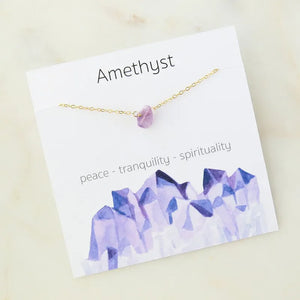

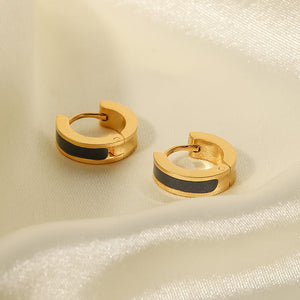
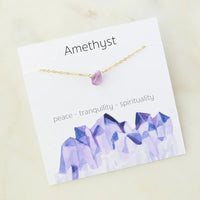
The piece they're describing → Stone Charm Necklace for Women — Raw Natural Gemstone Pendant
Personalize Yours


