


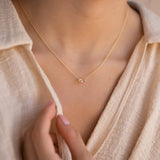
If you've ever searched for the birthstone by month for yourself or someone you love, you've probably landed on a basic list with little else. This guide goes further. You'll find a complete birthstone chart with Mohs hardness ratings, mining origins, price ranges, and historical context — everything you need to understand what makes each stone special and how to choose birthstone jewelry that lasts. Whether you're shopping for a birthday, anniversary, or Mother's Day, the right stone tells a story. Let's start with the full chart.
Birthstones by Month: Complete Chart
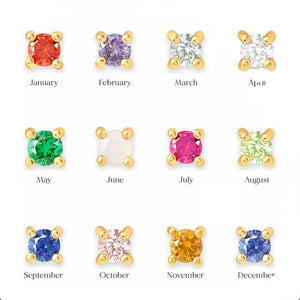
The table below covers all 12 months with the modern birthstone, traditional alternative, color, primary meaning, hardness on the Mohs scale, and where each stone is mined. This is the reference you'll want to bookmark.
| Month | Modern Stone | Traditional Stone | Color | Meaning | Mohs Hardness | Where Mined |
|---|---|---|---|---|---|---|
| January | Garnet | Garnet | Deep red | Loyalty | 6.5–7.5 | Mozambique, India, Brazil |
| February | Amethyst | Amethyst | Purple | Wisdom | 7 | Brazil, Uruguay, Zambia |
| March | Aquamarine | Bloodstone | Blue-green | Clarity | 7.5–8 | Brazil, Pakistan, Nigeria |
| April | Diamond | Sapphire | Colorless | Strength | 10 | Botswana, Russia, Canada |
| May | Emerald | Emerald | Green | Rebirth | 7.5–8 | Colombia, Zambia, Brazil |
| June | Pearl / Alexandrite | Moonstone | White / Color-change | Purity | 2.5–4.5 / 8.5 | Japan, China, Australia / Russia, Brazil |
| July | Ruby | Ruby | Red | Passion | 9 | Myanmar, Mozambique, Thailand |
| August | Peridot / Spinel | Sardonyx | Lime green / Multi | Healing | 6.5–7 / 8 | USA (Arizona), Egypt, Pakistan |
| September | Sapphire | Sapphire | Blue | Trust | 9 | Sri Lanka, Madagascar, Montana |
| October | Opal / Tourmaline | Opal | Multi / Pink-green | Creativity | 5.5–6.5 / 7–7.5 | Australia (95%) / Brazil, Afghanistan |
| November | Topaz / Citrine | Topaz | Yellow-orange / Gold | Warmth | 8 / 7 | Brazil, Pakistan, Russia |
| December | Tanzanite / Blue Topaz / Turquoise | Zircon | Violet-blue / Blue / Teal | Fortune | 6–7 / 8 / 5–6 | Tanzania only / Brazil / Iran, USA, Mexico |
Sources: GIA Birthstone Guide; American Gem Society. Mohs hardness values are approximate ranges.

Where Did Birthstones Come From?
The birthstone tradition reaches back at least 3,400 years. Understanding that history helps explain why different chart versions exist today — and why the list kept changing.
The Breastplate of Aaron. The oldest recorded connection between gemstones and months comes from the Hebrew Bible. In Exodus 28:17–20, God instructs Moses to make a breastplate for his brother Aaron, the high priest. The breastplate held 12 stones — one for each of the 12 tribes of Israel. Scholars date this account to roughly 1400 BC. The stones included sardius (likely carnelian or ruby), topaz, carbuncle, emerald, sapphire, diamond, jacinth, agate, amethyst, beryl, onyx, and jasper. The exact identifications are debated, since ancient gemstone names didn't always match modern mineralogy.
Ancient Greeks and Romans. Josephus, a first-century Jewish historian, first drew the connection between the 12 breastplate stones and the 12 months of the year. Greek and Roman scholars then expanded this idea, linking each stone to a planet and a zodiac sign. Wearing a stone aligned with the current month or celestial season was believed to amplify its protective powers.
St. Jerome and the Christian tradition. In the 5th century AD, St. Jerome connected the 12 stones to the 12 apostles rather than the 12 tribes. This gave the tradition a second theological layer in European culture. By the Middle Ages, collecting all 12 stones and wearing each one in its corresponding month had become a recognized practice among the devout.
Poland in the 18th century. The modern habit of wearing only your birth month's stone — rather than rotating through all 12 — is thought to have started in 18th-century Poland. From there the practice spread through Europe and eventually to North America.
1912: The modern list is born. In 1912, the National Association of Jewelers (now Jewelers of America) met in Kansas City and published the first standardized modern birthstone list. The goal was commercial consistency — jewelers needed an agreed-upon list to sell birthstone jewelry reliably. This list has served as the foundation ever since.
Later updates. The Jewelry Industry Council of America updated the list in 1952, adding alexandrite (June), citrine (November), and others. In 2002, tanzanite was added as a third December stone. In 2016, the American Gem Trade Association added spinel as an August birthstone — the first addition in over 60 years. The list is not static. It reflects commercial availability, cultural preferences, and gem industry lobbying.
Modern, Traditional, and Mystical Birthstones: What's the Difference?
When you search "birthstone chart," you'll find multiple versions. They all trace back to different historical traditions. Here's how the three main systems compare.
Modern birthstones come from the 1912 standardized list and its later updates. This is what jewelers use today. Traditional birthstones come from older European lists, primarily from the 15th–19th centuries, before any official standardization. Mystical or Ayurvedic birthstones come from ancient Indian (Hindu) traditions, which assigned stones based on their supposed metaphysical or healing properties rather than birth month alone. There's no single definitive Ayurvedic list — different sources vary — but the most widely referenced version is listed below.
| Month | Modern | Traditional | Mystical / Ayurvedic |
|---|---|---|---|
| January | Garnet | Garnet | Emerald |
| February | Amethyst | Amethyst | Blood Coral |
| March | Aquamarine | Bloodstone | Jade |
| April | Diamond | Sapphire | Opal |
| May | Emerald | Emerald | Sapphire |
| June | Pearl / Alexandrite | Moonstone | Moonstone |
| July | Ruby | Ruby | Ruby |
| August | Peridot / Spinel | Sardonyx | Sapphire |
| September | Sapphire | Sapphire | Moonstone |
| October | Opal / Tourmaline | Opal | Jasper |
| November | Topaz / Citrine | Topaz | Pearl |
| December | Tanzanite / Blue Topaz / Turquoise | Zircon | Onyx |
No version is "more correct" than another. The modern list is the standard for jewelry shopping. The traditional and mystical versions are worth knowing if you want to explore deeper meaning or gift a stone that resonates with a different tradition.
January Birthstone: Garnet
Stone: Garnet. Color: Deep blood-red to brownish-orange, though garnets also occur in green, orange, yellow, and even colorless varieties. The red pyrope garnet is the most recognized. Meaning: Garnet symbolizes loyalty, trust, and friendship. Ancient warriors carried garnets into battle as talismans for protection. Today, garnet jewelry is a popular gift between close friends and romantic partners. Mohs hardness: 6.5–7.5 — hard enough for daily wear with reasonable care. Where mined: Mozambique produces much of the world's gem-quality pyrope and rhodolite garnet; India and Brazil are also major sources. Price range: $20–$300 per carat for common varieties; rare demantoid green garnets reach $500 or more per carat. Gift idea: A garnet birthstone necklace is a meaningful January birthday gift. Browse AJLuxe's January birthstone guide or shop the full birthstone necklace collection.
February Birthstone: Amethyst
Stone: Amethyst. Color: Light lilac to deep violet-purple, with the richest "deep Siberian" purple — a vivid mix of purple and red — considered most valuable. Meaning: Amethyst has carried associations with wisdom, clarity of mind, and sobriety since ancient Greece. The name comes from the Greek amethystos, meaning "not drunk" — the stone was believed to prevent intoxication. Today it represents calm judgment and inner peace. Mohs hardness: 7 — suitable for everyday rings and necklaces. Where mined: Brazil and Uruguay produce the largest volumes; Zambia mines a particularly deep, saturated variety. Price range: $5–$30 per carat for most gem-quality stones, making amethyst one of the most accessible colored gemstones. Gift idea: Amethyst necklaces work beautifully as February birthday gifts or Valentine's Day jewelry. See the full February birthstone guide for more.
March Birthstone: Aquamarine
Stone: Aquamarine (modern); Bloodstone (traditional). Color: Pale sky blue to deep blue-green — the name literally means "water of the sea" in Latin. The most prized stones show a clear, saturated medium-blue with no green tint. Meaning: Sailors carried aquamarine as a protective talisman against storms and rough seas. The stone represents courage, clarity, and communication. Mohs hardness: 7.5–8 — durable enough for most jewelry types, including rings. Where mined: Brazil is the world's largest producer; Pakistan yields some of the deepest blues; Nigeria also produces significant quantities. Price range: $30–$200 per carat for clean, well-colored stones. Large, deeply saturated specimens command higher prices. Gift idea: Aquamarine necklaces in 18K gold plated over 925 sterling silver carry the stone's oceanic color beautifully. Explore the March birthstone guide for styles and settings.
April Birthstone: Diamond
Stone: Diamond (modern); Sapphire (traditional). Color: Colorless is the most prized, though diamonds occur naturally in yellow, brown, blue, pink, green, and even red. Meaning: Diamond symbolizes strength, eternal love, and clarity. The word comes from the Greek adamas, meaning "invincible." It's been the stone of commitment in Western engagement rings since the 15th century. Mohs hardness: 10 — the hardest natural substance on Earth. Nothing scratches a diamond except another diamond. Where mined: Botswana is currently the world's top diamond producer by value; Russia and Canada are also major sources. Price range: $1,000–$8,000 or more per carat for gem-quality diamonds, varying enormously based on the 4 Cs (cut, color, clarity, carat). Gift idea: For a more accessible diamond-month gift, diamond-accent birthstone necklaces offer real sparkle at approachable prices. Visit the April birthstone guide for ideas.
May Birthstone: Emerald
Stone: Emerald. Color: Vivid green to bluish-green — the deeper and more saturated, the more valuable. Most natural emeralds contain inclusions called "jardin" (French for garden), which are accepted and expected. Meaning: Emerald represents renewal, spring, and new beginnings. Cleopatra famously claimed the emerald mines of Egypt as her personal property. The stone has long symbolized fertility, wisdom, and good fortune. Mohs hardness: 7.5–8, but inclusions make emeralds more brittle than their hardness suggests — handle with some care. Where mined: Colombia produces the world's finest emeralds; Zambia and Brazil are also significant sources. Price range: $200–$2,000 or more per carat for fine stones; top Colombian emeralds exceed $10,000 per carat. Gift idea: May birthdays call for the richness of emerald. Find emerald-inspired styles in the May birthstone guide.
June Birthstone: Pearl or Alexandrite
Stones: Pearl and Alexandrite (modern); Moonstone (traditional). June has two modern birthstones because pearl — a long-standing June stone — was joined by alexandrite in 1952. Color: Pearls range from white and cream to pink, lavender, and black. Alexandrite famously shifts from green in daylight to red under incandescent light. Meaning: Pearls represent purity, innocence, and wisdom through experience. Alexandrite symbolizes luck, prosperity, and intellectual creativity. Mohs hardness: Pearl: 2.5–4.5 — delicate, avoid chemicals, perfume, and chlorine. Alexandrite: 8.5 — excellent for daily wear. Where mined: Japan (Akoya pearls), China (freshwater pearls), Australia (South Sea pearls); alexandrite primarily from Russia and Brazil. Price range: Pearl strands: $50–$500+; Alexandrite: $500–$15,000 per carat. Gift idea: Pearl birthstone necklaces are a timeless June gift. See all options in the June birthstone guide.
July Birthstone: Ruby
Stone: Ruby. Color: Medium to dark red, often described as "pigeon's blood red" — a pure, vivid red with a slight blue undertone. This shade, from Myanmar's Mogok Valley, is the most coveted. Meaning: Ruby is the stone of passion, vitality, and courage. Ancient Burmese warriors embedded rubies beneath their skin before battle, believing the stone made them invincible. In Sanskrit, ruby is called ratnaraj — "king of gemstones." Mohs hardness: 9 — second only to diamond. Ruby stands up to daily wear exceptionally well. Where mined: Myanmar (finest "Mogok" rubies), Mozambique (large commercial quantities), Thailand. Price range: $100–$3,000 per carat for commercial stones; fine Burmese rubies routinely exceed $10,000 per carat. Gift idea: Ruby necklaces in 18K gold plated over 925 sterling silver make a bold July birthday statement. Explore the July birthstone guide.
August Birthstone: Peridot or Spinel
Stones: Peridot and Spinel (modern); Sardonyx (traditional). Spinel was added to the August list in 2016. Color: Peridot shows a distinctive lime green to olive green — it gets its color from iron and cannot be confused with any other stone. Spinel occurs in virtually every color, with red and cobalt blue being most prized. Meaning: Peridot symbolizes healing, growth, and protection. Ancient Egyptians called it the "gem of the sun" and mined it on the island of Zabargad (St. John's Island) in the Red Sea. Mohs hardness: Peridot 6.5–7 — fine for necklaces and earrings; rings need some care. Spinel 8 — highly durable. Where mined: Peridot from Arizona USA (San Carlos Reservation), Egypt, Pakistan. Price range: Peridot $5–$80 per carat; quality spinel $20–$500 per carat. Gift idea: The vivid green of peridot is unmistakable in a birthstone necklace. See the August birthstone guide for details.
September Birthstone: Sapphire
Stone: Sapphire. Color: Deep velvety blue is most recognized, but sapphire occurs in every color except red (which is ruby — both are corundum). "Padparadscha" sapphire, a salmon-pink variety from Sri Lanka, is among the rarest colored gemstones. Meaning: Sapphire represents trust, loyalty, and divine wisdom. It was the stone of royalty and clergy for centuries. The British Crown Jewels and Princess Diana's famous engagement ring — now worn by Catherine, Princess of Wales — feature sapphires prominently. Mohs hardness: 9 — one of the most durable gemstones available, excellent for all jewelry types. Where mined: Sri Lanka (Ceylon sapphires), Madagascar, and Montana (USA). Price range: $100–$3,000 per carat for quality blue sapphires; fine Kashmir sapphires exceed $50,000 per carat. Gift idea: A sapphire birthstone necklace is a sophisticated September birthday gift. Browse the September birthstone guide.
October Birthstone: Opal or Tourmaline
Stones: Opal and Tourmaline (modern); Opal (traditional). Color: Opal is famous for its "play of color" — flashes of every spectral hue within a milky or transparent body. Tourmaline spans the widest natural color range of any gemstone, from watermelon pink-green to deep indicolite blue. Meaning: Opal represents creativity, spontaneity, and imagination. Ancient Romans called it opalus — "precious stone." Shakespeare called it the "queen of gems." Tourmaline symbolizes compassion and healing. Mohs hardness: Opal 5.5–6.5 — handle with care, avoid heat and drying. Tourmaline 7–7.5 — good durability. Where mined: Australia produces roughly 95% of the world's gem opals; tourmaline from Brazil, Afghanistan, and Nigeria. Price range: Opal $10–$500 per carat; tourmaline $20–$300 per carat. Gift idea: October birthdays have two gorgeous options. The October birthstone guide covers both in depth.
November Birthstone: Topaz or Citrine
Stones: Yellow Topaz and Citrine (modern); Topaz (traditional). Both stones share warm golden-yellow tones, which made them natural substitutes historically. Color: Imperial topaz — the most prized variety — shows a rich orange-gold with pink undertones. Citrine ranges from pale lemon-yellow to deep amber-orange. Meaning: Topaz symbolizes warmth, friendship, and good fortune. Citrine, sometimes called the "merchant's stone," represents abundance and positive energy. Mohs hardness: Topaz 8 — excellent for daily wear, though it has a cleavage plane that makes it somewhat vulnerable to sharp blows. Citrine 7 — solid for most jewelry. Where mined: Brazil dominates both topaz and citrine production; Pakistan and Russia also produce significant topaz. Price range: Yellow topaz $5–$30 per carat; citrine $5–$20 per carat — both among the most affordable birthstones. Gift idea: Warm, golden November birthstone necklaces feel seasonal and personal. Explore the November birthstone guide.
December Birthstone: Tanzanite, Blue Topaz, or Turquoise
Stones: Tanzanite, Blue Topaz, and Turquoise (modern); Zircon (traditional). December has three modern options, giving it the most variety of any month. Color: Tanzanite shows a distinctive violet-blue that shifts toward purple in low light — one of the most unique color effects in gemology. Blue topaz ranges from sky blue to deep Swiss and London blue. Turquoise offers a robin's-egg teal to sky blue, often with black or brown matrix veining. Meaning: Tanzanite represents transformation and spiritual awakening. Turquoise is among humanity's oldest ornamental stones — used by ancient Egyptians, Persians, and Native Americans — and symbolizes protection and good fortune. Mohs hardness: Tanzanite 6–7 (protect from knocks); blue topaz 8 (durable); turquoise 5–6 (treat gently, avoid chemicals). Where mined: Tanzanite comes exclusively from a single mine zone near Arusha, Tanzania — making it geologically rarer than diamond. Blue topaz from Brazil; turquoise from Iran, USA (Nevada, Arizona), and Mexico. Price range: Tanzanite $100–$1,200 per carat; blue topaz $5–$30 per carat; turquoise $0.05 to over $1,000 per ounce depending on quality, origin, and matrix. Gift idea: December birthdays deserve a stone as special as the season. See the December birthstone guide for all three options in jewelry form.
What Is My Birthstone?
Use this quick-find list to identify your stone by birth month:
- Born in January? Your birthstone is garnet.
- Born in February? Your birthstone is amethyst.
- Born in March? Your birthstone is aquamarine.
- Born in April? Your birthstone is diamond.
- Born in May? Your birthstone is emerald.
- Born in June? Your birthstone is pearl or alexandrite.
- Born in July? Your birthstone is ruby.
- Born in August? Your birthstone is peridot or spinel.
- Born in September? Your birthstone is sapphire.
- Born in October? Your birthstone is opal or tourmaline.
- Born in November? Your birthstone is topaz or citrine.
- Born in December? Your birthstone is tanzanite, blue topaz, or turquoise.
If your month has more than one option, you're free to choose the one that resonates most — by color, price, or personal meaning. Many people also wear stones from other months for their symbolism, or choose a stone based on a loved one's birth month rather than their own. There are no rules, only preferences.
Birthstones by Zodiac Sign
The zodiac birthstone system is older than the calendar-month system. Ancient Greeks and Romans assigned stones to zodiac signs based on the stones' perceived planetary and elemental associations. If you follow astrology, your zodiac stone may feel more personally meaningful than your calendar birthstone.
| Zodiac Sign | Dates | Traditional Gemstone |
|---|---|---|
| Aries | Mar 21 – Apr 19 | Diamond |
| Taurus | Apr 20 – May 20 | Emerald |
| Gemini | May 21 – Jun 20 | Pearl |
| Cancer | Jun 21 – Jul 22 | Ruby |
| Leo | Jul 23 – Aug 22 | Peridot |
| Virgo | Aug 23 – Sep 22 | Sapphire |
| Libra | Sep 23 – Oct 22 | Opal |
| Scorpio | Oct 23 – Nov 21 | Topaz |
| Sagittarius | Nov 22 – Dec 21 | Tanzanite |
| Capricorn | Dec 22 – Jan 19 | Garnet |
| Aquarius | Jan 20 – Feb 18 | Amethyst |
| Pisces | Feb 19 – Mar 20 | Aquamarine |
You'll notice that zodiac birthstones often align closely with calendar birthstones — that's not a coincidence. Many of the calendar assignments drew directly from the older zodiac tradition when the modern list was formalized in 1912.

Birthstone Gift Ideas by Occasion and Recipient
Birthstone jewelry works because it connects the gift to a specific person — their birth month, their stone, their color. A generic necklace is forgettable. A birthstone necklace is personal. Here's how to choose by recipient and timing. See our best birthstone jewelry by month for picks in every metal and style.
For Mom
A mother's birthstone necklace is one of the most requested jewelry gifts year-round. The most popular version stacks multiple stones — one for each child's birth month — on a single chain. This creates a piece that carries genuine emotional weight. If you're shopping for Mother's Day, a birthday, or a milestone like a baby shower, browse the AJLuxe birthstone necklace collection for sterling silver and 18K gold plated over 925 sterling silver options. These are hypoallergenic and safe for sensitive skin.
For Her (Girlfriend, Wife, Daughter)
For a partner or daughter, a single birthstone necklace — her stone in her preferred metal — is the cleaner, more elegant choice. Consider her aesthetic: a minimalist prefers a small solitaire pendant on a delicate chain; someone bolder might want a larger stone or a layered set. Personalized engraving with her initials or a meaningful date adds another layer of intention. All AJLuxe birthstone necklaces are crafted from 925 sterling silver with optional 18K gold plating, making them suitable for daily wear without skin irritation.
For Him
Men's birthstone jewelry is less common but increasingly popular. A simple birthstone pendant on a box chain, or a birthstone accent on a signet ring, carries quiet meaning without feeling ornate. Harder stones — garnet, sapphire, ruby, diamond — are practical choices for men's jewelry because they hold up to daily activity. The symbolism often resonates more with men when it's framed around the stone's meaning (protection, strength, loyalty) rather than just birth month.
When to Buy: Seasonal Timing Guide
Timing matters more than most shoppers realize. Here's what to know before you order:
- December birthdays: Order by December 5th to guarantee delivery before the holiday rush. December is the busiest shipping month of the year, and delays compound. Don't wait until the week before a birthday.
- Mother's Day (second Sunday of May): May is peak demand for birthstone jewelry. Order 2–3 weeks early to allow for personalization and standard shipping. Custom engraved pieces need extra lead time.
- Valentine's Day (February 14): February birthstone jewelry — amethyst — pairs naturally with Valentine's shopping. Order by February 7th for standard shipping.
- Holiday gifting for November or December birthdays: If the recipient was born in November or December, you can combine a holiday gift with their birthstone gift. A tanzanite or blue topaz necklace works year-round as a birthday piece and feels seasonally appropriate as a December holiday gift.
- Spring birthdays (March, April, May): Aquamarine, diamond, and emerald are perennially popular spring gifts. Stock is generally strong in Q1 — no urgency required, but personalized pieces still need 5–7 business days.
Shopping for mom? See our complete guide to the best birthstone necklace for mom — how to combine her children's birthstones, the best metals, and gift-ready styles.
Need help choosing? See our complete birthstone necklace guide — which stone to wear, how to layer, and the best metals for everyday wear.
Birthstone Rarity Rankings: Which Is Hardest to Find?
Not all birthstones are equally available. Rarity affects price, but it also makes a stone more meaningful — when you know your birthstone took millions of years to form in one tiny corner of the world, it changes how you think about wearing it.
| Rarity Tier | Birthstone | Month | Why It's Rare |
|---|---|---|---|
| Exceptionally Rare | Alexandrite | June (alternate) | Natural Russian alexandrite with strong color-change is among the rarest gems on Earth; most "alexandrite" sold is synthetic |
| Exceptionally Rare | Tanzanite | December | Found only in a 4 km² zone near Arusha, Tanzania; estimated 30–50 years of supply remaining before depletion |
| Very Rare | Ruby (fine quality) | July | Burmese "pigeon's blood" rubies above 5 carats are rarer than equivalent diamonds; most commercial rubies are heated and treated |
| Very Rare | Emerald (fine quality) | May | Inclusion-free Colombian emeralds above 3 carats are among the most valuable gemstones by weight; nearly all are oiled or resin-treated |
| Rare | Diamond (colorless, D–F) | April | Investment-grade colorless diamonds are rare; most commercial diamonds are lower color and clarity grades |
| Rare | Sapphire (Kashmir / Padparadscha) | September | Kashmir sapphires haven't been mined commercially since the 1930s; padparadscha sapphires are exceptionally scarce |
| Moderately Available | Aquamarine, Spinel, Opal | March / August / October | Quality specimens available but fine grades still limited; opal's fragility limits supply of wearable pieces |
| Widely Available | Amethyst, Garnet, Citrine, Peridot, Blue Topaz | Feb / Jan / Nov / Aug / Dec | Large-scale commercial mining in multiple countries; consistent supply keeps prices accessible |
Rarity assessments reflect gem-quality natural stones at fine grades. Commercial-grade material is available more broadly for most of the stones above.
Lab-Grown vs. Natural Birthstones: Cost Comparison 2026
Lab-grown gemstones are chemically identical to natural ones — same crystal structure, same optical properties, same Mohs hardness. The only difference is how they were made. For expensive birthstones like ruby, emerald, and sapphire, lab-grown stones offer the same beauty at 70–90% lower cost. Here's what the numbers actually look like in 2026.
| Birthstone | Month | Natural (per carat) | Lab-Grown (per carat) | Savings |
|---|---|---|---|---|
| Diamond | April | $1,000–$8,000 | $100–$800 | ~80–90% |
| Ruby | July | $100–$3,000 | $15–$200 | ~85–93% |
| Emerald | May | $200–$2,000 | $20–$150 | ~85–93% |
| Sapphire | September | $100–$3,000 | $10–$150 | ~85–95% |
| Alexandrite | June | $5,000–$15,000 | $50–$300 | ~97–99% |
| Aquamarine | March | $30–$200 | Not widely produced | — |
| Amethyst / Garnet / Citrine | Feb / Jan / Nov | $5–$30 | Lab versions uncommon — natural is already affordable | — |
When lab-grown makes sense: If your birthstone is diamond, ruby, emerald, sapphire, or alexandrite, a lab-grown stone gives you the same visual result and chemical identity at a fraction of the cost. Lab diamonds specifically have become the mainstream choice for April birthstone jewelry in 2024–2026. When natural makes sense: For amethyst, garnet, citrine, peridot, and blue topaz, the natural stones are already so affordable that lab-grown versions offer no meaningful advantage — and may not even be widely available.
All AJLuxe birthstone necklaces use genuine stones in sterling silver settings, keeping prices accessible without synthetic substitutes.
Birthstone Care Tips by Hardness
The right care routine depends on your specific stone's Mohs hardness and composition. Harder stones tolerate more; softer or porous stones need more protection. Here's what every birthstone owner should know.
| Birthstone | Mohs | Care Notes | Avoid |
|---|---|---|---|
| Diamond (April) | 10 | Extremely durable; clean with warm soapy water and soft brush | Only scratched by other diamonds; still avoid harsh impact |
| Ruby (July), Sapphire (Sept) | 9 | Excellent durability; warm soapy water or ultrasonic cleaner (untreated stones only) | Ultrasonic cleaners if stone is fracture-filled; avoid hard knocks on heated stones |
| Alexandrite (June), Spinel (Aug) | 8–8.5 | Very durable; warm soapy water with soft brush | No special precautions needed beyond general rules |
| Topaz (Nov), Blue Topaz (Dec) | 8 | Hard but has perfect cleavage — vulnerable to sharp blows | Knocking against hard surfaces; ultrasonic cleaners |
| Aquamarine (Mar), Emerald (May) | 7.5–8 | Good durability; warm soapy water; emeralds need extra gentleness due to inclusions | Ultrasonic and steam cleaners for emerald; heat exposure |
| Amethyst (Feb), Citrine (Nov) | 7 | Good everyday durability; warm soapy water | Prolonged sunlight (amethyst fades); steam cleaners |
| Garnet (Jan), Tourmaline (Oct), Peridot (Aug) | 6.5–7.5 | Solid for most jewelry; warm soapy water | Acid cleaners; peridot sensitive to rapid temperature changes |
| Tanzanite (Dec), Opal (Oct) | 5.5–7 | Moderate care required; soft cloth only for opal | Ultrasonic cleaners; sharp blows; heat; chemicals |
| Turquoise (Dec) | 5–6 | Porous — absorbs liquids; wipe with dry soft cloth only | Water, chemicals, perfume, lotions, oils — all can discolor permanently |
| Pearl (June) | 2.5–4.5 | Most delicate birthstone; wipe with damp cloth after wearing; re-string periodically | Chlorine, acids, perfume, hairspray, ultrasonic cleaners, steam — all damage nacre |
Which Birthstone Looks Best on Your Skin Tone?
Gemstone color interacts with skin undertone in ways that can make a stone look vibrant or washed out. Most people don't think about this when choosing birthstone jewelry — but it makes a real difference in how the piece looks when worn. Your birthstone is your birthstone regardless, but knowing how it interacts with your skin helps you choose the right setting, metal, and stone shade.
Identifying your undertone: Look at the veins on your inner wrist. Blue-purple veins = cool undertone. Green veins = warm undertone. Blue-green mix = neutral undertone. When in doubt, silver metals flatter cool undertones; gold metals flatter warm undertones; both work for neutral.
| Skin Undertone | Birthstones That Pop | Best Metal | Notes |
|---|---|---|---|
| Cool (pink/blue) | Amethyst, sapphire, aquamarine, tanzanite, alexandrite, diamond, pearl | White gold, sterling silver, platinum | Cool-toned blues and purples look electric against pink or rosy skin |
| Warm (yellow/peachy) | Garnet, citrine, topaz, peridot, ruby, emerald, turquoise, spinel | 18K gold plated, yellow gold, rose gold | Warm reds, oranges, and earthy greens complement olive or golden skin tones beautifully |
| Neutral | All birthstones work; especially: opal, diamond, pearl, alexandrite | Either silver or gold works equally well | Neutral skin tones have the most flexibility — use personal preference as the guide |
| Deep (rich brown/ebony) | Ruby, garnet, emerald, sapphire, citrine, spinel, turquoise | Gold tones preferred; silver works with high-contrast jewel tones | Deep, saturated colors and jewel tones create the most visual contrast and impact against deeper skin |
If your birthstone doesn't fall into your "most flattering" category, consider the metal setting as the adjustment. A ruby (warm stone) set in white gold pulls the overall piece cooler, making it more wearable for cool-undertone skin. Conversely, amethyst (cool stone) in an 18K gold plated setting shifts warmer. The stone's relationship with its metal matters as much as the stone color alone.
Browse the AJLuxe birthstone necklace collection — available in both sterling silver and 18K gold plated over 925 sterling to match any skin tone preference.
Related reading: October Birthstones: Opal and Tourmaline Compared (2026 Guide).
Related reading: Ring Birthstones Explained: The Modern vs. Traditional List (2026).
Frequently Asked Questions
- What are the 12 birthstones in order?
- The 12 modern birthstones in calendar order are: garnet (January), amethyst (February), aquamarine (March), diamond (April), emerald (May), pearl or alexandrite (June), ruby (July), peridot or spinel (August), sapphire (September), opal or tourmaline (October), topaz or citrine (November), and tanzanite, blue topaz, or turquoise (December). This list was standardized in 1912 and updated several times since. Some months have two or three options because the list was revised to add commercially available stones alongside historical ones. The modern list is maintained by the American Gem Trade Association and Jewelers of America.
- Can I wear a different birthstone?
- Yes — there are no rules about wearing only your birth month's stone. Many people wear a stone for its color, meaning, or because it belonged to a loved one. The birthstone tradition is personal, not prescriptive. Ancient cultures wore the stone of the current month for good luck, rotating through all 12 throughout the year. If a stone from a different month resonates with you more strongly, wear it. The point of birthstone jewelry is meaning, not compliance.
- What is the rarest birthstone?
- Alexandrite is widely considered the rarest birthstone by availability and value. Fine alexandrite — the color-change variety that appears green in daylight and red under incandescent light — is so scarce that most alexandrite on the market is synthetic or lab-grown. Natural alexandrite from Russia's Ural Mountains, where it was discovered in 1830, commands prices of $5,000–$15,000 per carat for fine specimens. Tanzanite is geographically rarer (mined in only one location on Earth) and could face supply exhaustion within decades, but alexandrite's combination of rarity and dramatic color change makes it the most remarkable of the two.
- What is the most popular birthstone?
- Sapphire (September) consistently ranks as one of the most purchased birthstones worldwide, driven by its deep blue color, royal associations, and excellent durability. Garnet (January), amethyst (February), and aquamarine (March) are also among the top sellers by volume. Pearl (June) is the most recognized non-mineral birthstone. Among collectors and jewelers, ruby (July) and emerald (May) are perennially prestigious. Popularity also varies by region — turquoise (December) is especially significant in Native American and Southwestern US jewelry culture.
- What is the most affordable birthstone?
- Amethyst and citrine are both widely available at $5–$30 per carat, making them two of the most budget-friendly birthstones. Peridot is similarly priced at $5–$80 per carat for most quality grades. Blue topaz (December) and garnet (January) also offer excellent value — both under $50 per carat for standard grades. By contrast, diamond, emerald, ruby, sapphire, and alexandrite command significantly higher prices and are among the most expensive gemstone categories.
- What birthstone has the most meaning?
- Ruby carries the longest and most consistent symbolic weight across the most cultures. Ancient Hindus called it ratnaraj — "king of gemstones." It appeared in the Breastplate of Aaron and in Sanskrit medical texts. It's been worn by royalty, warriors, and clergy across Asia and Europe for over 2,500 years as a symbol of passion, protection, and vitality. Emerald rivals it for cross-cultural significance — valued equally by ancient Egyptians (Cleopatra), Aztecs, and Medieval Europeans. Which stone "means more" ultimately depends on the cultural tradition you're drawing from and what resonates personally.
- Can I wear my partner's birthstone?
- Absolutely. Wearing your partner's birthstone is a recognized romantic gesture — it keeps them close symbolically when you're apart. Many couples exchange birthstone jewelry instead of or in addition to traditional anniversary gifts. There's also a long tradition of mothers wearing all of their children's birthstones together on one piece. Wearing another person's birthstone is a form of devotion, not an appropriation of their identity.
- What is the difference between modern and traditional birthstones?
- Modern birthstones come from the standardized list created in 1912 by the National Association of Jewelers, with updates in 1952, 2002, and 2016. Traditional birthstones come from older European jewelers' lists dating from the 15th to 19th centuries, before any official standardization. The two lists overlap for some months — garnet (January), amethyst (February), emerald (May), ruby (July), and sapphire (September) appear in both. They diverge most noticeably for March (aquamarine vs. bloodstone), April (diamond vs. sapphire), and December (tanzanite/blue topaz/turquoise vs. zircon).
- Is diamond really April's birthstone?
- Yes, diamond has been April's modern birthstone since the 1912 standardized list. It was also linked to April in several earlier European traditional lists. Before diamond became widely commercialized in the 20th century, sapphire was the traditional April stone in some European traditions — which is why sapphire appears as April's traditional birthstone. The GIA's birthstone guide confirms diamond as April's modern stone. There's no ambiguity in the current official list.
- What birthstone is hardest and most durable for everyday jewelry?
- Diamond (April) is the hardest substance on the Mohs scale at 10, making it the most scratch-resistant gemstone. Ruby (July) and sapphire (September) are both rated 9 on the Mohs scale and are considered the best choices for high-wear items like rings. Alexandrite (June) at 8.5 and aquamarine (March) and emerald (May) at 7.5–8 are also excellent for daily wear. Stones below Mohs 6.5 — pearl (June), opal (October), turquoise (December) — require more careful handling and are better suited to necklaces and earrings than everyday rings.
- What is the birthstone for someone born on the cusp (between months)?
- If you're born on the cusp — say, January 31st or February 1st — your birthstone is determined by your calendar birth month, not your zodiac cusp. There's no "cusp birthstone." However, some people born very close to a month boundary choose to wear both months' stones, which is a completely personal decision. The zodiac birthstone system can offer a meaningful alternative — your zodiac sign may feel more personally aligned with your personality than a strictly calendar-based assignment.
- Which birthstones should not get wet?
- Pearl, opal, and turquoise are the most vulnerable to water and chemicals. Pearl is an organic material — prolonged exposure to water, chlorine, and acidic substances (including perfume and sweat) degrades its nacre over time. Always put pearl jewelry on last and take it off first. Opal contains water molecules in its structure; sudden temperature changes and soaking can cause cracking. Turquoise is porous and absorbs liquids, which can alter its color permanently. Softer stones like tanzanite (6–7 Mohs) should also be kept away from ultrasonic cleaners. All sterling silver birthstone jewelry should be removed before swimming, showering, or using cleaning products.
- What is the most beautiful birthstone?
- Beauty in gemstones is subjective, but alexandrite consistently draws the most awe from gemologists for its dramatic color change — green in natural light, red in incandescent light. Tanzanite's violet-blue, only found in one place on Earth, produces a depth of color unlike any other stone. Padparadscha sapphire — a rare salmon-pink variety from Sri Lanka — is among the most visually unique colored stones in existence. Ruby at its finest (Burmese "pigeon's blood" red) and emerald at its finest (Colombian deep green) have few equals for richness. If pressed, most gemologists would name alexandrite as the most visually remarkable — though "most beautiful" ultimately comes down to the person wearing it.
- Are birthstones the same worldwide?
- The modern birthstone list is widely used across North America, Europe, and much of the jewelry industry globally — but it's not universal. India uses Ayurvedic (mystical) birthstones based on planetary associations rather than calendar months. Some East Asian traditions use different stones based on Chinese astrology or local mineral traditions. The Tibetan tradition uses a 12-stone system distinct from any Western list. Even within Western markets, the traditional and modern lists differ. The American Gem Society's standardized list is the most widely referenced in English-language jewelry markets, but globally there's no single authoritative version.
Curious about the botanical side of this same tradition? See our guide to birth flower jewelry meaning.
Prefer to choose your stone by astrology instead of birth month? See our birthstone by zodiac sign guide for the full 12-sign chart.
The Right Birthstone Makes a Gift Personal
A birthstone carries more than color. It carries history — 3,400 years of humans assigning meaning to the natural world through gemstones. When you choose a piece of birthstone jewelry for someone, you're not just picking a color that matches their birth month. You're connecting a gift to something specific about who they are and when they arrived in the world. That's a detail no generic gift can replicate.
Whether you're looking for January garnet or December tanzanite, the right place to start is a necklace that will be worn, not stored. Browse the AJLuxe birthstone necklace collection — all pieces are crafted from 925 sterling silver with optional 18K gold plating over sterling, hypoallergenic and safe for sensitive skin. Each necklace is made to be personalized, not mass-produced.
If you're still exploring options or want to find the right stone for a specific month, start with the individual guide for that month or browse the full AJLuxe jewelry collection. The details are in the stone. The gift is in the intention. Get both right, and it becomes something they'll keep.
Written by the AJLuxe team, specialists in personalized sterling silver jewelry. Last updated: June 2026.
Want the full picture? Our birthstone jewelry guide covers all 12 months, the traditional vs. modern stone list, a Mohs hardness durability table, care instructions by stone type, and how to choose the right metal and jewelry style for any birthstone.
All third-party trademarks, brand names and product names are the property of their respective owners. AJLuxe is not affiliated with, endorsed by, sponsored by, or otherwise connected to any third-party brand referenced in this article. Brand names are used solely for accurate comparative reference, and material descriptions reflect each brand's own published product specifications at the time of writing.
You Might Also Like
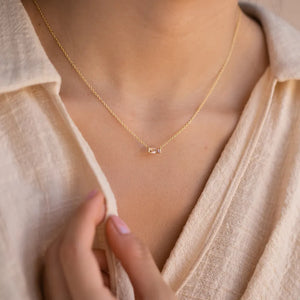

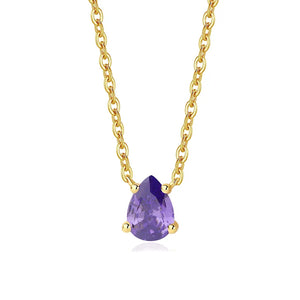

The piece they're describing → Birthstone Charm Necklace for Women — Baguette CZ Pendant, 18K Gold Plated
Personalize Yours


