


Anklets have been worn for 8,000+ years across dozens of cultures as symbols of femininity, status, protection, and marriage. In modern Western culture, wearing an anklet is primarily a personal style choice with no fixed meaning — which ankle you choose is up to you.
If color or side meaning matters to you: gold = prosperity and confidence, silver = intuition and calm, red = love and protection. Left ankle is loosely associated with relationships; right ankle is loosely associated with being single. Neither is a universal rule.
Anklets are one of the oldest surviving forms of jewelry — worn in ancient Mesopotamia, gifted at South Asian weddings, worn by Egyptian queens, and still one of the best-selling jewelry styles in 2026. Whether you're curious about the meaning behind a piece you already own, or shopping for an anklet as a gift, this is the complete guide to what anklets symbolize across history and cultures.
The History of Anklets: 8,000 Years of Ankle Jewelry
Mesopotamia and Sumeria — The First Anklets (5000 BCE)
Archaeological evidence from the ancient city of Ur places ankle jewelry as early as the 5th millennium BCE — among the earliest recorded human jewelry of any kind. Sumerian women wore anklets as symbols of a husband's wealth and social standing. The more ornate the piece, the higher the family's fortune. Anklets were not just decorative — they were a public declaration of status in the ancient world's first urban societies.
Ancient Egypt — Status and Class (4000+ BCE)
Egyptian women of every social class wore anklets, making them among the most democratic jewelry items in the ancient world. The material, however, was a strict class marker: gold anklets identified nobility, silver and beaded anklets were worn by commoners. Anklets have been found in Egyptian tombs dating to predynastic periods (before 3100 BCE), and Egyptian art consistently depicts women wearing layered ankle ornaments in everyday life, not only in ceremony.
Ancient India — Payal, Nupur, and the Solah Shringaar
In South Asian tradition, anklets hold some of their deepest cultural significance anywhere in the world. Known as payal, nupur, or golusu depending on regional language, they are one of the sixteen adornments of the Solah Shringaar — the traditional bridal preparation ritual encompassing all elements of a new bride's dress. The groom traditionally gifts the payal to the bride as part of the wedding ceremony.
A key detail most Western guides miss: in Hindu tradition, gold is considered too sacred to wear below the waist (gold is associated with the goddess Lakshmi, and placing it at the feet is considered disrespectful). This is why traditional Indian payal are made from silver, not gold — a striking contrast with Egyptian and Western gold anklet traditions. Bell anklets, called ghungroo, are worn by practitioners of classical Indian dance forms like Kathak and Bharatanatyam. The rhythmic sound of the bells is considered a form of divine communication, with some classical dance manuals describing the ankle bells as "the voice of the dancer's feet speaking to the gods."
Ancient Greece and Rome — Periscelis
Greek and Roman women wore ankle ornaments called periscelis (from the Greek for "around the leg"). As with Egypt, material was a class marker: silver for common women, gold for elite or noble families. Ankle jewelry appears in classical Greek sculpture and in Roman literary references, though it was never as central to culture as in South Asian and African traditions.
Africa — Tribal Identity and Fertility
Across African cultures, anklets carried — and in many communities still carry — specific social meaning. Among the Maasai of East Africa, ankle jewelry serves as an identity and status marker, with the materials, colors, and number of pieces indicating age, clan, and marital status. In West African traditions, anklets in brass, copper, and beads were associated with fertility, protection, and wealth. In some communities, a woman's anklet collection was an expression of economic status comparable to a man's cattle holdings.
China — Red String and Zodiac Protection
Chinese tradition includes the red string anklet, worn during one's zodiac year (the year that matches your birth year in the 12-year cycle) for protection and luck. The red string — sometimes a cord, sometimes incorporated into a more elaborate piece — is believed to ward off misfortune during a year when one is considered more vulnerable to bad luck. The tradition is also associated with the Lunar New Year, when red accessories of all kinds are worn for protection and prosperity.
The Middle East — Bedouin Tradition and Evil Eye
Bedouin women wore heavy silver anklets as part of tribal identity, with specific designs identifying which clan or region a woman came from. Middle Eastern anklet traditions also incorporate the evil eye motif — turquoise and blue beads on an anklet are believed to deflect negative energy and protect the wearer. This apotropaic (evil-averting) function continues in contemporary jewelry design, with evil eye charms remaining among the most popular anklet embellishments sold today.
The Western Revival — 1970s to Today
Anklets entered mainstream Western fashion during the 1970s beach and bohemian movements in the United States. Associated with barefoot summer freedom, surf culture, and free-spirited personal style, they became popular accessories without any fixed cultural symbolism — simply beautiful jewelry worn for aesthetic pleasure. That beach-freedom association has endured: the anklet remains one of the top seasonal jewelry trends each summer, and has increasingly become a year-round staple as fashion editorials have shown them worn over tights with boots.
Left Ankle vs. Right Ankle: What Does Each Mean?
Left Ankle — Relationships and Commitment
In modern Western culture, wearing an anklet on the left ankle is loosely associated with being in a committed relationship or marriage. The left side of the body has long been linked symbolically to the heart — "wearing your heart on your sleeve" has a left-side origin, and wedding rings are worn on the left hand in most Western traditions. Carrying that symbolism to the ankle, a left-ankle anklet sometimes signals romantic commitment. In feng shui tradition, the left side of the body is the "receiving" side — associated with attracting energy, love, and connection inward.
Right Ankle — Independence and Openness
The right ankle carries a looser association with being single or available. In some communities, particularly online, wearing an anklet on the right ankle has been interpreted as signaling openness to new connections. In feng shui, the right side of the body is the "releasing" side — associated with projecting energy, protection, and intention outward. Neither the left nor right ankle meaning is a universal rule — most people simply choose the ankle that feels comfortable or looks best.
The "Lifestyle" Question — Addressed Directly
Anyone researching anklet meaning will encounter references to the idea that a right-ankle anklet signals participation in a specific adult relationship lifestyle. This is an internet myth with no cultural or historical foundation. The association originated in online spaces in the 2000s and has no basis in mainstream jewelry tradition. The vast majority of people wearing anklets on either ankle are doing so because they like how it looks — nothing more.
Wearing Anklets on Both Ankles
Wearing anklets on both ankles carries no negative or unusual connotation in any mainstream culture. It's a valid styling choice — many people enjoy the symmetry or simply like how the jewelry looks from both sides. In some African tribal traditions, both-ankle adornment was actually the standard, with the number and type of pieces worn indicating specific social status.
Anklet Color Meanings
Gold Anklet
Gold is the most classic anklet choice — associated with prosperity, confidence, and success across virtually every culture that has worn gold jewelry. In Western fashion, a delicate gold chain anklet is the default "polish" choice: it elevates a simple sandal, works on any skin tone, and reads as timeless rather than trendy. In South Asian tradition, gold specifically signals luxury and status (though, as noted above, traditional payal are silver for religious reasons).
Silver Anklet
Silver anklets are associated with intuition, calm, feminine energy, and the moon across multiple spiritual traditions. In Hindu culture, silver at the feet is the religiously appropriate choice for married women — simultaneously traditional and auspicious. Silver anklets are also the most practical choice for everyday wear, as sterling silver holds up better without tarnishing concerns in summer conditions when water exposure is more likely.
Red Anklet
Red is one of the most symbolically loaded anklet colors. In South Asian traditions, red thread or red-beaded anklets are associated with love, passion, marriage, and protection. In Chinese tradition, red is the color of luck and is specifically worn during zodiac years for protection. In broader color symbolism, red represents vitality, courage, and strong energy — making a red anklet a bold, intentional choice.
Black Anklet
Black anklets carry a grounding energy in spiritual traditions — associated with protection, strength, and releasing negative influences. In some East Asian traditions, a black anklet (or black cord) is associated with a "savings" intention — wearing it to build financial discipline or stability. In modern fashion, black anklets have the most versatility in terms of pairing with dark or neutral outfits year-round.
Blue Anklet
Blue and turquoise carry strong protective symbolism, particularly in Middle Eastern and Mediterranean cultures where the evil eye belief is widespread. A blue or turquoise bead on an anklet is one of the oldest protective amulet traditions in the world. Beyond the evil eye connection, blue generally symbolizes tranquility, loyalty, and communication.
White or Pearl Anklet
White and pearl anklets are associated with purity, new beginnings, and clarity. They're particularly popular as bridal anklets — a delicate pearl-beaded anklet is a subtle, romantic choice for a beach or summer wedding. In spiritual contexts, white is associated with cleansing energy and fresh starts.
Green Anklet
Green carries associations of abundance, growth, and connection to nature. In feng shui, jade — which is green — is one of the most auspicious materials for jewelry, associated with good fortune and harmony. A green jade or green-beaded anklet is particularly meaningful in East and Southeast Asian cultural contexts.
Orange Anklet
Orange anklets are the friendship color in many traditions — similar to how friendship bracelets use specific colors to signal connection. Giving someone an orange anklet is an affectionate gesture of friendship and affection, distinct from romantic symbolism. Orange also carries associations with creativity, joy, and warmth.
Spiritual and Chakra Meaning of Anklets
In energy healing traditions, the ankles are considered the location of the Root Chakra (Muladhara) — the energy center associated with grounding, stability, security, and connection to the earth. Wearing ankle jewelry is sometimes described as "activating" this chakra, strengthening one's sense of being rooted and secure.
The ankles are also understood in some energy traditions as "gateways" — entry and exit points for the body's energy (Qi or Prana). The right ankle is associated with releasing and projecting energy outward; the left with receiving and attracting energy inward. This maps to the feng shui interpretation of left (receiving) and right (releasing) that informs the ankle-side meaning discussion.
Evil eye anklets deserve their own mention here: the evil eye (known as nazar in Turkish, ayin ha'ra in Hebrew, malocchio in Italian) is one of the oldest protective talismans in the world — found across Mediterranean, Middle Eastern, South Asian, and Latin American cultures. A blue or turquoise evil eye bead on an anklet is worn specifically for protection, deflecting negative energy directed toward the wearer. It's not superstition in the Western skeptical sense — it's a deeply rooted cross-cultural belief in protective intention.
What Does Wearing an Anklet Mean in the Bible?
Anklets appear in the Bible, and the reference is more nuanced than most people assume. The clearest mention is in Isaiah 3:16–18, where the prophet describes the "daughters of Zion" walking with "stretched-forth necks and wanton eyes... making a tinkling with their feet." The passage lists anklets among the ornaments — and it's often read as a warning against vanity and excess, not against anklets themselves.
Here's the important context: in the ancient Near East, anklets were everyday jewelry worn by women across social classes. The Isaiah passage isn't condemning the anklet — it's using fine jewelry as a symbol of pride and self-display in a specific moment of social critique. Nowhere does the Bible forbid wearing an anklet.
Modern Christian interpretation is broad. Most people today wear an anklet purely as a style or sentimental piece, with no religious meaning at all. If you value the Biblical reference, the takeaway is about intention over ornament — the same principle that applies to any jewelry. A dainty anklet worn for joy or as a gift carries no negative meaning in mainstream Christian thought.
Types of Anklets and What They Suggest
| Style | Feel / Meaning | Best Occasion |
|---|---|---|
| Delicate chain | Minimal, elegant, timeless | Everyday, office, weddings |
| Charm anklet | Personal, storytelling, playful | Beach, casual, gifting |
| Beaded / natural stone | Bohemian, earthy, spiritual | Festivals, travel, mindful wear |
| Evil eye anklet | Protective, spiritual, meaningful | Gifting, new chapters, travel |
| Bell / ghungroo | Traditional, ceremonial, cultural | Cultural events, dance, bridal |
| Permanent / welded | Commitment, milestone, forever | Friendship, self-love, anniversaries |
| Layered / stacked | Curated, fashion-forward | Summer, festivals, beach |
Can Men Wear Anklets?
Yes — and historically, they have. Egyptian men of high status wore gold anklets as status symbols. African tribal anklets were worn by men and women alike, serving as identity and rank markers. Greek and Roman men wore them in certain periods and regions.
In contemporary fashion, men's anklets are a growing trend — particularly in streetwear and beach fashion contexts. Men's anklets tend to be simpler (plain chain or single-cord styles) and are increasingly seen across major fashion runways and in editorial styling. Wearing an anklet as a man carries no negative connotation in any contemporary mainstream culture.
How to Style an Anklet
Sizing: Most anklets are 9–11 inches. Measure around your ankle bone and add 0.5–1 inch for a comfortable fit. An adjustable extender chain (usually 1 inch) gives the most flexibility.
Footwear pairing: Anklets show best with sandals (flat or heeled), bare feet, and cropped boots. They're visible but understated under wide-leg trousers or maxi skirts, peeking out at the hem. For year-round wear, a delicate gold anklet worn over sheer tights with ankle boots is a current editorial trend.
Layering: Two or three anklets of different textures or lengths on the same ankle is the standard stacked approach. Use slightly different lengths (9", 10", 11") so each piece is visible. Mix metals deliberately — pairing a fine gold chain with a beaded silver piece reads as intentional; mixing without contrast reads accidental.
Shop personalized anklets or the full sterling silver jewelry collection for everyday and gifting styles.
Shop at AJLuxe: Dainty Gold Anklet — 18K gold plated, adjustable ($33.99) · Gold Serpentine Anklet — smooth snake chain, 18K gold ($32.99) · Double Layer Anklet — layered gold chain, tarnish-free ($34.99)
Frequently Asked Questions About Anklet Meaning
What does wearing an anklet mean in the Bible?
The Bible mentions anklets in Isaiah 3:16–18 as part of a broader warning against vanity, not as a prohibition on anklets themselves. In the ancient Near East, anklets were common everyday jewelry. There is no Biblical rule against wearing one, and most people today wear anklets with no religious meaning — simply as style or a sentimental gift.
What does it mean when your anklet breaks?
In spiritual traditions, an anklet breaking is interpreted as the piece having "done its job" — absorbing negative energy or completing a protective cycle, releasing the wearer to begin a new chapter. In practical jewelry terms, it usually means the clasp spring or jump ring has fatigued from daily wear. Either way, many people treat a broken anklet as a sign of transition and an occasion to gift themselves a new one.
What does a red string anklet mean?
Red string anklets carry protective meaning across multiple traditions. In Chinese culture, a red cord anklet is worn during one's zodiac year for protection. In Kabbalah tradition, red string (worn on the left wrist, though also the ankle) is a protective amulet. In South Asian traditions, red threads and red-beaded anklets are associated with love and protection from negative energy.
What does an evil eye anklet mean?
An evil eye anklet — typically featuring a blue or turquoise glass or enamel bead in the shape of an eye — is a protective talisman worn to deflect negative energy or ill intentions directed toward the wearer. The tradition is found across Mediterranean, Middle Eastern, South Asian, and Latin American cultures and dates back thousands of years. It's one of the oldest continuously worn protective symbols in human history.
What does an anklet mean on a woman?
For most women today, an anklet is a personal style choice. Historically, anklets have symbolized femininity, social status, marital status, and spiritual protection depending on the culture. In modern Western culture, the meaning is largely individual — you wear it because you love it.
What does wearing an anklet on the left ankle mean?
In modern Western culture, the left ankle is loosely associated with being in a relationship or marriage — following the convention that the left side of the body is linked to the heart. In feng shui, the left side represents receiving energy, including love and connection. Neither meaning is universal; most people simply choose the ankle that's most comfortable.
What does wearing an anklet on the right ankle mean?
The right ankle is sometimes associated with being single or available in online communities. In feng shui, the right side represents projecting energy outward — protection and intention. There is no mainstream cultural rule about which ankle means what; choose based on preference.
What is a payal?
Payal is the Hindi and Urdu word for an anklet, particularly the traditional South Asian silver ankle bracelet that is part of bridal and formal attire. Traditional payal are made from silver (not gold) due to the Hindu tradition that gold should not be worn below the waist, as it is associated with the goddess Lakshmi. Payal often feature small bells that create a gentle sound with movement, considered auspicious in Indian tradition.
Is it OK to wear an anklet on both ankles?
Yes — no cultural or fashion rule prohibits this. Wearing anklets on both ankles is common, particularly in summer and beach settings, and can create a beautiful balanced look.
What does gifting someone an anklet mean?
Gifting an anklet carries different meanings by culture. In South Asian tradition, a groom gifting a bride payal is part of the wedding ceremony — a formal symbol of commitment. In Western contexts, an anklet gift is generally a gesture of affection and thoughtfulness, similar to any fine jewelry gift. Personalizing it — with an initial, a birthstone, or a charm that holds meaning — adds intention to the gesture.
How tight should an anklet be?
An anklet should hang loosely around the ankle bone — not pressing into skin. Add 0.5 to 1 inch to your ankle circumference when ordering. A properly fitted anklet moves slightly when you walk and sits at the ankle bone, not tight against the Achilles tendon.
Want to know how to actually style and wear anklets? Read our complete anklet styling guide — which ankle, how to size it, what to pair with, and how to stack multiple pieces.
Anklets are technically a bracelet worn at the ankle — see all 20 bracelet varieties in our complete bracelet types guide.
For another protective jewelry symbol with deep meaning, read our complete guide to evil eye bracelet meaning — including all 10 color meanings.
For another gemstone with deep symbolic meaning, explore our full guide to moonstone meaning, healing properties, and symbolism.
Written by Vaishakhi Ajmera — founder and jewelry specialist at AJLuxe. Last updated: May 2026.
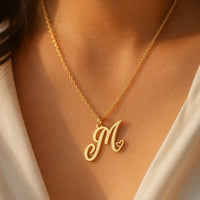
The piece they're describing → Heart Initial Necklace for Women — 18K Gold Plated, Personalized Letter + Heart Pendant
Personalize Yours

