


One of the most common questions about evil eye jewelry: is it okay for me to wear this? Does it require a certain religion, culture, or belief system? Here's the definitive answer.
Evil Eye Across Cultures — It Belongs to Everyone
The evil eye belief is one of the few cultural phenomena that appears independently across dozens of unconnected civilizations throughout history. This isn't borrowing — it's convergent belief. Here are the cultures that have historically used evil eye amulets:
- Turkey: The nazar boncuk (blue glass bead) is the national symbol — on Turkish Airlines planes, hung in homes and businesses, given to newborns
- Greece: Called mati; blue eye charms hung in homes, worn as jewelry across all ages
- Italy: The malocchio (evil eye curse) and corno (protective horn) are core folk traditions; evil eye jewelry widely worn
- Jewish tradition: Referenced in the Talmud; the concept of ayin hara (evil eye) is one of the oldest recorded supernatural beliefs in Jewish texts
- Islamic tradition: Mentioned in the Quran and Hadith; the Quran instructs seeking refuge from the evil eye; the Hamsa (Hand of Fatima) is the traditional protective response
- South Asian cultures: Nazar (same word as Turkish) is used in India, Pakistan, and Bangladesh; black kohl dots on babies' foreheads ward off the evil eye
- Latin America: Mal de ojo (evil eye) is a core folk belief across Mexico, Central America, and South America; red and black bracelets worn by babies for protection
- North Africa: Widespread use of Hamsa and blue eye amulets across Morocco, Tunisia, Libya, Algeria, and Egypt
- Scandinavian folklore: The concept of the evil eye appears in Norse mythology (the concept of gandr)
- Ancient Rome and Greece: Philosophical writing by Plutarch, Heliodorus, and Plato references the evil eye
No single culture invented the evil eye. The symbol appears to have emerged independently across human civilizations as a universal response to the real psychological phenomenon of envy.
Evil Eye and Major World Religions
Islam
The evil eye (ayn in Arabic) is explicitly mentioned in the Quran (Surah Al-Falaq 113:1-5) and in multiple Hadiths — the Prophet Muhammad is quoted acknowledging the evil eye's reality. Islamic protective responses include reciting Quran verses, making dua (supplication), and wearing protective amulets. While opinions on amulets vary among scholars (some conservative scholars advise against physical talismans, preferring Quranic recitation), the belief in the evil eye itself is universal within Islam.
Judaism
Ayin hara (Hebrew: "evil eye") is one of the most widely referenced concepts in Jewish religious literature. The Talmud warns against giving others reason for envy and advises against openly displaying wealth or good news to prevent attracting the evil eye. The Hamsa (Hand of Miriam) is the classic Jewish protective amulet. In many Jewish communities, saying "bli ayin hara" (without the evil eye) after mentioning something good is a casual everyday practice.
Christianity
Evil eye beliefs are common in Christian folk traditions — particularly in Mediterranean Catholic countries (Italy, Greece, Spain, Latin America). The belief isn't part of mainstream Protestant theology, but it's deeply embedded in folk Christianity. Many Catholic communities use the horn (corno), red string, or eye symbol alongside Christian symbols like crosses.
Hinduism
Nazar (same word used across Turkish, Hindi/Urdu, and Arabic) is a major concept in Hindu culture. Mothers draw a small black dot behind a baby's ear or on their chin to attract the evil eye to a "blemish" rather than the child. Lemon-and-chili totems hung above doors are common protective devices.
Is Wearing Evil Eye Jewelry Cultural Appropriation?
No — and this answer comes from the cultures themselves, not just from outside observers.
Cultural appropriation typically involves taking a sacred, culturally specific element from a marginalized culture and commercializing it without acknowledgment or credit. The evil eye fails this test on multiple counts:
- It belongs to 30+ cultures simultaneously — you can't "appropriate" from all of them at once
- No culture considers it their exclusive property — Turkish, Greek, Jewish, Islamic, Italian, and South Asian communities all claim it and all openly sell it to outsiders
- It's actively given as gifts across cultural lines — giving an evil eye to protect someone you love is the explicit tradition; giving it to someone outside your culture is the intended purpose
- The cultures of origin actively profit from and celebrate global adoption — Turkey's evil eye bead industry is a major export; Greek jewelers actively market to international tourists
The only respectful consideration: understand what you're wearing. Buying an evil eye necklace because it's cute without any knowledge of its meaning is less respectful than wearing it with awareness. But it's not appropriation.
Can You Wear Evil Eye If You Don't Believe in It?
Yes. Millions of people wear evil eye jewelry purely as a fashion accessory, with no spiritual belief in its protective function. This is completely valid. The symbol is beautiful, bold, and globally recognized — those are legitimate reasons to wear it.
If you do believe in its protective function — even partially — that intention only enhances the experience of wearing it. But belief is not required. The jewelry works as jewelry regardless.
Are There Any Restrictions on Wearing Evil Eye Jewelry?
Within specific religious communities, some scholars advise against amulets:
- Some conservative Islamic scholars advise against physical protective talismans, favoring Quranic recitation (ruqyah) as the only legitimate spiritual protection
- Some Protestant Christian denominations consider amulet use incompatible with monotheistic faith ("seek God's protection, not objects")
These are specific internal religious debates — they don't affect people outside those communities. If you practice one of these more conservative traditions and are uncertain, consult your spiritual leader.
For everyone else: wear it freely.
Related reading: Best evil eye bracelets.
Related reading: Evil eye necklace meaning.
What Is the Evil Eye, Exactly?
The evil eye is a belief, shared across more than 30 cultures, that an envious or malicious glare can bring misfortune, illness, or bad luck to whoever it's directed at — and evil eye jewelry is worn as a protective amulet believed to reflect that negative energy away before it takes hold. The piece itself isn't the curse; it's the shield against it.
Visually, the amulet is almost always rendered as a blue-and-white (or blue-and-black) concentric eye shape, most recognizably the Turkish nazar boncuk, though colors and styles vary by culture. The idea isn't that the jewelry has magical power on its own — it's a visual reminder, and for believers a spiritual one, to stay guarded against envy rather than a promise that nothing bad will ever happen.
AJLuxe's evil eye pieces are made in 925 sterling silver with 18K gold plating, so you get the traditional symbol in a hypoallergenic, everyday-wearable form whether you're drawn to it for its meaning, its look, or both.
Related reading: Spiritual jewelry guide.
Frequently Asked Questions
- Can anyone wear evil eye jewelry?
- Yes — anyone can wear evil eye jewelry. The symbol spans over 30 cultures. No single religion or culture owns it. No belief system is required.
- Is the evil eye cultural appropriation?
- No. The evil eye belongs to 30+ cultures simultaneously. No culture considers it their exclusive property. Wearing it with awareness is considered respectful universally.
- Can Christians wear evil eye jewelry?
- In practice, yes — it's widely worn in Mediterranean Catholic traditions. Some Protestant denominations may have concerns. Most Christians wearing it as a meaningful symbol or fashion piece encounter no controversy.
- Can Muslims wear evil eye jewelry?
- The evil eye is referenced in the Quran as real. Most Muslim communities accept protective amulets. Some conservative scholars prefer Quranic recitation only. Consult a trusted scholar if uncertain.
- Do you need to believe in the evil eye for the jewelry to work?
- No belief required. Millions wear evil eye jewelry purely as fashion. The jewelry is beautiful as an aesthetic and cultural object regardless of belief.
- Can babies wear evil eye jewelry?
- The evil eye is traditionally given to newborns as protection. For safety, avoid necklaces/bracelets under age 3. Evil eye pins on clothing or diaper bags are safer for infants.
- Can men wear evil eye jewelry?
- Yes — completely gender-neutral. Men across Turkish, Greek, Lebanese, Italian, and South Asian cultures wear evil eye jewelry. No gender connotations.
- Is wearing the evil eye good luck or bad luck?
- Good luck — the amulet protects you from bad luck caused by others' envy. The confusion comes from the name: the amulet protects against the evil eye curse, not from it.
It Was Made for Everyone
The evil eye didn't spread across 30 cultures because it was borrowed — it spread because it speaks to something deeply human: the desire to protect ourselves from the corrosive power of envy. Whatever your background, whatever your belief, that desire is yours. The symbol is yours too.
Written by the AJLuxe team — specialists in 925 sterling silver and spiritual jewelry. Last updated: June 2026.
All third-party trademarks, brand names and product names are the property of their respective owners. AJLuxe is not affiliated with, endorsed by, sponsored by, or otherwise connected to any third-party brand referenced in this article. Brand names are used solely for accurate comparative reference, and material descriptions reflect each brand's own published product specifications at the time of writing.
You Might Also Like

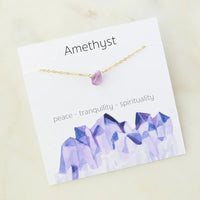
The piece they're describing → Stone Charm Necklace for Women — Raw Natural Gemstone Pendant
Personalize Yours


