


- Spiritual jewelry is worn with intention — for protection, attraction, or meaning — not purely for aesthetics.
- The five main categories are: evil eye, red string bracelet, crystal & gemstone, celestial, and sacred symbol jewelry.
- Evil eye and hamsa offer ancient protection; crystals carry healing intention; celestial pieces connect you to cosmic cycles.
- You can layer multiple spiritual pieces together — just pair complementary intentions.
- Cleanse new pieces with moonlight, sound, or selenite before wearing.
What Makes Jewelry "Spiritual"?
Walk into any jewelry store and you will find rings, necklaces, and bracelets by the hundreds. Most are chosen for how they look. Spiritual jewelry is different. It is worn with intention — because the symbol, stone, or ritual attached to it carries a meaning the wearer wants to embody, attract, or be protected by.
That distinction matters. A hamsa pendant is a perfectly beautiful piece of geometric metalwork. But when someone wears it as protection against the evil eye — a belief held across the Mediterranean, Middle East, and North Africa for more than three thousand years — it becomes something else entirely. It becomes an object of intention.
This guide covers the five major categories of spiritual jewelry: evil eye pieces, red string bracelets, crystal and gemstone jewelry, celestial jewelry, and sacred symbol jewelry — and if number-based meaning speaks to you more than a symbol does, our angel number necklace guide covers that separately. For each category you will find the origin, the meaning, how to choose the right piece, and how to wear it. At the end you will find a master symbol table, a stacking guide, and an honest answer to the question everyone eventually asks: does any of this actually work?
1. Evil Eye Jewelry
The evil eye — called nazar in Turkish and Arabic traditions — is one of the oldest supernatural concepts still in active circulation. The belief is simple: a glance charged with envy or malice can cause real harm to the person it falls on, affecting health, luck, relationships, or prosperity. The earliest written references appear in ancient Sumerian texts around 3,000 BCE. The Romans called it oculus malus. Ancient Greeks called it matiasma.
Evil eye amulets work by reflecting the curse back at its source. The distinctive blue-and-white eye shape — concentric circles of dark blue, light blue, white, and black — mimics a watchful eye, warning away jealous gazes before they can land. The particular shade of cobalt or royal blue seen in most nazar amulets traces back to ancient Egypt, where the color represented divine protection and was used heavily in funerary contexts.
Today evil eye jewelry is worn across Turkey, Greece, Israel, Lebanon, Morocco, India, Latin America, and most of the Western world. It appears on necklaces, bracelets, earrings, rings, and anklets. For a full origin breakdown, see our evil eye jewelry guide and our detailed article on evil eye necklace meaning.
What the Colors Mean
Dark blue is the most traditional color, representing karma and fate. Light blue represents the sky and general protection. White symbolizes purity and good luck. Green is associated with happiness and success. Red brings courage and energy. Gold or yellow brings health and power.
Who Should Wear Evil Eye Jewelry?
Evil eye amulets are traditionally given as gifts — the protective power is thought to be stronger when received rather than self-purchased. They are particularly common as new baby gifts, gifts for people entering new life chapters (new job, new relationship, new home), and for anyone who feels that envy from others is a recurring challenge in their life. That said, self-purchasing is widely accepted and practiced.
Hamsa vs Evil Eye
You will often see the hamsa hand — an open palm with an eye in the center — alongside or instead of the standalone eye. The hamsa is a separate but related symbol, common in Jewish, Islamic, and Christian traditions across the Middle East and North Africa. It represents the hand of divine protection. Many pieces combine both: a hamsa hand with an evil eye embedded in the palm. For a deep comparison, see our hamsa vs evil eye article.
2. Red String Bracelet
The red string bracelet is one of the most recognizable pieces of spiritual jewelry in the world — a thin cord of red wool or thread worn around the left wrist. Its best-known modern form comes from Kabbalah, a mystical tradition within Judaism, where red string from the tomb of Rachel (the Biblical matriarch, located near Bethlehem) is tied in seven knots around the left wrist to ward off the evil eye and attract good fortune.
The left wrist is specifically chosen because Kabbalistic teaching holds that the left side of the body is the receiving side — the side through which vulnerability and negative energy enter. Placing the string there creates a barrier at the point of entry.
The seven knots are not decorative. Each knot is tied while reciting an intention or blessing, creating a layered seal of protection. The number seven appears throughout Kabbalah as deeply significant — seven days of creation, seven divine attributes (Sefirot), seven dimensions of spiritual experience.
Red string bracelets exist outside Kabbalah as well. In Hinduism, a sacred red thread called mouli or kalava is tied during puja (worship) rituals. In Chinese folk tradition, a red string connects fated partners. In Tibetan Buddhism, blessed red cords are given by lamas to devotees. The common thread (literally) across all these traditions is the color red, which universally carries associations with energy, vitality, protection, and life force. For more detail see our article on red string bracelet meaning and Kabbalah bracelet meaning.
Wearing and Replacing
Traditional Kabbalah teaching holds that the bracelet should be tied by someone who loves you while they recite a specific prayer (Ana B'Koach). When the string naturally wears through and falls off on its own, the protection has been fully absorbed and a new one can be tied. Removing it intentionally before it breaks is generally discouraged.
3. Crystal and Gemstone Jewelry
Crystal healing is one of the most widely practiced spiritual frameworks in modern wellness culture. The basic premise is that different crystals carry different vibrational frequencies that interact with the human energy field, supporting specific emotional, mental, or physical states depending on the stone.
Mainstream science does not validate this mechanism. But from a mindfulness perspective, choosing and wearing a stone that represents a quality you want to cultivate — calm, clarity, love, courage — works as a form of continuous intention-setting. The crystal becomes a tactile reminder of your focus. That psychological mechanism is well documented even if the vibrational one is not. See our crystal necklace meaning guide for a full breakdown, and pair it with our crystals for your zodiac sign guide for personalized recommendations.
The Most Common Crystal Intentions
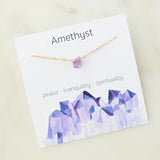
Amethyst — Calm, clarity, and spiritual protection. One of the most widely used crystals, associated with the crown and third-eye chakras. Historically worn by Greek and Roman soldiers who believed it prevented intoxication and maintained clear thinking in battle. Today used for stress relief, sleep, and meditation support.
Citrine — Abundance, confidence, and solar energy. Called the "merchant's stone" because shopkeepers historically kept it in their cash drawers. Associated with the sacral and solar plexus chakras. Unlike most crystals, citrine is said to not hold negative energy and does not need cleansing.
Rose Quartz — Love in all its forms: romantic, self-love, compassion, and forgiveness. Associated with the heart chakra. One of the most gifted crystals between partners. Also used as a self-care stone for rebuilding self-worth after difficult relationships.
Black Tourmaline — Protection and grounding. Considered one of the strongest protective stones, said to create a shield against negative energy, electromagnetic frequencies, and psychic attack. Often worn by people in high-stress or high-conflict environments.
Lapis Lazuli — Truth, wisdom, and communication. One of the most ancient sacred stones, used in the burial mask of Tutankhamun and prized by Mesopotamian civilizations. Associated with the throat chakra and mental clarity.
Malachite — Transformation and emotional healing. Its deep green swirling patterns make it one of the most visually dramatic stones. Associated with the heart chakra and used for releasing old emotional patterns. Note: malachite is toxic in raw powdered form; polished pieces are safe to wear.
How to Choose a Crystal for Your Intention
Start with the quality you most want to invite in: protection, love, clarity, abundance, confidence, or grounding. Cross-reference that with the crystal list above or see our charm and symbol meanings guide for stone-by-stone breakdowns. If you are drawn to a stone without knowing why, that instinct is considered meaningful in crystal traditions — pick up the one that calls to you and research its properties after.
4. Celestial Jewelry
Celestial jewelry — sun, moon, stars, constellations, planets — taps into humanity's oldest spiritual framework: the idea that the cosmos above reflects meaning and order below. Almost every major ancient civilization organized its spiritual life around celestial observation. The Babylonians tracked planets to predict human affairs. The Egyptians aligned pyramids with star clusters. Greek mythology populated every constellation with divine narratives. Vedic astrology in India built a complete framework for human destiny around planetary positions at birth.
Today celestial jewelry is one of the fastest-growing jewelry categories, driven partly by the resurgence of astrology as a cultural touchstone. But the symbolism runs much deeper than zodiac signs. For a deep dive, see our celestial jewelry guide and moon necklace meaning.
Sun Jewelry
The sun represents vital energy, confidence, identity, and masculine solar power. Sun pendants and charms are worn to invite warmth, vitality, and a sense of personal radiance. In many traditions the sun is also a symbol of clarity — of seeing things as they really are.
Moon Jewelry
The moon represents intuition, cycles, femininity, and the subconscious. Full moon jewelry is associated with completion and manifestation — the moment when seeds planted at the new moon come to fruition. Crescent moon jewelry is particularly associated with new beginnings, new cycles, and the promise of what is emerging. Wearing a crescent moon pendant is a subtle declaration of openness to change and growth.
Star Jewelry
Stars represent guidance, aspiration, and the idea that light persists even in darkness. The star has been a navigation tool since antiquity — sailors, travelers, and pilgrims used the North Star as a fixed point of orientation. Wearing star jewelry is an affirmation of direction and purpose.
Constellation Jewelry
Constellation pieces map your personal zodiac sign — the stars that appeared above the horizon at your birth. They carry all the personality associations of astrology (Scorpio's depth, Sagittarius's freedom, Pisces's empathy) rendered in metal and gems. Constellation necklaces are among the most personally meaningful gifts you can give or receive.
5. Sacred Symbol Jewelry
Beyond evil eye and celestial motifs, a rich vocabulary of sacred symbols appears across spiritual jewelry traditions worldwide. Each carries centuries of layered meaning.
Hamsa — The open palm of divine protection, discussed in detail above and in our hamsa vs evil eye guide. Common across Jewish, Islamic, and Christian Middle Eastern traditions.
Tree of Life — Found in nearly every major spiritual tradition from Norse mythology (Yggdrasil) to Kabbalah to Celtic spirituality. Represents interconnection, rootedness, growth, and the link between earthly and divine realms. Wearing it is an affirmation of your connections to family, community, and the larger web of life.
Om (Aum) — The sacred syllable of Hinduism, Buddhism, and Jainism, representing the sound from which all creation emerged. Wearing an Om pendant is both a spiritual statement and an invitation to presence and mindfulness.
Lotus — In Buddhist and Hindu traditions the lotus flower blooms from muddy water into perfect beauty — the quintessential symbol of spiritual development and enlightenment through adversity. Wearing a lotus is an affirmation that difficult circumstances are the soil of growth.
Infinity — The lemniscate (∞) symbol represents endless cycles, eternal connection, and unlimited possibility. Common in relationship jewelry as a symbol of enduring bonds, and in manifestation practices as a reminder of abundant potential.
Cross — The central symbol of Christianity, representing sacrifice, redemption, and divine love. Worn by billions worldwide as both a declaration of faith and a request for protection.
Ankh — The Egyptian symbol of life and immortality, combining the tau cross with an oval loop at the top. Associated with the life-giving power of the sun and Nile waters, and today worn as a symbol of life force, vitality, and spiritual awareness.
Master Spiritual Symbol Table
| Symbol | Tradition | Protects Against / Attracts | Best For |
|---|---|---|---|
| Evil Eye (Nazar) | Mediterranean, Middle East, Greece, Turkey | Protects against envy and the evil eye | Anyone in a high-visibility or competitive environment |
| Hamsa | Jewish, Islamic, Christian (Middle East, North Africa) | Protects against evil; attracts blessings and good fortune | New beginnings, new homes, gifts of protection |
| Red String | Kabbalah (Jewish mysticism), Hinduism, Tibetan Buddhism | Protects against evil eye; attracts luck and destined connections | Those seeking spiritual protection on the left wrist |
| Amethyst | Western, Vedic, Crystal healing | Attracts calm, clarity, and spiritual protection | Anxiety, insomnia, meditation practice |
| Rose Quartz | Crystal healing, Western | Attracts love, compassion, and self-worth | Relationship healing, self-love work |
| Black Tourmaline | Crystal healing, Western | Shields against negative energy, EMF, psychic attack | High-stress environments, empaths, energy workers |
| Citrine | Crystal healing, Western | Attracts abundance, confidence, solar energy | Business, creativity, manifestation practice |
| Sun | Universal / most spiritual traditions | Attracts vitality, clarity, and life force | Energy renewal, confidence, daytime wear |
| Crescent Moon | Islamic, Pagan, Celestial | Attracts new beginnings, intuition, and feminine energy | New chapters, transitions, intuition development |
| Tree of Life | Norse, Celtic, Kabbalah, Universal | Attracts groundedness, family connection, growth | Family gifts, transitions, rootedness intention |
| Om / Lotus | Hinduism, Buddhism, Jainism | Attracts presence, peace, and spiritual growth | Meditation practice, yoga community, spiritual seekers |
| Ankh | Ancient Egypt | Attracts life force, vitality, and immortality | Those drawn to Egyptian spirituality, life-force work |
How to Build a Spiritual Jewelry Stack
Layering spiritual jewelry is one of the most personal expressions of your intention practice. A few principles make stacking work both aesthetically and energetically.
Anchor with one primary intention. Decide what you most want to call in right now: protection, love, abundance, or clarity. Choose one dominant piece that represents that core intention — this becomes the anchor of your stack. An evil eye necklace for protection, a rose quartz pendant for love, or a citrine bracelet for abundance are strong anchors.
Build outward with complementary intentions. Your secondary pieces should support rather than contradict the anchor. Pairing rose quartz with a crescent moon necklace makes sense: both are associated with feminine energy, intuition, and emotional depth. Pairing black tourmaline (protection/grounding) with citrine (solar/abundance) is also strong because grounding and abundance reinforce each other. Avoid pairing stones with directly opposing associations — for example, citrine (energizing, solar) and amethyst (calming, lunar) can cancel each other's intended effect when worn as the two primary pieces, though many people wear both without issue.
Mix metals intentionally. Gold-toned pieces carry solar, warming, abundant associations. Silver-toned pieces carry lunar, intuitive, cooling associations. Mixing metals is visually fashionable right now and spiritually valid — you are simply blending solar and lunar energies, which many traditions see as a balance rather than a conflict.
Keep it wearable. A stack of seven pendants and four bracelets may carry meaningful symbolism but will feel overwhelming in daily life. The most effective spiritual jewelry is the jewelry you actually wear consistently. Choose two to four pieces that feel right together and rotate intentionally by season, phase of life, or lunar cycle. Our charm and symbol meanings guide has more layering inspiration.
Does Spiritual Jewelry Actually Work?
This is the honest question, and it deserves an honest answer.
There is no peer-reviewed scientific evidence that wearing an evil eye pendant physically deflects envy, that rose quartz emits a detectable frequency that improves romantic relationships, or that an ankh extends a person's life force in any measurable way.
What is well documented is this: intention-setting works as a psychological mechanism. When you choose a piece of jewelry because it represents something you want to cultivate — calm, protection, love, confidence — you are performing a small but real act of self-alignment. Every time you put that piece on, touch it during a stressful moment, or catch a glimpse of it in a mirror, it functions as a mindfulness anchor: a physical prompt that returns your attention to your stated intention.
This is not trivial. Research on behavioral cues, priming, and symbolic self-completion (the psychological phenomenon where wearing symbols of a desired identity helps people act more in alignment with that identity) supports the real-world effectiveness of objects that carry personal meaning. Athletes who wear lucky socks are not being irrational — they are using a physical object to access a mental state that improves performance.
Beyond psychology, there is the dimension of cultural and spiritual meaning that exists independent of scientific validation. If you come from a tradition where the evil eye is a lived reality — a belief embedded in your family, your community, your language — then wearing an evil eye amulet is a participation in something ancient and collective. That participation carries its own kind of power, regardless of what laboratory instruments can or cannot measure.
The honest answer is: spiritual jewelry works in the ways that matter most — as a practice of intention, a form of cultural expression, and a daily ritual of self-alignment. Wear it with that understanding and it will serve you well.
How to Cleanse and Charge Spiritual Jewelry
In crystal and spiritual jewelry traditions, new pieces are thought to carry ambient energy from everyone who handled them during mining, cutting, shipping, and selling. Cleansing clears that accumulated energy so the piece can be aligned purely to your intention.
Moonlight cleansing is the most widely used and gentlest method. Place your jewelry on a windowsill or outdoors overnight during a full moon. The full moon is associated with amplification and completion — ideal for charging pieces with strong intention. New moon cleansing is used for intention-setting at the start of a new cycle.
Selenite charging requires no special timing. Simply place your jewelry on a selenite plate or next to a selenite wand for several hours. Selenite is considered self-cleansing and is one of the only crystals that can cleanse other stones without needing to be cleansed itself. This makes it ideal for ongoing jewelry care.
Sound cleansing uses vibration to clear energy. Ring a Tibetan singing bowl near your jewelry, or play a recording of singing bowl tones. Particularly effective for metal jewelry (necklaces, bracelets) that cannot be submerged in water.
Smoke cleansing (often called smudging, though the latter term specifically refers to Indigenous American practices) uses the smoke of dried herbs — most commonly white sage, palo santo, or rosemary — to purify objects. Pass your jewelry through the smoke while holding a clear intention for the piece. Use in a well-ventilated space.
What to avoid: Salt and saltwater can damage sterling silver and porous stones (malachite, lapis lazuli, opal). Direct sunlight can fade colored stones including amethyst, rose quartz, and citrine over time. Submerging jewelry in water is safe for sealed stones but risks damage to glued settings. When in doubt, moonlight or selenite are always safe.
After cleansing, hold your piece, close your eyes, and state your intention clearly — either aloud or internally. This act of dedication is the final step in making a piece truly yours.
Explore AJLuxe Spiritual Jewelry
Our Elemental Stone Charms Necklace is designed specifically for intention layering — each charm carries a distinct spiritual meaning, and the design allows you to build a personal collection that evolves with your practice. Crafted in sterling silver with genuine gemstone charms, it is made to be worn daily and charged with whatever you need most right now.
Frequently Asked Questions About Spiritual Jewelry
What is spiritual jewelry?
Spiritual jewelry is any piece worn with intention, symbolism, or belief rather than purely for aesthetics. It includes evil eye amulets, crystal and gemstone pieces, celestial symbols, sacred signs like the hamsa or tree of life, and ritual items like the red string bracelet. What makes jewelry spiritual is not its design but the meaning and intention the wearer brings to it.
What does evil eye jewelry do?
Evil eye jewelry is worn to ward off the nazar — the harmful energy of envy or malice directed at a person. The evil eye amulet, typically a blue-and-white concentric eye symbol, is believed to reflect negative energy back toward its source before it can cause harm. The tradition spans Greek, Turkish, Middle Eastern, and Mediterranean cultures and dates back over 3,000 years.
What does a red string bracelet mean?
A red string bracelet most commonly refers to the Kabbalah red string — a thin red wool cord tied in seven knots around the left wrist to protect against the evil eye and attract good fortune. In Kabbalistic teaching, the left wrist is the receiving side of the body and the entry point for negative energy. The string creates a barrier of protection. Red string traditions also exist in Hinduism, Tibetan Buddhism, and Chinese folk belief, each with related but distinct meanings.
What crystals are best for protection jewelry?
The most widely used crystals for protection are black tourmaline (considered the strongest shield against negative energy and psychic attack), obsidian (powerful grounding and protection), labradorite (guards the aura), and smoky quartz (absorbs and transmutes negative energy). Black tourmaline is the most popular choice for daily-wear protection jewelry because of its strong grounding properties and durability.
What does celestial jewelry symbolize?
Celestial jewelry draws on the symbolism of the cosmos: the sun represents vitality, identity, and life force; the moon represents intuition, cycles, and feminine energy; stars represent guidance and aspiration; the crescent moon represents new beginnings and openness to change; constellations represent your personal zodiac identity and the qualities associated with your birth sign. Celestial jewelry connects the wearer to cosmic cycles and the idea that the universe above reflects meaning for life below.
How do I choose spiritual jewelry?
Start by identifying the quality or outcome you most want to cultivate right now: protection, love, abundance, clarity, grounding, or a new beginning. Then choose the symbol or stone most aligned with that intention — evil eye or black tourmaline for protection, rose quartz for love, citrine for abundance, amethyst for clarity, moon jewelry for new beginnings. If you are drawn to a particular piece without knowing why, trust that instinct and research its meaning after — in many spiritual traditions, the piece that calls to you is the one you need.
Can I wear multiple spiritual pieces together?
Yes. Layering spiritual jewelry is a common and meaningful practice. The key is to pair pieces with complementary rather than conflicting intentions. For example: an evil eye necklace (protection) with black tourmaline (protection and grounding) and a crescent moon pendant (new beginnings) creates a coherent protective stack for someone entering a new chapter. Avoid anchoring your stack with two pieces that carry opposite energies as your dominant intention — for instance, high-energy citrine and calming amethyst as the two primary pieces can feel scattered. Start with one anchor piece and build outward with supportive symbols and stones.
How do I cleanse spiritual jewelry?
The safest and most widely used methods are: moonlight (place overnight on a windowsill during a full moon), selenite (rest pieces on a selenite plate for several hours — safe for all metals and stones), and sound (ring a Tibetan singing bowl near the jewelry). Avoid submerging porous stones like malachite, lapis lazuli, or opal in water, and avoid prolonged direct sunlight for colored stones like amethyst or rose quartz, which can fade. After cleansing, hold your piece and state your intention clearly before wearing.
Does spiritual jewelry actually work?
There is no scientific evidence for the supernatural mechanisms proposed in spiritual jewelry traditions. However, the psychological mechanism of intention-setting is well documented: wearing a symbol of something you want to cultivate functions as a consistent mindfulness anchor, priming you to notice opportunities and act in alignment with your stated goal. Research on symbolic self-completion supports the effectiveness of objects that carry personal meaning. Additionally, for those from cultural traditions where these beliefs are embedded in community and family, wearing these symbols is a meaningful act of cultural participation with its own real dimension of power.
What is the most powerful protection jewelry?
The most widely recognized protection symbols across spiritual traditions are the evil eye amulet (nazar), the hamsa hand, the red string Kabbalah bracelet, and black tourmaline crystal jewelry. The evil eye and hamsa address protection from envy and malice specifically; the red string addresses the evil eye and general fortune from a Kabbalistic perspective; black tourmaline addresses energetic and psychic protection broadly. Many people wear a combination — for example, an evil eye necklace paired with a black tourmaline bracelet — to cover multiple dimensions of protection simultaneously.
Related reading: Best String for Bead Bracelets: Which Type to Use (2026).
For abundance and solar plexus activation, citrine is one of the most universally recommended spiritual crystals — known as the merchant's stone for its prosperity associations.
All third-party trademarks, brand names and product names are the property of their respective owners. AJLuxe is not affiliated with, endorsed by, sponsored by, or otherwise connected to any third-party brand referenced in this article. Brand names are used solely for accurate comparative reference, and material descriptions reflect each brand's own published product specifications at the time of writing.
You Might Also Like

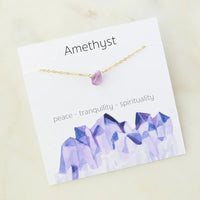
The piece they're describing → Stone Charm Necklace for Women — Raw Natural Gemstone Pendant
Personalize Yours


