


Few symbols have survived 5,000 years of human history still meaning exactly what they always meant. The evil eye — known as nazar in Turkish, ayin hara in Hebrew, and malocchio in Italian — is one of the oldest protective symbols in the world. It has been worn across ancient Greece, Rome, Egypt, Turkey, India, and the Middle East for millennia. Today it is one of the most popular jewelry motifs globally.
So what does an evil eye necklace mean? Simply: protection — specifically, protection from the envy and ill-wishes of others. Wearing the symbol is believed to reflect malicious gazes back to their source, shielding the wearer from harm caused by jealousy. Whether you wear it for tradition, for meaning, or for style, the intention behind the symbol has never changed.
For more on jewelry symbolism, see our guides on jewelry symbolism, birthstone necklace meaning, and bracelet meaning.
What Is the Evil Eye Symbol?
The evil eye is not just a piece of jewelry — it is one of the oldest documented beliefs in human history. The concept that a jealous or malicious glare can cause real harm dates to at least 3,000 BCE, found in ancient Mesopotamian cuneiform tablets. The idea appeared independently in ancient Greece, Rome, the Middle East, Africa, South Asia, and Mesoamerica — making it one of the most universal human beliefs ever recorded, appearing in over 40 distinct cultures without cross-contact.
In traditional belief, the amulet works through symmetry: an eye reflects the evil gaze back to its sender, neutralizing the harm before it reaches the wearer. The iconic blue glass nazar amulet — the round, concentric-circle eye most people picture — originated in Turkey and the Aegean region, where it remains ubiquitous in homes, vehicles, and jewelry.
The word nazar itself comes from Arabic (نظر) meaning "sight" or "gaze." The symbol is called malocchio in Italian ("the bad eye"), ayin hara in Hebrew (עין הרע, "the evil eye"), and buri nazar in Hindi. Each culture has its own name, its own rituals, and its own preferred form of the amulet — but the core meaning is identical everywhere: protect the wearer from the destructive power of envy.
Evil Eye Necklace Meaning
The placement of the evil eye symbol matters. When worn as a necklace — hanging at the chest or heart — the evil eye is specifically believed to protect the emotional body. The chest placement guards against envy targeting your relationships, your joy, your emotional wellbeing, and your inner life. It sits close to the heart, the seat of feeling.
This is distinct from an evil eye bracelet (which protects your actions and daily movement — what you do with your hands, your work, your path) or evil eye earrings (which protect what you hear — rumor, gossip, and false information directed at you). Each placement has its own protective logic, rooted in the body part it sits nearest to.
The evil eye as a gift carries especially strong meaning. In many cultures — Turkish, Greek, Middle Eastern, Jewish — giving someone an evil eye piece is an act of genuine care. It says: I see that good things are happening for you, and I want to protect that. "If someone gives you an evil eye necklace, they're saying: I want good things for you, and I want to protect you from those who don't." It is one of the most meaningful protective gifts across cultures, given at moments of new beginnings, success, or vulnerability.
Evil Eye Color Meanings — Full Chart
The classic evil eye is blue — but the color carries specific protective meaning, and different colors are used for different intentions. Here is the full breakdown:
| Color | Meaning | Best For |
|---|---|---|
| Blue (classic) | Protection, good karma, calm | General protection, most traditional |
| Light Blue / Turquoise | Health, relaxation, open communication | Health and wellbeing protection |
| Dark Blue | Fate protection, karma | Protection from fate and bad luck |
| Red | Courage, protection from fear | Bravery, protection in challenges |
| Orange | Happiness, creativity, motivation | Positive energy and success |
| Yellow / Gold | Health protection, mental clarity | Focus and health |
| Green | Good luck, success in career | Abundance and career protection |
| Pink | Love protection, friendship | Romantic and friendship protection |
| White | Purity, clarity, new beginnings | Fresh starts and clarity |
| Black | Power, prosperity, protection from negativity | Strong general protection |
| Purple | Wisdom, spiritual protection | Inner wisdom and spiritual growth |
The blue evil eye is most traditional and most widely recognized. If you are choosing an evil eye necklace and are uncertain about color, classic blue is the right choice — it is the original form of the nazar and carries the broadest protective meaning.
Evil Eye Bracelet Meaning
The evil eye bracelet is the most common wearable form of the symbol — and the one most associated with everyday protection. In most traditions, it is worn on the left wrist, which is considered the receiving side of the body: closest to the heart, absorbing energy that comes toward you. Some cultures specify the right wrist for specific intentions (projecting strength, outward action), but left is the traditional choice for a protective evil eye piece.
The bracelet protects the actions of the day: your work, your movement, your interactions, your journey. Because it is worn on the wrist, it is always visible — a constant reminder of the protective intention.
What does it mean when your evil eye bracelet breaks? In many traditions — particularly Turkish and Greek — a broken evil eye bracelet is not bad luck. It means the bracelet has done its job: it absorbed a negative energy or malicious gaze directed at you, and broke under the force of that absorption. The correct response is gratitude and replacement. You should buy a new one promptly.
Where the Evil Eye Symbol Comes From — Cultural Origins
The evil eye belief is genuinely one of the most universal concepts in human culture. Here is where it appears:
- Turkey and Greece: The nazar amulet — the iconic round blue glass eye — is most associated with Turkish and Greek culture. It hangs in homes, cars, and jewelry throughout the Aegean region. Blue is used because, historically, blue-eyed strangers were considered more likely to give the evil eye (being a rarity in the region), so the amulet mirrors their gaze back.
- Middle East: The word nazar (Arabic: نظر) means "sight" or "gaze." The evil eye belief is widespread across Arab cultures, where protective amulets are common household and personal items.
- Hebrew tradition: Ayin hara (עין הרע) — the evil eye — is a concept woven through Jewish mysticism and the Talmud. The Hamsa hand, often depicted with an evil eye in its center, is a companion symbol in Jewish tradition.
- Italy: Malocchio (the bad eye) is still deeply believed in southern Italy. Specific hand gestures, rituals, and amulets exist specifically to counter the evil eye.
- India: Nazar is widely believed across Hindu traditions. Parents often use kohl (kajal) to put a black dot behind an infant's ear to protect from the evil eye — the mark makes the child appear less perfect and therefore less vulnerable to envy.
- The Hamsa: The open-hand Hamsa symbol, common across Islamic, Jewish, and Christian traditions in the Middle East and North Africa, frequently features an evil eye in its center. The two symbols are often used together as complementary protective talismans.
Who Should Wear an Evil Eye Necklace?
The short answer: anyone who values the protection it represents. But the evil eye carries especially strong relevance for certain moments and situations:
- People experiencing a period of success — success attracts envy. New jobs, promotions, business growth, public recognition — all of these are traditional moments when an evil eye piece is most meaningful.
- New mothers and infants — children are traditionally considered most vulnerable to the evil eye, because they are pure and attract admiring (and envious) attention. Giving an evil eye necklace to a new mother is a powerful protective gift.
- People entering new chapters — new relationship, new home, new city, new beginning. Transitions attract attention and, with it, envy.
- Those who feel they've been receiving negative energy — if you have been experiencing unexplained setbacks, conflict, or drains on your wellbeing, an evil eye piece is a traditional tool for breaking that pattern.
"The evil eye isn't superstition for believers — it's acknowledgment that human envy is real, and that a symbol of protection is a form of mindfulness." The act of wearing it is itself a ritual: a daily choice to be intentional about what energy you allow near you.
Frequently Asked Questions
The hamsa hand is the evil eye's natural companion. Together they form the most recognized protective combination in the world — the hand deflects harm while the eye reflects it back. See the full Hamsa Hand Meaning guide for the complete protective symbolism.
- What does an evil eye necklace mean?
- An evil eye necklace means protection — specifically protection from the jealousy, envy, and ill-wishes of others. The evil eye (nazar) is one of the oldest protective symbols in the world, dating to at least 3,000 BCE. Worn as a necklace, it guards the emotional body and heart against envy. It is also widely worn as a style piece regardless of spiritual belief.
- What does the evil eye symbol protect against?
- The evil eye symbol protects against malicious envy — the belief that a jealous or ill-wishing gaze can cause real harm. In traditional belief, the amulet reflects the evil gaze back to its sender. More broadly, it represents protection from negative energy, bad luck, and the ill-will of others.
- What does a blue evil eye mean?
- A blue evil eye means general protection, good karma, and calm. It is the most traditional color — the classic nazar is blue because blue-eyed strangers were historically considered more likely to carry the evil gaze in the cultures that developed the symbol. Blue is the safest all-purpose choice.
- What does it mean when someone gives you an evil eye necklace?
- It means they genuinely care about your wellbeing. In Turkish, Greek, and Middle Eastern cultures, giving an evil eye piece is one of the most meaningful protective gifts you can offer. It says: I want good things for you, and I want to shield you from those who don't.
- What wrist do you wear an evil eye bracelet on?
- In most traditions: the left wrist. The left is considered the receiving side — closest to the heart. It is the traditional placement for protective pieces. Some traditions specify the right wrist for projecting strength, but left is the standard recommendation for protective evil eye jewelry.
- What does a broken evil eye bracelet mean?
- It means it has done its job. In Turkish and Greek tradition, a broken evil eye amulet absorbed a negative energy directed at you and broke under that force. It is considered a good sign — replace it promptly.
- What is the difference between a Hamsa and an evil eye?
- The Hamsa is an open-hand symbol; the evil eye is an eye-shaped amulet. Both are protective, and they are frequently combined — many Hamsa designs feature an evil eye in the center. The Hamsa is rooted in Islamic, Jewish, and Christian traditions; the evil eye appears in over 40 cultures independently.
- Where does the evil eye symbol come from?
- It dates to at least 3,000 BCE in ancient Mesopotamia, with independent appearances in Greece, Rome, Egypt, Turkey, the Middle East, India, and over 40 other cultures. The iconic blue glass nazar originated in Turkey and the Aegean. The symbol has been in continuous use for over 5,000 years.
- What does each color evil eye mean?
- Blue = classic protection; light blue = health and communication; dark blue = fate protection; red = courage; orange = happiness and creativity; yellow/gold = health and clarity; green = luck and career; pink = love and friendship; white = new beginnings; black = strong general protection; purple = wisdom and spirituality.
- Is it bad luck to buy yourself an evil eye?
- No. While receiving one as a gift carries special meaning, there is no widespread belief that buying your own is harmful. Many people buy their own evil eye jewelry. What matters is the intention you bring to wearing it.
See also: Seashell Necklace Meaning — another ancient protective symbol with deep cultural roots.
If you're exploring another powerful protection symbol — the Kabbalah red string bracelet, read our guide to red string bracelet meaning next.
The Protective Symbol That Outlasted Empires
The evil eye is one of the few symbols that transcends culture, religion, and era — because the human experience of jealousy and the desire for protection from it are universal. Ancient Mesopotamians, Greek sailors, Roman emperors, Ottoman artisans, and contemporary jewelry wearers have all reached for the same symbol to express the same thing: I am protected. What I have cannot be taken by envy.
Whether you wear an evil eye necklace for tradition, for meaning, or for the clarity of intention it brings to your day, you are part of a 5,000-year lineage of protection.
Looking for a meaningful gift? A birthstone necklace carries equally deep personal significance — each stone tied to birth month, identity, and intention. Shop the full birthstone necklace collection at AJLuxe.
Written by Vaishakhi Ajmera, founder of AJLuxe. Last updated June 2026.
See also: infinity necklace meaning.
See also: lotus necklace meaning.
All third-party trademarks, brand names and product names are the property of their respective owners. AJLuxe is not affiliated with, endorsed by, sponsored by, or otherwise connected to any third-party brand referenced in this article. Brand names are used solely for accurate comparative reference, and material descriptions reflect each brand's own published product specifications at the time of writing.
You Might Also Like

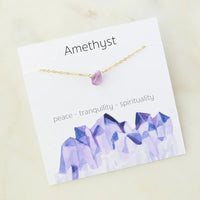
The piece they're describing → Stone Charm Necklace for Women — Raw Natural Gemstone Pendant
Personalize Yours


