


Walk into any jewelry store and you'll face an overwhelming wall of earring styles — studs, hoops, chandeliers, threaders, cuffs, climbers. Each has a different look, weight, and use case. Knowing the types of earrings before you buy means you stop guessing and start choosing earrings that actually work for your face, your ears, and your lifestyle.
Shop it: the AJLuxe Sterling Silver Ear Cuff — no piercing needed, nickel-free 925 sterling silver. Join the waitlist.
This guide covers every major earring style, explains which back type goes with which design, gives you a complete face shape decision table, and walks through the weight guidance that most earring guides never mention. By the end, you'll know exactly which styles belong in your collection.
The 12 Types of Earrings — Styles, Names, and What Each Is Best For
1. Stud Earrings
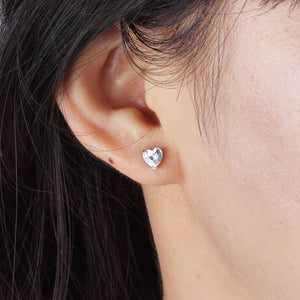
A stud earring sits flat against the earlobe with no hanging element. The decorative front piece — a gem, ball, or flat shape — attaches to a straight post that passes through the piercing and secures with a back (usually a butterfly or screw back). Studs weigh between 0.5g and 2g per pair, making them the most comfortable earring for all-day wear.
Studs work with every face shape, every outfit, and every occasion. They're the earring you wear to a job interview, to the gym, and to bed. If you own one pair of earrings, make it a simple stud. For daily wear, choose a metal with good longevity — 18K gold plated over 925 sterling silver sits flat against the skin and doesn't catch on clothing.
Best for: Everyday wear, work, minimalist looks, sensitive ears, sleeping.
2. Hoop Earrings
A hoop earring forms a complete circle or partial arc that passes through the earlobe from front to back. Hoops range from 10mm (barely visible above the lobe) to 80mm+ statement hoops that brush the shoulder. The wire passes through the piercing and closes with a hinge snap or click closure.
Size matters more with hoops than any other earring style. Small hoops (10–25mm) work for everyday wear and weigh under 3g per pair. Medium hoops (25–50mm) are office- and brunch-appropriate. Large hoops (50mm+) are event wear — they catch on everything and pull on the lobe after a few hours. Classic gold hoops are the most versatile earring after studs.
Best for: Oval and round face shapes (they add width), casual and smart-casual occasions, everyday glam, layering with studs in a second hole.
3. Huggie Earrings
Huggie earrings are small hoops (10–18mm) that sit tight against the earlobe — they literally "hug" the lobe. The hinge-back closure makes them easy to put on and secure throughout the day. Huggies are thicker than regular hoops, with a band width of 3–6mm, which gives them a more substantial look despite their small size.
Huggies are the earring for people who love hoops but work in environments where large earrings catch or pull. They're also the best second-hole earring — a huggie in a second lobe piercing alongside a stud in the first hole creates an effortless stacked look. At 1–3g per pair, they're comfortable for full-day wear.
Best for: Second-hole stacking, professional environments, active lifestyles, new piercings that are fully healed.
4. Drop Earrings
Drop earrings extend below the earlobe by 1–3cm, hanging from a fixed point with minimal movement. Unlike dangle earrings, a drop sits relatively still — the design is usually a single stone, pearl, or small geometric shape suspended from a short wire or post. The lack of swing makes drops feel more formal and polished than dangles.
Drop earrings are the most versatile "dressed-up" earring. They add elegance without the drama of a full dangle, which makes them appropriate for weddings, dinners, and work presentations. A classic teardrop or pearl drop in 18K gold sits at the intersection of formal and everyday — you can wear them to a board meeting or a dinner party.
Best for: Work events, weddings, date nights, gifting, heart-shaped and round faces (teardrop shape lengthens the face).
5. Dangle Earrings
Dangle earrings hang below the earlobe and move freely with the wearer — that swing is their defining feature. They range from 3cm to 8cm in length and come in every shape: chain links, feathers, beads, bars, abstract shapes. The movement draws attention to the neck and jaw, making them one of the most face-framing earring styles.
Dangle earrings work best for events where you're not constantly moving or bending — they catch on scarves, turtlenecks, and hair. At 3–8g per pair, longer dangles should be saved for shorter wear times (2–4 hours) to avoid lobe fatigue. The longer the earring, the more it amplifies the visual length of the face — great for round faces, overwhelming on long faces.
Best for: Evening events, cocktail parties, statement looks, round and square faces.
6. Chandelier Earrings
Chandelier earrings are a specific type of dangle earring designed to branch outward and downward, resembling the tiers of a chandelier. They're wider at the bottom than the top, often featuring multiple stones, chains, or ornamental elements arranged in a fan or tree shape. They're the most formal earring style and typically the heaviest — 5–12g per pair.
Chandeliers are occasion-only earrings. Wear them to formal galas, black-tie events, and weddings. They require a simple outfit — a chandelier earring next to a busy neckline is visual chaos. The wide-bottom structure adds width to the jaw, which makes them especially flattering for heart-shaped faces where a wider jaw is the goal.
Best for: Formal events, gala and black-tie occasions, heart-shaped faces, updos that show the ears.
7. Threader Earrings
Threader earrings use an ultra-thin chain or wire that threads directly through the piercing hole, hanging on both sides of the lobe — no backing required. The chain dangles on the front and back simultaneously. They come in simple chain form or with small pendants on either end. Because the wire is so thin (0.5–0.8mm), they require a fully healed piercing that's been open for at least 6 months.
Threaders are one of the more minimalist, fashion-forward earring styles. They're light (under 1g per pair) and extremely comfortable. The main tradeoff is security — they slip out more easily than backed earrings and aren't ideal for sleep, sports, or high-movement situations. Best in simple metals: gold, silver, or gold plated over sterling silver.
Best for: Casual and editorial looks, everyday minimalists, oval and long face shapes.
8. Ear Cuffs
Ear cuffs are the only style on this list that requires no piercing. They grip the outer cartilage of the ear through tension — the metal band squeezes slightly around the helix or upper lobe to stay in place. They mimic the look of a cartilage piercing without the commitment or healing time. Most ear cuffs fit the upper cartilage, though lobe cuffs that wrap around the earlobe also exist.
Ear cuffs work best on people with thicker ear cartilage — thin cartilage makes them harder to keep in place. They're ideal for special occasions but tend to loosen over a full day. Pair an ear cuff with a simple stud in the lobe for a layered, editorial look without additional piercings. They typically weigh 1–2g.
Best for: Non-pierced ears, fashion-forward editorial looks, single-side styling, oval and long face shapes.
9. Ear Climbers / Crawlers
Ear climbers (also called crawlers) are earrings designed to travel up the outer edge of the ear. The post goes through a standard lobe piercing, but a curved arm extends upward along the helix, appearing as though the earring is "climbing" the ear. They create the illusion of multiple piercings from a single lobe hole.
Climbers are a modern design that's trended heavily since 2018. They work best with hair pulled back or up — if your hair covers your ears, the effect is lost. At 1–3g per pair, they're comfortable. The main consideration is cartilage fit — the climbing arm needs to sit flush against the curve of your specific ear, so buying from a retailer with a return policy matters.
Best for: Updos and pulled-back hairstyles, fashion-forward and editorial looks, oval faces.
10. Cluster Earrings
Cluster earrings group multiple stones, pearls, or decorative elements together in a single compact design — they're studs that make a bigger visual impact by arranging several elements into one cohesive shape, like a floral cluster, starburst, or organic pebble shape. They sit on or very close to the lobe (like a stud) but have the visual weight of a more statement piece.
Clusters are the bridge between everyday studs and full drop earrings — they give you the visual interest of a statement piece with the comfort of a close-to-the-lobe stud. Typically 2–4g per pair. They work well for office environments where long dangles aren't appropriate but plain studs feel underwhelming.
Best for: Office statement wear, all face shapes, smart-casual and business-casual occasions.
11. Jacket Earrings
Jacket earrings are a two-part system. A standard front stud passes through the piercing in the normal way. The "jacket" — a larger decorative element — slides onto the post from the back of the ear, framing the stud from behind and below. The effect is a layered look where the stud appears to emerge from within a larger design. The jacket may extend below and around the lobe, giving the visual impact of a drop without the weight on the front.
Jackets are less common than other styles, but they're one of the most versatile — the stud alone works for everyday wear, and you add the jacket when you want a more dressed-up look. Two earrings in one. Weight varies: the stud is 0.5–1g, the jacket adds 2–4g.
Best for: Versatile dressing (one earring, two looks), oval face shapes, smart to formal occasions.
12. Statement / Baroque Earrings
Statement earrings is the catch-all category for oversized, bold, maximalist designs that don't fit neatly into other categories. Irregular baroque shapes, sculptural abstracts, oversized geometric forms, mixed-media pieces. What they share: they're designed to be the focal point of an entire outfit. Statement earrings are worn with simple, minimal clothing — a plain white tee, a solid-color dress — so the earring has the visual field to itself.
Weight ranges widely: 4–15g per pair. Wear time should be limited for heavier pieces. Most statement earrings look best on oval and long face shapes where additional visual width doesn't overwhelm. Keep hair up or pulled back — the earring should be visible.
Best for: Parties, evening events, bold style statements, oval and long faces.
Types of Earring Backs — Which Closure Belongs on Which Style
The back of an earring matters more than most people think. The wrong closure causes earrings to fall off, sit crookedly, or feel uncomfortable. Here's every common earring back type and what it's best suited for.
| Back Type | How It Works | Security | Best For |
|---|---|---|---|
| Butterfly / Push Back | Small metal piece slides onto post and grips via internal ridges | Medium | Studs, lightweight drops, everyday earrings |
| Screw Back | Threaded post screws into threaded backing — requires twisting to remove | High | Diamond studs, valuable earrings, children's earrings |
| Hinge / Snap Back | Hinged post snaps into a notch — opens wide for insertion | High | Huggies, small hoops, everyday hoops |
| Lever Back | French wire passes through piercing; lever arm snaps closed forming a complete loop | High | Drop earrings, dangle earrings, medium-weight earrings |
| French Wire / Shepherd's Hook | Open curved wire hooks through piercing — no backing | Low | Lightweight dangles, casual earrings — not for active wear |
| Omega / Latch Back | Rigid C-shaped back with a hinged panel that latches closed | Very High | Heavy drop and chandelier earrings where security is critical |
| Flat Back / Threadless | Smooth flat disc screws or presses onto an internally-threaded post | High | Cartilage piercings, helix, tragus, labret — comfortable for sleep |
For most everyday earrings, a butterfly back is fine. If you regularly lose earrings or wear valuable stones, upgrade to screw backs. For drop and dangle earrings, lever backs offer the best combination of security and easy on/off. For cartilage piercings, flat backs are the most comfortable option for long-term wear.
Which Earrings Suit Your Face Shape
Earring shape changes how your face reads visually. The goal is always balance: styles that complement your natural proportions rather than exaggerate them. Here's the full decision table.
| Face Shape | Best Earring Styles | Why It Works | Styles to Avoid |
|---|---|---|---|
| Oval | All styles — most versatile face shape | Balanced proportions work with every earring shape | Nothing — experiment freely |
| Round | Long dangles, drop earrings, angular geometric shapes, long hoops | Vertical lines elongate the face and visually slim the cheekbones | Round hoops, circular studs, ball earrings — these add visual width |
| Square | Round hoops, teardrop drops, oval shapes, huggies | Curved shapes soften the angular jaw and forehead | Square or rectangular geometric earrings — they emphasize the jaw's squareness |
| Heart | Chandelier earrings, wider-at-bottom dangles, teardrop earrings, triangular drops | Width at the bottom of the earring adds balance to a narrower chin | Wide-at-top studs, large top-heavy cluster earrings — adds width near the temples |
| Long / Rectangle | Round hoops, button studs, cluster earrings, wide geometric shapes | Horizontal width near the cheekbones shortens a long face | Long dangle earrings, threaders, linear drops — they add more vertical length |
| Diamond | Studs, small huggies, drop earrings, curved shapes at cheekbone level | Simple styles complement the strong cheekbones without overwhelming | Wide statement earrings at cheekbone level — exaggerate the widest point |
One important note: these guidelines are starting points, not rules. Your personal style, hair texture, and how you carry yourself matter more than any formula. Try styles that appeal to you — if you love the way something looks on you, that's the right answer.
Earrings by Piercing Type — What Each Style Actually Requires
Most earring guides assume you only have one lobe piercing. In reality, earring style choices depend on exactly which piercings you have. Here's what works where.
Standard Lobe Piercing
The most common placement — through the fleshy lower part of the earlobe. Compatible with: studs, hoops, huggies, drops, dangles, chandeliers, threaders, climbers, cluster, jacket, and statement earrings. All 12 types on this list work in a lobe piercing. For lobe piercings, post gauge is typically 20G or 18G.
Second and Third Lobe Piercings
Additional lobe piercings (usually positioned higher on the lobe) are ideal for stacking. The standard stacking rule: wear the smallest, simplest earring in the highest hole. Huggies and small studs in second and third piercings frame the lobe without competing with your primary earring. Avoid long dangles in second holes — they tangle with first-hole earrings.
Helix / Cartilage Piercing
Located on the upper outer cartilage. Because cartilage is thicker and heals more slowly than lobe tissue, use only flat-back threadless or internally-threaded jewelry during healing (6–12 months). Once healed, small hoops (6–8mm), huggies, and simple studs work well. Avoid heavy earrings — cartilage doesn't have the same support structure as lobe tissue and will ache under weight.
Tragus Piercing
Located on the small cartilage flap that partially covers the ear canal. Most wearers use small flat-back studs (3–5mm face) or tiny hoops (8mm max) once healed. The placement is small and close to the face — intricate micro-designs show better here than in a lobe where they get lost.
Daith Piercing
Located in the innermost cartilage fold of the ear. Curved barbells and small captive bead rings are most common. Standard earring styles (studs, hoops) don't fit the curved anatomy of a daith — purpose-built daith jewelry is required.
Conch Piercing
Located in the large central cartilage area inside the ear. Inner conch piercings typically wear studs; outer conch piercings work with large hoops (20–30mm) that encircle the ear's outer edge. The conch is one of the most visually dramatic piercing placements when paired with an appropriately sized hoop.
Wearing Earrings with a Keloid
If you're prone to keloids (raised scar tissue around piercings), consult a dermatologist before adding piercings. For existing keloid-prone piercings: stick to lightweight earrings (under 2g), avoid styles that pull or create pressure, and wear earrings made from implant-grade titanium or 925 sterling silver — materials with the lowest rates of contact irritation. The American Academy of Dermatology recommends pressure earrings and medical treatment before adding additional jewelry stress to a keloid-prone ear.
Earring Weight and Comfort Guide
Earring weight is the most overlooked factor in earring buying decisions — and the most common reason earrings end up unworn. Here's the breakdown by weight range.
| Weight Range | Comfort Level | Max Wear Time | Typical Styles |
|---|---|---|---|
| Under 1g | Barely noticeable | All day, can sleep in them | Fine studs, threaders, tiny huggies |
| 1–3g | Comfortable for full-day wear | 8–12+ hours | Standard studs, small huggies, small hoops |
| 3–5g | Noticeable but manageable | 4–8 hours | Medium hoops, drop earrings, cluster earrings |
| 5–8g | Lobe fatigue starts after a few hours | 2–4 hours | Statement hoops, larger drop earrings, dangles |
| 8g+ | Heavy — may cause lobe stretching over time | Under 2 hours; event-only wear | Large chandeliers, heavy statement earrings |
The "cheese-cutter effect" is real: earrings over 8g per pair apply constant downward pressure on the lobe piercing. Worn repeatedly, this stretches the piercing hole and can cause the lobe to split at the bottom in severe cases. If you love heavy earrings, save them for short events and balance them by wearing your hair up so the earring sits more evenly against the ear.
For people with sensitive lobes or recently stretched piercings, start with under 2g and work up gradually. Metal choice also affects comfort — 18K gold plated earrings over a 925 sterling silver base are among the lightest-feeling options because sterling silver has a lower density than brass-based alloys. For a full comparison by material, see our best hypoallergenic earrings.
Earrings for Every Occasion — A Quick Reference
| Occasion | Best Earring Styles | What to Avoid |
|---|---|---|
| Everyday / Work | Studs, small huggies, small hoops (under 25mm) | Long dangles, heavy chandeliers, anything that catches on a headset |
| Casual / Weekend | Medium hoops, huggies, cluster studs, ear cuffs | Oversized chandelier earrings that overwhelm a casual outfit |
| Date Night | Drop earrings, dangles, statement hoops | Earrings so large they catch on scarves or distract from the conversation |
| Wedding (Guest) | Pearl drops, elegant dangles, small chandeliers, cluster earrings | Loud statement earrings — not the place to be the most memorable accessory |
| Wedding (Bride) | Chandelier earrings, large drops, pearl hoops — whatever shows above the dress neckline | Studs that disappear in photos — your earrings show in every portrait |
| Formal / Black Tie | Chandeliers, dramatic drops, long crystal dangles | Casual hoops or plain studs — undersells the occasion |
| Exercise / Sport | Tiny flat-back studs only — or remove completely | Hoops, dangles, anything that can catch on equipment or catch a blow |
| Sleep | Fine studs with screw backs (under 1g), flat-back cartilage jewelry | Hoops (pillow-snagging), dangles, open-wire hooks — these bend and scratch overnight |
Earring Materials and Sensitive Ears
Ear piercings are in direct contact with your skin for hours at a time. Metal choice is not cosmetic — it's a health decision for many people. Nickel is the most common cause of contact dermatitis in jewelry: according to the American Academy of Dermatology, nickel allergy affects up to 18% of people in North America and Europe. The reaction — redness, itching, swelling — most often appears within 12–48 hours of wearing nickel-containing jewelry.
Here's how common earring metals compare for sensitive ears:
| Metal | Nickel Content | Hypoallergenic? | Notes |
|---|---|---|---|
| Implant-grade titanium | None | ✅ Yes | Best choice for new piercings or severe sensitivity |
| 925 Sterling Silver | None (7.5% copper) | ✅ Yes | Nickel-free; excellent for sensitive ears. Can tarnish if not maintained |
| 18K Gold Plated over 925 Silver | None | ✅ Yes | Gold layer + sterling base = gold look with hypoallergenic contact. Best of both worlds |
| 14K–18K Solid Gold | Minimal (in white gold alloys) | ✅ Usually yes | Yellow and rose gold alloys rarely cause reactions. White gold may contain nickel |
| Surgical Steel | Trace amounts | ⚠️ Usually fine | 316L surgical steel is widely tolerated but not nickel-free. Some sensitive individuals react |
| Brass / Fashion Metal | Often high | ❌ No | Cheap fashion earrings often contain significant nickel — avoid if sensitive |
| Gold Plated over Brass | Yes (brass base) | ❌ Not long-term | Gold layer fades within months, exposing the nickel-containing brass beneath |
The key distinction for gold plated earrings: the base metal matters as much as the plating. 18K gold plated over 925 sterling silver keeps a hypoallergenic contact layer even as the gold plating thins with wear — because sterling silver itself is nickel-free. Gold plated over brass loses its hypoallergenic benefit once the top layer wears down. Check what the base metal is before buying plated earrings.
If you're unsure about your sensitivity, try earrings in your second hole first — if you develop no reaction in 48 hours, the metal is safe for your primary piercing as well.
How to Stack and Layer Earrings
Earring stacking — wearing multiple pairs across multiple piercings simultaneously — is one of the most versatile styling techniques in jewelry. It works best when you follow a few simple principles.
Rule 1 — Graduated size. Wear the largest earring in the lowest, most prominent position (first lobe piercing). Go progressively smaller as you move up the ear. A statement drop in the first hole + a small huggie in the second + a tiny stud in a cartilage piercing creates a natural visual gradient that looks intentional.
Rule 2 — Match metals. All earrings in a stack should be the same metal tone — all gold, all silver, or a deliberate mix if you're intentionally mixing. Random metal mixing looks accidental; intentional mixing (one silver ear cuff + gold studs) can look editorial if the proportions are right.
Rule 3 — Vary the style, not the size. Two studs in a stack look boring. One stud + one huggie in two lobe piercings creates visual interest with minimal effort. Add an ear cuff in the cartilage for a layered look that requires only one real piercing in that area.
Rule 4 — Keep one ear busier than the other. The asymmetric stack — one ear with 3–4 pieces, the other with a single simple stud — is the strongest earring trend since 2022. It balances visual interest with restraint. Your main stack goes on the side that shows most in your standard hairstyle.
For more detail on building your earring stack, see our guide to earrings for sensitive ears, our breakdown of what huggie earrings are and how to wear them, and our buying guide to hypoallergenic huggie earrings if your ears react to regular hoops.
Frequently Asked Questions About Types of Earrings
What are the 4 main types of earrings?
The 4 foundational earring categories are studs, hoops, drops, and dangles. Studs sit flat on the lobe. Hoops form a full or partial ring. Drops hang 1–3cm below the lobe with minimal movement. Dangles hang below the lobe and swing freely. Every other earring style — huggies, chandeliers, climbers, threaders, ear cuffs — is a variation or subcategory of one of these four basics.
What are the subcategories of earrings?
Subcategories break down within the four main types. Under hoops: huggies (small, close-to-lobe hoops) and statement hoops (60mm+). Under dangles: chandelier earrings (branching, tiered), threaders (thin chain that passes through the hole), and ear climbers (travel upward along the ear). Under studs: cluster earrings (multiple elements grouped together) and jacket earrings (two-part system with a stud and a back "jacket"). Ear cuffs are a separate non-piercing category entirely.
What is the most popular type of earring?
Stud earrings are the most widely worn earring type globally — they're the first earring most people receive and the default choice for daily wear. Among pierced earring styles that get purchased most frequently as gifts, hoop earrings rank second. Among fashion-forward buyers, huggies have overtaken small hoops as the most requested style since 2021.
Which earrings are best for everyday wear?
For everyday wear, choose earrings that weigh under 3g per pair and use a secure back type. Best options: small studs with screw or butterfly backs, huggie hoops with hinge backs (10–18mm), and small cluster earrings. Avoid open shepherd's-hook french wire for daily wear — they're the most likely to fall out unnoticed. For the most comfortable all-day earring, a 6–8mm flat stud in 18K gold plated sterling silver weighs under 1g and is barely noticeable after a few hours.
Can you wear dangle earrings every day?
Short dangles (under 3cm, under 3g) are fine for daily wear with normal office or casual activity. Long dangles (4cm+, 5g+) are better reserved for shorter wear periods — 4 hours or less. Wearing heavy dangles daily accelerates the stretching of the piercing hole and causes lobe fatigue. If you love the dangle look daily, choose lightweight threader earrings or small drops rather than long metal-chain dangles.
How to wear earrings with a keloid?
If you have a keloid around a piercing, prioritize lightweight earrings (under 2g) in hypoallergenic metals — implant-grade titanium is the best choice because it has the lowest rate of tissue reaction. Avoid heavy earrings that create downward traction, and don't add new piercings to keloid-prone areas without consulting a dermatologist first. Some people with keloids do well wearing earrings; the key is minimizing any physical stress or irritation at the site. The American Academy of Dermatology has detailed guidance on managing keloids around piercings.
What earrings are best for newly pierced ears?
New piercings need 6–8 weeks of healing time before changing earrings (lobe piercings) or 6–12 months (cartilage). During healing, keep the initial earrings in — studs with flat backs or screw backs in implant-grade titanium, 14K+ gold, or 925 sterling silver only. Do not use fashion metals with unknown alloy content. After healing, your first upgrade earrings should still be lightweight (under 2g) to avoid stressing a newly healed channel. Avoid hoops with open hooks during the first year — the open wire can irritate the back of the piercing.
What's the difference between drop earrings and dangle earrings?
Drop earrings hang 1–3cm below the lobe with minimal movement — they're essentially a fixed pendant on a short wire or post. Dangle earrings hang longer (3–8cm) and move freely as you move. The distinction matters for occasion: drops are more formal and polished because they sit still. Dangles are more playful and attention-drawing because of their swing. A teardrop pearl on a 2cm wire is a drop. A 6cm chain with a crystal at the bottom that sways as you walk is a dangle.
Are huggie earrings suitable for cartilage piercings?
Standard huggies (10–18mm diameter) designed for lobe piercings may not fit cartilage piercings, which typically have a smaller gauge and different anatomy. Cartilage-specific huggie hoops — sometimes called "helix huggies" — are sized at 6–10mm and made for 16G piercings. If you're buying huggies for a helix or tragus piercing, verify the inner diameter and gauge before buying. A 16G 8mm huggie is the most common cartilage huggie size.
How do you clean earrings at home?
For most metal earrings, mix a few drops of mild dish soap into warm water, dip a soft-bristle toothbrush, and gently scrub the earring surface. Rinse with clean water, pat dry immediately with a soft cloth, and allow to air dry completely before storing. For 18K gold plated earrings, skip ultrasonic cleaners and harsh chemicals — they accelerate plating wear. Store earrings separately in soft pouches or a lined box to prevent scratching. Never store wet earrings — moisture inside a jewelry box creates tarnish even on gold.
For the complete earring reference — types, sizing, curated ear, face shape guide, and sensitive skin — read The Complete Earring Guide.
Sensitive-ear shopping path
Sensitive ears? Choose the earring type after you choose the metal
Style matters, but comfort starts with metal, weight, and the part that touches the piercing.
- Hypoallergenic jewelry guide — safe metals and nickel-risk explained
- Shop hypoallergenic jewelry — sensitive-skin friendly pieces
- Shop huggie earrings — low-movement everyday earrings
Final Thoughts — Building Your Earring Collection
The most useful earring collection isn't the biggest one. It's a curated set of versatile pieces that work for 90% of your life. Start with: one pair of quality studs for daily wear, one pair of small-to-medium hoops for casual and smart-casual occasions, and one pair of drop earrings for events. That three-earring foundation covers more than most jewelry boxes with 40 pairs.
From there, add based on what's actually missing. If you find yourself wanting more visual interest at your lobe every morning, add a pair of huggies for a second hole or a small cluster stud. If you attend formal events regularly, one pair of chandeliers pays for itself in the right situations. Let your real wear patterns — not aspirational ones — drive what you add next.
When in doubt, prioritize metal quality over style variety. Five pairs of 18K gold plated sterling silver earrings in classic shapes will serve you better than fifteen pairs of fashion metal earrings that turn your ears green in six months.
Explore our full earring collection — all pieces in 18K gold plated 925 sterling silver, nickel-free and hypoallergenic.
Written by Vaishakhi Ajmera — founder and jewelry specialist at AJLuxe. — specialists in 18K gold plated sterling silver jewelry. Last updated: May 2026.
For a deeper look at all the piercing placements — including helix, tragus, daith, and rook — read our complete types of ear piercings guide with pain ratings and healing times for all 15 types.
You Might Also Like
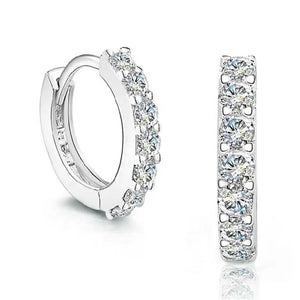
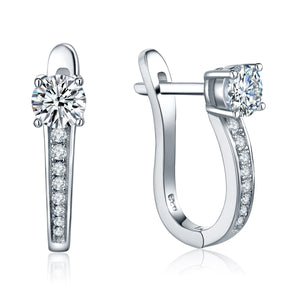
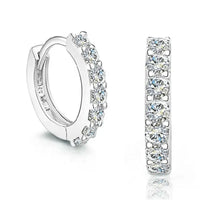
The piece they're describing → CZ Micro Pave Huggie Earrings for Women — 925 Sterling Silver, Hypoallergenic
Personalize Yours

