


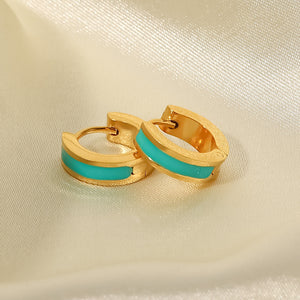
- Turquoise and gold work because they're near-opposite on the color wheel — warm gold, cool-to-warm blue-green stone.
- Most turquoise-and-gold looks are layered, not fused: a turquoise focal piece plus separate gold chains, bands, or hoops.
- Real turquoise (Mohs 5–6, per GIA) is softer and more porous than most jewelry gems — it can't go in an ultrasonic or steam cleaner.
- Dyed howlite and magnesite are the most common turquoise fakes — a too-uniform color and a too-low price are the two biggest tells.
Turquoise has been paired with warm metal for longer than almost any other stone in jewelry — Southwestern silversmithing traditions, most famously the Navajo, Zuni, and Hopi artisans of the American Southwest, built entire schools of design around turquoise set in silver starting in the mid-1800s, and the gold pairing followed as turquoise moved into mainstream fashion jewelry through the 20th century. That history is worth knowing because it explains why turquoise-and-gold still reads as "intentional" rather than trendy: it's a color pairing with real design logic behind it, not a passing combination. This guide covers why the two work together, how to actually style them, how to tell real turquoise from the dyed howlite sold as a cheap substitute, what it costs at other jewelry brands, and how to take care of a piece once you own it.
Why Turquoise and Gold Pair So Well
Turquoise and gold pair well because they sit on opposite temperature registers — gold is unambiguously warm, and turquoise's blue-to-blue-green range reads as a cool color with just enough warmth (from its natural green undertone) to keep it from fighting the metal the way a pure icy blue stone would. That's a different relationship than turquoise has with silver, where two cool tones create a calmer, more monochrome look; gold against turquoise creates contrast, which is why turquoise-and-gold pieces tend to photograph and read as more "statement" than turquoise-and-silver.
The other reason it works: turquoise is one of the few colored stones that looks equally at home in a rustic, hand-hammered gold setting and a clean, minimal one. A raw or lightly polished turquoise nugget suits the textured, artisanal gold finishes associated with Southwestern-style jewelry, while a smooth, calibrated turquoise cabochon suits a plain polished gold band or bezel. Few stones flex between those two aesthetics as easily.

How to Style Turquoise and Gold Jewelry
The easiest way to wear turquoise and gold together is to treat turquoise as the one focal color in an otherwise all-gold look, rather than trying to match multiple turquoise pieces at once. A single turquoise pendant on a gold chain, one turquoise ring next to plain gold stacking bands, or turquoise studs under gold hoops all keep the stone doing the visual work it's meant to do.
- Necklaces: layer a turquoise pendant at collarbone length with one or two plain gold chains at slightly longer lengths — the gold chains give the eye somewhere to rest between glances at the pendant.
- Rings: pair one turquoise statement or cocktail ring with plain gold stacking bands on the same hand, rather than a second colored stone, so the turquoise stays the focal point.
- Earrings: small turquoise studs work well stacked with plain gold huggies or hoops in a second or third piercing; a single turquoise drop earring reads better solo than paired with another colorful earring.
- Bracelets: a turquoise cuff or bangle looks intentional next to two or three thin gold bangles, echoing the Southwestern stack-of-bangles look without needing more than one turquoise piece.
- Outfits: turquoise and gold both read warmer against tan, cream, denim, and terracotta than against cool grays or pure white, which is part of why the pairing is so strongly associated with Southwestern and desert-inspired styling.
If your existing jewelry box is mostly silver, you don't need to replace it to wear turquoise and gold — mixed-metal styling (one gold piece worn deliberately among silver ones, or vice versa) has been mainstream for several years now, and a single gold turquoise pendant can be the one warm-metal piece in an otherwise silver stack.
What Does Real Turquoise Look Like?
Real turquoise has natural color variation and a visible matrix — thin, irregular veining of the host rock (often brown, black, or gray) running through the blue-green — because it forms as a mineral deposit inside surrounding rock rather than growing as a clean, uniform crystal. A stone with dead-flat, perfectly even color and zero veining is more likely to be a dyed substitute or a heavily processed/reconstituted stone than natural turquoise, which is one of the fastest visual checks before you even look at the price.
The most common turquoise substitute isn't a fake gem at all — it's dyed howlite or magnesite, two naturally white, veiny minerals that take blue dye extremely well and mimic turquoise's matrix pattern closely enough to fool a quick glance. Genuine turquoise also rates 5 to 6 on the Mohs hardness scale, according to GIA, which is softer than quartz-family stones and means it scratches more easily than many other jewelry gems — a helpful fact when a seller claims a stone is "hard, durable turquoise" as a selling point, since that's actually somewhat true of the genuine article but often gets exaggerated to sell an imitation.
Practical buying tips:
- Check the price against the size. Large, vividly uniform "turquoise" pieces sold cheaply are almost always dyed howlite, magnesite, or resin composite — natural, untreated turquoise in that size and clarity is genuinely rare and priced accordingly.
- Look for the word "stabilized" or "reconstituted." Reputable sellers usually disclose treatment; stabilized turquoise (natural turquoise treated with resin to harden it, a common and accepted industry practice) is different from howlite dyed to imitate turquoise from scratch, and a seller who's upfront about which one you're buying is a good sign either way.
- Ask what's underneath a "turquoise-blue" description. Fashion jewelry brands, AJLuxe included, sometimes use precision-cut simulated stones described honestly as "turquoise-blue" rather than natural turquoise — that's a legitimate, disclosed choice for an affordable everyday piece, and different from a seller passing off dyed howlite as the genuine mineral without saying so.
How Much Does Turquoise and Gold Jewelry Cost?
Turquoise-and-gold pieces from established jewelry brands typically run from about $58 for a small gold-plated piece up to several hundred dollars for solid gold or larger natural-stone designs. Vermeil and gold-plated sterling silver keep the price down considerably compared to solid gold while still giving the warm-metal look.
| Brand | Typical Metal | Price Range |
|---|---|---|
| 18K gold plated (solid 14K also offered) | ~$58–$90 plated; $305+ solid gold | |
| 18ct gold vermeil over sterling silver | ~$120–$300+ | |
| Astrid & Miyu | Gold vermeil / gold plated | ~$61–$160 |
| AJLuxe | 925 sterling silver / 18K gold plated | $24.99–$79.99 |
Prices for other brands are approximate, gathered from current published pricing and vary by specific design; check each brand's site for a given piece's exact price. Sterling silver with gold plating (rather than solid gold or heavier gold vermeil) is what keeps a piece in that lower range without giving up the look — the tradeoff is that plating wears over years of daily contact, where solid gold and thick vermeil hold their finish longer.
How to Care for Turquoise and Gold Jewelry
Turquoise needs gentler care than the gold (or gold-plated) metal it's usually set in, so the stone — not the metal — should set the cleaning rules for the whole piece. Per GIA's turquoise care guidance, turquoise rates 5 to 6 on the Mohs hardness scale with only fair-to-good toughness, and it's porous enough to absorb oils, lotion, and perfume, which can discolor or degrade the stone over time.
- Clean with a soft, dry cloth first. Wipe the stone and metal after wearing to clear everyday oil and residue before it has a chance to soak in.
- If needed, use only warm water and mild soap. GIA notes this is safe for turquoise, but skip a soak — brief contact, then dry immediately.
- Never use an ultrasonic or steam cleaner. Both are explicitly unsafe for turquoise per GIA and can crack or cloud the stone, even though they're fine for many harder gems.
- Put it on last, take it off first. Apply lotion, perfume, and hairspray before jewelry, not after — turquoise's porosity means it absorbs these faster than most stones, and they're a common cause of discoloration.
- Store away from heat and direct sun. GIA notes high heat can cause discoloration and, in some cases, breakage; a jewelry box or pouch out of direct sunlight is safer than a sunny windowsill dish.
- Store separately from harder pieces. Turquoise's lower hardness means it can be scratched by harder stones or metal edges if pieces are tossed together in one compartment.
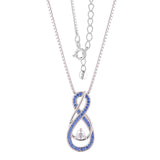
If you like the turquoise-and-gold look but want to start with a lower-commitment piece, AJLuxe's Turquoise Blue Infinity Birthstone Necklace ($59.99) sets a vivid turquoise-blue infinity pendant on a 925 sterling silver chain — layer it with one of AJLuxe's 18K gold-plated pieces for the classic mixed-metal, turquoise-and-gold look, or wear it on its own for a cooler-toned take on the same color story. Being honest about the metal: this particular pendant is finished in sterling silver, not gold, so it's the "gold" half of the pairing that you'd add from a separate piece.
Frequently Asked Questions
Does turquoise look good with gold or silver?
Both, for different effects — gold creates warm-cool contrast that makes turquoise read as a statement color, while silver creates a cooler, more monochrome look since both metal and stone sit on the same temperature register. Neither is objectively better; it comes down to whether you want the stone to pop against the metal or blend with it.
Is turquoise and gold jewelry in style?
How can you tell if turquoise is real?
Look for natural color variation and a visible matrix (thin veining from the surrounding host rock) rather than flat, uniform blue — genuine turquoise almost never has perfectly even color. A very low price on a large, vividly colored piece is the other major tell, since dyed howlite and magnesite (turquoise's most common substitutes) are far cheaper to produce than natural turquoise.
What metal goes best with turquoise?
Sterling silver is the traditional pairing, especially in Southwestern-style design, while gold (plated, vermeil, or solid) creates a bolder, higher-contrast look. Both are correct choices; the decision usually comes down to whether the rest of your jewelry collection is warm-toned or cool-toned.
Is turquoise jewelry expensive?
It ranges widely — small gold-plated or sterling silver pieces with a simulated or lower-grade turquoise stone can run $25–$80, while natural, untreated turquoise in fine jewelry can cost several hundred dollars or more depending on origin, clarity, and matrix quality. Stabilized turquoise (natural turquoise treated with resin for durability) sits in between.
Can you wear turquoise jewelry every day?
Yes, but with more care than a plain metal piece — because turquoise is relatively soft (Mohs 5–6) and porous, daily wear means being mindful about lotion, perfume, and knocks against hard surfaces. Rings and bracelets, which take the most daily contact, are more prone to visible wear over time than turquoise earrings or necklaces.
All third-party trademarks, brand names and product names are the property of their respective owners. AJLuxe is not affiliated with, endorsed by, sponsored by, or otherwise connected to any third-party brand referenced in this article. Brand names are used solely for accurate comparative reference, and material descriptions reflect each brand's own published product specifications at the time of writing.
You Might Also Like
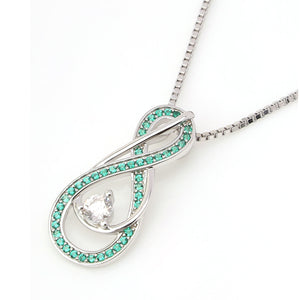
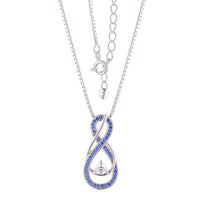
The piece they're describing → December Birthstone Necklace for Women — Turquoise Blue Infinity Pendant, 925 Sterling Silver
Personalize Yours


