



Where the Friendship Bracelet Actually Comes From
The friendship bracelet's origins trace to Indigenous communities in Central America, with the clearest documented tradition coming from Mayan artisans in Guatemala. Long before the phrase "friendship bracelet" existed in English, weavers there were braiding brightly dyed cotton embroidery thread into patterned bands using knotting and plaiting techniques passed down within families and communities. The colors and patterns were part of a broader textile tradition, the same one behind Guatemala's well-known woven huipiles and fabrics, not a novelty product designed for export.
It is worth being precise about what is and is not established here. The style is widely and consistently credited to Central American, and specifically Guatemalan Mayan, craft traditions across multiple sources, including Wikipedia's entry on the subject. What is much less documented, and what this article deliberately avoids repeating as fact, is any specific date, named inventor, or single originating village. Craft histories that claim that level of precision are usually smoothing over gaps in the record rather than citing an actual source, so where the trail runs out, the honest answer is "a longstanding Indigenous Central American tradition," not a manufactured founding story.
A Second Meaning: Guatemala in the 1980s
In the 1980s, woven bracelets from Guatemala took on a second, more serious meaning connected to the country's civil war. During that period, Guatemala saw the mass disappearance of Mayan people and rural peasants under military rule, and woven bracelets became visible at protests calling attention to it. Religious and human rights groups brought the bracelets into the United States and used them at political rallies to raise awareness of what was happening in Guatemala, so for a stretch of the decade the same object that shows up in a summer camp craft box today was, in another context, a symbol of solidarity with people whose family members had vanished.
That history does not cancel out the craft tradition described above. It sits alongside it: the same weaving technique served, at different moments and in different hands, as everyday cultural expression and as a quiet form of protest.
How the Friendship Bracelet Reached the United States
Friendship bracelets first became widely popular in the United States during the 1970s, a decade when wearing handmade, natural-material, "ethnic" accessories was itself part of a broader cultural moment. That decade's counterculture and hippie movement had already revived macrame, the general family of knotting techniques the bracelets belong to, as a handmade alternative to mass-produced fashion, so woven Central American bracelets fit naturally into what people were already making and wearing. By the late 1970s into the 1980s, the style most people now recognize, several strands of embroidery floss knotted into repeating patterns like chevron or diamond stripes using a basic forward-knot stitch, had become the standard version in the US.
Summer Camps, Schoolyards, and the "BFF" Bracelet Era
The friendship bracelet's move into camp and schoolyard culture is where most people's personal memory of it actually begins, and it happened through the 1980s and into the 1990s. Embroidery floss was cheap, required no special tools, and could be knotted during idle time on a bus, at a lunch table, or on a cabin bunk, which is exactly the kind of craft that spreads through scouting programs and summer camps without any marketing behind it. The rituals that still define the bracelet today, tying it directly onto a friend's wrist rather than handing it over loose, and wearing it continuously until it falls off on its own, became fixed during this era.

Friendship Bracelet History: A Timeline
Here is the verified history laid out in order, with the caveat that centuries and eras below are approximate ranges, not exact dates, since that is genuinely what the historical record supports.
| Era | What Happened |
|---|---|
| Pre-1900s | Indigenous, largely Mayan, weaving traditions in Central America (documented most clearly in Guatemala) produce woven cotton and embroidery-thread bands as part of a broader textile craft. |
| 1960s | Macrame, the knotting family of techniques behind the bracelets, is revived in the United States by the counterculture movement's interest in handmade goods. |
| 1970s | Friendship bracelets become widely popular in the US, worn as part of the era's broader embrace of handmade, natural-material, ethnic-inspired accessories. |
| 1980s | Woven bracelets are worn at protests over the disappearance of Mayan people during Guatemala's civil war, and religious/human rights groups bring them to political rallies in the US. In parallel, the embroidery-floss version becomes a fixture of American summer camps and schoolyards. |
| 1990s-2000s | The bracelet settles into its familiar role as a childhood and teen craft, made and traded between best friends, largely outside of fashion trend cycles. |
| 2023-present | Beaded friendship bracelets return as a mainstream fashion moment, driven by fan culture around Taylor Swift's Eras Tour, with friendship bracelet kit sales reported up 915% that year. |
What Do Friendship Bracelet Colors Mean?
Friendship bracelet color meanings are a folk tradition passed down informally, not a documented or standardized system, so treat any specific color chart, including the one below, as commonly believed rather than historically verified fact. Different sources and different friend groups assign different meanings to the same color, which is itself part of how the tradition has always worked: the meaning is whatever the person tying the knots intends it to be.
- Red: traditionally associated with love, courage, or adventure
- Blue: traditionally associated with loyalty, trust, or calm
- Yellow: traditionally associated with friendship itself, optimism, or warmth
- Green: traditionally associated with growth, nature, or compassion
- Purple: traditionally associated with strength or ambition
- White: traditionally associated with honesty or peace
The most consistent piece of folklore attached to the bracelet is the "wish" tradition: the giver ties the bracelet onto the recipient's wrist (rather than handing it over) using a few knots, the wearer makes a silent wish while the final knot is tied, and the wish is only said to come true once the bracelet wears through naturally and falls off on its own, never cut or untied deliberately. Like the color meanings, this is a widely shared custom, not a documented historical rule, and it varies by who is telling it to you.
Are Friendship Bracelets Still Popular?
Yes, friendship bracelets are more visible now than they have been in years, driven by a very specific and well-documented 2023 fashion moment rather than a steady, unbroken trend line. When Taylor Swift's Eras Tour began in March 2023, fans started making and trading beaded friendship bracelets referencing song lyrics, album eras, and inside jokes, a callback to the line "make the friendship bracelets" from her song "You're On Your Own, Kid." The trend was large enough to measure commercially: friendship bracelet kit purchases rose 915% that year, and it pulled a craft most people associate with childhood back into adult fashion and gifting.
That revival sits on top of the tradition's steadier, less headline-grabbing life: friendship bracelets have never really left summer camps, scouting programs, or elementary school classrooms, where the embroidery-floss version documented above has been a constant since the 1980s.
How a Traditional Friendship Bracelet Is Made
A traditional friendship bracelet is made by knotting several strands of embroidery floss (usually four to eight, in two or more colors) in a repeating pattern using a basic forward-knot or backward-knot stitch, the same family of half-hitch knots used in macrame. The strands are typically taped or pinned down at one end to hold tension, then knotted strand by strand across the row, building up a diagonal chevron or straight candy-stripe pattern depending on the knot direction chosen. No tools beyond floss, tape, and scissors are required, which is a large part of why the craft spread so easily through camps and classrooms with no equipment budget at all.
Frequently Asked Questions
Who invented the friendship bracelet?
There is no single documented inventor. The friendship bracelet grew out of Indigenous, largely Mayan, weaving traditions in Central America, most clearly documented in Guatemala, where the technique was part of an existing textile craft rather than something one person created. Any source that names a specific inventor or exact founding date is not citing verifiable history.
Where did friendship bracelets originate?
Friendship bracelets originated with Indigenous communities in Central America, with the clearest documented tradition coming from Mayan artisans in Guatemala, who wove colorful embroidery thread into patterned bands using knotting techniques related to macrame.
When did friendship bracelets become popular in the United States?
Friendship bracelets first became widely popular in the United States during the 1970s, as part of the hippie era's broader interest in handmade, natural-material, ethnic-inspired accessories and a revival of macrame. They became a fixture of American summer camps and schoolyards through the 1980s and 1990s.
Why were friendship bracelets a symbol of protest in the 1980s?
In the 1980s, woven bracelets were worn at protests over the disappearance of Mayan people and peasants during Guatemala's civil war. Religious and human rights groups brought the bracelets to the United States and used them at political rallies to raise awareness, giving the same craft object a second meaning as a symbol of solidarity.
What do friendship bracelet colors mean?
Friendship bracelet color meanings are traditionally believed rather than formally documented, and they vary by source and by friend group. Common folk associations include red for love or adventure, blue for loyalty or trust, yellow for friendship and optimism, green for growth or compassion, purple for strength or ambition, and white for honesty or peace. See our full friendship bracelet meaning guide for a deeper breakdown of colors and patterns.
Are friendship bracelets still popular?
Yes. Friendship bracelets never fully left summer camp and classroom culture, and they had a major mainstream fashion revival starting in 2023, driven by fans trading beaded bracelets at Taylor Swift's Eras Tour. Friendship bracelet kit sales were reported up 915% that year.
What is the traditional friendship bracelet wish tradition?
The most common friendship bracelet folklore is that the giver ties the bracelet directly onto the recipient's wrist rather than handing it over loose, the wearer makes a silent wish as the final knot is tied, and the wish is said to come true only once the bracelet wears through naturally and falls off on its own, never cut or removed deliberately. This is a widely shared custom, not a documented historical rule.
Final Thoughts
The friendship bracelet most people learned to make at camp did not start as a camp craft. It carries a longer, more layered history: Indigenous Central American weaving traditions, a serious political meaning in 1980s Guatemala, an American cultural adoption tied to the hippie era's handmade-goods movement, and then decades as a quiet, unbranded constant in childhood friendships before returning to the spotlight through Eras Tour fan culture in 2023.
Knowing where something came from does not change how you wear it, but it is worth knowing that a bracelet this simple has meant this much, to this many different people, for this long.
Shop Bracelets
AJLuxe does not currently carry a woven embroidery-floss friendship bracelet, but if this history has you in the mood to add a bracelet to your own stack, browse the full collection below.
Written by the AJLuxe team. Last updated: September 2026. Historical claims in this article are drawn from Wikipedia's entry on friendship bracelets and contemporaneous reporting on the 2023 Eras Tour friendship bracelet trend (Today.com, Billboard); dates and details that could not be independently verified are described in general terms rather than stated as precise fact.
All third-party trademarks, brand names and product names are the property of their respective owners. AJLuxe is not affiliated with, endorsed by, sponsored by, or otherwise connected to any third-party brand referenced in this article. Brand names are used solely for accurate comparative reference, and material descriptions reflect each brand's own published product specifications at the time of writing.
You Might Also Like

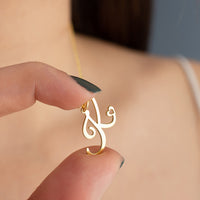
The piece they're describing → Heart Initial Necklace for Women — 18K Gold Plated, Personalized Letter + Heart Pendant
Personalize Yours


