


- Deep blue-violet stone found exclusively in Tanzania, discovered in 1967
- Symbolizes transformation, intuition, and truthful communication
- December birthstone alongside turquoise and blue zircon
- Trichroic: shows blue, violet, and burgundy depending on viewing angle
- Mohs hardness 6.5–7 — needs gentle care; avoid ultrasonic cleaners
- Quality grades: AA (good), AAA (very fine), AAAA (top 1% — exceptional)
Tanzanite is the kind of stone that stops people mid-sentence. Its deep blue-violet color shifts between blue, purple, and a flash of burgundy depending on the light — a property called trichroism that no other popular gemstone shares. But tanzanite's meaning runs deeper than its color. This guide covers the symbolism, healing properties, birthstone significance, and everything you need to know about quality and care before buying.
What Is Tanzanite? Origin and Discovery
Tanzanite is a blue-violet variety of the mineral zoisite, known scientifically as calcium aluminium hydroxy sorosilicate. What makes it extraordinary isn't just its color — it's its address. Every tanzanite on Earth comes from a single deposit measuring roughly 4 kilometers by 2 kilometers near the Merelani Hills in northern Tanzania, at the foot of Mount Kilimanjaro.
That geographic exclusivity makes tanzanite estimated to be around 1,000 times rarer than diamonds. And unlike most gemstones, which have been mined for centuries, tanzanite has an exact birthday: it was discovered in 1967 by a Masai tribesman named Ali Juuyawatu (some sources credit Manuel de Sousa) who noticed blue crystals glinting in the sun after a lightning strike sparked a brush fire that accidentally heated the stones, revealing their color.
Tiffany & Co. recognized its potential and coined the trade name "tanzanite" in 1968, marketing it as "the most beautiful blue stone discovered in 2,000 years." Their backing turned it from a geological curiosity into one of the world's most desired colored gemstones.
| Property | Detail |
|---|---|
| Mineral family | Zoisite (calcium aluminium hydroxy sorosilicate) |
| Colors | Blue, violet-blue, purple-violet (trichroic) |
| Mohs hardness | 6.5–7 |
| Crystal system | Orthorhombic |
| Origin | Tanzania only (Merelani Hills) |
| Birthstone | December (with turquoise and blue zircon) |
| Chakras | Throat, Third Eye, Crown |
| Zodiac | Sagittarius, Capricorn, Pisces |
| Discovered | 1967, Tanzania |
| Treatment | Heat treated (95%+ of all tanzanite) |
Tanzanite Meaning and Symbolism
Tanzanite carries a meaning tied to its rarity. Because it exists in only one place on Earth, crystal practitioners associate it with things that are singular and precious — authentic identity, personal truth, and the transformation it takes to live in alignment with both.
The core symbolic themes in tanzanite meaning are:
- Transformation: Tanzanite is considered a stone of metamorphosis. Its formation deep in the Earth under extreme heat mirrors the internal pressure required to change. People working through major life transitions — career shifts, relationship changes, grief — often reach for tanzanite.
- Higher consciousness: The blue-violet spectrum connects to the upper chakras (throat, third eye, crown), which govern intuition, inner vision, and spiritual awareness. Meditators use tanzanite to deepen presence and access quieter layers of knowing.
- Truthful communication: As a throat chakra stone, tanzanite supports the kind of communication that's honest rather than just polite. It's said to help soften the delivery of difficult truths without blunting them.
- Psychic awakening: Third eye activation is central to tanzanite's meaning. Many practitioners use it to heighten intuitive perception, dream recall, and sensitivity to subtle patterns in daily life.
- Protection: Some traditions treat tanzanite as a protective stone for travelers — fitting for a gem named after the country where it was born.
Because tanzanite was discovered so recently in geological and cultural terms, it doesn't carry the same deep folklore as emerald or sapphire. That's actually part of its appeal — its meaning has been shaped almost entirely in the contemporary crystal healing tradition, making it a stone that reflects modern spiritual priorities: authenticity, growth, and inner clarity.
Tanzanite Healing Properties
Physical Healing
Crystal healing is not a substitute for medical treatment. That said, practitioners attribute several physical wellness associations to tanzanite:
- Supporting immune system function during recovery from illness
- Easing stress-related tension, particularly in the head and neck
- Calming overactive inflammatory responses (associated with the stone's cooling blue energy)
- Supporting the nervous system during high-pressure periods
- Some practitioners use it with recovery from detoxification or major life changes that take a physical toll
Emotional Healing
Tanzanite's emotional associations center on the transition from anxiety to clarity. Specifically:
- Dissolving fear: The stone is said to reduce fear-based thinking by connecting you to a broader perspective — the kind of long view that makes most daily worries shrink.
- Overcoming depression: Its uplifting blue-violet frequency is used to counteract heaviness, particularly the kind that comes from feeling stuck or misaligned with your life path.
- Compassionate communication: For people who struggle to say hard things gently, tanzanite is considered a bridge between what needs to be said and how to say it well.
- Releasing work stress: Particularly useful for people in high-pressure professional environments — counselors, therapists, executives — who need to separate work from personal identity at the end of the day.
- Building self-trust: By activating intuition, tanzanite is said to help you trust your own perceptions rather than outsourcing every decision to external validation.
Metaphysical Properties
Tanzanite is considered one of the most powerful stones for spiritual development. Its trichroic nature — the fact that it appears differently depending on how you look at it — is seen as a metaphor for spiritual perception: truth looks different depending on the dimension you're viewing it from.
In chakra work, tanzanite activates three upper energy centers simultaneously:
- Throat chakra (Vishuddha): The seat of authentic expression and honest communication
- Third eye chakra (Ajna): The center of intuition, imagination, and inner vision
- Crown chakra (Sahasrara): The connection point to higher consciousness and spiritual awareness
Few stones work across all three upper chakras at once. This makes tanzanite especially valued in meditation for bringing mental clarity, spiritual openness, and honest self-expression into alignment at the same time.

Tanzanite as the December Birthstone
Tanzanite joined the official birthstone list in 2002 when the American Gem Trade Association added it as a December birthstone — the first addition to the list since 1912. December now has three birthstones: tanzanite, turquoise, and blue zircon. Each appeals to a different buyer.
| Stone | Color | Hardness | Price range | Best for |
|---|---|---|---|---|
| Tanzanite | Blue-violet, trichroic | 6.5–7 | $$$ | Luxury gift, statement jewelry |
| Turquoise | Sky blue to blue-green | 5–6 | $–$$$ | Bohemian style, everyday wear |
| Blue Zircon | Electric blue, high brilliance | 6–7.5 | $$ | Diamond alternative, sparkle-first |
Tanzanite is the December birthstone most associated with luxury gifting. Its rarity and depth of color make it a meaningful choice for milestone birthdays, anniversaries, and significant December celebrations. Because it comes from a single location, every tanzanite piece carries a geographic story that turquoise and zircon don't.
If you're shopping for a December birthday gift and want something that will stand out, tanzanite is the answer. See our complete December birthstone guide for full gift recommendations.

Tanzanite vs. Sapphire: What's the Difference?
This is the most common question tanzanite buyers ask — and for good reason. The two stones share a color range that can look nearly identical in photos. But they're different in ways that matter for buying decisions.
| Feature | Tanzanite | Blue Sapphire |
|---|---|---|
| Mineral | Zoisite | Corundum |
| Color range | Blue-violet-purple (trichroic) | Blue (various shades) |
| Hardness (Mohs) | 6.5–7 | 9 |
| Durability | Moderate — needs care | Excellent — very hard |
| Origin | Tanzania only | Sri Lanka, Madagascar, Myanmar, others |
| Rarity | Extremely rare (single deposit) | Rare (fine quality) |
| Color shift | Yes — shifts under different light | No — consistent color |
| Price (per carat) | $300–$1,200+ (fine); $25–$150 (commercial) | $400–$2,000+ (fine); $50–$300 (commercial) |
| Birthstone | December | September |
| Best for | Statement pieces, special occasion | Everyday fine jewelry, engagement rings |
The short version: Sapphire wins on durability. Tanzanite wins on uniqueness, color complexity, and rarity story. If you want a ring you'll wear every day for decades, sapphire is the practical choice. If you want a stone that shifts color in the candlelight and comes from the only place on Earth where it exists, tanzanite is in a category of its own.
Understanding Tanzanite Quality: The Grade System
Most tanzanite dealers use a letter grade system to communicate quality. Knowing these grades before you buy protects you from overpaying for mid-grade stones or unknowingly buying the lowest commercial tier.
| Grade | Description | Color depth | Approx. price/ct |
|---|---|---|---|
| D (Commercial) | Light lavender, visible inclusions | Pale | $5–$25 |
| C (Standard) | Light to medium blue-violet | Light | $25–$75 |
| B (Good) | Medium blue-violet, minor inclusions | Medium | $75–$150 |
| AA (Very Good) | Strong blue-violet, eye-clean | Deep | $150–$400 |
| AAA (Exceptional) | Vivid royal blue-violet, eye-clean | Very deep | $400–$1,000 |
| AAAA (Top 1%) | Exceptional vivid blue-violet, loupe-clean | Exceptional | $1,000–$1,500+ |
Most tanzanite jewelry sold at accessible price points uses B-grade stones. AA and AAA are the sweet spot for gifting — deep enough color to be visually striking, still within reach at reasonable price points for smaller carat sizes. AAAA stones are collector pieces that command fine jewelry pricing.
What About Heat Treatment?
An important buying fact: approximately 95% or more of all tanzanite on the market has been heat treated. Raw tanzanite is typically brownish or reddish-brown. Heat treatment at around 600°C permanently removes those tones and reveals the blue-violet color you see in finished jewelry. This is considered an industry-standard treatment, not a deception — similar to how sapphire and aquamarine are routinely heated. Untreated tanzanite exists but is exceptionally rare and commands a significant price premium. Unless a seller explicitly certifies a stone as untreated, assume it has been heat treated — that's not a flaw, it's just how tanzanite works.
Tanzanite in Jewelry: What to Know Before You Buy
Tanzanite's Mohs hardness of 6.5–7 places it softer than sapphire (9) and harder than opal (5–6.5). That means it's appropriate for earrings, pendants, and bracelets worn occasionally, but requires more care in rings — especially rings worn daily where contact with surfaces is frequent.
Best Settings for Tanzanite
- Bezel setting: Best for rings — fully wraps the stone edge, protecting it from knocks
- Halo setting: Smaller center stone surrounded by diamonds; reduces pressure on the tanzanite
- Prong setting: Fine for pendants and earrings; more vulnerable in rings
- Pendant / drop earring: Ideal — minimum daily contact, maximum visibility of the color
Metal Pairings
Tanzanite's blue-violet tones pair beautifully with yellow gold (warm contrast), white gold (lets the blue dominate), and rose gold (creates a cool-warm contrast that brings out the violet). Sterling silver is a practical choice for birthstone jewelry that doesn't need to be fine — the cooler metal temperature complements tanzanite's color range well.
How to Care for Tanzanite
Tanzanite needs gentler care than harder stones. Follow these rules to protect it:
- Never use ultrasonic cleaners. The vibrations can fracture tanzanite, especially if it has any existing inclusions. This applies even to "gentle" at-home ultrasonic units.
- Never use steam cleaners. Rapid temperature changes can stress the stone and damage the integrity of heat-treated stones.
- Avoid acids and harsh chemicals. Remove tanzanite jewelry before swimming in chlorinated pools, using cleaning products, or applying perfume and hairspray directly.
- Clean with warm soapy water. A soft toothbrush, lukewarm water, and a drop of mild dish soap is all you need. Rinse well and pat dry.
- Store separately. At Mohs 6.5–7, tanzanite can be scratched by harder stones like sapphire, diamonds, or topaz. Store it in a separate pouch or compartment.
- Remove before physical activity. Tanzanite rings in particular should come off during exercise, gardening, or any activity involving impact.
With simple, consistent care, tanzanite jewelry maintains its color and clarity for decades. The heat treatment that establishes its blue-violet color is permanent and stable — it won't fade over time with normal wear.
How to Use Tanzanite in Crystal Practice
If you work with crystals intentionally, here are the most common ways practitioners use tanzanite:
- Meditation: Hold tanzanite in your left hand during meditation with the intention of opening to inner guidance. The stone's third eye and crown chakra associations support deep meditative states.
- Communication work: Place at the throat before important conversations — presentations, difficult discussions, or situations where you need to express something vulnerable. The intention is to align what you know internally with how you express it externally.
- Dream work: Place under your pillow or on a nightstand to encourage vivid, lucid, or insightful dreams.
- Journal prompting: Some practitioners hold tanzanite while free-writing or journaling to access more honest, uninhibited self-reflection.
- Pairing stones: Tanzanite pairs well with hematite (grounding its high-frequency energy), clear quartz (amplifying clarity), and selenite (for spiritual elevation).
Frequently Asked Questions About Tanzanite
What is tanzanite good for spiritually?
Tanzanite is associated with transformation, intuitive awakening, and honest communication. Spiritually, it activates the throat, third eye, and crown chakras simultaneously — making it one of the few stones that aligns expression, perception, and higher awareness at once. It's used for meditation, dream work, and navigating major life transitions with clarity.
Is tanzanite rarer than diamonds?
Yes — tanzanite is estimated to be approximately 1,000 times rarer than diamonds. Diamonds are found in deposits across multiple continents. Tanzanite exists in a single 4 km² deposit in Tanzania, and that deposit is expected to be exhausted within several decades. There is no known secondary source anywhere on Earth.
What does tanzanite say about a person?
Wearing tanzanite is generally associated with someone who values depth over flashiness and authenticity over convention. Its rarity makes it a quiet flex — most people won't recognize it immediately, but those who know gemstones will. The spiritual meaning ties it to people who are actively growing, transforming, or working on honest self-expression.
Can tanzanite be worn every day?
With care, yes — but it requires attention. At Mohs 6.5–7, tanzanite is softer than sapphire and can scratch or chip with daily ring wear involving physical activity. For earrings and pendants, daily wear is fine. For rings, choose a protective bezel or halo setting and remove the piece during physical tasks, cleaning, and sports. With those precautions, tanzanite lasts beautifully for decades.
What is the difference between tanzanite and blue sapphire?
The main differences are hardness, color range, and origin. Sapphire scores 9 on the Mohs scale (very hard, excellent for daily rings); tanzanite scores 6.5–7 (more fragile). Sapphire is consistently blue; tanzanite is trichroic — it shows blue, violet, and burgundy depending on the light angle. Sapphire comes from multiple countries; tanzanite comes only from Tanzania. For daily-wear fine rings, sapphire is more durable. For a stone with a unique color story, tanzanite is unmatched.
Is tanzanite heat treated? Does that matter?
Over 95% of tanzanite is heat treated — this is standard industry practice, not deception. Raw tanzanite is typically brown; heat treatment at ~600°C permanently produces the blue-violet color. The treatment is stable — it won't change or fade. Unless a stone is explicitly certified as untreated (and commands a price premium), assume it has been heat treated. This is the same as aquamarine and most sapphires. It doesn't diminish the value or beauty.
What chakra is tanzanite associated with?
Tanzanite is associated with three chakras: the throat chakra (authentic expression), the third eye chakra (intuition and inner vision), and the crown chakra (connection to higher consciousness). This triple-chakra activation is unusual and is why tanzanite is considered particularly powerful for meditation and spiritual development work.
Who should wear tanzanite?
Tanzanite is traditionally recommended for Sagittarius and Capricorn — December birthstone recipients naturally align with it. Beyond astrology, it suits anyone drawn to transformation, people working through major life changes, and those who want to strengthen their intuitive voice. Therapists, coaches, and creative professionals are among those who most frequently seek out tanzanite for its communication and clarity associations.
Is tanzanite a good investment?
From a pure investment standpoint, tanzanite has appreciated significantly over the past three decades due to supply constraints from a single mine. With the deposit expected to be depleted within decades, scarcity will only increase. High-quality AAAA stones in larger carat sizes (5ct+) have the strongest investment cases. That said, jewelry gemstones are not like financial instruments — liquidity is low and condition matters enormously. Buy tanzanite because you love it; treat any future appreciation as a bonus.
How can I tell if tanzanite is real?
Real tanzanite shows strong trichroism — it shifts color visibly when you rotate it under different light sources. A genuine stone looks blue from one angle, violet from another, and may show a burgundy flash from a third. Synthetic tanzanite and simulants (like blue glass or synthetic color-shifted stones) often lack this depth of color shift. For important purchases, request a certificate from a reputable gemological lab such as GIA, AGL, or GRS.
What is tanzanite worth?
Tanzanite price varies enormously by quality. Commercial grade (light color, visible inclusions): $5–$75 per carat. Good quality (AA grade, eye-clean): $150–$400 per carat. Fine quality (AAA grade, vivid color): $400–$1,000+ per carat. A typical 1-carat tanzanite pendant in sterling silver can be found in the $80–$300 range depending on quality. Fine tanzanite rings with AAAA stones can reach $2,000–$5,000+ for 2+ carat sizes.
What does tanzanite look like under different lights?
This is tanzanite's most distinctive quality. Under daylight or LED lighting, tanzanite appears primarily blue-violet. Under incandescent or warm yellow lighting, the violet and purple tones become more dominant. Rotated along its optical axes, the stone can flash burgundy-red — a color entirely absent in sapphire. This color-shifting behavior (trichroism) is the single fastest way to identify tanzanite and distinguish it from blue sapphire or iolite in person.
Tanzanite is one of Sagittarius's official December birthstones. Our Sagittarius birthstone guide explains why this rare gem matches the Archer perfectly.
Final Thoughts
Tanzanite is one of those gemstones where the story matches the stone. A single deposit, discovered by chance in 1967, producing a color that shifts between blue, violet, and burgundy depending on how you look at it — and estimated to be rarer than almost any other stone you could buy. Whether you're drawn to tanzanite for its December birthstone meaning, its spiritual symbolism around transformation, or simply its extraordinary color, it's a stone that rewards attention.
If you're gifting a December birthday or looking for a meaningful piece tied to growth and authenticity, tanzanite is one of the best choices in gemstone jewelry. The key: know the quality grade you're buying, understand that heat treatment is standard and not a flaw, and pair it with the right setting for how the piece will be worn.
Browse birthstone jewelry and gemstone necklaces at AJLuxe — all in 925 sterling silver and 18K gold plating, gift-ready with packaging included. Free shipping on orders over $35.
Written by Vaishakhi Ajmera — founder of AJLuxe, specialists in personalized sterling silver jewelry. Last updated: May 2026.
Sources: GIA — Tanzanite Description | Jewelers of America — Tanzanite | Finematter — Tanzanite Buying Guide
If you're choosing between December birthstones, compare tanzanite with our full Zircon Meaning guide — zircon is Earth's oldest mineral and makes a compelling alternative for December birthdays.
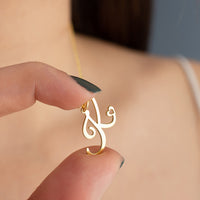
The piece they're describing → Heart Initial Necklace for Women — 18K Gold Plated, Personalized Letter + Heart Pendant
Personalize Yours

