


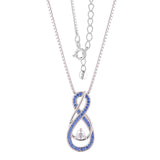
December is one of only four months to have three official birthstones. That used to make choosing a December birthstone gift complicated. Now, once you understand what separates blue topaz from tanzanite from turquoise, the choice becomes straightforward — it depends entirely on budget, durability needs, and what the person values most.
This guide covers all three stones in full: their meanings, histories, differences, prices, and exactly how to choose between them.
Shop the December Birthstone Necklace
AJLuxe's December Birthstone Necklace features a turquoise blue infinity pendant in 925 sterling silver, $59.99 — hypoallergenic and gift-ready, currently in stock.
What Is the December Birthstone?
December has three official birthstones, recognized by the American Gem Trade Association and Jewelers of America:
- Blue topaz — the modern December birthstone, adopted 1952. Most popular, most affordable, hardness 8.
- Tanzanite — added in 2002. Rarest of the three, found only in Tanzania. Violetish blue, hardness 6–7.
- Turquoise — the oldest December birthstone, one of the first gemstones in human history. Hardness 5–6, blue to blue-green.
A fourth stone — blue zircon — is the traditional December birthstone, pre-dating the modern list. Natural blue zircon is a completely different mineral from cubic zirconia (which is a synthetic diamond simulant). Zircon is one of the oldest minerals on Earth at 4.4 billion years old.
All four December birthstones share a blue or blue-green color palette — making December one of the most visually consistent birthstone months.
Blue Topaz: December's Most Popular Birthstone
Blue topaz is the go-to December birthstone for most jewelry — and for good reason. It's hard enough for everyday rings (Mohs 8), comes in three distinct blue shades, and is widely available at prices that make it accessible at every budget level.
The three blue topaz varieties differ significantly in shade:
- Sky blue topaz — pale, ice blue. The lightest and most delicate shade. Best in simple, minimalist settings.
- Swiss blue topaz — medium, vivid blue. The most popular variety for necklaces and rings. Bright and saturated without being dark.
- London blue topaz — deep, steely blue with slight grey-green undertones. The most expensive of the three. Dramatic and bold.
Blue topaz earns its popularity as a gift stone because it photographs beautifully, suits both silver and gold settings, and doesn't require special care beyond standard gemstone handling. At a Mohs hardness of 8, it outperforms tanzanite and turquoise in daily-wear durability.
Price range: $20–$80 for a sterling silver pendant necklace. Fine jewelry with large London blue topaz can reach $200–$500.
What blue topaz symbolizes: Clarity of thought, honest communication, and creative expression. Ancient Greeks believed topaz gave strength and protected against enemies. In the Renaissance, it was thought to cure madness and improve vision. The blue variety specifically connects to the Throat Chakra — the energy center governing communication and truth-telling.
For a full deep-dive on blue topaz meaning, healing properties, and stone quality grades, see our dedicated blue topaz meaning guide.
Tanzanite: The Rarest December Birthstone
Tanzanite is one of the rarest gemstones on Earth. It exists in a 6 km² zone at the foot of Mount Kilimanjaro in northern Tanzania — the only place on the planet where it forms. Geologists estimate the deposit will be exhausted within the next 10–20 years. No new source has been found since its discovery in 1967.
That scarcity is part of what makes tanzanite distinctive as a December birthstone. Unlike blue topaz or turquoise, you cannot substitute another location's tanzanite — there is no other location.
What makes tanzanite visually unique: It's trichroic — it shows three different colors depending on the viewing angle: blue, violet, and burgundy-red. In finished jewelry, this typically appears as a rich violetish blue that shifts slightly depending on lighting. Incandescent light (warm bulbs) brings out the violet; daylight brings out the blue.
Price range: $100–$500+ for a sterling silver pendant with a tanzanite center stone. Fine jewelry with D-block tanzanite (finest quality, blue with minimum violet) can reach $1,500 per carat or more. Budget for at least $150–$200 for a piece that shows tanzanite's characteristic color shift properly.
Durability note: Tanzanite has a Mohs hardness of 6–7 and perfect cleavage in one direction. This means it can crack under a sharp blow. It's excellent for necklaces, earrings, and occasional-wear rings — not ideal for everyday rings that get knocked against hard surfaces.
What tanzanite symbolizes: Transformation, spiritual wisdom, and higher consciousness. Many crystal traditions associate tanzanite with the Third Eye and Crown Chakras — the centers of intuition and spiritual insight. It's often given as a gift to mark major life transitions: graduation, milestone birthdays, new chapters.
For the full tanzanite story — including the Maasai herdsman discovery, quality grading by the Tanzanian government, and the real-vs-fake identification guide — read our tanzanite meaning and properties guide.
Turquoise: December's Most Ancient Birthstone
Turquoise has been in human jewelry for over 7,000 years. Egyptian pharaohs wore it. Persian emperors decorated palace walls with it. Native American tribes in the Southwest used it in ceremonial jewelry for centuries. No other December birthstone — or most birthstones, for that matter — has this kind of cross-cultural, multi-millennial track record.
The name comes from the French pierre turquoise — "Turkish stone" — because it reached Europe via Turkey from the Persian Empire, where the finest turquoise was mined (and still is). The best quality is called Persian turquoise or Nishapur turquoise, from the mines in northeastern Iran that have produced gem-quality stones for 2,000 years.
Color range: Sky blue (copper-dominant, with minimal iron) to blue-green to greenish (iron-dominant). The most prized color is an even, sky blue with no green — what the market calls "robin's egg blue" from the finest Persian mines. American Southwest turquoise (Sleeping Beauty mine, Kingman mine) tends to be a brighter, lighter blue. Chinese turquoise tends to be more green.
Price range: $20–$100+ for a sterling silver turquoise pendant. High-quality natural, untreated Persian turquoise can reach $500–$1,000+ for fine jewelry pieces. Most commercial turquoise is stabilized (resin-impregnated to improve hardness and color stability), which is standard and widely accepted.
Durability note: Turquoise has a Mohs hardness of 5–6 — softer than blue topaz and tanzanite. It's porous and can absorb oils, perfume, and water, which can alter its color over time. Store separately, remove before swimming, and clean with a dry soft cloth. Despite this, turquoise jewelry in museum collections has survived thousands of years with proper care.
What turquoise symbolizes: Protection, healing, luck, and friendship. Native American traditions often associate turquoise with sky and water — the life-giving elements. In Persian culture it was a protective talisman against evil. The Aztecs used it in warrior's shields and ceremonial masks. Today it's most commonly associated with mental clarity, emotional calm, and good fortune during travel.
For the full turquoise guide including quality grades, synthetic vs natural identification, and chakra associations, see our turquoise meaning and properties guide.
December Birthstone Comparison Table
Here's how all three December birthstones compare across the factors that matter most when choosing:
| Stone | Color | Hardness | Origin | Price Range | Best For |
|---|---|---|---|---|---|
| Blue Topaz | Sky, Swiss, or London blue | 8 Mohs ⭐ | Brazil, Russia, Nigeria | $20–$200 | Everyday wear, first birthstone gift, any budget |
| Tanzanite | Violetish blue (color-shifting) | 6–7 Mohs | Tanzania only | $100–$1,500+ | Special occasion, collector, milestone gift |
| Turquoise | Sky blue to blue-green | 5–6 Mohs | Iran, USA, China | $20–$500+ | Statement jewelry, boho style, meaningful tradition |
| Blue Zircon (traditional) | Sky to deep blue | 7.5 Mohs | Cambodia, Sri Lanka | $50–$400+ | Traditional gift, high dispersion sparkle |

December Birthstone Meaning and Symbolism
Each December stone carries distinct symbolic meaning — and the one you choose can reflect something specific about the person you're giving it to.
Blue topaz speaks to clarity and communication. Give it to the person who expresses themselves with precision and honesty — a writer, teacher, or anyone navigating a major conversation in their life. In crystal traditions, blue topaz is associated with cutting through confusion and speaking truth.
Tanzanite symbolizes transformation and spiritual depth. It's the birthstone for people who are evolving — entering a new chapter, leaving something behind, or pursuing a path of self-understanding. The fact that it comes from one tiny place on Earth reinforces its message: some things are irreplaceable.
Turquoise is the stone of protection and connection. It's what you give to a traveler, a risk-taker, or someone who needs grounding and strength. Every ancient culture that encountered turquoise reached the same conclusion about it independently: this stone protects. That cross-cultural convergence over 7,000 years is something no other gemstone can claim.

How to Choose the Right December Birthstone
Three stones, one decision. Here's how to make it quickly:
Choose blue topaz if: Budget matters, the piece will be worn every day (hardness 8 handles rings and bracelets), or you want the cleanest, simplest blue. Sky blue topaz in a sterling silver necklace is a universally wearable gift that works for any December birthday.
Choose tanzanite if: This is a milestone gift — a significant birthday, graduation, or major life event. The price point signals the occasion's importance, and the stone's rarity makes it inherently meaningful. Anyone who collects or appreciates fine jewelry will recognize tanzanite's value immediately.
Choose turquoise if: The recipient has a bohemian, southwestern, or artistic sensibility. Or if you want to give something with genuine historical weight — a stone that humans have valued longer than written history. Turquoise also works beautifully for those who feel a connection to Native American or Persian heritage.
December Birthstone for Sagittarius vs Capricorn
December covers two zodiac signs, and each aligns differently with the available birthstones.
Sagittarius (November 22 – December 21): The archer is a traveler, philosopher, and truth-seeker. Turquoise is historically Sagittarius's stone — it's the traveler's talisman in multiple traditions. Tanzanite's transformative energy also suits Sagittarius's constant evolution. Blue topaz's connection to honest communication fits the sign's directness.
Capricorn (December 22 – January 19): The sea-goat is disciplined, ambitious, and practical. Blue topaz suits Capricorn's need for clarity and structured thinking. Tanzanite's rarity appeals to Capricorn's appreciation for quality over quantity — they'd rather have one exceptional stone than three average ones.
For the full zodiac birthstone breakdowns, see our Sagittarius birthstone guide and Capricorn birthstone guide.
December Birthstone Jewelry Gift Ideas
The safest December birthstone gift for most budgets is a blue topaz pendant necklace in sterling silver. London blue topaz in a simple bezel setting looks elevated without costing more than $50–$80. For someone who prefers bolder color, Swiss blue is more vivid and photographs better.
For a milestone birthday — 30th, 40th, or a significant occasion — tanzanite in 18K gold plating is the right choice. A violetish blue tanzanite pendant with 18K gold setting looks like a fine jewelry piece. The color-shift effect is something most people have never seen in a stone before — it makes an impression.
For someone with eclectic, artistic, or bohemian taste, turquoise in sterling silver is the most distinctive choice. A bezel-set turquoise pendant or turquoise stacking bracelet reads as intentional and personal rather than generic. Look for stones with even color and no visible plastic-resin coating on the surface.
Related reading: Birthstone for the Month of December: Turquoise, Tanzanite, Zircon & Blue Topaz Explained (2026).
Related reading: December Birthstone: Turquoise, Zircon, Tanzanite, and Blue Topaz Explained (2026).
Frequently Asked Questions
What is the birthstone for December?
December has three birthstones: blue topaz, tanzanite, and turquoise. Blue topaz is the most popular and affordable. Tanzanite is the rarest, found only in Tanzania. Turquoise is the oldest, with a 7,000-year history in Egyptian, Native American, and Persian jewelry traditions.
What color is the December birthstone?
All three December birthstones are blue or blue-green. Blue topaz ranges from pale sky blue to deep London blue. Tanzanite is a distinctive violetish blue that shifts color in different lighting. Turquoise ranges from robin's egg sky blue to blue-green depending on iron content.
What is the most popular December birthstone?
Blue topaz is the most popular December birthstone for jewelry purchases. It's the most affordable of the three (from $20 for a pendant), available in three shades, and has a hardness of 8 — excellent for rings and everyday wear. Tanzanite is more prestigious but also more expensive.
Is tanzanite rarer than diamonds?
Yes — tanzanite is estimated to be 1,000 times rarer than diamond. It exists in a 6 km² area at the foot of Mount Kilimanjaro in Tanzania, the only known deposit on Earth. Geologists estimate the mines will be exhausted within 10–20 years. Diamond, by contrast, is mined on every continent.
What is the difference between blue topaz and tanzanite?
Blue topaz is harder (Mohs 8 vs 6–7), less expensive ($20–$200 vs $100–$1,500+), and a pure blue. Tanzanite is rarer, shows a distinctive violet-blue color shift in different lighting, and comes from a single location in Tanzania. For everyday jewelry, blue topaz is more durable. For a special occasion or collector gift, tanzanite is the more meaningful choice.
Is turquoise a December birthstone?
Yes. Turquoise is one of three official December birthstones, alongside blue topaz and tanzanite. It's actually the oldest — used in jewelry for over 7,000 years. Turquoise was the primary December birthstone before tanzanite was added to the list in 2002.
What is the rarest December birthstone?
Tanzanite is the rarest December birthstone by a significant margin. It's found only in a small area near Mount Kilimanjaro in Tanzania — the sole source of tanzanite in the world. It's estimated to be 1,000 times rarer than diamond and the deposit is finite, with no other source discovered in 50+ years of searching.
What is the traditional December birthstone?
Blue zircon is the traditional December birthstone, pre-dating the modern list adopted in the 20th century. Natural blue zircon is completely different from cubic zirconia — it's a natural mineral, one of the oldest on Earth (samples found at 4.4 billion years old). Blue topaz largely replaced it in popularity because of wider availability and lower price.
Can you wear turquoise every day?
You can wear turquoise daily in a necklace or earrings, but it needs more care than harder stones. Turquoise is porous (Mohs 5–6) and can absorb oils, perfume, and water, which can alter its color over time. Remove before swimming or bathing. Wipe clean with a dry cloth after wearing. Avoid ultrasonic cleaners and harsh chemicals.
What birthstone is tanzanite replacing?
Tanzanite was added as a new December birthstone in 2002 — it didn't replace an existing stone. The American Gem Trade Association added it alongside blue topaz and turquoise, making December one of only four months with three official birthstones. Tanzanite is the first stone added to the official birthstone list since 1912.
Does December have two birthstones or three?
December officially has three birthstones: blue topaz, tanzanite, and turquoise. Some older sources list only two — usually blue topaz and turquoise — because tanzanite was added later (2002). The most current list from Jewelers of America and the American Gem Trade Association includes all three.
What does the December birthstone symbolize?
Each December birthstone carries different symbolism. Blue topaz represents clarity, communication, and truth. Tanzanite symbolizes transformation, wisdom, and spiritual evolution. Turquoise is associated with protection, healing, and good fortune during travel. All three are traditionally connected to calm, clarity, and the qualities of winter — stillness, depth, and endurance.
Final Thoughts: Which December Birthstone Is Right?
For most December birthdays, start with blue topaz. It's beautiful, durable, and accessible at any price point — and a well-chosen Swiss blue or London blue topaz pendant in sterling silver never looks like a budget choice.
Move to tanzanite when the occasion calls for it. A significant milestone, a piece someone will keep forever, a gift that says "I thought about this" — tanzanite earns its price by being genuinely rare. Anyone who knows jewelry will recognize it immediately.
Choose turquoise when the person you're giving to has a story. It's the stone with the longest memory of any on this list — 7,000 years of cultures reaching the same conclusion that this blue stone matters. That history doesn't go away when you buy a piece of turquoise jewelry. You're carrying it.
All AJLuxe birthstone jewelry is set in 18K gold-plated 925 sterling silver — hypoallergenic, nickel-free, gift-ready with free US shipping and 30-day returns.
→ Browse Birthstone Necklace Collection
→ December Birthstone Pendant Necklace — $27
Written by Vaishakhi Ajmera — founder of AJLuxe, specialists in personalized sterling silver jewelry. Last updated: June 2026. | Sources: GIA December Birthstones · Jewelers of America — Birthstones · American Gem Society — December
Explore more: Birthstone Jewelry by Month
All third-party trademarks, brand names and product names are the property of their respective owners. AJLuxe is not affiliated with, endorsed by, sponsored by, or otherwise connected to any third-party brand referenced in this article. Brand names are used solely for accurate comparative reference, and material descriptions reflect each brand's own published product specifications at the time of writing.
You Might Also Like
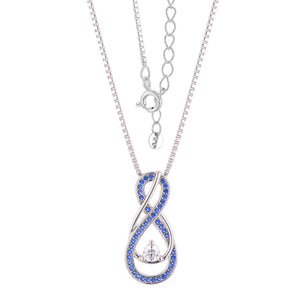
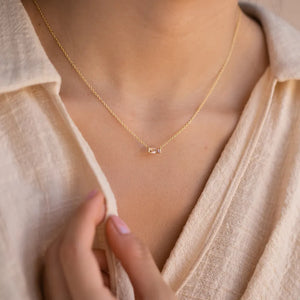

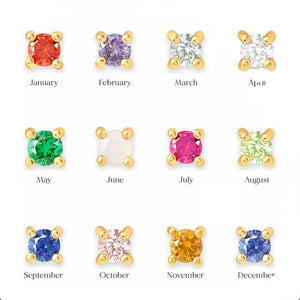
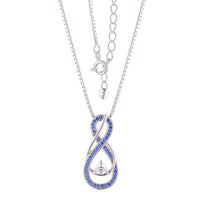
The piece they're describing → December Birthstone Necklace for Women — Turquoise Blue Infinity Pendant, 925 Sterling Silver
Personalize Yours


