


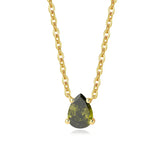
Knowing how to buy peridot the right way saves you from overpaying for dull, yellowish stones while missing out on the gem's signature electric green. Peridot is one of the few gemstones that forms in only one color — a result of iron content, not trace impurities — but quality still varies enormously from stone to stone. This guide covers everything from grading standards and price per carat to treatment red flags and the five questions every buyer should ask before handing over money.
How Peridot Quality Is Graded
Peridot is graded on the same four axes as most colored gemstones: color, clarity, cut, and carat weight. Unlike diamonds, there's no universal industry standard for peridot — the GIA notes that individual sellers create their own AAA/AA/A scales — so you need to understand what each factor means in practice.
Color
Color drives 60–70% of peridot's value. The ideal hue is a pure, medium-dark grass green with no yellow or brown undertones. Saturation matters more than tone: a vivid yellow-green outperforms a dull medium-green. The richest saturation typically appears in stones above 10 carats because iron distribution becomes more uniform at larger sizes. Smaller stones under 3 ct almost always show a lighter, more yellowish hue — that's normal, not a defect.
Clarity
Top peridot is eye-clean with no visible inclusions. The most common inclusion type is "lily pads" — reflective, disk-shaped features caused by stress fractures around small mineral crystals. A few tiny black spots under magnification are acceptable. Avoid stones with visible cracks, milky zones, or heavy needle-like inclusions that obscure the bodycolor.
Cut
Skilled cutting maximizes peridot's vitreous luster and bodycolor. The gem cuts well in ovals, cushions, pears, rounds, and emerald cuts. Watch for windowing — a pale, washed-out center visible when you tilt the stone — which means the pavilion angle is too shallow. A well-cut stone shows consistent color from edge to center.
Carat Weight and Origin
Fine peridot above 5 ct is rare outside collector markets. For jewelry use, 1–5 ct stones in clean cuts offer the best value. Pakistan (especially the Kohistan region) produces some of the finest large crystals. Arizona's San Carlos Apache Reservation is the world's most productive source, supplying about 80–95% of commercial peridot. Myanmar's Pyaung-Gaung mine yields exceptional dark gems. Egypt's ancient Zabargad Island once supplied royalty but is now mostly mined out.
Peridot Grades and Price Guide
| Grade | Color Description | Price Range per Carat | What to Expect | Best For |
|---|---|---|---|---|
| Heirloom / AAA | Vivid pure grass green, 10 ct+ | $150–$400+ | No visible inclusions, GIA or AGL report, Pakistan or Myanmar origin | Collector pieces, engagement rings |
| Fine / AA | Strong lime-green, 3–10 ct | $65–$150 | Eye-clean, minimal lily-pad inclusions, Arizona or Pakistan | Fine jewelry pendants, statement rings |
| Good / A | Medium yellow-green, 1–3 ct | $20–$65 | May show slight brown undertone or minor inclusions under 10× | Earrings, stacking rings, everyday wear |
| Commercial | Pale yellow-green, under 1 ct | $5–$20 | Visible inclusions common, mass-market calibrated sizes | Fashion jewelry, birthstone gifts |
| Rough / Melee | Variable | $1–$10 | Uncut or chip sizes used in bead jewelry | Crystal healing jewelry, bracelets |
Common Peridot Treatments
Here's good news for buyers: peridot is one of the few colored gemstones sold almost entirely untreated. No heat treatment, fracture filling, or irradiation is known to improve peridot's color or clarity — the GIA confirms this explicitly.
What you might encounter:
- "Unheated" marketing claims: Sellers sometimes market peridot as "unheated" to imply rarity or premium status. The GIA calls this misleading — no peridot is heated. You're paying extra for a claim that means nothing.
- Oiling or resin filling: A small number of commercial stones with surface cracks may be oiled to improve apparent clarity. Ask specifically: "Has this stone been clarity-enhanced?" Reputable sellers will answer directly.
- Synthetic peridot: Lab-created peridot (forsterite) exists but is uncommon in the retail market. It sells at a fraction of natural stone prices. If a price seems too low, ask for a gem lab report.
How to detect treatments at home: View the stone under bright light at different angles. Oiling sometimes creates an iridescent sheen inside surface cracks. Extremely uniform color with no inclusions at all may indicate synthetic material — natural peridot almost always has at least trace inclusions.
Top Peridot Origins and What They Mean
Origin affects both quality expectations and price, especially in the collector and fine jewelry markets.
San Carlos, Arizona, USA
The San Carlos Apache Reservation produces 80–95% of the world's commercial peridot supply. These stones typically run 1–5 ct with a medium yellow-green color. They're affordable, widely available, and perfect for jewelry. Many are sold as calibrated rounds and ovals for mass-market settings.
Kohistan, Pakistan
Pakistan's Kohistan district produces the finest large crystals — often 5–50 ct with exceptional color saturation. Pakistani peridot tends toward a purer green with less yellow, commanding prices 2–4× higher than comparable Arizona material. Look for these in fine jewelry and collector lots.
Pyaung-Gaung, Myanmar (Burma)
Burmese peridot is rare and highly prized by collectors. The stones show a rich, dark green with excellent saturation. Supply is inconsistent and ethical sourcing documentation is important given Myanmar's political situation — ask for a conflict-free certification.
Zabargad Island, Egypt
Historically the world's most famous source, Zabargad supplied pharaohs, European royalty, and medieval church treasures. Modern production is essentially nil. "Egyptian peridot" on the market today usually means antique stones or mislabeled Arizona material — treat such claims skeptically without documentation.
China and Vietnam
Both countries produce commercial-grade peridot used in fashion jewelry. Quality is generally Good/A grade — fine for everyday birthstone pieces but not suitable for investment-grade purchases.
5 Questions to Ask Before Buying Peridot
-
"Where was this stone mined?"
Expected answer: Arizona, Pakistan, Myanmar, or China — with documentation for premium claims.
Suspicious answer: "Egypt" or "ancient source" without a lab report or provenance chain. -
"Has this stone been treated in any way?"
Expected answer: "No treatments — peridot isn't heated or filled."
Suspicious answer: Evasiveness, "minimal enhancement," or inability to answer. -
"Does it come with a gem lab report?"
Expected answer: GIA, AGL, or AGTA report for stones above $200 total value.
Suspicious answer: "It doesn't need one" for a high-priced stone, or a report from an unknown lab. -
"What is the exact carat weight?"
Expected answer: A specific number like "2.47 ct" — not a range or estimate.
Suspicious answer: "About 2–3 carats" or refusal to provide a weight certificate. -
"What's your return policy?"
Expected answer: At least 7–14 days with full refund for undamaged stones.
Suspicious answer: "All sales final" on an expensive stone — never acceptable for fine gems.
Online Peridot Red Flags
Online gem buying has genuine advantages — better selection, lower overhead prices — but it also concentrates the risk. Watch for these 6 warning signs:
- No carat weight listed: Any reputable seller lists exact weight. "Large" or "approximately 3 ct" is a red flag.
- "Natural Egyptian Peridot" without documentation: Zabargad is essentially depleted. This claim is almost always Arizona or Chinese material with a premium markup.
- Price below $3/ct for a stone marketed as "fine quality": Fine peridot starts around $20–$45/ct. Below that, you're in commercial territory — not fine.
- Stock photos or extreme saturation boosting: Digital photos can be color-corrected heavily. Look for multiple raw-light photos or video. If only one professional photo exists, ask for more.
- "AAA grade" without defining what that means: No universal AAA standard exists for peridot (GIA confirmed). "AAA" is a marketing term — demand specific color and clarity descriptions.
- Lab report from an unrecognized lab: Stick with GIA, AGL, AGTA, or IGI. Certificates from "GGL" or "IGL" or similar-sounding names with no independent verification carry zero weight.
Best Peridot Jewelry Styles
Peridot's Mohs hardness of 7.5–8 makes it suitable for most jewelry types, though it's softer than sapphire or ruby and needs some care in rings.
Pendants and Necklaces
Pendants are the safest choice for peridot — the stone doesn't contact hard surfaces the way rings do. A peridot pendant in a bezel or four-prong setting shows off the color beautifully and sits protected against the body. Our peridot water drop pendant necklace in 925 sterling silver is an excellent everyday option that pairs the gem's lime green with the cool tone of silver.
Earrings
Peridot earrings — especially studs and drops — are low-wear items that keep the stone looking pristine for years. Drops and dangles catch the light well and showcase the gem's vitreous luster. The yellow-green plays especially well against gold settings and warm skin tones.
Rings
Peridot rings work best in protective settings — bezels, halos, or flush-set designs — rather than high-prong solitaires where the stone can chip on doorframes or countertops. If you want a peridot ring for daily wear, choose a thicker girdle stone and a setting that guards the edges.
Bracelets
Peridot bracelets exist but require care — the gem can crack from a sharp knock. Beaded peridot bracelets in crystal/healing styles work fine since individual beads are small and replaceable. Tennis-style bracelets with bezel-set peridot offer better protection for fine pieces.
Explore our full August birthstone jewelry collection for peridot pieces in sterling silver settings. For the spiritual side of the stone, read our guide to peridot meaning and symbolism.
How to Care for Peridot Jewelry
Peridot is durable enough for regular wear but needs a few precautions to stay looking its best.
- Cleaning: Warm water, mild dish soap, and a soft toothbrush. Rinse thoroughly and pat dry. Never use ultrasonic cleaners — they can worsen existing inclusions or cause lily pads to expand.
- Avoid: Household bleach, chlorine pools, and strong acids — these attack the stone's surface over time. Also keep peridot away from extreme heat (stovetops, direct sunlight in a car) since thermal shock can cause cracking.
- Storage: Store in a separate fabric pouch or compartment. Peridot at 7.5–8 Mohs can scratch softer gems like pearls and opals, and harder gems like sapphire can scratch peridot.
- Steam cleaning: Not recommended. Steam combined with existing fractures or inclusions can cause breakage.
Peridot is a naturally green gemstone with a Mohs hardness of 7.5–8, making it durable for most jewelry. Retail prices range from $5–$20 per carat for commercial grades to $150–$400+ per carat for fine specimens above 10 carats from Pakistan or Myanmar. The top quality indicator is color saturation — look for a vivid, pure grass green with no brown undertones. Clean peridot with warm water and mild soap only; avoid ultrasonic cleaners, bleach, and steam.
Related reading: Olivine vs peridot.
Related reading: Matching Necklaces for Best Friends (2026 Guide): Symbols, Prices & What to Buy.
Frequently Asked Questions
How much does real peridot cost?
Real peridot ranges from $5 to $400+ per carat depending on quality. Commercial-grade stones under 1 carat sell for $5–$20/ct, Good/A quality runs $20–$65/ct, fine AA quality runs $65–$150/ct, and top-grade AAA stones above 10 carats can exceed $400/ct. Jewelry with peridot set in sterling silver typically retails between $30 and $300 depending on the piece, metal, and stone quality.
How do I know if my peridot is real?
Real peridot almost always has visible lily-pad inclusions — reflective, disk-shaped features inside the stone — which synthetic or glass imitations lack. Look at the stone under a loupe at 10×. Natural peridot also shows doubling of back facets when viewed through the table, caused by its birefringence. A perfectly clean stone at a suspiciously low price is worth having tested by a gemologist. For a definitive answer, a GIA identification report costs around $50–$80.
What color of peridot is most valuable?
A richly saturated, pure grass green is the most valuable peridot color. This is best described as a medium-dark lime green with no yellow or brown undertones — essentially the green of a fresh-cut lawn. This color typically only appears in stones of 10 carats or larger. Smaller stones naturally show more yellow, which reduces value but doesn't make them less beautiful for jewelry purposes.
Who should not wear peridot?
Peridot has no proven harmful effects for any person to wear. Some traditional and Vedic astrology systems suggest peridot should not be worn by people whose birth charts are governed by certain planets (particularly Saturn or Mars, depending on the tradition), but these are cultural beliefs rather than scientific facts. Anyone with sensitive skin should choose peridot set in hypoallergenic metals like 925 sterling silver or 14k gold, as it's the metal — not the stone — that typically causes skin reactions.
Is peridot durable enough for an engagement ring?
Peridot can work in an engagement ring, but it requires a protective setting. At Mohs 7.5–8, it's softer than sapphire (9) or diamond (10) and can chip or scratch over decades of daily wear. A bezel setting or halo design that protects the stone's girdle is essential. Many couples choose peridot for its meaningful August birthstone connection and budget-friendly price compared to other colored gems.
Is peridot treated or heated?
Peridot is not heated or treated. It's one of the only major gemstones sold in its entirely natural state — no heat, no irradiation, no fracture filling changes its color or clarity. The GIA explicitly states that no heat treatment for peridot is known. Any seller marketing peridot as "unheated" is technically correct but using it as a meaningless premium claim.
What's the difference between peridot and emerald?
Peridot and emerald are entirely different minerals. Peridot is the gem variety of the mineral olivine (magnesium iron silicate), while emerald is the green variety of beryl (aluminum beryllium silicate). Peridot's color comes purely from iron, giving it a yellow-green to lime green tone. Emerald's color comes from chromium, producing a deeper blue-green. Peridot is generally more affordable and less included than emerald, though top peridot still commands significant prices.
What is the best setting metal for peridot?
925 sterling silver and yellow gold are the best metals for peridot. Sterling silver complements peridot's cool lime green, while yellow gold warms the stone and makes its color appear richer. White gold and platinum also work well for a modern look. Avoid silver-plated or base metal settings for anything above commercial quality — the setting metal should match the stone's value.
Where does the best peridot come from?
Pakistan's Kohistan district produces the finest peridot in the world — large crystals with exceptional color saturation and minimal inclusions. Myanmar (Burma) also yields top-quality gems. Arizona's San Carlos Reservation supplies most commercial peridot and offers excellent value. Egypt's Zabargad Island was historically important but is essentially exhausted today.
Can peridot go in water?
Peridot tolerates brief water contact for cleaning but shouldn't be worn in pools, hot tubs, or the ocean. Chlorine in pool water and salt in seawater can slowly etch the stone's surface and attack any metal setting. For regular cleaning, warm water with mild soap is safe — just avoid prolonged soaking, which can loosen prong settings over time.
How can I tell if peridot is high quality?
High-quality peridot shows a vivid, pure green color with no yellow or brown undertones, is eye-clean under normal viewing, and has been well-cut so the color appears consistent across the stone face. Check for windowing (a pale, washed-out center) by tilting the stone — a quality cut eliminates this. Origin documentation (Pakistan or Myanmar) and a lab report confirm premium status for stones above $150 total value.
Is peridot rare?
Commercial peridot is not rare — Arizona alone produces millions of carats annually, keeping prices accessible. However, fine peridot above 10 carats in pure grass-green color from Pakistan or Myanmar is genuinely uncommon and commands collector prices. Peridot from ancient Zabargad Island is historically significant and rarely available. The gem's affordability actually makes it one of the best values in the colored gemstone market for jewelry buyers.
Shop Peridot Jewelry at AJLuxe
Our peridot water drop pendant necklace in 925 sterling silver uses ethically sourced stones. Browse all peridot birthstone jewelry — hypoallergenic, gift-ready, 30-day returns.
Final Thoughts
Buying peridot doesn't have to be complicated once you know what drives value. Color saturation matters most — look for that vivid lime green and walk away from brown-tinted stones no matter how good the price sounds. Ask for origin disclosure and confirm there are no treatments (there shouldn't be). For jewelry pieces, the commercial to Good/A grade range offers beautiful stones at accessible prices, while fine AA and AAA grades reward collectors who want something exceptional.
Peridot's combination of natural beauty, no-treatment integrity, and wide availability at fair prices makes it one of the most honest gems you can buy. Whether you're shopping for an August birthday, an anniversary, or just a green stone you love, this guide gives you the framework to shop with confidence.
All third-party trademarks, brand names and product names are the property of their respective owners. AJLuxe is not affiliated with, endorsed by, sponsored by, or otherwise connected to any third-party brand referenced in this article. Brand names are used solely for accurate comparative reference, and material descriptions reflect each brand's own published product specifications at the time of writing.
You Might Also Like
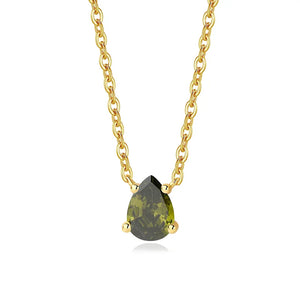

The piece they're describing → Peridot Pendant Necklace for Women — Green Peridot Teardrop, 925 Sterling Silver
Personalize Yours


