


- Nose studs (L-bend, nose screw, flat-back labret) sit low-profile and are what piercers use for new piercings — rings are typically not recommended until healing is done.
- Nose rings/hoops (seamless ring, captive bead ring, clicker) make a bolder statement but can rotate and snag more during healing.
- Standard nostril piercing gauge is 18g or 20g; ring diameter is usually measured in millimeters from the piercing to the base of the nostril.
- Healing typically takes 4-6 months before switching from a starter stud to a ring is recommended.
- Nickel is the single biggest cause of jewelry-related skin reactions, per the American Academy of Dermatology — metal choice matters as much as style.
- AJLuxe doesn't currently sell nose piercing jewelry — see below for what to buy instead, and where to get real nose jewelry.
If you've searched "nose ring with studs," you're probably trying to sort out two things at once: what the actual style options are, and which one is right for your piercing. The confusion is fair — a lot of shoppers use "nose ring" as a catch-all for any nose jewelry, when studs and rings are genuinely different pieces with different insertion mechanisms, healing implications, and looks. Here's the honest breakdown (2026).
Nose Stud vs. Nose Ring: What's the Real Difference?
A nose stud sits flush against the nostril with a small decorative top and a backing mechanism hidden inside the nose, while a nose ring (hoop) forms a visible loop that passes all the way through the piercing. Studs are low-profile, less likely to snag on clothing, towels, or masks, and are what most professional piercers use for a brand-new piercing. Rings sit further out, read as a bolder style statement, and are prone to rotating in the piercing — which is exactly why piercers generally hold off on rings until a piercing has fully healed.
The 3 Main Types of Nose Studs
Nose studs stay in place through one of three backing mechanisms — no visible clasp or butterfly back like an earring, since everything sits inside the nostril:
- L-bend (L-shaped post): The post makes a simple L-shaped turn just inside the nostril, which holds it in place while still twisting in and out easily. It's the most common starter-jewelry style because it's the fastest to insert and remove.
- Nose screw (U-bend): The post curves in a gentle spiral that "screws" into the piercing channel, which holds more securely than an L-bend but takes a bit more practice to insert correctly.
- Flat-back labret: A straight post with a flat disc that threads on from inside the nose, sitting completely flush. It's the most secure of the three — nothing to catch or twist out — which is why it's often recommended for sleeping or active healing.

The 3 Main Types of Nose Rings (Hoops)
Nose rings all form a loop through the piercing, but they close in different ways:
- Seamless ring: A single continuous circle of metal that you twist open slightly to insert, then twist back closed. Minimalist and comfortable once healed, but fiddlier to put in than a hinged style.
- Captive bead ring (CBR): A ring with a small bead or gem held in place by the ring's own tension, which snaps into a gap to close it. Secure and classic, though it takes a bit of dexterity to open and close.
- Clicker (hinged segment ring): A hinged section that swings open and clicks shut, making it the easiest ring style to put on and take off one-handed — a common upgrade once you're past the initial healing window.
| Style | Type | Best For | Notes |
|---|---|---|---|
| L-bend stud | Stud | New piercings | Fastest to insert/remove; most common starter style |
| Nose screw | Stud | New or healed piercings | More secure than L-bend; slight learning curve to insert |
| Flat-back labret | Stud | Active healing, sleeping | Most secure stud style; sits fully flush |
| Seamless ring | Ring | Healed piercings | Minimalist look; twists open/closed |
| Captive bead ring | Ring | Healed piercings | Classic look; bead held by ring tension |
| Clicker (hinged) | Ring | Healed piercings | Easiest ring to self-insert; hinged, snaps shut |
What Gauge and Size Do You Actually Need?
Most nostril piercings are done at 18g or 20g (thinner than most ear piercings), and that's the gauge to match when buying a replacement stud or ring — sizing down or up from your piercer's original gauge isn't something to guess at. For a ring, the number that matters is inner diameter, not the overall piece size: measure from the piercing hole to the bottom edge of your nostril in millimeters to find a diameter that sits snugly without hanging loose or pressing into the piercing channel. A septum piercing uses different gauge and sizing conventions entirely, so treat it as its own category rather than assuming nostril numbers apply.
Stud or Ring — Which Should You Get First?
Get a stud first — specifically an L-bend or nose screw — because that's what piercers use to start a new nostril piercing, not a ring. A ring's continuous loop shape allows more movement in the piercing channel than a snug stud does, and that extra motion during the healing window is what tends to prolong healing, irritate the tissue, and cause bumps. The commonly cited healing window for a nostril piercing is 4 to 6 months before it's ready for a jewelry change; septum and other nose piercings can take longer. Once your piercer confirms the piercing is fully healed, switching to a ring — seamless, captive bead, or clicker — is a straightforward, low-risk swap.
Choosing a Safe, Nickel-Free Metal
The metal matters as much as the style, especially for a fresh piercing: nickel is the single most common cause of jewelry-related skin reactions, according to the American Academy of Dermatology, and nose skin — thin, and constantly exposed to oil and moisture — reacts faster than almost anywhere else jewelry touches the body. Implant-grade titanium and niobium are what professional piercers reach for on a new piercing because they're inert and contain no nickel at all; nickel-free sterling silver and solid gold become reasonable options once a piercing is fully healed. For the full metal-by-metal breakdown — including why sterling silver isn't recommended for a fresh piercing specifically — see AJLuxe's hypoallergenic nose piercing jewelry guide.
Does AJLuxe Sell Nose Rings or Nose Studs?
Not currently — AJLuxe's catalogue is built around necklaces, earrings, bracelets, and rings worn on healed ears and hands, not initial nose piercing jewelry, and we're not going to dress that up as something it isn't. If you like the look of a small, delicate round stud and want that same nickel-free, everyday-sparkle aesthetic somewhere you can shop today, AJLuxe's Mini CZ Stud Earrings are 925 sterling silver with 18K gold plating — worth knowing this is an ear stud, not a literal nose stud, but it shares the same tiny, understated shape. For your actual nose jewelry, buy implant-grade titanium or niobium directly from a professional piercer or a dedicated body-jewelry retailer, especially for a new piercing.
Frequently Asked Questions
Is it better to get your nose pierced with a ring or a stud?
A stud is better for a new nose piercing — piercers typically start new piercings with an L-bend or nose screw stud rather than a ring, since a ring's looser fit and rotation can slow healing and increase irritation. Rings are a better fit once the piercing is fully healed.
How does a nose ring with a stud stay in?
A nose stud stays in through one of three backing mechanisms hidden inside the nostril: an L-shaped bend that hooks against the inside of the piercing, a spiral "screw" post that twists into place, or an internally threaded flat-back post that screws onto a small flat disc. None of them use a visible outer backing the way an earring does.
Can you wear a stud in a piercing that was originally done with a ring, or vice versa?
Yes, once a piercing is healed, most nostril piercings can accommodate either a properly gauged stud or a properly sized ring — the piercing itself doesn't "lock in" to one style. The only real constraint is matching the gauge and, for rings, choosing a diameter that fits the piercing comfortably.
What is the safest type of nose ring or stud?
Implant-grade titanium (ASTM F136) or niobium is the safest material for either style, especially for a new piercing, because both are nickel-free and biocompatible. The style (stud vs. ring) is a separate decision from the metal — pick the metal for skin safety first, then choose the style that fits your piercing's healing stage. See our hypoallergenic nose rings guide for the full material breakdown and aftercare timeline.
What gauge is a standard nose piercing?
Most nostril piercings are done at 18g or 20g, which is thinner than the gauge used for most ear piercings. Always match a replacement stud or ring to the gauge your piercer originally used rather than guessing.
How long before you can switch from a nose stud to a nose ring?
The commonly cited healing window for a nostril piercing is 4 to 6 months before it's considered safe to switch from a starter stud to a ring, though actual healing time varies by person. Confirm with your piercer that healing is complete before making the switch.
For piercing aftercare and jewelry-material standards, the Association of Professional Piercers is the industry's leading resource.
All third-party trademarks, brand names and product names are the property of their respective owners. AJLuxe is not affiliated with, endorsed by, sponsored by, or otherwise connected to any third-party brand referenced in this article. Brand names are used solely for accurate comparative reference, and material descriptions reflect each brand's own published product specifications at the time of writing.
You Might Also Like

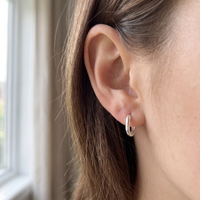
The piece they're describing → Silver Huggie Earrings for Women — 925 Sterling Silver, Hypoallergenic, Minimalist
Personalize Yours


