


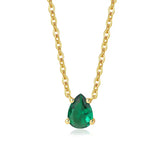
If you're weighing lab created emerald vs natural emerald, you're not choosing between real and fake. You're choosing between two equally genuine stones that differ in origin, clarity, and price. Both score 7.5–8 on the Mohs hardness scale and share the same chemical formula — Be₃Al₂Si₆O₁₈ with chromium giving that vivid green. What separates them is where they came from and what that means for your wallet, your ethics, and your long-term goals.
What Is a Lab-Created Emerald?
A lab-created emerald is a genuine emerald grown in a controlled environment rather than mined from the earth. Scientists use two main methods: hydrothermal growth (replicating the high-pressure, high-temperature conditions of natural formation using water solutions) and flux growth (dissolving mineral components in molten salts and allowing crystals to form slowly). Both processes produce Be₃Al₂Si₆O₁₈ with chromium or vanadium — the same compound found in Colombian mines.
Lab emeralds reach Mohs 7.5–8 hardness, the same as natural stones. Because the growth environment is controlled, they typically show far fewer inclusions — often eye-clean or near-eye-clean. Color is consistent and vivid, ranging from medium to deep green. The entire growth cycle takes weeks rather than millions of years. Lab stones are certified as synthetic emeralds (not imitations) by labs like GIA and IGI, and they carry the same gemological designation: emerald.
What Is a Natural Emerald?
Natural emeralds form deep in the earth's crust over millions of years when beryllium-rich rocks interact with chromium or vanadium through hydrothermal fluid activity. The most prized specimens come from Colombia (Muzo, Coscuez, Chivor mines), Zambia, Brazil, and Ethiopia. Each origin imparts subtle color differences — Colombian stones lean toward a pure, slightly blue-green; Zambian emeralds often show a slightly darker, cooler hue.
Natural emeralds almost always contain inclusions, called jardin (French for garden) — a network of fractures, bubbles, and mineral deposits. The GIA notes that virtually no natural emerald is completely free of inclusions, and the trade accepts them as proof of natural origin. Mohs hardness sits at 7.5–8, but natural fractures can make stones more vulnerable to impact than their lab counterparts. Over 90% of natural emeralds on the market receive oil or resin treatment to fill surface-reaching fractures and improve apparent clarity.
Lab-Created Emerald vs Natural Emerald: Key Differences
| Property | Lab-Created Emerald | Natural Emerald |
|---|---|---|
| Origin | Grown in a lab via hydrothermal or flux methods (weeks) | Formed in the earth over millions of years |
| Chemical composition | Be₃Al₂Si₆O₁₈ with Cr/V — identical to natural | Be₃Al₂Si₆O₁₈ with Cr/V |
| Mohs hardness | 7.5–8 | 7.5–8 |
| Color | Vivid, consistent medium-to-deep green | Ranges from pale to deep green; origin-specific nuance |
| Clarity / inclusions | Often eye-clean; far fewer inclusions | Almost always has jardin (inclusions); eye-clean stones are rare and extremely expensive |
| Treatments | Not required; no oil or resin | 90%+ are oiled or resin-filled; disclosure required by GIA standards |
| Price per carat (1 ct, fine quality) | $30–$150 | $500–$10,000+ (Colombian top-grade can exceed $25,000/ct) |
| Rarity | Reproducible on demand | Geologically rare; supply limited by mining |
| Resale value | Low; depreciates like other consumer goods | Higher; fine Colombian stones can appreciate |
| Symbolism & meaning | Same metaphysical properties ascribed to emerald (renewal, growth, love) | Traditional birthstone for May; centuries of cultural significance |
| Ethical / environmental | No mining impact; lower carbon footprint per carat | Mining varies; some certified ethical-origin programs (Muzo, Gemfields) |
| Best use cases | Everyday fine jewelry, fashion-forward pieces, larger carat sizes on a budget | Heirloom pieces, investment, collector stones, engagement rings with provenance |
The most important difference most guides gloss over is treatment disclosure. When you buy a natural emerald without a certificate, there's a 90%+ chance it's been oiled. That treatment can wear off over time — especially with ultrasonic cleaners or steam — and re-oiling costs money. Lab stones don't have this problem because they don't have the surface-reaching fractures that require filling in the first place.
The second gap is clarity. A lab emerald at $80 per carat is likely eye-clean. A natural emerald at the same price per carat will almost certainly show visible inclusions. If you want that deep, clean green look, lab wins at every budget tier below $500 per carat.
Where natural emeralds genuinely win is uniqueness and long-term value. Each stone's jardin is one-of-a-kind — a fingerprint forged over millions of years. Fine Colombian specimens certified origin-untreated have historically held or grown in value. Lab stones, like lab diamonds, are expected to continue dropping in price as production scales.
When to Choose a Lab-Created Emerald
- You want maximum clarity at your budget. If you're spending under $500 on the stone itself, a lab emerald gives you a cleaner, more vivid stone than any natural emerald at that price point.
- You're buying a larger carat weight. A 2ct natural fine-quality emerald can cost $5,000–$20,000+. A 2ct lab emerald in the same vivid green runs $100–$300. The visual impact is nearly identical at arm's length.
- You prefer treatment-free stones. If you want a stone that won't need re-oiling and can survive the occasional ultrasonic cleaning (with care), lab is the safer choice.
- Sustainability matters to you. Lab production avoids the land disruption and labor risks associated with artisanal emerald mining in Colombia, Zambia, or Brazil.
When to Choose a Natural Emerald
- You want an heirloom piece. A fine natural Colombian emerald — especially one certified no-oil or minor-oil by GIA — carries provenance that a lab stone can't replicate. It's a conversation piece with millions of years of history.
- You're investing in a collectible gemstone. Natural emeralds above 3 carats in vivid Colombian green, untreated, have shown value appreciation in auction records. Lab stones don't have this trajectory.
- The jardin appeals to you. Some buyers specifically love the organic, imperfect character of a natural stone. The inclusions aren't flaws — they're proof of earth-origin.
- You're buying for cultural or astrological significance. As May's traditional birthstone with centuries of Vedic and Western symbolic meaning, a natural emerald carries weight that a lab stone — despite identical chemistry — doesn't yet share in every cultural context.
Price Comparison: Lab-Created Emerald vs Natural Emerald
Price is where the gap is most dramatic. Lab-created emeralds cost 70–90% less than natural stones of comparable size and color. Here's a rough guide to what you'll pay at retail in 2026:
| Carat weight | Lab-Created Emerald | Natural Emerald (fine quality) |
|---|---|---|
| 0.25 ct | $8–$40 | $125–$600 |
| 0.5 ct | $15–$75 | $250–$2,000 |
| 1 ct | $30–$150 | $500–$10,000 |
| 2 ct | $60–$300 | $2,000–$40,000 |
| 3 ct | $100–$500 | $6,000–$100,000+ |
What drives natural emerald prices? Origin is the biggest factor. Colombian stones from Muzo command a premium over Brazilian or Ethiopian stones of similar size. Untreated stones (no oil) sell for a 30–100% premium over treated ones of equivalent color. Clarity is critical — each step up in clarity at larger carat weights multiplies price exponentially. Cut and saturation round out the key value drivers.
For lab stones, price is largely commodity-driven. As production scales, retail prices have been falling roughly 10–15% annually. That's great for buyers today, but it means resale value is minimal — if you paid $150 for a 1ct lab emerald today, don't expect to recoup more than $20–30 in five years.
If you're buying emerald-set jewelry (rather than loose stones), the difference narrows at the finished piece level because labor, metal, and design make up a larger share of retail cost. A sterling silver necklace with a lab emerald stone might retail for $80–$150; the same design with a natural emerald of similar size could run $300–$800+.
Care and Durability
Both lab and natural emeralds score 7.5–8 on the Mohs scale — harder than most household dust (which is mostly quartz at Mohs 7), so daily wear is fine with reasonable care. The differences in care come from the fracture and treatment differences, not the hardness number.
Lab-created emeralds: Because they're largely inclusion-free and untreated, lab stones handle cleaning more easily. Warm soapy water and a soft brush are safe. Ultrasonic cleaners are generally tolerable for unfractured lab stones, but check with your jeweler first. Avoid prolonged exposure to heat (can affect color in some flux-grown stones). Store separately to avoid scratching softer metals.
Natural emeralds: Avoid ultrasonic cleaners completely — vibration can propagate existing fractures or dislodge oil treatments. Steam cleaners are equally risky. Stick to warm water and a soft cloth only. Re-oiling every few years is standard practice for oiled natural stones. Keep them out of household chemicals including acetone (nail polish remover) and bleach, which can strip oil treatments. Store in a padded box or soft pouch away from harder stones like sapphires and diamonds.
Both types should be removed during activities where impact is likely — gardening, gym workouts, heavy cleaning. Emerald's cleavage planes make it more chip-prone than a sapphire of the same hardness. For a full emerald buying guide including grading and certification tips, check our detailed walkthrough.
Lab-created emeralds and natural emeralds share the same chemical composition (Be₃Al₂Si₆O₁₈) and Mohs hardness of 7.5–8, making them physically and chemically identical. The key differences are origin (earth vs. lab), clarity (lab stones are typically eye-clean while natural ones almost always have inclusions called jardin), treatments (90%+ of natural emeralds are oiled; lab stones are not), and price (lab emeralds cost 70–90% less per carat). Buyers who want maximum visual quality per dollar should choose lab; collectors and investors seeking rarity, provenance, and long-term value should choose natural.
Frequently Asked Questions
Are lab-created emeralds real emeralds?
Yes — lab-created emeralds are real emeralds. They share the same chemical formula (Be₃Al₂Si₆O₁₈), the same chromium-driven green color, and the same Mohs hardness (7.5–8) as natural stones. The GIA classifies them as synthetic emeralds, meaning they are genuine emerald — not glass, not simulant — just grown in a controlled environment rather than mined. The term "synthetic" in gemology means lab-grown, not fake.
Can you tell the difference between lab and natural emerald by looking?
Usually not with the naked eye. Lab emeralds are typically cleaner (fewer inclusions), which can actually make them look more uniform. A gemologist using a loupe (10x magnification) can often identify growth patterns, inclusions, and flux residue specific to lab stones. Advanced spectroscopic testing provides a definitive answer. If you see no inclusions at all in a vivid green emerald, it's a strong sign it's lab-grown — eye-clean natural emeralds are extremely rare and very expensive.
Are lab emeralds worth anything?
Lab emeralds have genuine material value as gemstones, but low resale value as assets. A 1ct lab emerald might retail for $30–$150, but if you tried to resell it, you'd likely get $10–$30 at most. They don't appreciate over time — production costs keep falling as technology improves. Buy a lab emerald because you love the look and the price, not as an investment.
Do natural emeralds hold their value?
Fine natural emeralds — especially large, untreated Colombian stones with GIA certification — have historically held or appreciated in value. Auction records show top-quality stones selling above their original retail price after 10–20 years. However, commercial-grade natural emeralds (small, heavily oiled, from non-prestigious origins) don't reliably appreciate. Emerald is not as liquid as diamonds — resale requires specialized auction houses or gem dealers.
What is the "jardin" in natural emeralds?
Jardin (French for garden) refers to the network of internal inclusions, fractures, and mineral fingerprints found in virtually every natural emerald. It includes needle-like inclusions, two-phase and three-phase inclusions (fluid pockets with gas bubbles), and healed fractures. Rather than being a flaw, jardin is viewed by gem lovers as proof of natural origin and uniqueness — each stone's jardin is one-of-a-kind. Gemologists use jardin patterns to fingerprint individual stones and identify treatments.
Do lab-created emeralds need to be oiled?
No. Oil treatment fills surface-reaching fractures in natural emeralds to improve apparent clarity. Because lab-created emeralds are grown in a controlled environment and contain far fewer fractures, they don't need oiling. This is a practical advantage: oiled natural stones require re-treatment every few years and must be kept away from ultrasonic cleaners, steam, and solvents that would strip the oil.
How are lab-created emeralds made?
Lab emeralds are made via two primary methods. Hydrothermal growth mimics natural formation: beryllium-rich solutions are heated and pressurized in an autoclave, growing crystals onto seed plates over several weeks. Flux growth dissolves beryllium and aluminum compounds in a molten flux medium (usually a lithium-based melt), allowing crystals to form as the melt cools. Hydrothermal stones tend to more closely resemble natural emeralds in their inclusion types; flux stones are often cleaner but may contain remnants of the flux material as internal features.
Which is better for an engagement ring — lab or natural emerald?
Both can work beautifully in an engagement ring, but with caveats. Emerald's Mohs 7.5–8 hardness and tendency toward cleavage make it somewhat more fragile than sapphire or ruby — consider a protective bezel setting rather than prongs. Lab emeralds are ideal if you want a vivid, clean stone without a large budget. Natural emeralds are better if provenance, rarity, and long-term value matter to you or your partner. Either way, check whether the stone is treated (for natural) and choose a secure setting that protects the girdle.
What's the difference between a lab emerald and a green glass simulant?
A lab emerald is genuine beryl with the same chemistry as natural emerald. A glass simulant (like green glass or cubic zirconia dyed green) is a completely different material with different hardness, refractive index, and no chemical relationship to emerald. Other common emerald simulants include green tourmaline, peridot, green sapphire, and synthetic spinel — none of these are emeralds. Always ask for certification and avoid purchasing loose stones without documentation.
Are lab emeralds ethical?
Lab emeralds avoid the land-use, water, and labor concerns sometimes associated with artisanal emerald mining. However, lab production still requires significant energy, and not all facilities use renewable power. If ethics drive your purchase, look for lab stones from producers that disclose energy sourcing, or for natural stones certified through programs like Gemfields' responsible sourcing chain. The most ethical choice depends on which externalities you weight most.
How do I clean a lab-created emerald safely?
Clean lab emeralds with warm (not hot) soapy water and a soft-bristle brush. Rinse thoroughly and pat dry with a lint-free cloth. Untreated lab stones without heavy fractures can often tolerate a brief ultrasonic clean — but check with your jeweler first, as some lab methods produce internal features that could be affected. Never use steam, bleach, acetone, or ammonia-based cleaners. For more detail, see our emerald care and meaning guide.
What carat weight of lab emerald is equivalent in appearance to a natural emerald?
Carat weight (mass) is the same between lab and natural emerald — both have a specific gravity of approximately 2.72, so a 1ct lab stone and 1ct natural stone are nearly identical in physical size (roughly 6.5mm round). There's no "size equivalence" conversion needed. The visual difference you'll notice isn't size — it's that the lab stone tends to look cleaner and more uniformly vivid, while the natural stone may show visible inclusions or color zoning depending on its grade.
Shop at AJLuxe
Looking for quality gemstone jewelry in 925 sterling silver? Browse our featured piece — hypoallergenic, gift-ready, 30-day returns. Explore our full gemstone necklace collection.
Final Thoughts
Lab-created and natural emeralds share the same chemistry, the same hardness, and the same deep green color that's made emerald one of the world's most prized stones for over 4,000 years. The choice between them isn't about quality in a vacuum — it's about what you value. If you want the most vivid, inclusion-free stone at the best possible price, lab wins every time. If you want rarity, provenance, and the kind of stone that could mean more in 30 years than it does today, natural is worth the premium.
Most buyers end up happy with a lab emerald when they see one in person — the color is stunning, the clarity is exceptional, and the price means you can go larger without guilt. But if you're buying for a milestone moment and you want a stone with a story older than civilization, there's nothing quite like a natural emerald with its jardin intact. Either way, buy from a jeweler who discloses treatments honestly, get a certificate for any stone over 0.5ct, and choose a setting that protects the stone's girdle for daily wear.
Related reading: see our jade green jewelry buying guide.
All third-party trademarks, brand names and product names are the property of their respective owners. AJLuxe is not affiliated with, endorsed by, sponsored by, or otherwise connected to any third-party brand referenced in this article. Brand names are used solely for accurate comparative reference, and material descriptions reflect each brand's own published product specifications at the time of writing.
You Might Also Like
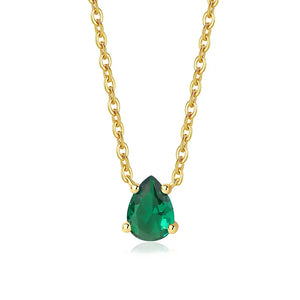
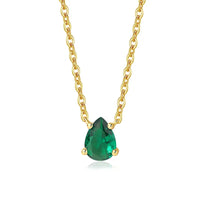
The piece they're describing → Emerald Pendant Necklace for Women — Green Emerald Teardrop, 925 Sterling Silver
Personalize Yours


