


Written by the AJLuxe team — specialists in gemstone sterling silver jewelry. Last updated: June 2026.
- Color is everything — look for vivid bluish-green to pure green; avoid pale or yellowish stones.
- Inclusions are normal — almost every natural emerald has them. They're called "jardin" and they prove authenticity.
- Cedar oil treatment is fine and industry-standard; resin filling (Opticon) is not — it devalues the stone.
- Colombian emeralds are the most prized, but Zambian stones offer excellent quality at a lower price point.
If you're looking for an emerald buying guide that actually helps you make a confident purchase, you're in the right place. Most guides tell you what emeralds are. This one tells you how to buy emerald without getting burned — what to look for, what to avoid, what questions to ask, and what realistic prices look like at every budget.
Emeralds are one of the world's most beloved gemstones, but they're also one of the most misunderstood. A little knowledge goes a long way. Let's dig in.
The 4 Cs of Emerald — How They Differ from Diamonds
You've probably heard of the 4 Cs: color, clarity, cut, and carat. Gemologists at the Gemological Institute of America (GIA) use them for diamonds and colored stones alike — but for emeralds, the weight given to each C is very different.
- Color — by far the most important factor. Vivid, saturated green is what drives value. Pale or washed-out stones are worth a fraction of deeply saturated ones.
- Clarity — almost all natural emeralds have visible inclusions. Unlike diamonds, where eye-clean stones are standard, emerald inclusions are expected and accepted. A heavily included stone with great color can still outvalue a clean stone with weak color.
- Cut — the classic "emerald cut" (a rectangular step cut with cropped corners) was literally invented for this stone because it protects the brittle corners. Well-cut emeralds show off color depth. Poor cuts make a stone look lifeless.
- Carat — size matters, but color matters more. A 1-carat vivid Colombian emerald can easily cost ten times more than a 2-carat pale Brazilian stone.
Bottom line: when buying emerald, always prioritize color first, then clarity, then cut, then carat weight.
Understanding Emerald Color Grades
Color in emeralds has three components: hue (the actual green tone), saturation (how vivid or intense it is), and tone (how light or dark it appears). The finest emeralds sit in a narrow sweet spot — vivid, medium-dark, with a blue-green to pure green hue.
| Color Grade | Description | Value Impact |
|---|---|---|
| Vivid Bluish-Green | Intense, pure color with slight blue secondary hue; the Colombian benchmark | Highest — premium per carat |
| Vivid Pure Green | Strongly saturated, medium-dark green; no secondary hue | Very high |
| Medium-Dark Green | Good saturation, slightly less vivid; the sweet spot for buyers | High — best value range |
| Light Green | Noticeably pale; often Brazilian or lower-grade Zambian | Moderate |
| Yellowish or Grayish Green | Off-tone; secondary hue undermines desirability | Low |
When you're shopping online, ask for photos in daylight and in indoor lighting — color can look very different under fluorescent bulbs.
What Is Jardin? Emerald Inclusions Explained
Here's something most buyers don't know going in: nearly every natural emerald in the world has inclusions. These internal characteristics — tiny fractures, mineral crystals, gas bubbles — are collectively called jardin, French for "garden." The name stuck because under magnification they can look like wispy plant growth inside the stone.
Jardin is not a defect. It's a fingerprint.
Emeralds form under extreme geological pressure over millions of years, and that process almost always leaves traces inside the crystal. A perfectly clean emerald with no inclusions is extremely rare and commands a dramatic price premium. For most buyers, the question isn't "does it have inclusions?" — it's "do the inclusions affect the beauty of the stone?"
What to accept: inclusions that are only visible under 10x magnification, or faint wisps that don't interrupt the face-up color.
What to avoid: fractures that reach the surface (they weaken the stone and can catch on settings), dark black spots that interrupt the color, or inclusions so heavy they make the stone look cloudy face-up.
Interestingly, jardin can actually help authenticate a natural emerald — lab-created stones and glass imitations don't have this organic internal world. When buying, jardin is something to understand, not fear. You can also learn more about what makes this stone special in our guide to emerald meaning.
Emerald Treatments — Cedar Oil vs Resin Filling
This is the part most buyers get wrong. Emerald treatment is not a yes/no question — it matters what the stone was treated with.
Cedar oil treatment — standard and accepted
Almost all natural emeralds on the market have been oiled. Cedar oil (or a similar colorless oil) is worked into the surface fractures to reduce their visibility, improve clarity, and enhance the color. This is an industry-standard practice, accepted by major gemological labs including GIA. It's disclosed on lab reports as "minor," "moderate," or "significant" oil. Minor oiling is perfectly fine and doesn't substantially affect value. Significant oiling slightly reduces price but is still widely sold.
Resin filling (Opticon) — avoid this
Some lower-grade stones are treated with epoxy resin (often called Opticon or a similar trade name). Resin fills fractures more aggressively than oil, but it's considered a permanent alteration that significantly devalues the stone. Unlike oil, which can be re-applied by a jeweler, resin is difficult to remove and can discolor over time. Reputable sellers disclose this; disreputable ones don't.
The Jewelers of America and major gemological bodies require treatment disclosure on all emerald sales. If a seller can't tell you how their emerald was treated, walk away.
What to ask: "Has this emerald been treated? If so, with oil or resin?" A trustworthy seller will answer without hesitation.
Emerald Origin Comparison — Colombia, Zambia, Brazil, Lab
Where an emerald comes from directly shapes its color character, quality expectations, and price. Here's how the four main sources compare.
| Origin | Color Character | Typical Clarity | Price Impact |
|---|---|---|---|
| Colombian | Vivid bluish-green; warm, velvety appearance | Heavily included; jardin common | Highest — 20–50% premium over other origins |
| Zambian | Deep forest green; cooler blue undertone | Often better clarity than Colombian | High — 15–30% less than Colombian for equivalent quality |
| Brazilian | Lighter green; sometimes yellowish | Variable | More affordable; most accessible natural option |
| Lab-Created | Consistent vivid green; no origin variation | Eye-clean; no jardin | Lowest — fraction of natural price |
Zambian emeralds are an increasingly popular choice among buyers who want top-tier color without the Colombian price tag. They're deeply saturated, often cleaner, and come at a meaningful discount. If origin prestige matters to you, Colombian is the benchmark. If color-per-dollar matters more, Zambia delivers.
Lab-created emeralds are chemically identical to natural ones but don't carry the same rarity value. They're a great option for jewelry where you want the look without the investment. Just make sure the seller labels them clearly as lab-created — disclosure is required. Discover how emerald's energy is also connected to astrology in our emerald zodiac sign guide.
Emerald Price Guide by Quality Tier
Emerald prices vary enormously based on color, clarity, origin, size, and treatment. Here's a realistic breakdown of what you can expect at each budget level — these are retail price ranges for a single emerald gemstone or emerald set in simple jewelry.
| Budget | What You Get | Best For |
|---|---|---|
| Under $100 | Small Brazilian or lab-created stones; light color; may have significant treatment | Fashion jewelry, gifts, first-time buyers |
| $100–$300 | Small natural emeralds with decent color; Zambian or Brazilian origin; some inclusions visible | Everyday jewelry, pendants, sterling silver settings |
| $300–$800 | Good-quality Zambian; medium-dark color; minor-moderate oil treatment; 0.5–1ct range | Collector entry point; meaningful gift; statement piece |
| $800–$2,500 | Fine Zambian or mid-grade Colombian; vivid color; GIA or AGL certified; 1ct+ | Investment pieces; engagement rings; heirloom jewelry |
| $2,500+ | Fine to exceptional Colombian; vivid bluish-green; minor oil only; certified; 1ct+ | Serious collectors; auction-quality stones; premium custom jewelry |
For most buyers, the $100–$800 range hits the sweet spot — you get a genuinely beautiful natural emerald in a wearable setting without paying the Colombian premium. You can also explore the full spiritual dimension of this stone in our emerald healing properties guide.
5 Questions to Ask Before Buying Emerald
- What is the country of origin? Colombian, Zambian, Brazilian, or lab-created each carry different value expectations. If the seller can't answer, that's a red flag.
- Has the stone been treated, and with what? Cedar oil is fine; resin is not. You need a clear answer, not "all emeralds are treated."
- Is there a gemological certificate? GIA and AGL are the gold standard for natural emeralds. A certificate confirms authenticity, origin, and treatment level.
- What is the carat weight, not just the size in millimeters? Millimeter dimensions don't tell you mass — and price is based on carat weight.
- What is your return policy? Any reputable seller of gemstones over $200 should offer at least a 7–14 day return window. No returns = proceed with caution.
Red Flags When Buying Emerald Online
Online shopping opens up a huge selection — but it also opens the door to misrepresentation. Here's what to watch for:
- "Natural emerald" listed under $20 for anything over 1ct. Real natural emeralds don't sell at those prices. You're looking at glass, dyed quartz, or synthetic stone with no disclosure.
- Photos with obviously enhanced color. If the stone looks neon green in product images, ask for unedited photos in natural light. Oversaturated photography is a common tactic.
- No treatment disclosure. Legitimate sellers always disclose. "Natural untreated emerald" at low prices is almost always false.
- Certificate from an unknown lab. EGL International, IGI (for colored stones from unknown sellers), or in-house "certificates" have inconsistent standards. Stick to GIA or AGL for natural emeralds.
- Vague descriptions like "emerald green gemstone" or "emerald-like." These are often legally avoiding calling the stone an emerald because it isn't one.
- No return policy or "all sales final." This should immediately raise caution for any gemstone purchase.
FAQ
What should I look for when buying an emerald?
Prioritize color above all else — you want vivid, medium-dark green with a bluish or pure green hue. After color, check that inclusions (jardin) don't interrupt the face-up appearance, verify treatment type (cedar oil is fine, resin is not), confirm the origin, and ask for a certificate from GIA or AGL for stones over $300.
What is a good price for an emerald?
It depends on quality and size. A nice natural emerald in a sterling silver setting typically starts around $100–$300. Fine Zambian or Colombian stones with certification range from $800 to $2,500+ per carat. Lab-created emeralds are available for under $100 for the stone alone.
What does jardin mean in emeralds?
Jardin is French for "garden" and refers to the internal inclusions found in almost all natural emeralds. These are tiny fractures, mineral crystals, and gas bubbles formed during the stone's growth over millions of years. They're completely normal, expected, and actually help authenticate natural emeralds versus imitations.
Are treated emeralds worth buying?
Yes — if the treatment is cedar oil. Oil treatment is industry-standard, accepted by GIA, and doesn't significantly affect value when minor. Avoid emeralds treated with resin (Opticon), which devalues the stone and can cause long-term issues. Always ask what type of treatment was used.
Which country produces the best emeralds?
Colombia is considered the benchmark for the finest emeralds, producing vivid bluish-green stones with a distinctive warm glow. Zambia is a close second, with deeply saturated forest-green stones at a lower price. Brazil produces more affordable natural emeralds, often lighter in color. "Best" depends on your priorities — Colombian for prestige, Zambian for value.
How can I tell if an emerald is real?
Natural emeralds almost always have visible inclusions (jardin) — if a stone is perfectly clean, it's likely lab-created or glass. Real emeralds feel cold to the touch initially and are harder than glass or plastic. The most reliable method is a certificate from GIA or AGL, or an in-person evaluation by a certified gemologist.
Is lab-created emerald as good as natural?
Lab-created emeralds are chemically and optically identical to natural ones. They have consistent vivid color and no jardin. They're not "fake" — they're real emeralds grown in a controlled environment. What they lack is rarity, which is what drives natural emerald prices. For jewelry purposes, lab-created is excellent value.
What carat size emerald should I buy?
For everyday pendants and earrings, 0.25–0.75ct per stone is a practical, beautiful range. For a statement ring or centerpiece, 1ct is the classic choice. Emeralds are denser than diamonds, so a 1ct emerald appears slightly smaller than a 1ct diamond of the same cut. Don't fixate on carat — a vivid 0.5ct stone will outshine a pale 1.5ct stone every time.
Does emerald need a certificate?
For any natural emerald over $300, a GIA or AGL certificate is strongly recommended. It confirms authenticity, country of origin, and treatment level. For lab-created stones or fashion jewelry under $150, a certificate is less critical but still a good sign of a trustworthy seller.
What is the difference between Colombian and Zambian emerald?
Colombian emeralds are known for their vivid bluish-green color and a warm, velvety glow caused by trace chromium and vanadium content. They carry the highest prestige and price premium. Zambian emeralds have a deeper, cooler forest-green tone, often better clarity than Colombian stones, and sell for roughly 15–30% less at equivalent quality. Both are excellent — the choice comes down to color preference and budget.
Final Thoughts
Buying an emerald doesn't have to be intimidating. Once you understand the role of color, why jardin is normal, and why treatment type matters more than whether a stone was treated at all, you're already ahead of most buyers.
The three-step rule: prioritize vivid color, confirm cedar oil treatment (or none), and get a certificate for anything meaningful. Stick to that and you'll come home with a stone you'll love for years.
Whether you're spending $150 or $1,500, the best emerald is the one that makes you pause when you look at it — because that depth of color is exactly what makes this gem so enduring.
Shop Emerald Jewelry at AJLuxe
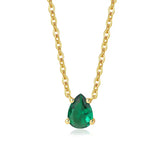
Our emerald water drop pendant necklace in 925 sterling silver features genuine emerald in a classic water drop setting — certified, beautifully set, and ready to wear.
Ready to shop? Browse all emerald necklaces and birthstone jewelry in 925 sterling silver — every piece hypoallergenic, gift-ready, and backed by our 30-day returns.
Comparing emerald against another green stone? See our jade green jewelry guide for real jade prices, how to spot dyed or fake jade, and an honest look at AJLuxe's own green-toned pieces.
All third-party trademarks, brand names and product names are the property of their respective owners. AJLuxe is not affiliated with, endorsed by, sponsored by, or otherwise connected to any third-party brand referenced in this article. Brand names are used solely for accurate comparative reference, and material descriptions reflect each brand's own published product specifications at the time of writing.
You Might Also Like
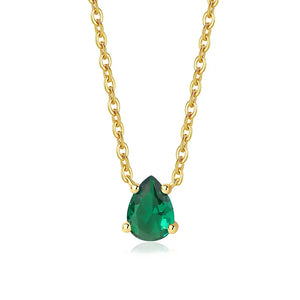
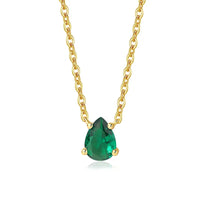
The piece they're describing → Emerald Pendant Necklace for Women — Green Emerald Teardrop, 925 Sterling Silver
Personalize Yours


