


Lab Diamond vs Moissanite: Which Is Worth Buying in 2026?
Written by the AJLuxe team — specialists in personalized sterling silver jewelry. Last updated: June 2026.

- Lab diamond IS a real diamond. Same chemistry as mined diamond, grown in a chamber over 6–10 weeks.
- Moissanite is NOT a diamond. It's silicon carbide — a different gemstone with more fire and a lower price.
- Price gap in 2026: 1ct lab diamond ~$800–1,200. 1ct moissanite ~$300–500.
- Neither holds resale value well — buy whichever you want to wear, not to sell.
Lab diamond vs moissanite is a common comparison — but it starts from a false premise. Most people search this question assuming both are "diamond alternatives." They're not. Lab diamond is a diamond. Moissanite is a completely different gemstone that happens to look similar in jewelry. Once you understand that, the decision gets a lot clearer.
Both are brilliant lab-created options. Both avoid conflict diamond supply chains. Both can look stunning in a ring or necklace. But they're made of different materials, they sparkle differently, they cost different amounts, and they mean different things to different buyers.
Here's the honest breakdown.
Lab Diamond vs Moissanite: The Core Difference
A lab-grown diamond has the same chemical composition as a natural diamond: pure carbon, in a cubic crystal structure. It's grown in a chamber using either HPHT (High Pressure High Temperature) or CVD (Chemical Vapor Deposition) technology over 6–10 weeks, replicating the conditions that form natural diamonds underground over billions of years. The result is chemically, optically, and physically identical to a mined diamond. The Gemological Institute of America (GIA) grades lab diamonds using the exact same 4Cs system (cut, color, clarity, carat) as natural diamonds.
Moissanite is silicon carbide (SiC). It was first found in a meteor crater in Arizona in 1893 by Henri Moissan — who initially thought he'd discovered diamonds. Natural moissanite is extraordinarily rare (essentially only found in meteorites). Every moissanite sold in jewelry is lab-created. It has a higher refractive index than diamond, giving it more colorful fire, but it's a distinct gemstone — not a type of diamond.
The short version: lab diamond = real diamond. Moissanite = different gemstone entirely.
The Complete Comparison Table
| Attribute | Lab Diamond | Moissanite |
|---|---|---|
| Composition | Pure carbon (C) — identical to natural diamond | Silicon carbide (SiC) — different material |
| Mohs Hardness | 10 (hardest known mineral) | 9.25 — excellent for daily wear |
| Refractive Index | 2.42 | 2.65–2.69 (higher = more fire) |
| Price Per Carat (2026) | $800–1,500 (dropped ~70% since 2020) | $300–600 |
| Certification | GIA, IGI, GCAL — full 4Cs grading | Graded by cut and color grade (D–E–F = colorless) |
| Resale Value | Loses 50%+ immediately — poor | Minimal — very poor |
| Detectability | Basic tester: reads as diamond. Advanced tester: identified as lab-grown. | Basic tester: may read as diamond. Advanced tester: identified as moissanite. |
| Fire | Moderate, white-dominant brilliance | High — vivid rainbow dispersion |
Price in 2026: What Changed and What to Expect
Lab diamond prices have collapsed since 2020. CVD technology made mass production feasible, and the market flooded with supply. A 1-carat lab diamond that cost $4,000–5,000 in 2021 now sells for $800–1,200. That's a 70–80% price drop in five years.
This changes the calculus. Lab diamonds used to be firmly out of reach for many buyers. Now they're genuinely competitive — especially for buyers who want to say they own a certified diamond.
Here's what you're looking at in 2026:
| Stone Size | Lab Diamond (stone only) | Moissanite (stone only) | Natural Diamond (stone only) |
|---|---|---|---|
| 0.5 carat | $400–700 | $150–280 | $1,500–3,500 |
| 1 carat | $800–1,200 | $300–500 | $4,000–12,000 |
| 1.5 carat | $1,400–2,200 | $450–750 | $9,000–22,000 |
| 2 carat | $2,200–4,000 | $600–1,000 | $18,000–40,000+ |
Moissanite still costs roughly half the price of a lab diamond at every size. If budget is the primary driver, moissanite wins. If you want a certified diamond at the lowest possible price, lab diamond now delivers that.
Sparkle Comparison: Which Looks Better?
Neither is objectively "better" — they produce different kinds of sparkle, and which you prefer is personal.

Lab diamond sparkle: White, icy brilliance. The light it returns is predominantly white and silvery. In bright light, it's dazzling. In lower light, it's subtler. Diamond's sparkle is considered the benchmark for a reason — it's clean, classic, and elegant.
Moissanite sparkle: Colorful, high-fire brilliance. Moissanite's refractive index (2.65–2.69) is higher than diamond's (2.42), which means light bends more dramatically inside the stone, producing vivid rainbow flashes — called fire or dispersion. Some people find this stunning. Others find it too flashy, especially in larger stones.
One technical note on moissanite: it has double refraction — light bends twice as it passes through. In some cuts (especially step cuts like emerald or asscher), this creates a faint blurriness under magnification. Round brilliant and cushion cuts minimize this effect significantly.
For everyday jewelry wear — necklaces, earrings, stackable rings — both look excellent. The difference becomes more noticeable in a solitaire setting under varied lighting conditions.
Will Anyone Know the Difference?
For most people in most situations: no. To the naked eye, a well-cut lab diamond and a colorless moissanite look virtually identical in normal lighting.
Where it gets more nuanced:
- Basic diamond testers (thermal): Both lab diamond and moissanite can pass as "diamond" on thermal conductivity testers. Moissanite's thermal conductivity is similar enough to diamond that older testers sometimes misread it.
- Advanced testers (Presidium Duo, multi-tester): These use both thermal and electrical conductivity. Lab diamond passes both as a diamond. Moissanite is correctly identified as a non-diamond.
- Jeweler visual inspection: An experienced gemologist can identify moissanite under a loupe by the double refraction (doubling of facets) and needle-like inclusions. Lab diamond requires a grading certificate and specific equipment to distinguish from natural diamond.
Bottom line: a random person at a wedding won't know. A jeweler with proper equipment will. If you're buying moissanite, buy it as moissanite — not as something to pass off as diamond.
Resale Value Reality Check
Let's be honest about this, because it matters.
Neither lab diamond nor moissanite holds resale value well. Lab diamonds lose 50–70% of their retail value immediately — the resale market for them is thin and prices are still dropping as production increases. Moissanite has almost no secondary market at all at meaningful prices.
Natural diamond isn't much better — it loses 30–50% the moment you walk out of the store. The "diamonds hold their value" belief is largely a legacy of DeBeers marketing, not financial reality for retail buyers.
The honest frame: all gemstone jewelry is a consumption purchase, not an investment. Buy what you want to wear and love. Don't buy either expecting to sell it for what you paid.
Which Should You Buy? A Decision Matrix
Scenario 1: "I want maximum sparkle for under $1,000 total."
Winner: Moissanite. A 1.5ct+ moissanite in a simple setting can be done for $700–1,000 total. A lab diamond at that budget gets you 0.5–0.75ct. If size and sparkle matter more than the word "diamond," moissanite wins clearly.
Scenario 2: "I want a certified diamond at the lowest possible price."
Winner: Lab diamond. At current 2026 prices, a GIA-certified 1ct lab diamond (G color, SI1) is attainable for under $1,500 total with a simple solitaire setting. If owning a certified diamond matters — for sentiment, for giving, for tradition — lab diamond is the answer.
Scenario 3: "I want everyday sparkle jewelry — necklaces, earrings, stacking rings — without spending $1,000+."
Winner: Neither. Gemstone necklaces in sterling silver with genuine semi-precious stones (topaz, amethyst, garnet, citrine) start at $30 and deliver real sparkle without the engagement-ring price tag. For everyday wear, a dedicated diamond or moissanite stone isn't necessary to look beautiful.
Explore More in This Series
- Moissanite vs Diamond: The Complete Honest Comparison
- Moissanite vs Cubic Zirconia: The Real Differences
- What Is Moissanite? The Complete Guide
- Are Lab-Grown Diamonds Real? Answered Honestly
- Is Moissanite Worth It? Honest Review
- Shop Gemstone Necklaces at AJLuxe — from $30
Frequently Asked Questions
Is a lab-grown diamond a real diamond?
Yes — completely. A lab-grown diamond has the same chemical composition (pure carbon), crystal structure, optical properties, and physical hardness as a mined diamond. The only difference is origin. The GIA grades lab diamonds on the same 4Cs scale as natural diamonds. "Lab-grown" refers to how it was made, not what it is.
Is moissanite a type of diamond?
No. Moissanite is silicon carbide (SiC) — a different mineral entirely. It's not a diamond alternative, a diamond simulant, or a diamond substitute in the chemical sense. It's its own gemstone, with different properties, different sparkle characteristics, and a different origin story.
Why did lab diamond prices drop so much?
CVD (Chemical Vapor Deposition) technology scaled rapidly from 2020 onward, making large-scale lab diamond production significantly cheaper. More producers entered the market, supply outpaced demand, and retail prices fell 70–80% from their 2020 peak. This trend is likely to continue as technology improves further.
Can a jeweler tell lab diamond from moissanite?
Yes, with proper equipment. An experienced gemologist using a multi-tester (like the Presidium Duo) can distinguish them via electrical conductivity differences. Under a loupe, moissanite's double refraction creates a distinctive doubling of facet junctions that a skilled jeweler recognizes. Basic thermal testers alone won't always catch the difference.
Which has better sparkle — lab diamond or moissanite?
They sparkle differently. Lab diamond produces brilliant white light. Moissanite produces more colorful rainbow fire (higher dispersion). Most people consider diamond's sparkle more classic and understated; moissanite's sparkle more vibrant and dramatic. Neither is objectively better — it's a matter of preference.
Does moissanite look fake?
No — moissanite looks like a high-quality gemstone. In fact, its high fire can make it look more impressive than diamond to some eyes. The word "fake" doesn't apply — moissanite is a genuine gemstone, just not a diamond. The only optical tell is its very high fire, which can appear different from diamond's cooler brilliance in certain lighting.
Do lab diamonds hold their value better than moissanite?
Slightly, but both are poor investments. Lab diamonds lose 50–70% of retail value immediately on resale because the secondary market is thin and prices keep falling. Moissanite has almost no secondary market at meaningful prices. Both are purchases you make to wear and enjoy, not to sell later.
Which is more ethical — lab diamond or moissanite?
Both are ethical choices. Lab diamonds require no mining and eliminate conflict diamond supply chain concerns entirely. Moissanite is also 100% lab-created with zero mining impact. Neither has a meaningful ethical advantage over the other — both are significantly better than buying mined natural diamonds without verified sourcing.
Can moissanite pass a diamond test?
On older thermal-only diamond testers, moissanite sometimes registers as diamond because its thermal conductivity is similar. On modern multi-testers that measure both thermal and electrical conductivity, moissanite is correctly identified as a non-diamond. Lab diamond passes both tests as a diamond.
What certification should I look for with lab diamonds?
GIA (Gemological Institute of America), IGI (International Gemological Institute), and GCAL (Gem Certification and Assurance Lab) are the most respected certifiers for lab diamonds. All use the same 4Cs grading as natural diamonds. GIA is considered the gold standard. For moissanite, Charles & Colvard provides its own grading certificates, though third-party GIA/IGI grading of moissanite is less common.
What if I just want sparkly everyday jewelry without spending $500+?
Sterling silver jewelry with genuine semi-precious stones delivers real sparkle — topaz, amethyst, garnet, citrine — for $20–80. For daily-wear necklaces, earrings, and rings, you don't need a diamond or moissanite to look beautiful. The "you must have a diamond" idea is a marketing construct, not a fashion requirement.
Final Thoughts
Lab diamond vs moissanite isn't a close call once you know what each actually is. Lab diamond is a real diamond — same material, certified the same way, just grown in a lab. Moissanite is a different gemstone with more fire and a lower price. Neither is the "wrong" choice.
Choose lab diamond if you want a certified diamond at a fraction of the mined-diamond price. Choose moissanite if you want maximum sparkle per dollar. And if you want brilliant everyday jewelry without the commitment of either — our sterling silver gemstone necklaces start at $30 and look stunning.
Shop Gemstone Necklaces — from $30
Related reading: Jewelry From Costco: Is It Actually Worth Buying? (2026 Guide).
Related reading: Best Earrings Under $30 (2026): What's Actually Worth Buying.
Related reading: Best Birthstone Necklaces Under $60 (2026): 4 Picks Worth Buying.
All third-party trademarks, brand names and product names are the property of their respective owners. AJLuxe is not affiliated with, endorsed by, sponsored by, or otherwise connected to any third-party brand referenced in this article. Brand names are used solely for accurate comparative reference, and material descriptions reflect each brand's own published product specifications at the time of writing.
You Might Also Like
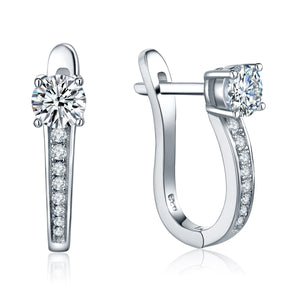
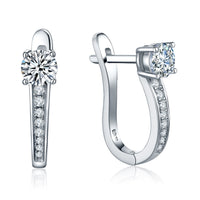
The piece they're describing → Moissanite Hoop Earrings for Women — 925 Sterling Silver, Brilliant Cut, Hypoallergenic
Personalize Yours


