


Bracelet stacking is one of those styling moves that looks effortless on everyone else and chaotic when you try it yourself. Too many and it's cluttered. Too few and it doesn't read as a stack at all. The wrong bracelet types tangle within an hour. The wrong arm makes every task annoying.
The bracelets and anklets we carry at AJLuxe are made from 925 sterling silver — lightweight enough for everyday stacking without irritating the skin.
There's a logic to it — and once you understand it, stacking becomes easy. This guide covers how many bracelets to wear, which types layer well together, how to mix metals, the watch problem, wrist-size adjustments, and the specific combinations that always work.
How Many Bracelets to Wear at Once
The number that works depends on bracelet thickness and your intention. The practical ranges:
Two bracelets. Minimal — reads as deliberate pairing rather than a full stack. Works best with one meaningful piece (a charm bracelet, a birthstone bangle) and one thin metal band. This is the lowest-commitment entry point into stacking.
Three to five bracelets. The sweet spot for most wrists. Three reads as a curated stack; five can read as maximalist depending on the bracelet weights. Three thin bangles + one medium chain bracelet + one cuff is a classic five-piece formula.
Six or more. Requires a coherent logic — one dominant material (all gold bangles, all beaded, all chain) with variety within it. Without a unifying element, six-plus bracelets reads as collected-from-a-souvenir-shop rather than curated.
The one-third rule applies to all stack sizes: bracelets should cover no more than one-third of your forearm from the wrist up. On a 10-inch forearm, that's roughly 3–3.5 inches of coverage. Stack depth beyond that is visually heavy and practically uncomfortable.
Which wrist? Your non-dominant hand is the practical choice — the stack doesn't interfere with writing, using a phone, or opening doors. Most people stack on the left wrist for this reason. The "right hand vs. left hand" question has no cultural weight for bracelets the way it does for rings.
Which Bracelet Types Layer Well Together
Not every bracelet combination works. Some types tangle; others compete visually; some create friction that damages both pieces. Understanding which types are compatible makes stacking much easier. For a full breakdown of bracelet styles, read our complete types of bracelets guide.
| Bracelet Type | Stacks With | Avoid Pairing With | Notes |
|---|---|---|---|
| Thin bangles | Other thin bangles, chain bracelets, cuffs | Charm bracelets (charms catch) | The most stackable type; wear 2-5 together |
| Chain bracelets | Bangles, cuffs, beaded bracelets | Other chain bracelets (tangle) | Space at least 1 solid piece between two chains |
| Cuffs | Thin bangles, chain bracelets | Other cuffs (too much bulk) | One cuff per stack as anchor; others support it |
| Tennis bracelets | Thin bangles, delicate chains | Charm bracelets, chunky bangles | Elegant anchor; keep other pieces thin around it |
| Charm bracelets | Thin bangles on either side | Other charm bracelets, thin chains (tangle) | Wear as the anchor; buffer with solid bangles |
| Beaded bracelets | Thin bangles, chain bracelets | Other beaded (too similar in texture) | One beaded piece adds texture contrast |
| Evil eye bracelets | Thin chains, thin bangles | Heavy charm bracelets | The charm reads best with minimal competition — pair thin |
The general principle: alternate solid pieces with chain pieces. Two chains next to each other will tangle within minutes of active wear. One solid bangle between two chains gives them room to move independently.

The Anchor Principle — Building the Stack Around One Piece
Every successful bracelet stack has a visual anchor — one piece with more weight, width, or significance than the others. The anchor goes closest to the wrist (where the eye goes first) or in the center of the stack (where visual weight naturally sits). The rest of the stack builds around it.
Good anchor candidates: a wide cuff, a tennis bracelet, a charm bracelet with personal significance, or a thicker chain bracelet. Bad anchor candidates: the thinnest piece in your collection, something with minimal visual weight.
Once you have an anchor, the logic of the rest of the stack follows: alternate thinner, lighter pieces above and below the anchor. The taper from anchor to ends creates a visual pyramid that reads as intentional. Equal-weight pieces all the way through reads as a bundle.
Practical stacking order (wrist outward):
- Anchor piece closest to the wrist (most visual weight)
- Medium piece (chain bracelet or medium bangle)
- Thin pieces toward the elbow end
This order works because the pieces with the most movement (thin bangles) are at the top where they can slide freely, while the anchor sits snug and stable at the base.
How to Mix Metals in a Bracelet Stack
The same mixed-metal principles that apply to ring stacking apply to bracelets — with one difference: bracelets move against each other constantly, so metals scratch each other at friction points. This matters more for softer finishes (matte gold, brushed metals) than for polished surfaces.
The dominant metal rule: Choose one primary metal (yellow gold, rose gold, or sterling silver) for 60–70% of your stack. The remaining pieces can introduce a secondary metal. Two gold bangles + one silver chain + one gold cuff reads as gold-dominant mixed-metal; two silver + two gold reads as indecisive.
Rose gold bridges gold and silver. A rose gold bangle in a stack with yellow gold and silver pieces acts as a visual bridge — it contains warmth (ties to gold) and coolness (lighter than yellow gold). This is the easiest way to mix metals without clash.
What to avoid: Equal amounts of cool and warm metals in the same stack. Three silver pieces + three gold pieces = visual tension with no resolution. Give one metal clear dominance.

Stacking Bracelets with a Watch
Wearing a bracelet stack with a watch is one of the most popular looks — and the most likely to go wrong. The common mistake: piling bracelets between the watch and the hand, where they tangle with the watch band and make the watch hard to read.
The correct approach: bracelets above the watch, toward the elbow. The watch sits at the wrist. One to three thin bracelets sit above it, between the watch and the elbow. The watch band acts as a natural backstop that keeps the bracelets from sliding off.
How many bracelets with a watch:
- Large/statement watch: One thin bangle above the watch maximum. The watch is already the statement piece.
- Medium everyday watch: Two to three thin pieces above work well. Stick to bangles or simple chain bracelets — no charms that catch the watch crown.
- Slim/minimalist watch: Up to four or five thin pieces, with the watch acting as the anchor of the whole stack.
Metal matching with a watch: Match at least one bracelet to the watch case metal. Gold watch case + one gold bangle creates cohesion even if the other pieces are silver. Silver watch case + mixed silver and gold bracelets reads as more intentional than gold watch + all silver bracelets.
Silicone and sport watch bands work better with beaded bracelets (silicone + metal is a common casual-stack combo) than with delicate chains that snag on the silicone texture.
Bracelet Sizing and Wrist-Specific Adjustments
Fit is the most overlooked element of bracelet stacking. Bracelets that are too loose slide down over the hand when your arm is raised. Bracelets that are too tight don't move naturally and look constricting.
The standard fit test: one finger's width of space between the bracelet and your wrist. That's roughly 1–1.5cm of movement room. Enough to slide freely without slipping off.
Petite/small wrists (under 6 inches circumference): Thin bangles (2–4mm width) and delicate chains. Avoid wide cuffs that take up a large proportion of the wrist-to-elbow distance. Three thin bangles on a small wrist can look like seven on a larger wrist. Keep the stack shallower — 2-3 inches from the wrist up is plenty.
Medium wrists (6–7 inches): The most versatile range. Most bracelet styles work. Can carry medium cuffs and more substantial chain bracelets as anchors. Standard stack depth of 3 inches works well.
Larger wrists (7+ inches): Wider bangles (6mm+) and substantial chain bracelets work better visually than multiple thin bangles, which can look lost. A single wide cuff or a bold anchor chain creates a more proportionate look than five thin bangles.
Frequently Asked Questions About Stacking Bracelets
How many bracelets should you stack?
Three to five is the sweet spot. Two reads as pairing; three is the minimum for a stack to read as intentional. Six or more needs a unifying element to avoid looking cluttered. Bracelets should cover no more than one-third of your forearm.
Which wrist should you stack on?
Non-dominant wrist is the practical choice. Most right-handed people stack on the left. If you wear a watch, stack on the same wrist above it, or on the opposite wrist entirely.
How do you prevent tangling?
Never put two chain bracelets directly next to each other — always place a solid piece (bangle or cuff) between chains. Charm bracelets tangle with everything; buffer them with solid bangles on each side.
Can you wear a stack with a watch?
Yes — bracelets above the watch, toward the elbow. One to three thin bangles above a medium watch. Match at least one piece to the watch case metal. Avoid charms near watches — they catch on crowns and buttons.
Can you mix gold and silver?
Yes — choose one dominant metal (60–70%) and accent with the second. Rose gold bridges the two well. Avoid equal amounts of warm and cool metals.
How do you stack on a petite wrist?
Thin bangles (2–4mm) and delicate chains. Keep coverage to 2–3 inches from the wrist up. Fewer pieces than a larger wrist for the same visual impact.
What does an evil eye bracelet mean in a stack?
A protective talisman worn to deflect negative energy. Traditionally paired with thin chains that don't compete with the charm's symbolism. Read our evil eye bracelet meaning guide for the full color breakdown and which wrist to wear it on.
For bangle sizing, fit, and styling specifics: How to Wear a Bangle: The Complete Fit, Size & Style Guide.
For the complete bracelet reference — every type, meaning, sizing, and stacking guide: The Complete Bracelet Guide: Every Type, Style, Meaning & How to Wear Them.
Final Thoughts
Bracelet stacking follows the same logic as every other multi-piece jewelry look: one anchor, varied textures, a clear metal logic, and proportion to your body. The most common mistakes — equal-weight pieces throughout, two chains tangled together, too much coverage up the arm — are all easy to fix once you see them.
Start with one bracelet you already love. Add one thin band beside it. See how it moves. Add a third piece — a different texture — and adjust until the anchor is clear. That's the entire process. The rest is just adding pieces with intention.
Explore the full AJLuxe bracelet range: all bracelets.
Written by Vaishakhi Ajmera — founder and jewelry specialist at AJLuxe. Last updated: May 2026.
If you're new to bracelets and want to understand types, sizing, and fit before stacking, see our guide on how to choose a bracelet for women with a wrist size chart, 7 bracelet type comparisons, and occasion recommendations.
You Might Also Like

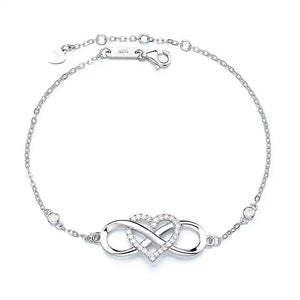
The piece they're describing → Heart Chain Bracelet for Women — 18K Gold Plated, Infinite Heart Link, Gift-Ready
Personalize Yours

