


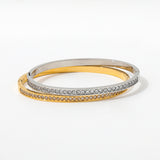
How to Choose a Bracelet for Women
To choose a bracelet for women, start with wrist measurement (add 0.5" for snug, 0.75" for standard, 1" for loose fit), then select a style that suits the occasion: bangles and cuffs for casual wear, tennis bracelets for formal events, charm bracelets for personalization, and chain bracelets for everyday versatility. Match metal to the wearer's existing jewelry preference.
Related reading: how a bolo bracelet's sliding mechanism works and how it compares to other adjustable styles.
A bracelet might seem like a straightforward jewelry purchase, but wrist size variation, bracelet type differences, and fit style preferences mean a bracelet that looks perfect on one person is unwearable on another. This guide covers everything — how to measure correctly, what each bracelet type is actually like to wear, which metals last, stacking rules, and a decision framework for every occasion.
Step 1: Measure the Wrist Correctly
Most bracelet sizing errors come from measuring the wrist and ordering that exact size. But a bracelet that fits exactly to the wrist measurement is too tight — you want ease for movement and comfort. Here's how to measure properly:
- Wrap a flexible measuring tape, string, or strip of paper around your wrist at the narrowest point, just above the wrist bone where a bracelet would naturally sit.
- Note the circumference in inches.
- Add ease based on your preferred fit style (see chart below).
| Fit Style | Add to Wrist Measurement | What It Feels Like | Best For |
|---|---|---|---|
| Snug | + 0.25" | Stays in place, minimal movement | Tennis bracelets, cuffs |
| Standard/Classic | + 0.5" | Comfortable, slight movement | Chain bracelets, charm bracelets |
| Relaxed | + 0.75" | Noticeable movement, casual feel | Bangles worn solo |
| Loose/Drape | + 1.0"–1.25" | Slides and drapes on wrist | Stacked bangles, bohemian styling |
Standard Women's Bracelet Size Chart
For a fuller chart in inches and centimeters, with snug, standard and loose fits plus bangle, cuff and children's sizing, see our bracelet size chart.
| Wrist Circumference | Bracelet Size (Standard Fit) | Size Category |
|---|---|---|
| 5.5" | 6.0–6.25" | XS |
| 6.0" | 6.5" | Small |
| 6.5" | 7.0" | Medium (most common) |
| 7.0" | 7.5" | Large |
| 7.5" | 8.0" | XL |
| 8.0"+ | 8.5" | XXL |
Note for bangles: Rigid bangles don't adjust to wrist circumference — they must slip over the widest part of your hand. Measure the circumference of your hand at the knuckles (not the wrist) and add 0.25–0.5" to find the minimum bangle diameter that will go on comfortably.
Bracelet Types: What They Are and When to Wear Them
Bangle Bracelet
A bangle is a rigid, non-opening circular bracelet that slips over the hand. Bangles come in narrow widths (2–3mm — stackable and delicate) or wider statement widths (10mm+). The classic bangle stack involves 3–7 narrow bangles in coordinating metals and textures that clink together as you move. Bangles work best for casual to smart-casual occasions; very wide statement bangles can work for cocktail events.
Fit note: The bangle must slip over the widest point of your hand (knuckles) to get onto your wrist. If you have to force it, it's too small — and it will never sit comfortably.
Cuff Bracelet
A cuff is a rigid bracelet with a gap (opening) that allows you to slide it onto the wrist rather than over the hand. The gap makes sizing more forgiving — you can squeeze a cuff slightly narrower or wider to fit. Cuffs range from narrow (similar to bangles) to wide statement cuffs that cover 2–3 inches of the forearm.
Wide cuffs have a bold, sculptural presence and work well for evening wear and formal occasions. Narrow cuffs stack similarly to bangles but with an adjustable advantage. The gap should sit toward the inner wrist for a cleaner visual line from the outside.
Chain Bracelet
A chain bracelet uses the same link structures as necklaces (cable, box, rope, curb) in a 6.5–8" wrist length. Chain bracelets are the most versatile bracelet type — they work for casual, office, and evening wear, adjust easily with a lobster clasp and extender chain, and layer well with other bracelets. A 3–5mm cable or box chain bracelet in gold or sterling silver is the closest equivalent to a "daily driver" bracelet.
Charm Bracelet
Charm bracelets are the most personalized bracelet type — they build a wearable story over time and make excellent ongoing gift foundations.
Tennis Bracelet
A tennis bracelet is a continuous in-line setting of diamonds or gemstones in a flexible chain setting. Named after a famous incident in which tennis player Chris Evert's diamond bracelet broke during a 1987 US Open match, the term stuck. Tennis bracelets are designed to sit close to the wrist (snug fit) so the stones face upward and catch light consistently.
They're predominantly formal and special-occasion pieces, though fine diamond tennis bracelets are worn daily by many women as investment-level jewelry. At the more accessible price point ($80–$300), cubic zirconia or lab-grown diamond versions create the same visual effect for daily wear without the risk.
Beaded Bracelet
Elastic or wire-strung beads of stone, glass, or metal. The elasticity of most beaded bracelets makes sizing simple — stretch to go on, and they contract to a comfortable fit. Beaded bracelets are predominantly casual and bohemian in style; crystal and gemstone bead bracelets have also become popular as crystal healing or intention-setting jewelry. Stack 3–7 beaded bracelets of varying textures and colors for a layered bohemian wrist.
Hinged Bracelet
A rigid bracelet (like a bangle) but with a hinge that allows it to open and close for easy wear. The hinge solves the main limitation of bangles — you don't need to force it over your hand. Hinged bracelets have a more formal, polished look than standard bangles and are particularly common in fine jewelry (gold hinged bangles are a staple gift item).
Bracelet Type Comparison Table
| Type | Sizing | Occasion | Stacks Well? | Best Metal | Price Range |
|---|---|---|---|---|---|
| Bangle | Rigid, hand-over sizing | Casual, everyday | Yes — classic stack | Gold, silver | $20–$200 |
| Cuff | Adjustable gap | Casual to evening | Yes (with gaps) | Gold, silver, brass | $30–$250 |
| Chain | Clasp + extender | Daily to formal | Yes | Any | $25–$150 |
| Charm | Clasp + extender | Casual, everyday | Limited | Silver, gold vermeil | $40–$300+ |
| Tennis | Close-fitting, snug | Formal, special occasion | With plain chains | Gold, sterling silver | $50–$5,000+ |
| Beaded | Elastic stretch | Casual, bohemian | Yes — best for stacking | Stone, glass, metal | $10–$80 |
| Hinged | Rigid, opens on hinge | Smart-casual, formal | Yes | Gold, silver | $50–$400 |
Metal Options for Bracelets
Bracelets take more mechanical stress than necklaces — they're constantly moving, bumping against hard surfaces, and catching on things. Metal choice matters more for durability:
| Metal | Durability | Daily Wear Rating | Tarnish | Price | Best For |
|---|---|---|---|---|---|
| Solid 14K Gold | Lifetime | 5/5 | None | $$$$$ | Heirloom, investment |
| Gold-Filled | 10–30 years | 4/5 | Minimal | $$$ | Daily wear, tennis bracelets |
| Gold Vermeil | 2–5 years daily | 3/5 | Minimal | $$ | Fashion, gift, everyday |
| Sterling Silver | Indefinite (with care) | 3/5 | Yes (polishes) | $$ | Chain, bangle, charm |
| Gold-Plated (flash) | 6–18 months | 2/5 | Yes (flakes) | $ | Occasional wear only |
| Stainless Steel | Indefinite | 5/5 | None | $$ | Sports, waterproof use |
Bracelet Stacking Rules
Stacking bracelets creates a curated, intentional wrist look. These rules produce cohesive stacks:
- Choose a metal direction. All-gold, all-silver, or intentional mixed metals. Accidental metal mixing (wearing gold and silver because you forgot to check) looks unplanned; deliberate mixing (a gold chain with a silver beaded bracelet worn as a statement about mixing rules) reads as confident.
- Vary textures, not colors. A smooth bangle + a textured cuff + a beaded bracelet in the same gold tone creates visual interest through texture contrast rather than color conflict.
- Odd numbers often look more intentional. Three bracelets or five look like a decision. Two or four can look like you couldn't decide. (This rule is flexible — some of the best stacks have four pieces.)
- Balance the stack visually. If your anchor piece is a wide cuff or statement bangle, flank it with thinner pieces on either side rather than stacking all substantial pieces together.
- Watch the wrist real estate. Seven bangles on a small wrist can look overwhelming; three on a large wrist might look sparse. Scale stack size to wrist size.
Occasion Guide
| Occasion | Best Bracelet Type | Style Note |
|---|---|---|
| Daily/casual | Chain bracelet or slim bangle | Durable, low-catch, comfortable for typing |
| Office/professional | Simple chain or single bangle | Avoid noisy bangle stacks in quiet offices |
| Date night | Tennis bracelet or hinged bangle | Dressy sparkle without going full formal |
| Formal/evening | Tennis bracelet or fine bangle | Keep it clean and singular for maximum elegance |
| Beach/vacation | Beaded stretch bracelet | Water-resistant, low-value, easy to replace |
| Gift (birthday) | Charm bracelet or birthstone cuff | Personal meaning; can be added to over time |
| Gift (wedding/anniversary) | Tennis bracelet or gold bangle | Classic, investment-grade, universally wearable |
| Self-care/intention | Crystal beaded bracelet | Gemstone bracelets with specific meaning |
How to Choose a Bracelet as a Gift
Buying a bracelet as a gift adds the complication that you may not know the recipient's wrist size. Strategies:
- Choose adjustable styles. Chain bracelets with lobster clasps and extender chains typically cover 6.5–8" wrists with a single size. Elastic beaded bracelets fit most wrists. Adjustable cuffs have a gap you can squeeze to fit.
- Go slightly larger if guessing. A bracelet that's slightly too large looks intentionally relaxed; one that's too small is unwearable. If you're between sizes, order the larger.
- Include the measurement in the gift card. "I ordered 7" — let me know if you need an adjustment" is thoughtful, not a failure.
- Charm bracelets are the safest gift bracelet because sizing is more forgiving (chain with extender) and the piece can be personalized over time with additional charms. If the recipient is your sister specifically, see our bracelet for sister guide for style and matching-set picks.

Frequently Asked Questions
What is the average bracelet size for a woman?
The average women's wrist measures 6–6.5 inches, making a 7" bracelet (wrist + 0.5" ease) the most common standard size. Most ready-made women's bracelets are designed to a 7" default. Always measure before ordering — wrists vary significantly and a bracelet that's off by even 0.5" can go from comfortable to either too tight or too loose.
How tight should a bracelet fit?
A bracelet with standard fit should allow one or two fingers to slide under it flat. Any tighter and it will restrict movement and leave marks; any looser and it risks sliding over the hand accidentally. Tennis bracelets and close-set cuffs should fit with just one finger's width of room; bangles and casual chain bracelets work with 0.5–1" of movement.
Can you wear a bracelet every day?
Yes, but metal choice determines longevity. Solid 14K gold, stainless steel, and gold-filled bracelets are designed for daily wear and will last years without visible degradation. Sterling silver requires more care (tarnishes without regular wear or polishing). Gold-plated bracelets worn daily will show plating wear within 6–18 months. For a truly daily-wear bracelet, gold-filled or solid gold is worth the investment.
What bracelet is best for small wrists?
Delicate styles scale better on small wrists: narrow bangles (2–3mm width), thin chain bracelets (1.5–2mm), and petite charm bracelets. Avoid wide cuffs (3cm+) or thick Cuban link chains on small wrists — they overwhelm the proportions. For stacking on small wrists, 3 thin bracelets often look better than 7 medium ones.
How many bracelets is too many to stack?
There's no hard maximum, but visual coherence usually breaks down above 7–8 pieces. The Bohemian stack (5–10 bracelets in a relaxed, eclectic mix) is an intentional aesthetic; a random accumulation of 10 different bracelets from different contexts tends to look unplanned. Start with 3, add to 5 once you know what works, and evaluate visually rather than by number.
What's the difference between a bangle and a cuff?
A bangle is a complete, unbroken circle that must slip over your hand. A cuff has a gap (opening) that allows it to slide onto the wrist without going over the hand. Bangles are completely rigid once on; cuffs can be slightly adjusted by squeezing or widening the gap. Both can come in the same widths and materials, but the wearing mechanism is fundamentally different.
Should you remove bracelets when sleeping?
For most bracelets, yes — sleeping with bracelets increases tangling, clasp wear, and the risk of skin irritation from constant contact. The exception is simple elastic or beaded stretch bracelets, which are comfortable enough that many people forget to remove them. For metal chain bracelets, hinged bangles, or cuffs, removing for sleep significantly extends the piece's lifespan.
What bracelet material is hypoallergenic?
Sterling silver (925), solid 14K or 18K gold, and titanium are the safest choices for sensitive skin. Gold vermeil on a sterling silver base is generally safe for most nickel sensitivities. Avoid brass-base or stainless steel bracelets if you have a known nickel allergy — some grades of stainless steel contain nickel. Look for pieces specifically labeled "nickel-free" if sensitivity is a concern. That matters even more for a bracelet meant to be worn around the clock, like a medical alert bracelet — see our guide to the best hypoallergenic styles for sensitive skin.
How do you measure for a bangle?
For a bangle, you need to measure the widest part of your hand (knuckles) rather than your wrist — because the bangle must pass over your hand to get onto your wrist. Make a fist and wrap a tape measure around the widest point of your hand at the knuckles. Add 0.25–0.5" to this measurement to find the minimum comfortable bangle diameter. Most women's bangles have an inner diameter of 2.5–2.75" (about 7.8–8.6" circumference).
Final Thoughts
The right bracelet comes down to three variables: size (measure, then add ease), type (match occasion and lifestyle), and metal (match existing jewelry and daily wear habits). For a first bracelet or a versatile gift, a chain bracelet in gold vermeil or sterling silver at 7" with a lobster clasp extender covers the most wrists and occasions. Our infinite affection heart bracelet is sized at 6.5–7.5" adjustable, made in gold vermeil on a sterling silver base, and designed with a heart-shaped clasp that makes the sentimental intent of a gift explicit.
Related reading: Charm necklace guide.
Related reading: How to choose a name necklace.
All third-party trademarks, brand names and product names are the property of their respective owners. AJLuxe is not affiliated with, endorsed by, sponsored by, or otherwise connected to any third-party brand referenced in this article. Brand names are used solely for accurate comparative reference, and material descriptions reflect each brand's own published product specifications at the time of writing.
You Might Also Like
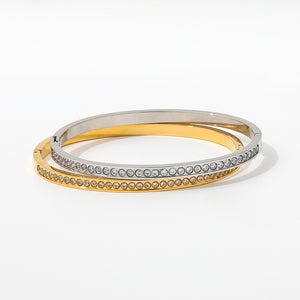
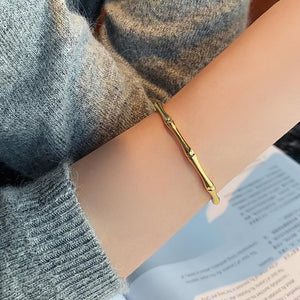
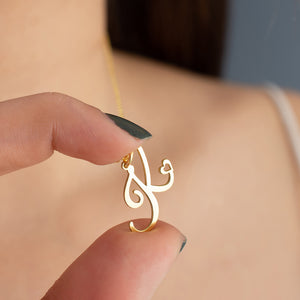
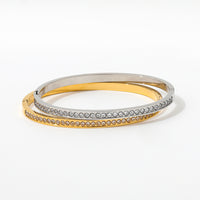
The piece they're describing → CZ Bangle Bracelet for Women, Gold or Silver Plated, CZ Stones
Personalize Yours


