



Gold filled has a brass or copper core wrapped in a thick, mechanically bonded 50–100 micron gold layer and lasts 10–30 years. Gold plated has a brass or copper core with a thin 0.5–2.5 micron electroplated layer that wears off in months to 2 years. Gold vermeil sits in between: a sterling silver core with a regulated 2.5+ micron gold layer, hypoallergenic but not as durable as gold filled. Choose gold filled for daily wear, vermeil for sensitive skin on a budget, and plated for occasional, low-cost pieces.
"Gold filled," "gold plated," and "gold vermeil" get thrown around almost interchangeably in jewelry listings, but they describe three legally distinct constructions with very different lifespans and price points. This guide lines all three up side by side, factor by factor, so you can match the right one to how you actually wear jewelry.

What Are Gold Filled, Gold Plated, and Gold Vermeil?
Gold filled jewelry is made by mechanically bonding a thick sheet of real gold to a base metal core (usually brass) under heat and pressure. The FTC requires the gold to make up at least 1/20th (5%) of the item's total weight.
Gold plated jewelry has a thin layer of gold applied to a base metal core through electroplating — running an electric current through a gold-ion solution to deposit gold atoms on the surface. There is no FTC minimum thickness for standard "gold plated," which is why quality varies so widely between brands.
Gold vermeil ("ver-MAY") is a regulated subcategory of gold plating. To legally use the word "vermeil" in the US, a piece must have a sterling silver (925) core, a gold layer at least 10K in purity, and a minimum thickness of 2.5 microns — five times the FTC floor for plain gold plating.
All three contain real gold on the surface. What separates them is what's underneath that surface and how thick the gold layer is, which is what actually determines how long the piece looks good.
Base Metal: What's Actually Underneath the Gold
The core metal matters because it's what your skin touches once the gold layer eventually shows wear at edges, clasps, and friction points.
- Gold filled — almost always brass, sometimes copper. Brass can contain trace nickel, a common allergen.
- Gold plated — brass, copper, or occasionally base white metals. Same nickel-exposure risk as gold filled once plating wears through, but it wears through much sooner.
- Gold vermeil — sterling silver (925) by legal requirement. Silver is naturally hypoallergenic for most wearers, so even worn plating exposes a low-reaction metal instead of brass.
This is the single biggest practical difference between vermeil and the other two: the core metal itself is a selling point, not just a structural necessity.
Gold Thickness in Microns, Side by Side
Microns are the actual specification that drives everything else in this comparison — durability, price, and legal labeling all trace back to this one number.
| Factor | Gold Filled | Gold Plated | Gold Vermeil |
|---|---|---|---|
| Base metal | Brass or copper | Brass or copper | Sterling silver (925), required |
| Gold thickness | 50–100 microns | 0.5–2.5 microns | 2.5+ microns (FTC minimum) |
| Bonding method | Heat + pressure bonded | Electroplated | Electroplated |
| Durability | 10–30 years | 6 months–2 years | 1–3 years |
| Typical price | $40–$200+ | $10–$50 | $20–$100 |
| Best for | Daily-wear staples, rings | Occasional or trend pieces | Sensitive skin, budget gifting |
The gap between gold filled and gold plated is enormous — gold filled carries roughly 20 to 200 times more gold by thickness than standard plating. Vermeil's 2.5-micron floor puts it five times thicker than the low end of plating, but it's still a fraction of gold filled's mechanically bonded layer. For the deeper mechanics of the gold-filled construction process, see our dedicated gold filled vs. gold plated guide.
Durability and Lifespan: How Long Each One Actually Lasts
Gold filled is built to be worn daily for years without visible change. Because the gold is bonded rather than plated, there's no thin surface layer to abrade away — friction points like ring bands and clasp tabs hold their color for a decade or more.
Gold plated is the least durable by a wide margin. The thin electroplated layer wears fastest at high-friction points: the inside of a ring band, chain links, earring posts. A gold-plated ring worn every day can show base metal within 1–3 months. Necklaces and earrings last longer, typically 6 months to 2 years.
Gold vermeil outlasts standard plating because of its thicker gold layer, but it is still electroplated and will eventually wear through, usually somewhere between 1 and 3 years of regular wear depending on the piece and how it's cared for. The sterling silver base means that even after the gold wears, what's exposed underneath is far less likely to irritate skin than brass. For a deeper wear-pattern breakdown, see our dedicated guide on how long gold vermeil lasts.
Hypoallergenic and Sensitive Skin Comparison
Roughly 15% of people have a nickel allergy, and nickel is a common trace element in the brass alloys used for gold filled and gold plated bases. As long as the gold layer stays intact, neither construction touches the skin directly — but gold plating's thin layer wears through far sooner, exposing that base metal much earlier in the piece's life.
Gold vermeil has an advantage here that isn't really about the gold at all: its sterling silver base is inherently low-reactivity for the large majority of wearers, so even worn spots are unlikely to cause a reaction. If sensitive skin is your top priority and budget is limited, vermeil is usually the better starting point than standard gold plating. Browse our hypoallergenic jewelry collection for sterling-silver-based pieces.
How to Identify Which One You're Wearing
Check the hallmark stamp on the clasp, inner ring band, or the back of a pendant with a jeweler's loupe or magnifying glass:
- GF, 14K GF, or 1/20 14K GF — gold filled
- GP, GEP, RGP, or HGE — gold plated
- 925 stamped alongside a karat mark, or the word "vermeil" on the tag — gold vermeil
- 925 alone, no gold indicator — plain sterling silver, not gold-coated at all
If there's no stamp at all, treat the piece as standard gold plated for care purposes — that's the safest assumption and it will guide you toward gentler handling.
Price Tier: What You're Actually Paying For
The price differences aren't arbitrary markup — they map directly to the microns table above. Gold plated is cheapest because the gold volume used is tiny. Vermeil costs more because it uses more gold and a sterling silver core instead of brass. Gold filled costs the most of the three because the bonded layer uses dramatically more raw gold than either plating method.
Cost per wear tells a different story than sticker price. A $25 gold-plated necklace worn daily for a year works out to about $0.07 per wear. A $120 gold-filled necklace worn daily for 10 years works out to roughly $0.03 per wear — less than half, despite costing nearly 5 times as much upfront. If you already know you'll wear a style constantly, the higher-micron option is usually the better long-term value.

Which One Should You Buy? By Use Case
Everyday wear (worn most days, for years): Gold filled is the strongest choice, especially for rings and bracelets that see constant friction. Quality 18K gold plated over sterling silver is a reasonable step-down if gold filled isn't in the budget — see our gold necklaces collection for sterling-silver-based options.
Special occasion (worn a handful of times a year): Gold vermeil or gold plated both work well here, since infrequent wear means the thin gold layer isn't under constant abrasion. Vermeil is the better pick if the piece will also see some regular rotation, since its sterling core buys you more longevity than plating.
Budget-conscious buying (lowest price point, replacing pieces is acceptable): Gold plated is the most economical entry point, particularly for trying a trend or style before committing to a pricier version. Just plan on replacing it within a year or two of regular wear.
Sensitive skin, any budget: Gold vermeil first, gold filled second. Both keep a low-reactivity metal at or near the surface, but vermeil's silver core is the more budget-accessible route to that protection.
For a full breakdown of vermeil specifically, including whether it's worth the price over plain plating, read our guides on what gold vermeil is and whether gold vermeil is worth it.
Care Tips for Each Type
Gold filled: Clean with mild soap, warm water, and a soft cloth. Occasional water contact is fine; avoid chlorinated pools, saltwater, and harsh chemical cleaners.
Gold plated: Remove before showering, swimming, exercising, or applying lotion, perfume, or sunscreen. Wipe with a dry, soft cloth after each wear and store in an airtight pouch to slow oxidation.
Gold vermeil: Same removal habits as gold plated — take it off before water and cosmetics contact. The sterling silver base benefits from occasional gentle silver-safe cleaning once the gold has worn in spots, since you're then caring for the silver underneath.
Shop AJLuxe Alexandrite Teardrop Pendant Necklace
925 sterling silver, 18K gold plated, set with a lab-created alexandrite teardrop that genuinely shifts from green in daylight to red-violet under incandescent light — nickel-free, June birthstone.
Shop the Alexandrite Necklace →Frequently Asked Questions
What's the actual difference between gold filled, gold plated, and vermeil?
Gold thickness and base metal. Gold filled has a thick, bonded 50–100 micron gold layer over brass. Gold plated has a thin, electroplated 0.5–2.5 micron layer, also usually over brass. Vermeil is a regulated electroplated layer of at least 2.5 microns over a required sterling silver base.
Which lasts the longest — gold filled, gold plated, or vermeil?
Gold filled, by a wide margin — typically 10 to 30 years of regular wear. Gold vermeil generally lasts 1 to 3 years, and standard gold plating lasts 6 months to 2 years, with rings wearing out fastest of any jewelry type.
Is gold vermeil the same as gold filled?
No. They're often confused because both are considered "better than standard plating," but vermeil is still electroplated onto sterling silver, while gold filled is mechanically bonded onto brass with a much thicker gold layer. Gold filled is more durable; vermeil is more hypoallergenic at its core.
Which is more hypoallergenic — gold filled or vermeil?
Vermeil, technically, because its required sterling silver base is inherently low-reactivity even once the gold surface wears. Gold filled is also generally safe since its thick gold layer rarely wears through, but its brass core carries more risk if it ever does.
How can I tell which type of gold jewelry I own?
Check the hallmark with a magnifying glass. "GF" or "14K GF" means gold filled. "GP," "GEP," "RGP," or "HGE" means gold plated. A "925" stamp paired with a karat mark or the word "vermeil" on the tag or listing means gold vermeil.
What is the minimum gold thickness for something to legally be called vermeil?
2.5 microns, with a gold purity of at least 10 karat, over a sterling silver (925) base. This is an FTC-regulated definition in the US — a piece cannot legally be marketed as "vermeil" without meeting all three requirements.
Is gold plated jewelry real gold?
Yes, technically — the surface layer is genuine gold. But there's no FTC minimum thickness for standard "gold plated" labeling, which is why quality and lifespan vary so widely between brands and why the layer wears through relatively quickly.
Which is the best value — gold filled, gold plated, or vermeil?
It depends on how often you'll wear the piece. For daily wear over years, gold filled has the lowest cost per wear despite the highest sticker price. For occasional wear or trying a style, gold plated is the most economical. Vermeil is the best value when hypoallergenic properties matter as much as price.
Can you wear gold vermeil in the shower?
It's best to remove it first. Regular water exposure accelerates wear on the electroplated gold layer, the same way it does with standard gold plating. Gold filled tolerates occasional water contact better because of its thicker, bonded gold layer.
Does gold vermeil turn your skin green?
Rarely, and only after the gold layer has worn through in spots to expose sterling silver, which itself does not typically cause green skin the way brass or copper does. Green skin is much more associated with worn gold plating over a brass or copper core.
Why is gold vermeil more expensive than gold plated but cheaper than gold filled?
It uses more gold than standard plating (2.5+ microns versus as little as 0.5) and a costlier sterling silver base instead of brass, which raises the price above plain plating. It still uses far less gold than a mechanically bonded gold-filled layer, which keeps it below gold filled pricing.
Is 18K gold plated better than gold vermeil?
Not necessarily — karat purity and micron thickness are separate specs. An 18K gold-plated piece has richer gold color, but if its layer is thinner than 2.5 microns or its base isn't sterling silver, it will wear faster and offer less hypoallergenic protection than true vermeil, regardless of karat.
Shop AJLuxe's 18K gold-plated sterling silver jewelry
Shop the 18K Gold PVD Plated Snake Chain NecklaceShop This Guide
Browse our gold necklaces collection for 18K gold-plated sterling silver pieces built for everyday wear, or see our gold filled vs. gold plated deep dive, gold dipped vs. gold plated, and gold vermeil guide for more on each individual type.
AJLuxe Team. Last updated: July 2026. AJLuxe uses 18K gold plating over 925 sterling silver, which shares vermeil's sterling silver base but does not meet the 2.5-micron vermeil threshold. Sources: Jewelers of America, and the US FTC Guides for the Jewelry, Precious Metals, and Pewter Industries (16 CFR Part 23).
All third-party trademarks, brand names and product names are the property of their respective owners. AJLuxe is not affiliated with, endorsed by, sponsored by, or otherwise connected to any third-party brand referenced in this article. Brand names are used solely for accurate comparative reference, and material descriptions reflect each brand's own published product specifications at the time of writing.
You Might Also Like
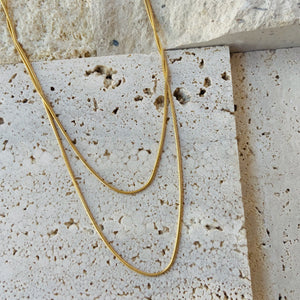


The piece they're describing → Layered Choker Necklace for Women — 18K Gold Plated
Personalize Yours


