


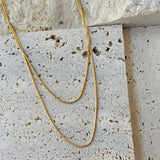
- Showering in solid 316L (or 304) stainless steel jewelry is safe. The chromium in the alloy forms a self-healing, invisible oxide layer that keeps water and soap from corroding the metal.
- Water itself is not the problem. Soap scum, conditioner residue, and hard-water minerals build up and leave the surface looking cloudy or dull, not damaged.
- Chlorinated pools and hot tubs plus salt water are the genuine risks. Both can slowly break down the protective layer and cause pitting or discoloration with repeated exposure.
- A 30-second habit fixes almost everything: rinse in fresh water after showering or swimming, then dry with a soft cloth before storing.
- Gold-plated and sterling silver pieces are a different story. Plating wears and silver tarnishes in the shower, which is why AJLuxe builds its waterproof line on 925 sterling silver with durable 18K PVD gold plating designed to survive water.
If you own a stainless steel necklace or ring, you have almost certainly asked the question: can you shower with stainless steel jewelry, or do you need to take it off every single time? The short answer is that stainless steel is one of the few jewelry materials genuinely built to live in water. It won't rust in the shower, it won't tarnish from a bar of soap, and it doesn't need to come off before you wash your hands. But "safe in the shower" and "looks perfect forever with zero care" are two different claims, and most guides blur them together. This one won't. Below is exactly what happens to stainless steel in the shower, where the real risks are (they aren't the ones you'd guess), a simple care routine, and an honest look at how gold-plated and silver pieces compare.
The Short Answer: Yes, With One Caveat
You can shower with stainless steel jewelry, full stop. High-quality stainless steel, especially the 316L grade used in most modern waterproof jewelry, is specifically engineered to handle daily contact with water, sweat, and mild soap without corroding. This is the whole reason stainless steel became the default material for pieces marketed as "waterproof" or "everyday."
The one caveat is the difference between quality stainless steel and the cheap unmarked alloys used in some fast-fashion jewelry. Genuine 316L or 304 stainless steel shrugs off shower water. A no-name "stainless" alloy with a thin coating or low chromium content can still discolor. If you bought your piece from a reputable brand that lists the grade, you're fine. If you have no idea what it's made of, the shower will tell you quickly.
Why Stainless Steel Handles Water So Well
The magic is in the chromium. Stainless steel alloys contain a high percentage of chromium, which reacts with oxygen in the air to form an ultra-thin, invisible, passive layer of chromium oxide across the entire surface of the metal. This layer is non-porous, so water and soap can't reach the iron underneath to cause rust.
Better still, the layer is self-healing. If the surface gets scratched, the freshly exposed chromium immediately reacts with oxygen and re-forms the protective barrier. That self-repairing shield is why stainless steel doesn't behave like ordinary steel, which rusts the moment it gets wet. For the fuller picture on how the alloy holds up day to day, see our guide on whether stainless steel jewelry is actually good.
The 316L grade takes this a step further. On top of chromium, 316L contains 2 to 3 percent molybdenum, which sharply improves resistance to salt, sweat, and chlorides. That's why the industry calls it "marine grade" and why serious waterproof jewelry uses it instead of cheaper grades.
What Actually Happens When You Shower In It
Here's the part most people get wrong. When stainless steel looks dull or cloudy after months of showering, the metal itself is almost never the problem. What you're seeing is buildup sitting on top of the metal:
- Soap and shampoo film. Body wash, shampoo, and conditioner leave a thin residue that clings to the jewelry. Over weeks it accumulates into a hazy layer that mutes the shine. This wipes off. It is not corrosion.
- Hard-water minerals. If your home has hard water, dissolved calcium and magnesium can leave chalky spots or a filmy cast on the surface after the water evaporates. Again, surface-level, and again, removable.
- Trapped moisture in crevices. Chains, clasps, and settings hold water. Left to sit, that can leave water spots, though not rust on genuine stainless steel.
None of this damages the steel. It just makes a piece look tired when it's actually fine underneath. A rinse and a wipe restore it. This is a completely different situation from tarnishing, which is a chemical change in the metal itself. If you want the distinction spelled out, our article on whether stainless steel jewelry tarnishes covers it in detail.

The Real Risks: Chlorine and Salt Water (Not Your Shower)
This is the section most "yes you can shower with it" guides skip, and it's the one that actually matters. Plain shower water is harmless. The two things that genuinely threaten stainless steel are chlorine and salt water, and neither of them lives in a normal shower.
Chlorine is aggressive toward stainless steel. It attacks the chromium oxide layer that protects the metal, and with repeated exposure it can cause pitting and discoloration that a rinse won't fix. This means chlorinated swimming pools and hot tubs, not your bathroom. The 304 and 316 grades can tolerate low levels of chlorine (roughly 2 to 5 parts per million), which is why a single dip usually does nothing, but daily pool wear is a different story. If you swim laps in a chlorinated pool with your jewelry on every day, take it off first.
Salt water works more slowly but in the same direction. Ocean water won't corrode stainless steel instantly, but salt is corrosive over time and salt crystals left to dry on the surface will dull the finish and, with enough repetition, encourage pitting. A day at the beach is fine if you rinse afterward. Living in your jewelry in and out of the ocean without rinsing is not.
Notice that neither of these is your shower. This is the key reframe: your shower is one of the safest water environments for stainless steel. It's the pool and the ocean you need a plan for.
What "Waterproof" Really Means (and What Most Guides Won't Tell You)
The word "waterproof" gets thrown around loosely in jewelry marketing, and it hides an important nuance. Waterproof means the piece can get wet without being damaged. It does not mean the piece is invincible in every kind of water. A stainless steel chain that's genuinely waterproof in the shower can still be worn down by daily chlorine or unrinsed salt water.
There's a second thing brands rarely mention: the grade and construction determine everything. A solid 316L piece is waterproof in the real sense. A base-metal piece with a thin coating advertised as "stainless steel tone" is not, and it will fail in the shower no matter what the listing says. When a material claim isn't backed by a stated grade, treat "waterproof" as marketing rather than a spec. For a broader comparison of how steel stacks up against silver, see sterling silver vs. stainless steel.
How Different Metals Handle the Shower
Stainless steel is the shower champion, but it helps to see where it sits relative to other common jewelry materials. Here's how the main options actually behave under daily water exposure:
| Material | Shower Safe? | What Water Does | Care Needed |
|---|---|---|---|
| 316L stainless steel | Yes | Nothing structurally; soap film can dull shine | Rinse and dry occasionally |
| Solid 14K or 18K gold | Yes | Nothing; soap can leave a film | Wipe dry to keep shine |
| Sterling silver (925) | Not ideal | Speeds up tarnish; water spots | Dry fully, polish regularly |
| Standard gold-plated | No | Wears through the thin plating faster | Keep dry to extend life |
| 18K PVD gold plating | Yes | Little to nothing; bonded coating resists water | Rinse and dry occasionally |
The takeaway: solid metals (steel, gold) and PVD-bonded coatings survive the shower. Sterling silver and ordinary thin plating are the two categories where a daily shower shortens the life of the piece.
A Simple Stainless Steel Shower Care Routine
You don't need a jewelry spa. The entire routine takes under a minute and keeps a stainless steel piece looking new for years:
- Rinse after exposure. After a shower, and especially after a pool or the ocean, hold the piece under fresh running water for a few seconds to flush off soap film, chlorine, or salt.
- Dry it. Pat it with a soft cloth or microfiber towel. Getting water out of the clasp and chain links prevents water spots. This is the single most valuable step.
- Deep-clean occasionally. Once a month, a few minutes in warm water with a drop of mild dish soap and a soft toothbrush lifts built-up film. Rinse and dry afterward.
- Store dry. Keep pieces in a dry spot, ideally separated so chains don't scratch each other. Damp storage is worse than a wet shower.
- Skip the pool and hot tub when you can. If you swim in chlorine daily, taking the piece off is the one habit worth the effort.

What About Gold-Plated or Silver Jewelry in the Shower?
Stainless steel's water resistance sets a high bar, and it's worth being honest that not every material clears it. This is where a lot of shoppers get burned, because a gold-tone piece that looks identical to a stainless steel one can behave completely differently in water.
Standard gold-plated jewelry is the most common casualty. Ordinary plating is a microns-thin layer of gold over a base metal, and repeated showering wears it away faster, exposing the metal underneath and leaving that telltale "brassing" where the gold rubs off. We break down exactly what happens in our guide on whether you can shower with gold-plated jewelry. The short version: most cheap plating doesn't survive daily water.
Sterling silver is safe to get wet but tarnishes faster with frequent water exposure, and it can pick up water spots. It's fine occasionally, but it isn't the "wear it in the shower and forget it" material stainless steel is. Our article on whether you can wear sterling silver in the shower lays out the tradeoffs.
There's also the skin-contact question. Stainless steel is a common pick for sensitive skin because quality grades keep nickel locked in the alloy, though "stainless" alone isn't a guarantee. If reactivity matters to you, our honest take on whether stainless steel jewelry is hypoallergenic is worth a read before you buy.
How AJLuxe Approaches Waterproof Jewelry
Here's where we'll be straight about what AJLuxe does and doesn't make, because it's directly relevant to this question. AJLuxe's core catalog is built on 925 sterling silver with 18K gold plating, in the $24.99 to $79.99 range. Sterling silver is beautiful and hypoallergenic-friendly, but as covered above, it isn't the ideal daily-shower metal. We won't pretend otherwise.
As of August 2026, AJLuxe also carries genuine 316L stainless steel directly — starting with the Men's Cross Necklace, Adjustable Cuban Link Chain. If the metal this article is actually about is what you're shopping for, that's the real thing: solid 316L, not a plated substitute. One honesty note on the skin-safety point above: 316L keeps nickel locked inside the alloy rather than exposed at the surface, which is why it's a common pick for sensitive skin — but that's different from a certified "nickel-free" claim, so if you have a diagnosed nickel allergy, check with a dermatologist rather than relying on "stainless" alone.
For shoppers who specifically want jewelry they never have to take off, AJLuxe's answer is its waterproof line built on durable 18K PVD gold plating. PVD (physical vapor deposition) is a completely different process from ordinary electroplating: the coating is bonded to the metal at a molecular level, producing a far harder, more scratch- and water-resistant finish than standard gold plating. It's the same category of technology that makes stainless steel jewelry genuinely shower-safe, applied to give a lasting gold tone that holds up to water, sweat, and daily wear.
So if the reason you're asking about stainless steel in the shower is that you want a piece you can live in, you now have two honest options from AJLuxe: the actual 316L stainless steel necklace above, or a PVD-plated waterproof necklace if you're after a gold tone rather than steel. Either beats a standard gold-plated piece that will brass out or a sterling silver chain you'd have to baby.
For a wider look at which metals and finishes survive showers, pools and the beach, see our best waterproof jewelry guide.
Frequently Asked Questions
Can you shower with stainless steel jewelry every day?
Yes. Quality 316L or 304 stainless steel is designed for daily water contact and won't rust or tarnish from showering. The only routine worth adopting is an occasional rinse and dry to keep soap film from dulling the shine over time.
Does stainless steel jewelry rust in the shower?
No. The chromium in stainless steel forms a self-healing oxide layer that blocks water from reaching the iron underneath, so genuine stainless steel does not rust in shower water. If a piece labeled "stainless" rusts, it was a low-quality alloy or coated base metal rather than true stainless steel.
Is 316L stainless steel waterproof?
Effectively, yes. 316L contains molybdenum on top of chromium, which gives it strong resistance to water, sweat, and chlorides. It's the grade used in most jewelry marketed as waterproof and is safe for showering, hand-washing, and sweating.
Why does my stainless steel jewelry look cloudy after showering?
That haze is almost always soap film, conditioner residue, or hard-water mineral deposits sitting on the surface, not corrosion. It wipes off with a rinse and a soft cloth, or a monthly clean in warm soapy water with a soft brush.
Can you swim with stainless steel jewelry?
A single swim is usually fine, but daily exposure to chlorinated pools or salt water is the real risk. Chlorine attacks the protective layer over time and salt can cause pitting. If you swim often, remove the piece, or at minimum rinse it in fresh water immediately afterward.
Does soap damage stainless steel jewelry?
No. Mild soap, body wash, shampoo, and conditioner don't harm stainless steel. They can leave a film that dulls the shine if it builds up, which is why an occasional rinse helps, but they cause no structural damage to the metal.
Should I take off stainless steel jewelry before showering?
You don't have to. Stainless steel is one of the few materials you can safely leave on in the shower. The only times it's worth removing are for chlorinated pools, hot tubs, and frequent ocean swimming.
How do I keep stainless steel jewelry shiny?
Rinse it in fresh water after showering or swimming, dry it with a soft cloth to prevent water spots, and give it a monthly clean with warm water and a drop of mild dish soap. Store it dry and separated so pieces don't scratch each other.
Can you shower with gold-plated or silver jewelry too?
Not as safely as stainless steel. Standard gold plating wears away faster with repeated water exposure, and sterling silver tarnishes quicker and can spot. Durable 18K PVD gold plating, by contrast, is bonded to the metal and holds up to water much like stainless steel does.
Does salt water ruin stainless steel jewelry?
Not immediately, but salt is corrosive over time. Salt crystals left to dry on the surface dull the finish and, with repeated unrinsed exposure, can encourage pitting. A quick fresh-water rinse after the beach prevents almost all of it.
How long does stainless steel jewelry last if you shower in it?
With basic rinse-and-dry care, quality stainless steel can last many years, effectively a lifetime of normal wear, without meaningful degradation from showering. Water is not what wears it out; neglecting chlorine and salt exposure is.
Is stainless steel jewelry good for sensitive skin in the shower?
Quality stainless steel is a common choice for sensitive skin because it keeps nickel locked in the alloy, and getting it wet doesn't change that. That said, "stainless" alone isn't a guarantee of low reactivity, so check the grade if skin sensitivity is a concern.
Final Thoughts
So, can you shower with stainless steel jewelry? Yes, confidently. It's one of the very few jewelry materials genuinely built to live in water, and your bathroom shower is about the friendliest water environment it will ever meet. The nuance worth remembering is that "shower-safe" isn't "care-free": soap film and hard water will dull the shine if you never rinse, and chlorine and salt water are the real threats you need a habit for. A ten-second rinse and dry solves nearly all of it. And if what you actually want is a gold-tone piece you can treat the same way, the honest answer isn't ordinary gold plating or sterling silver in the shower, it's a PVD-bonded waterproof piece designed for exactly that. Know your material, and the shower question answers itself.
Want a gold-tone piece you never have to take off?
Shop the 18K Gold PVD Waterproof Snake Chain NecklaceShop This Guide
Browse our full jewelry collection to find waterproof PVD-plated pieces, everyday sterling silver, and layering chains that fit your routine, or shop the waterproof snake chain above as a gold-tone piece built to survive water.
AJLuxe Team. Last updated: July 2026. Care guidance reflects general fine-jewelry best practices. Sources: Jewelers of America.
All third-party trademarks, brand names and product names are the property of their respective owners. AJLuxe is not affiliated with, endorsed by, sponsored by, or otherwise connected to any third-party brand referenced in this article. Brand names are used solely for accurate comparative reference, and material descriptions reflect each brand's own published product specifications at the time of writing.
You Might Also Like
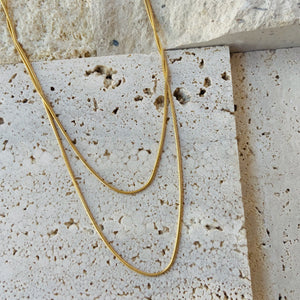
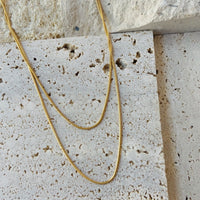
The piece they're describing → Double Chain Necklace for Women — 18K Gold Plated Snake Chain, Layered Look
Personalize Yours


