


Can You Mix Gold and Silver Jewelry?
Yes, mixing gold and silver jewelry is a widely accepted, intentional styling choice, not a rule you're breaking. The old guidance to match all your metals came from an era of more formal, matchy-matchy dressing; current styling practice treats gold and silver as two tools you use together, the same way you'd mix textures or a print with a solid. The pieces that make it look deliberate rather than accidental follow a few practical rules around ratio, undertone, and where the two metals actually meet.
- Works well: one dominant metal (roughly 70/30) with the second metal repeated at least twice, so it reads as a choice rather than a mismatch.
- Works well: a "bridge" piece that already combines gold and silver, worn alongside single-metal pieces to visually connect them.
- Clashes: two pieces in the exact same style but opposite metals worn right next to each other (for example, two nearly identical chain necklaces, one gold and one silver, layered together).
- Clashes: mixing finishes as well as metals at once (high-polish gold with brushed-matte silver) in a small space like stacked rings, where the eye reads it as clutter rather than contrast.
- Undertone tip: warm skin undertones tend to make yellow gold read as the "anchor" metal; cool undertones tend to make silver read as the anchor. Neutral undertones can lead with either.
When Mixing Metals Works, and When It Actually Clashes
Mixed metals work when there's a clear ratio between the two, not an even split. An even 50/50 mix of gold and silver pieces tends to read as visual noise, since your eye can't settle on which metal is "the" metal for the outfit. Picking one to dominate, roughly 70 percent of your pieces in one metal and 30 percent in the other, gives the look a clear anchor while the second metal still reads as an intentional accent rather than a mismatch.
Mixed metals clash most obviously when two pieces are nearly identical in style but opposite in metal, sitting right next to each other. Two thin cable-chain necklaces at the same length, one gold and one silver, layered together, tends to look like a labeling mistake rather than a styling choice, because there's nothing else differentiating them besides the metal. The fix isn't avoiding the combination, it's varying something else, length, chain style, or pendant shape, so the two pieces read as distinct choices instead of a pair that doesn't match.
Matching Metals to Your Skin Undertone
Skin undertone is a genuinely useful starting point for deciding which metal to lead with, even if you plan to wear both. Warmer undertones (skin with yellow, peachy, or golden hints, veins that read more green than blue) tend to make yellow gold sit closest to the skin, so it reads as the natural anchor metal, with silver pieces working as accents. Cooler undertones (skin with pink or blue hints, veins that read more blue than green) tend to make silver, white gold, and platinum sit closest to the skin, making silver the natural anchor instead.
Neutral undertones, which show characteristics of both, generally have the most flexibility to lead with either metal depending on the piece or the outfit. None of this is a hard rule, plenty of people wear whichever metal they love regardless of undertone, but if you're trying to figure out which metal should dominate your 70/30 split, undertone is the fastest way to decide.

The Layering Ratio: How Many Pieces of Each Metal
For necklaces specifically, a workable starting ratio is one statement piece in your dominant metal, plus one or two thinner chains in the second metal layered at different lengths. The length variation matters as much as the metal choice, since necklaces at different lengths don't compete for the same visual space the way two same-length chains do.
For rings, stacking two or three in your dominant metal with one in the second metal, worn on a different finger rather than in the same stack, tends to read cleaner than an even mix within a single stack. For earrings, mixing metals within the same ear (say, a gold hoop with a silver stud above it) works, but mixing a gold earring in one ear with a silver earring in the other reads as mismatched jewelry rather than a styling choice, since there's no visual bridge connecting the two sides.
Bridge Pieces: The Easiest Way to Mix Without Overthinking It
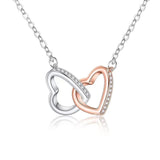
A bridge piece, meaning one item that already combines both gold and silver in its own design, is the lowest-effort way to mix metals confidently. Wearing a two-tone piece anchors the rest of your gold and silver items around it, since the piece itself is visual proof that the two metals were meant to be together, and everything else you layer around it reads as coordinated rather than accidental.

Our Interlocking Hearts Necklace is built exactly this way, one heart in polished silver and one in rose gold, interlocked into a single pendant. Worn on its own it already reads as intentional mixed-metal styling, and worn alongside separate gold or silver pieces, it does the work of visually connecting them.
A Few Combinations to Avoid
Mixing metals and mixing finishes at the same time, in a small space, is the combination most likely to look cluttered rather than intentional. Stacking a high-polish gold band, a brushed matte silver band, and a hammered-texture gold band on one finger asks the eye to process three different variables at once in a tiny area; picking a consistent finish across your mixed-metal pieces, all polished or all matte, keeps the metal contrast as the only variable and makes the whole stack easier to read.
It's also worth keeping obviously mismatched formality levels apart: a delicate, fine mixed-metal set reads differently than pairing a fine gold chain with a chunky costume silver cuff. Neither is wrong on its own, but combining very different weight classes of jewelry can distract from the metal-mixing itself.
Frequently Asked Questions
Can you mix silver and gold jewelry?
Yes. Mixing gold and silver jewelry is a widely accepted styling choice. It works best with a clear ratio, roughly 70/30 in favor of one metal, rather than an even split, so the look reads as intentional rather than mismatched.
Does mixing metals damage jewelry or cause a reaction?
No. Wearing gold and silver jewelry together has no effect on either metal; they don't react with each other simply by being worn at the same time. Any tarnishing or wear on a piece comes from its own material and care, not from being paired with a different metal.
What skin undertone works best with gold vs silver?
Warmer undertones (yellow, peachy, or golden skin tones) tend to suit yellow gold as the anchor metal. Cooler undertones (pink or blue-leaning skin tones) tend to suit silver or white gold as the anchor. Neutral undertones can lead with either.
How do you mix gold and silver necklaces without them looking mismatched?
Vary the length and style of each necklace rather than layering two similar chains at the same length in different metals. A statement piece in one metal with a thinner chain in the second metal at a different length reads as layered, not mismatched.
What is a "bridge piece" in mixed metal jewelry?
A bridge piece is a single item, like a two-tone pendant or ring, that already combines gold and silver in its own design. Wearing one anchors your other single-metal pieces and makes the overall mix read as coordinated.
Is it okay to wear a gold earring in one ear and silver in the other?
It's less reliable than mixing metals within a single piece or a single ear, since there's no visual bridge connecting the two different-metal earrings across your face. Mixing gold and silver within the same ear, or choosing a two-tone pair, tends to read more intentional.
Final Thoughts
The short answer to "can you mix gold and silver jewelry" is yes, and the longer answer is that it works best with a bit of structure: a clear dominant metal, some variation in length or style so similar pieces don't compete, and optionally a bridge piece to tie the mix together. None of this is about strict rules, it's closer to the same instinct you'd use mixing patterns or textures in an outfit, contrast on purpose, not by accident.
For more layering ideas, see our full mixed metal jewelry guide, ear stacking guide, and how to style gold jewelry.
Want an easy way to start mixing metals?
Our Interlocking Hearts Necklace pairs polished silver and rose gold in one pendant, a bridge piece that does the mixed-metal work for you.
Shop the Interlocking Hearts NecklaceShop This Guide
- Interlocking Hearts Necklace: two-tone silver and rose gold bridge piece
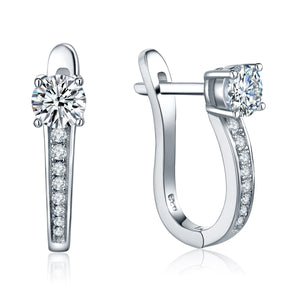
- Gold Hoop Earrings: 925 sterling silver, gold plated
- Necklaces Collection: mix and match pieces
Sources: general jewelry styling and color-theory reference practice on skin undertone and metal pairing, compiled from jewelry-industry styling guidance.
Written by AJLuxe Team. Last updated: September 2026
All third-party trademarks, brand names and product names are the property of their respective owners. AJLuxe is not affiliated with, endorsed by, sponsored by, or otherwise connected to any third-party brand referenced in this article. Brand names are used solely for accurate comparative reference, and material descriptions reflect each brand's own published product specifications at the time of writing.
You Might Also Like
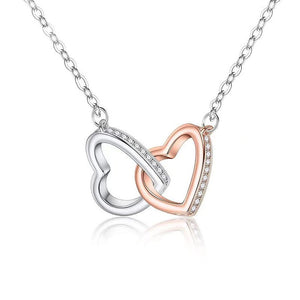
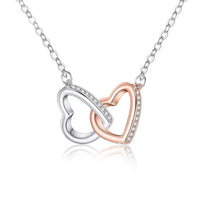
The piece they're describing → Interlocking Hearts Necklace — Two-Tone Silver & Rose Gold Pendant, Gift Boxed with Message Card
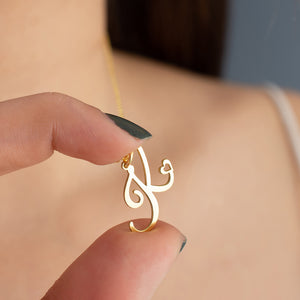
Personalize Yours


