


The short answer
"Waterproof" is a marketing word, not a regulated one — so the only thing that actually determines whether earrings survive the shower, pool, or ocean is the base metal. Solid gold, titanium, and PVD-coated stainless steel are genuinely waterproof and tarnish-free. Sterling silver (925) is water-safe — it won't rust or leave green marks — but it can tarnish in chlorine or saltwater, which a quick rinse-and-dry fixes. What you want to avoid entirely for water wear is gold plating over brass or zinc, because the thin plating wears off and the base metal underneath reacts, corrodes, and can irritate skin. Match the metal to how wet your life is, pick a secure closure so you don't lose a hoop down the drain, and rinse in fresh water after every swim.
Searching for the best waterproof earrings usually means one specific frustration: you're tired of taking your earrings out every time you shower, swim, or work out — and tired of the ones you forgot to remove turning dull, tarnished, or leaving a green mark behind. The problem is that almost every brand slaps "waterproof" on a product page, and the word has no legal definition, so it tells you nothing about whether a pair will actually last. This guide fixes that by ranking earring metals by how they truly behave in water, explaining the difference between "waterproof," "tarnish-free," and "won't lose its plating" (they are not the same thing), and giving you specific AJLuxe picks for everyday water wear.
We'll also cover two things most waterproof jewelry guides skip: exactly how chlorine damages earrings differently from saltwater and plain shower water, and why a "waterproof" label on a plated earring can still leave you disappointed six months later.

Waterproof earring metals, ranked by how they actually behave in water
The single most important factor in a waterproof earring is the metal it's made of — not the finish, not the brand, not the "waterproof" badge on the listing. Water itself doesn't harm most jewelry; the problem is what the water carries (chlorine, salt, soap, minerals) and how the underlying metal reacts to it. Here's how the common earring metals rank, from truly waterproof to avoid-in-water.
| Metal | Truly waterproof? | What happens in water |
|---|---|---|
| Solid gold (14K+) | Yes | Doesn't tarnish, corrode, or fade — the gold standard for shower, pool, and ocean wear, with no plating to wear off |
| Titanium | Yes | Highly resistant to chlorine and saltwater without any coating; also one of the most hypoallergenic metals available |
| PVD-coated stainless steel | Yes (while coating lasts) | The vapor-bonded coating is far tougher than ordinary plating and holds up to daily water; affordable, but once worn it can't be re-coated |
| 925 sterling silver | Water-safe, not tarnish-proof | Won't rust or leave green marks, but chlorine, saltwater, and humidity can dull or darken it — a rinse and polish restores the shine |
| Gold vermeil | Partly | A thick gold layer over sterling silver — more durable than plating, but heavy water exposure can still wear it and let the silver base tarnish |
| Gold plated over brass/zinc | No | The thin plating wears off fast in water, exposing a base metal that corrodes, tarnishes, and can leave green marks or irritate skin |
The takeaway: a "waterproof" earring is only as waterproof as the metal underneath the finish. If you want a pair you never have to think about, solid gold or titanium wins outright. If you want everyday value without a brass base that turns your ears green, a sterling-silver-core piece is the sweet spot — more on that below. For the bigger picture across necklaces, bracelets, and rings too, our best waterproof jewelry guide and our in-depth waterproof jewelry care guide both go deeper on materials. If you're building a matching set, our companion best waterproof necklaces guide covers chains that survive the same shower and pool wear, and our roundup of the best tarnish-free jewelry brands compares the labels that specialize in water-safe pieces.
"Waterproof" vs. "tarnish-free" vs. "won't lose its plating" — the label trap
This is the first gap most waterproof-earring guides miss entirely: shoppers treat "waterproof," "tarnish-free," and "won't fade" as one promise, when they're three separate properties that don't always come together. Understanding the difference is what stops you from buying a pair that technically survives water but still looks worn out in a season.
- Waterproof means the metal doesn't rust or corrode from water contact. Solid gold, titanium, stainless steel, and even sterling silver all clear this bar — none of them rust.
- Tarnish-free is a higher bar. Tarnish is a chemical reaction between the metal and sulfur/oxygen in air, water, sweat, and chemicals. Solid gold and titanium are tarnish-free; sterling silver is not — it's waterproof but can still tarnish and need polishing.
- Won't lose its plating only applies to plated or coated pieces. A gold-plated earring can be "waterproof" in the sense that the base won't rust while the plating lasts — but once that thin gold layer wears off in the pool, you're left with whatever cheap base metal was underneath.
So when a listing says "waterproof," ask the follow-up question the label is dodging: waterproof made of what? A solid metal earning all three labels at once is genuinely low-maintenance. A plated earring earning only the first is a countdown clock. This is exactly why the base metal matters more than the marketing — and why we recommend earrings built on a sterling silver core rather than a brass one for anyone who wants to keep them on in water.
Chlorine vs. saltwater vs. shower water: what each does to earrings
The second gap most guides skip: not all water is equal. "Can I get these wet?" has a different answer for a chlorinated pool, the ocean, and your morning shower, because each carries different chemistry. Here's what each type of water actually does to earrings.
| Water type | Main risk | Safest metals |
|---|---|---|
| Chlorinated pool | Chlorine is harsh — it degrades finishes and plating and can dull or damage the surface of softer metals over time | Solid gold, titanium; rinse steel and silver right after |
| Saltwater / ocean | Salt is corrosive and accelerates tarnishing on sterling silver and any exposed base metal | Solid gold, titanium, PVD steel |
| Shower / freshwater | Water itself is gentle, but soap, shampoo, and hard-water minerals can leave film or dull the finish | Almost any solid metal; skip brass-based plating |
Two practical rules fall out of this table. First, chlorine and saltwater are the real enemies — plain shower water is the mildest exposure by far, so a pair you'd never swim in may still be perfectly fine to shower in daily. Second, the fix for silver and steel after pool or ocean wear is the same and takes ten seconds: rinse in fresh water and pat dry, before the chlorine or salt has time to sit and react. Even the most water-friendly metals last longer when you rinse the harsh stuff off.

Why "waterproof" earrings sometimes still leave green marks
A green mark on your earlobe isn't rust and it isn't a gold reaction — it's copper. Many inexpensive "waterproof" earrings are built on a brass or zinc-alloy base (both contain copper), then thinly plated. In water and sweat, the plating wears through, the copper base reacts with the acids and moisture on your skin, and the result is that telltale green tint — often alongside itching or irritation if the base metal also contains nickel.
According to the American Academy of Dermatology, nickel allergy is one of the most common causes of contact dermatitis, and the reliable way to avoid a reaction is to choose jewelry made from nickel-free metals — sterling silver, high-karat gold, titanium, or surgical-grade stainless steel — rather than trusting a "hypoallergenic" or "waterproof" label alone, since neither term has a regulated legal meaning. Water simply speeds the whole process up, because it wears plating faster and keeps skin in contact with whatever's underneath. This is the core reason we point water-wearers toward a 925 sterling silver core: even if a gold-plated surface wears over years of daily wear, the metal underneath is still skin-safe silver, not reactive brass. For more on which earring metals are safe against skin, see our guide on whether gold earrings are hypoallergenic.
Best waterproof earrings for everyday wear: AJLuxe picks
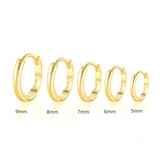
AJLuxe's earrings are built on a 925 sterling silver base finished with 18K gold plating — which puts them in the water-safe, skin-safe category: no brass core to corrode or turn your ears green, and a hypoallergenic silver post that's comfortable for all-day wear. For the most water-friendly everyday option, a huggie style is the smart pick: the small, closed design means less surface area exposed to water and a secure closure that won't slip off in the shower or pool. Here's how to shop the range for water wear.
- Everyday shower-and-sweat huggie: our minimalist gold huggie earrings — a solid 925 sterling silver core with 18K gold plating and a snug, secure closure, the pair to leave in for daily wear, workouts, and the shower.
- Slightly bolder huggie hoop: our 2.5mm gold huggie hoop earrings for a little more presence while keeping the same low-profile, secure-closure design.
- Small everyday hoop: our 15mm small gold hoop earrings — a compact hoop on a sterling silver base, easy to keep in through daily water contact.
- Browse the full range: see every style in our earrings collection to find the size and shape you'll actually reach for.
One honest note: for genuine swim-every-day, ocean-and-chlorine durability with zero maintenance, solid gold or titanium is the ultimate answer, and no plated piece from any brand fully matches it. What a sterling-silver-core pair gives you is the realistic everyday middle ground — safe to shower, sweat, and rinse-and-wear, at a fraction of solid-gold pricing, without the green-mark risk of brass-based "waterproof" earrings. If you want more style-specific picks, our best hoop earrings guide covers sizing and closures across the full hoop range.
Shop This Guide
Our Minimalist Gold Huggie Earrings — a solid 925 sterling silver core with 18K gold plating, a hypoallergenic post, and a secure closure that stays put through showers, workouts, and everyday wear.
Shop Gold Huggie EarringsHow to care for waterproof earrings after swimming or showering
Even the most water-friendly earrings last longer with a two-minute routine. The goal isn't to keep them out of water — it's to keep chlorine, salt, soap, and minerals from sitting on the metal after you're done.
- Rinse in fresh water after any pool or ocean swim, ideally as soon as you're out, to flush off chlorine and salt before they react.
- Pat dry with a soft cloth. Don't let them air-dry with water pooling in the closure or against the post — trapped moisture is what accelerates tarnish on silver.
- Store dry and separated. Keep earrings in a pouch or compartmented box away from other jewelry, so they don't scratch each other. Waterproof doesn't mean scratch-proof.
- Keep chemicals off. Apply perfume, sunscreen, and lotion before putting earrings on, and let it dry — these are harder on finishes than water itself.
- Polish silver as needed. If a sterling piece dulls, a soft jewelry polishing cloth brings the shine back in seconds; this is normal, not a defect.
How to choose waterproof earrings: a quick decision path
- Start with how wet your life is. Daily ocean/pool swimmer → solid gold or titanium, no compromise. Shower-and-sweat everyday wearer → a sterling-silver-core pair is the practical, affordable pick.
- Check the base metal, not the "waterproof" badge. Any earring built on brass or zinc will eventually wear and turn your ears green in water. Sterling silver, solid gold, titanium, or PVD steel bases only.
- Prioritize a secure closure. Huggies and hinged small hoops stay put in water far better than friction-back styles — the last thing you want is losing one down a shower drain.
- Match the style to the exposure. Smaller, closed designs (huggies, small hoops) expose less surface area to water and are the easiest to keep in full-time.
- Commit to the ten-second rinse. Whatever you buy, rinsing off chlorine and salt after a swim is the single habit that most extends its life.
Written by the AJLuxe Team. Last updated: July 2026. According to the American Academy of Dermatology, checking the base metal beneath any plating — rather than trusting a "hypoallergenic" or "waterproof" label — is the most reliable way to avoid skin irritation, which matters even more for earrings worn in water, since moisture wears plating faster and keeps skin in longer contact with whatever lies underneath.
Frequently Asked Questions
Which earring metals are truly waterproof and tarnish-free?
Solid gold (14K and higher), titanium, and PVD-coated stainless steel are the only metals that are genuinely waterproof and tarnish-free, holding up to water, sweat, chlorine, and saltwater without fading. Titanium is especially resistant to chlorine and saltwater and needs no plating. Sterling silver is water-safe but can still tarnish and need occasional polishing.
Can you shower or swim in sterling silver earrings?
Yes — 925 sterling silver won't rust or leave green marks, so it's safe to shower in. However, it can tarnish and lose shine in chlorinated pools, saltwater, or humid conditions. If you swim in sterling silver, rinse the earrings in fresh water and pat them dry afterward, and use a polishing cloth to restore the shine if they dull.
Are gold-plated earrings safe for swimming or showering?
It depends on the base metal. Gold plating over brass or zinc is not safe for regular water exposure — the thin plating wears off, especially in pools and the ocean, and the base metal underneath corrodes and can turn skin green. Gold plating over a sterling silver core is far more forgiving, because even as the plating ages, the skin-safe silver base won't corrode or irritate.
How do chlorine and saltwater affect waterproof earrings differently?
Chlorine is a harsh chemical that degrades finishes and plating and can dull softer metals over time, while saltwater is corrosive and accelerates tarnishing on sterling silver and any exposed base metal. Solid gold and titanium resist both best. For sterling silver and stainless steel, rinsing in fresh water immediately after swimming prevents most of the damage.
Is gold vermeil better than solid gold for water exposure?
Solid gold is better for water because it never corrodes, fades, or wears through. Gold vermeil has a thicker gold layer over sterling silver, making it more durable than standard gold plating, but heavy or repeated water exposure can still wear the gold and let the silver base tarnish. For frequent swimming, solid gold or titanium outlasts vermeil.
Do waterproof earrings ever tarnish?
Earrings made from solid gold, titanium, or stainless steel do not tarnish, even with regular water, sweat, and air exposure. Pieces labeled "waterproof" that use plated finishes can still tarnish once the coating wears off, and sterling silver — while water-safe — can tarnish and simply needs occasional polishing to restore shine.
What is PVD coating, and does it make earrings waterproof?
PVD (Physical Vapor Deposition) is a thin, vapor-bonded coating applied to metals like stainless steel to make them waterproof and tarnish-resistant. It's far more durable than ordinary gold plating and holds up to daily water exposure, but once a PVD coating wears off, the piece cannot be re-coated the way plated jewelry can be re-plated.
Which earrings are best for swimming in the ocean or a pool?
Solid gold and titanium earrings are best for ocean or pool swimming because they resist corrosion from saltwater and chlorine without any coating. PVD-coated stainless steel is a good affordable alternative if you rinse it after each swim. Choose a small, closed style like a huggie or hinged hoop so there's no risk of losing a piece in the water.
Why do some "waterproof" earrings still leave green marks on my ears?
Green marks come from copper in a brass or zinc base metal reacting with moisture and skin acids once the plating wears through. Water speeds this up by wearing plating faster and keeping skin in contact with the base metal. Earrings built on a sterling silver, solid gold, or titanium base don't leave green marks because those metals don't react with skin this way.
Can I wear waterproof earrings in the shower every day?
Yes, if they're made of a solid, skin-safe metal. Plain shower water is the gentlest exposure — much milder than chlorine or saltwater — so solid gold, titanium, stainless steel, and even sterling-silver-core pieces are fine for daily showering. Avoid soap and shampoo buildup on the metal, and pat the earrings dry afterward to keep them looking their best.
How should I care for waterproof earrings after swimming?
Rinse them in fresh water as soon as you're out to flush off chlorine or salt, pat them dry with a soft cloth so no moisture sits in the closure, and store them dry and separated from other jewelry to prevent scratching. Keep perfume, sunscreen, and lotion off the metal, since chemicals are harder on finishes than water itself.
Are waterproof earrings scratch-proof too?
No — waterproof and scratch-proof are different properties. Water resistance means the metal won't rust or corrode, but even solid gold and titanium can be scratched by contact with harder objects or other jewelry. Store earrings individually in a pouch or compartmented box, and avoid stacking them loosely with other pieces.
All third-party trademarks, brand names and product names are the property of their respective owners. AJLuxe is not affiliated with, endorsed by, sponsored by, or otherwise connected to any third-party brand referenced in this article. Brand names are used solely for accurate comparative reference, and material descriptions reflect each brand's own published product specifications at the time of writing.
You Might Also Like
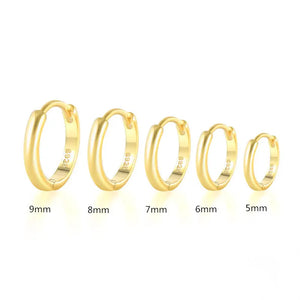
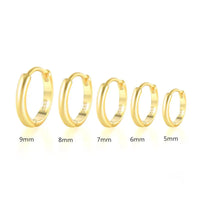
The piece they're describing → Gold Huggie Earrings for Women — 925 Sterling Silver, 18K Gold Plated, Minimalist
Personalize Yours


