


The short answer
"Tarnish-free" is a materials question, not a brand-loyalty question. The finishes that actually resist tarnish are PVD-coated stainless steel, gold-filled, solid gold, and 18K gold plated over a 925 sterling silver base — anything plated over brass or zinc will discolor once the coating wears thin. Match the material to how you'll wear it: for shower-and-sweat everyday pieces, stainless-steel-PVD or gold-filled brands like Hey Harper and Ellie Vail win; for a dressier hypoallergenic look, 18K-gold-over-sterling lines like AJLuxe and Mejuri hold up. Ignore the word "tarnish-free" on the label and read the base metal instead.
Searching for the best tarnish-free jewelry brands usually turns up two very different kinds of results: influencer-style brand lists that never explain why a piece resists tarnish, and materials explainers that never name a single brand you can actually shop. This guide does both. We'll break down which materials are genuinely tarnish-resistant (and which just get marketed that way), compare the brands most often recommended for jewelry that won't tarnish — including where AJLuxe fits honestly among them — and give you a checklist to separate a real anti-tarnish finish from a hopeful product description.
Two things most "tarnish-free jewelry" roundups skip entirely: how to verify a tarnish claim before you buy (not after it turns your finger green), and the fact that "waterproof" and "tarnish-free" are not the same promise. We'll cover both.

What actually makes jewelry tarnish-free
Tarnish is a chemical reaction — the metal's surface oxidizing when it meets moisture, sweat, air, and the sulfur compounds in lotions and perfumes. A piece resists tarnish either because the metal itself doesn't readily oxidize (solid gold, platinum, titanium) or because a durable protective layer keeps air and moisture off a more reactive base metal. That protective layer is where most of the difference between brands lives.
The single most important term to know is PVD (Physical Vapor Deposition). PVD bonds a thin layer of gold or other metal onto a base — almost always 316L stainless steel — at a molecular level in a vacuum chamber. The result is far more scratch-, water-, and oxidation-resistant than traditional electroplating, which is why nearly every genuinely waterproof "tarnish-free" brand builds on stainless steel with PVD. The other durable options are gold-filled (a thick pressure-bonded layer of real gold, legally required to be at least 1/20th of the item's weight), solid gold, and 18K gold plated over 925 sterling silver — where even as plating wears, the base metal underneath is still a precious, skin-safe metal rather than brass.
Tarnish resistance by material: a comparison table
Before you compare brands, compare materials — because the brand matters far less than what a specific piece is made of. This is the table most brand roundups never show you. (For a full breakdown of what the phrase "tarnish-resistant" is actually claiming, see our explainer.)
| Material | Tarnish resistance | Waterproof? | Notes |
|---|---|---|---|
| 316L stainless steel + PVD | Excellent | Yes | The workhorse of waterproof brands; shower/pool/sweat safe, most affordable genuinely durable option |
| Solid gold (14K–18K) | Excellent | Yes | Never needs replating; highest cost; the true lifetime option |
| Gold-filled | Very good | Mostly | Thick bonded gold layer lasts years; can tolerate water but drying it extends life |
| 18K gold plated over 925 sterling silver | Very good | Splash-safe, not swim-safe | Hypoallergenic base metal; best value for a dressy, skin-safe look; keep off during long water exposure |
| 925 sterling silver (uncoated) | Fair | No | Tarnishes from its copper content but polishes back to new; not a "wear it in the shower" metal |
| Gold plated over brass/zinc | Poor | No | The finish most falsely sold as "tarnish-free"; discolors and can turn skin green once thin plating wears |
If you want to go deeper on any one of these finishes, we have dedicated guides on whether gold-filled jewelry tarnishes, whether gold vermeil tarnishes, and a broader breakdown of what jewelry does not tarnish and why.
Best tarnish-free jewelry brands compared
Here are the brands most consistently recommended for tarnish-free and waterproof jewelry, grouped by what they actually do well. We've included AJLuxe honestly in context — it competes on the 18K-gold-over-sterling-silver value tier, not the stainless-steel-swimwear tier, and it's worth being clear about which is which.
| Brand | Core material | Best for | Rough price tier |
|---|---|---|---|
| Hey Harper | PVD-coated stainless steel | 24/7 waterproof everyday wear | $$ |
| Ellie Vail | PVD-coated stainless steel | Sensitive skin, no-green-finger promise | $$ |
| Abbott Lyon | Stainless steel + PVD gold | Personalized pieces, color warranty | $$ |
| Mejuri | Solid gold & gold vermeil | Investment-grade fine minimalism | $$$–$$$$ |
| Monica Vinader | 18K gold vermeil & solid gold | Heavier vermeil that lasts, engravable | $$$ |
| AJLuxe | 18K gold plated over 925 sterling silver; select PVD & tarnish-free lines | Dressy, hypoallergenic pieces at an affordable price | $–$$ |
The honest read: if your priority is swimming and showering in a piece indefinitely, a dedicated stainless-steel-PVD brand is built for exactly that. If your priority is a hypoallergenic, jewelry-box-worthy look — everyday earrings, layering chains, delicate anklets — that resists tarnish without a base-metal problem, an 18K-gold-over-925-sterling line like AJLuxe delivers most of the durability at a lower price, with a genuinely skin-safe base metal. For a wider affordable-brand shortlist beyond just tarnish resistance, see our best affordable jewelry brands guide, and if a nickel allergy is your main concern, our best hypoallergenic jewelry brands roundup goes deeper on skin-safe metals.

How to verify a tarnish-free claim before you buy
This is the gap almost every brand list leaves out: "tarnish-free" has no legal definition, so the word alone tells you nothing. Here's how to check a claim before your money leaves your account, not after the piece discolors.
- Find the base metal, not the plating. A trustworthy listing states the core material — "316L stainless steel," "gold-filled," "925 sterling silver base," or "solid 14K." If a product only says "18K gold" with no mention of what's underneath, assume it's plated over brass until proven otherwise.
- Look for PVD or gold-filled specifically. These are the two terms that signal a genuinely durable finish. "Gold-plated" and "gold dipped" with no base-metal disclosure are the weakest signals.
- Check the warranty. Brands confident in their finish offer a tarnish or color warranty (often 1–5 years or lifetime). A warranty is a company betting its own money that the piece won't discolor — the strongest signal there is.
- Read reviews for water and time. Search a brand's reviews for "shower," "pool," "green," and "after a year." Real long-term wear reports beat any marketing headline.
- Match the price to the claim. A $12 chain claiming to be solid-gold-equivalent and shower-proof forever is telling you something. Genuine gold-filled and solid gold cost more because the material costs more.
Waterproof vs. tarnish-free: not the same promise
The second thing most guides blur together: a piece can be waterproof but not truly tarnish-free, and vice versa. "Waterproof" means water won't immediately damage it; "tarnish-free" means it won't oxidize and discolor over time. Solid gold and stainless-steel-PVD deliver both. But a sealed costume piece might survive a splash (waterproof-ish) while still tarnishing at the edges over months, and uncoated sterling silver can be perfectly fine to get wet occasionally yet still tarnish from air exposure alone.
If daily water contact is your real requirement — you work out, swim, or simply never want to take a piece off — prioritize brands and pieces built on stainless steel with PVD or solid gold. Our dedicated best waterproof jewelry guide covers the swim-and-shower category specifically, and our best waterproof necklaces roundup narrows it to chains built for daily water wear. For pieces you'll wear dressed up rather than in the ocean, tarnish resistance and a hypoallergenic base metal matter more than a strict waterproof rating.
Is tarnish-free the same as hypoallergenic?
These two terms get used interchangeably, but they answer different questions. Tarnish-free is about how a piece holds its finish; hypoallergenic is about whether it irritates your skin. A stainless-steel-PVD piece can be both, but the overlap isn't automatic — a gold-plated-over-brass chain might resist tarnish for a while thanks to a sealed coating, yet still trigger a nickel reaction the moment that coating wears through at a clasp or edge.
If you have a known metal sensitivity, prioritize the base metal above everything else: 316L stainless steel, titanium, solid gold, and 925 sterling silver are the safe bets, and 18K gold plated over sterling silver keeps a skin-safe metal against your skin even after the plating thins. Brass and nickel-heavy alloys are the ones to avoid regardless of how "tarnish-free" the listing claims to be. The reassuring part is that the same materials that resist tarnish best — noble metals and precious-metal bases — are usually the same ones that are gentlest on sensitive skin, so shopping for one tends to get you the other.
Which tier is right for you?
A quick way to land on the right brand tier without overthinking it:
- You want to never take it off — gym, shower, ocean, sleep. Go stainless-steel-PVD (Hey Harper, Ellie Vail, Abbott Lyon). Built for exactly this, and the most affordable genuinely-waterproof route.
- You want a dressy, hypoallergenic everyday look at a fair price. Go 18K-gold-over-925-sterling (AJLuxe). Splash-safe, skin-safe, and a jewelry-box aesthetic rather than a sporty one.
- You want a lifetime heirloom piece and budget isn't the constraint. Go solid gold or heavy vermeil (Mejuri, Monica Vinader). Highest cost, longest life, never needs replating in the solid-gold case.
How to keep tarnish-free jewelry looking new
Even genuinely tarnish-resistant pieces last longer with a little care, and it's the difference between a chain that looks new in three years and one that looks tired in one.
- Put jewelry on last, take it off first. Perfume, lotion, sunscreen, and hairspray are the biggest accelerators of discoloration — apply them before your jewelry goes on.
- Dry after water. Even waterproof pieces benefit from a quick pat-dry; standing moisture in clasps and links is where problems start.
- Store dry and separated. A cloth pouch or compartmentalized box keeps pieces from scratching each other and limits air exposure. An anti-tarnish strip in the box helps for silver.
- Wipe with a soft cloth after wear. (see how to clean a Pandora bracelet for the full at-home method) Removing skin oils and residue after each wear does more for longevity than any occasional deep clean.
- Skip harsh chemicals. Avoid silver dips and abrasive cleaners on plated and PVD pieces — they can strip the very finish that makes the piece tarnish-resistant.
- Know when a piece needs gentler care. Costume-metal pieces with an antiqued or Rafaelian-style finish (see how to clean Alex and Ani jewelry) need an even gentler routine than plain tarnish-resistant metal, since the darker detailing is part of the design, not tarnish to remove.
Shop This Guide
Our Dainty Double-Layer Chain Anklets are tarnish-free, water-friendly beach jewelry built to stay bright through sand, sun, and everyday wear — a perfect entry point into pieces that hold up.
Shop Tarnish-Free JewelryBrowse the full range of tarnish-resistant earrings, chains, and anklets in the AJLuxe jewelry collection, and if you're brand-shopping across categories, our sibling roundups like the best mood ring brands guide use the same honest, materials-first approach.
Written by the AJLuxe Team. Last updated: July 2026. According to Jewelers of America, a metal's composition and finish — not the marketing on the label — determine how it wears over time, which is exactly why reading the base metal under any plating is the most reliable way to judge whether a piece will truly resist tarnish.
Related reading: Does nickel free jewelry tarnish.
Related reading: Does BaubleBar Jewelry Tarnish? The Real Reason Fashion Jewelry Fades (2026).
Related reading: 8 Best Nickel-Free Jewelry Brands (2026).
Related reading: How to Clean James Avery Jewelry Without Damaging It.
Frequently Asked Questions
What jewelry brands are genuinely tarnish-free and not just marketing?
Brands most consistently reported as genuinely tarnish-free use PVD-coated stainless steel or gold-filled materials, including Hey Harper, Ellie Vail, and Abbott Lyon, while fine brands like Mejuri and Monica Vinader deliver it through solid gold and heavier vermeil. AJLuxe covers the affordable dressy tier with 18K gold plated over a 925 sterling silver base. The common thread is a disclosed, durable base material rather than the word "tarnish-free" alone.
What makes jewelry tarnish-free?
Jewelry resists tarnish either because the metal itself does not readily oxidize — such as solid gold, platinum, or titanium — or because a durable protective layer keeps air and moisture off a more reactive base metal. PVD coating over stainless steel and thick gold-filled layers are the two most effective protective finishes.
Is PVD coating actually tarnish-resistant?
Yes. PVD (Physical Vapor Deposition) bonds a metal layer onto a base at a molecular level in a vacuum, creating a finish far more resistant to water, scratches, and oxidation than traditional electroplating. It is widely considered the most durable anti-tarnish coating available for everyday jewelry.
Is stainless steel or gold-plated jewelry better for avoiding tarnish?
Stainless steel, especially with a PVD finish, resists tarnish far better than standard gold-plated jewelry, which wears off relatively quickly. Gold plating is only as good as its base metal — plating over brass discolors fast, while plating over 925 sterling silver holds up much better because the base itself is a precious, skin-safe metal.
Is all waterproof jewelry also tarnish-free?
Not necessarily. Waterproof means water will not immediately damage a piece, while tarnish-free means it will not oxidize and discolor over time. Solid gold and stainless-steel-PVD deliver both, but some water-resistant coated pieces can still tarnish at the edges over months, so check the base material rather than relying on a waterproof label alone.
Does tarnish-free jewelry actually last?
When made from solid noble metals or PVD-coated stainless steel, tarnish-free jewelry can hold its color for five or more years of daily wear. Cheap gold-plated pieces over brass, by contrast, often lose their finish within months, which is why the base material matters more than the price or the brand name.
Can you shower with tarnish-free jewelry?
You can shower with pieces made from stainless steel, titanium, solid gold, or gold-filled materials, which are designed to withstand water, sweat, and pool exposure. Drying the piece afterward extends its life. Gold plated over sterling silver is splash-safe but is best kept out of long water exposure to preserve the plating.
How much does genuine tarnish-free jewelry cost?
PVD-coated stainless steel is the most budget-friendly genuinely durable option, often ranging from roughly $15 to $50 per piece. Gold-filled sits above that, and solid gold or platinum ranges from around $100 into the thousands depending on weight. Extremely cheap pieces claiming permanent shine are usually plated over brass.
What metals should I avoid if I want tarnish-free jewelry?
Avoid gold plating over brass or zinc, uncoated sterling silver if you want zero maintenance, and any copper- or nickel-based alloys, all of which oxidize easily. These require frequent polishing and are not suited to 24/7 or waterproof wear.
How do I spot real tarnish-free jewelry when shopping online?
Look for a disclosed base material such as "316L stainless steel," "gold-filled," "925 sterling silver base," or "solid 14K," plus terms like "PVD coating." Favor brands that list full materials, provide care instructions, and back the piece with a tarnish or color warranty, and read reviews for words like "shower," "pool," and "after a year."
Does gold plated over sterling silver tarnish?
18K gold plated over 925 sterling silver resists tarnish very well and is a strong value option, because even as the plating gradually wears, the base metal underneath is precious and skin-safe rather than brass. It is splash-safe for everyday wear but is best kept out of prolonged water exposure to preserve the gold layer as long as possible.
How to Verify a Tarnish-Free Claim Before You Buy
You can confirm whether a "tarnish-free" listing is real before you ever click add-to-cart, using five checks that take under a minute per product page.
- Does the listing name the base metal, not just the finish? "Gold plated" alone tells you nothing — plated over what? A trustworthy listing says "18K gold plated over 925 sterling silver" or "gold-filled over brass core," not just "gold plated." If the base metal is missing entirely, assume it's brass or zinc alloy, the two metals most likely to turn skin green.
- Is the gold layer measured, or just described? Gold-filled jewelry has a legal minimum — 1/20th of the item's total weight in karat gold, per U.S. FTC guidelines — and reputable brands will state it (e.g., "14/20 gold-filled"). Plated pieces worth trusting often list microns (0.5–2.5 microns is typical for durable plating); anything unspecified is usually a thinner flash-plate that wears within months.
- Does the brand offer a color or tarnish guarantee? Brands confident in PVD or thick plating back it with a 6–12 month color warranty (Abbott Lyon and Hey Harper both do this). No guarantee at all is a signal the brand doesn't expect the finish to last.
- Do the reviews mention water, sweat, or fading — not just "pretty"? Search the review section for "turned green," "faded," or "still shiny after months." Star ratings hide plating failures that only show up in the text.
- Are care instructions specific or generic? "Avoid harsh chemicals" is boilerplate every listing has. Genuine tarnish-resistant pieces get concrete guidance — e.g., AJLuxe's 18K-over-sterling pieces are listed as splash-safe but not swim-safe, with a specific reason (chlorine strips plating faster than fresh water). Vague care copy usually means the brand hasn't tested the finish under real conditions.
Run a listing through these five checks and "tarnish-free" stops being a marketing word and becomes something you can actually confirm.
Already own plated pieces from a brand like Brighton? See our Brighton jewelry cleaning guide for the safe, material-specific routine.
Already have a Swarovski piece losing its shine? See our Swarovski jewelry cleaning guide for the safe step-by-step method.
All third-party trademarks, brand names and product names are the property of their respective owners. AJLuxe is not affiliated with, endorsed by, sponsored by, or otherwise connected to any third-party brand referenced in this article. Brand names are used solely for accurate comparative reference, and material descriptions reflect each brand's own published product specifications at the time of writing.
You Might Also Like
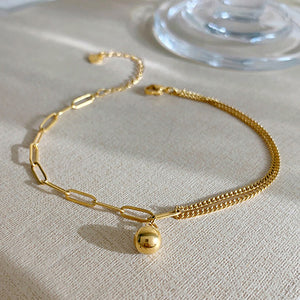
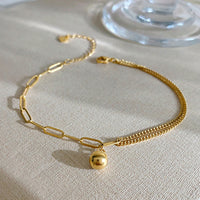
The piece they're describing → Double Layer Anklet for Women — 18K Gold Plated, Layered Chain, Tarnish-Free
Personalize Yours


