


The short answer
"Waterproof" comes down to the material, not the brand's marketing. Only a handful of metals — PVD-coated stainless steel, solid gold, titanium, and platinum — are genuinely immune to water, sweat, and chlorine. Standard gold-plated and gold-vermeil chains are water-resistant at best and will fade with repeated submersion. The other two things that decide whether a waterproof necklace actually survives daily wear are the chain style (solid links like snake, box, and rope hold up far better than fragile paperclip or delicate cable chains) and the clasp (stainless or solid-gold clasps won't corrode where a base-metal spring ring will). If you want one chain you never take off, pick a PVD stainless or solid-gold snake or rope chain.
Searching for the best waterproof necklaces usually turns up a wall of brand names with no explanation of why one piece survives the ocean and another turns your neck green after a week at the pool. The difference is almost never the logo — it's the metal underneath and how the chain is built. This guide skips the brand-list shortcut and gives you a material-by-material framework so you can judge any necklace, from any store, on whether it will actually hold up in water. We'll cover which metals are truly waterproof, how PVD coating differs from ordinary gold plating, how saltwater and chlorine each attack jewelry differently, which chain styles wear best wet, and specific AJLuxe picks that meet the bar.
Two things most "best waterproof necklace" roundups leave out entirely: the fact that chain construction matters as much as the metal (a delicate cable chain in a waterproof metal can still kink and snap), and a plain breakdown of waterproof versus water-resistant, two words brands use interchangeably even though they mean very different things for your jewelry.

Which necklace materials are actually waterproof?
Waterproof jewelry starts and ends with the base material. A necklace is only as water-safe as the metal it's built from and the quality of any coating on top. The table below ranks the common necklace materials by how they handle real water exposure — showering, swimming, sweating, and daily wear — so you can shop by material first and brand second.
| Material | Truly waterproof? | Shower / sweat | Pool & ocean |
|---|---|---|---|
| PVD-coated stainless steel | Yes | Excellent — the coating is molecularly bonded, not a surface plate | Excellent; rinse after saltwater to remove salt crystals |
| Solid gold (10K–18K) | Yes | Excellent — never rusts or tarnishes | Excellent, though many owners avoid saltwater to prevent scratching |
| Titanium | Yes | Excellent — corrosion-proof and hypoallergenic | Excellent; best-in-class for saltwater |
| Solid 925 sterling silver | Water-safe, but tarnishes | Won't rust, but oxidizes over time; polishes back up | Chlorine and salt accelerate tarnish; dry after wear |
| Gold-filled | Water-resistant | Handles showers and hand-washing thanks to a thick bonded gold layer | Keep away from chlorine and prolonged saltwater |
| Gold vermeil | Water-resistant, short-lived in water | Occasional splashes OK; regular water wear thins the gold layer | Avoid — chlorine and salt strip the plating fast |
| Standard gold-plated (brass core) | No | Plating fades, oxidizes, and can turn skin green | Avoid entirely |
The takeaway: if the product page doesn't tell you the base metal, assume it's the weakest option. For a broader primer that covers rings, bracelets, and earrings alongside necklaces, see our best waterproof jewelry guide, and our in-depth waterproof jewelry guide for the full care-and-materials breakdown. For a matching set, our companion best waterproof earrings guide applies the same metal rules to studs and hoops, and our roundup of the best tarnish-free jewelry brands compares the labels that specialize in water-safe pieces.
PVD coating vs. standard gold plating: the difference that matters most
This is the first gap most waterproof-necklace lists skip: two necklaces can both say "18K gold plated" and behave completely differently in water. The word "plated" hides two very different processes.
- PVD (Physical Vapor Deposition): gold is bonded to a stainless steel core at a molecular level inside a vacuum chamber. The result is a hard, thick, evenly distributed layer that resists water, sweat, chlorine, and daily abrasion. This is the coating that makes a "gold" necklace genuinely waterproof.
- Standard electroplating: a microns-thin layer of gold is deposited electrically over a base metal — usually brass. It looks identical on day one, but water, sweat, and friction wear it away quickly, exposing the base metal underneath (which is what actually causes green skin and dullness).
Because PVD is bonded to stainless steel rather than brass, a PVD necklace gives you the warm look of gold with the water-immunity of steel — the best value route to a chain you genuinely never have to take off. When you compare products, look specifically for the words "PVD" and "stainless steel," not just "gold plated." If a listing only says "gold plated" with no mention of the base metal or PVD, treat it as water-resistant at best.
Not all water is equal: shower, sweat, chlorine & saltwater
This is the second gap competitors miss: "waterproof" gets treated as one thing, but a necklace faces very different chemistry in the shower versus the ocean. Here's how each type of exposure actually affects your jewelry, and what even waterproof metals need afterward.
| Exposure | Main risk | Safe for PVD steel & solid gold? | Aftercare |
|---|---|---|---|
| Shower | Soap and product residue dulling the finish | Yes | Occasional wipe with a soft cloth to remove soap film |
| Sweat / workouts | Sweat is mildly acidic and breaks down weak plating | Yes | Rinse and dry; sweat won't touch PVD or solid gold |
| Chlorine pool | Chlorine is a harsh chemical that dulls finishes and strips plating | Yes for both; deadly for plated/vermeil | Rinse in fresh water afterward to remove chlorine |
| Saltwater / ocean | Salt crystals can scratch and, over time, corrode | Yes, but rinse promptly | Rinse in fresh water and dry; titanium and steel handle it best |
The pattern is clear: even a genuinely waterproof necklace benefits from a fresh-water rinse after chlorine or saltwater. Waterproof means it won't be damaged by water — it doesn't mean salt and pool chemicals should be left sitting on the metal. This is a habit worth building even with solid gold and PVD steel.

Which chain styles survive water best?
Material decides whether a necklace can be waterproof; chain construction decides whether it stays intact with daily wear. A fragile chain in a waterproof metal will still kink, catch, and snap. Solid, tightly-linked chain styles are far more forgiving for the never-take-it-off lifestyle.
| Chain style | Durability in daily/water wear | Best for |
|---|---|---|
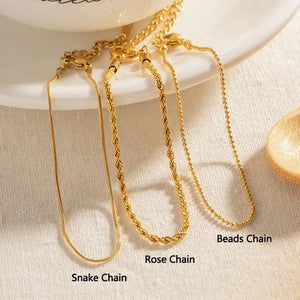
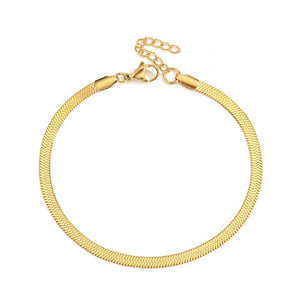
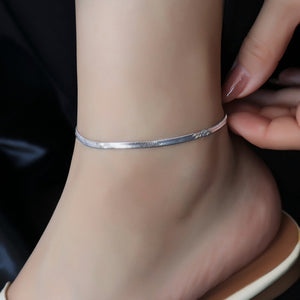
| Snake chain | Very high — smooth, tightly interlocked, few catch points | Sleek everyday and layering wear you never remove |
| Rope chain | Very high — twisted links are strong and hide scratches | Active wear and a substantial look |
| Box chain | High — square links resist kinking | Pendants and minimal everyday chains |
| Curb / Figaro | High — flattened, interlocking links wear well | Statement everyday chains |
| Delicate cable / paperclip (thin) | Lower — thin open links can bend, kink, and snag | Layering that you take off before rough activity |
If you want a waterproof necklace you'll wear through the gym, the shower, and the beach without a second thought, a snake or rope chain in PVD stainless or solid gold is the most bulletproof combination. To go deeper on every chain construction and how each hangs, see our types of chain necklaces guide.
Waterproof vs. water-resistant: the label trap
Brands use "waterproof" and "water-resistant" as if they mean the same thing. They don't, and the gap matters for your money.
- Waterproof means the piece can be submerged indefinitely — showers, pools, ocean, daily — without damage. Only PVD-coated stainless steel, solid gold, titanium, and platinum truly earn this label.
- Water-resistant means it tolerates limited exposure — hand-washing, a caught-in-the-rain moment, a quick splash — but not repeated submersion. Gold-filled and most sterling silver fall here; gold vermeil sits at the weaker edge of it.
When a listing says "water-resistant," read it as "take it off before the pool." When it says "waterproof" and names a genuinely waterproof material like PVD stainless steel or solid gold, you have a piece you can forget you're wearing. Anytime the two words appear without a named material, treat the claim skeptically.
Best waterproof necklaces: AJLuxe picks
Here's how to shop AJLuxe's necklace range if waterproof, tarnish-free wear is your priority — so you can go straight from "I want something I never take off" to an actual product. Prioritize PVD-coated and solid, tightly-linked chain styles.
- Everyday layered PVD chain: our 18K gold PVD-plated double-row snake chain necklace — a molecularly bonded PVD finish over a stainless core, in a smooth snake construction that resists kinks and catches. This is the closest thing to a shower-to-ocean, never-take-it-off chain.
- Minimal everyday layering: browse smooth, tightly-linked chains you can stack and leave on in our necklaces collection.
- Layering with an initial or pendant: if you want to build a water-safe layered look, our guide to layering initial necklaces covers length spacing and mixing chain widths.
- Close-to-the-neck styles: if you prefer a shorter silhouette, our types of choker necklaces guide explains which choker constructions hold up to daily wear.
Shop This Guide
Our 18K Gold PVD-Plated Double-Row Snake Chain Necklace — a molecularly bonded PVD finish over stainless steel and a smooth, kink-resistant snake construction, built to be the waterproof chain you wear from the shower to the shore and never take off.
Shop the Waterproof Snake ChainHow to care for a waterproof necklace
Even waterproof metals last longer and stay brighter with a light routine. None of this is difficult — it's mostly about not leaving corrosive residue sitting on the metal.
- Rinse after chlorine or saltwater. A quick fresh-water rinse removes salt crystals and pool chemicals before they can dull or scratch the finish.
- Dry with a soft cloth. Wiping the chain dry prevents water spots and keeps the finish looking new.
- Clean gently. Warm water and a drop of mild soap on a soft cloth is enough; skip abrasive cloths and harsh chemical cleaners, which can scratch or damage plating and coatings.
- Store dry and separate. Keep the necklace in a soft pouch away from sand and away from other pieces that could scratch it.
- Put jewelry on last. Perfume, lotion, and sunscreen are hardest on any finish; applying them before your necklace keeps residue off the metal.
Written by the AJLuxe Team. Last updated: July 2026. According to the Gemological Institute of America (GIA), the durability of a piece of jewelry in everyday conditions depends on the intrinsic properties of its metal — precious metals like gold and platinum resist corrosion because of their chemical stability, which is exactly why solid gold and inert coatings such as PVD outperform thin electroplating when a necklace is worn in water day after day.
Related reading: Best waterproof jewelry brands.
Related reading: Ball chain necklace.
Frequently Asked Questions
What necklace metals are truly waterproof and safe for swimming?
The metals that are genuinely waterproof and immune to rust or tarnishing are PVD-coated stainless steel, solid gold (10K–18K), platinum, and titanium. These materials keep their shine and structure even when submerged repeatedly in water, sweat, or rain, which makes them the only materials worth trusting for swimming.
Is PVD coating better than standard gold plating for waterproof jewelry?
Yes. PVD (Physical Vapor Deposition) bonds a thick layer of gold onto stainless steel at a molecular level, making it far more resistant to water and sweat than ordinary electroplating. Standard gold plating is a thin surface layer that quickly wears off or fades once it's exposed to water, especially in pools or the ocean.
Can you shower and swim in a stainless steel necklace without it tarnishing?
Yes. Stainless steel is waterproof and can be worn in the shower, pool, or ocean without rusting, tarnishing, or losing its shine. It's one of the most durable options for everyday wear because it is non-tarnishing and resistant to both water and sweat.
Does saltwater or chlorine damage waterproof necklaces differently?
Yes. Saltwater contains corrosive salt crystals that can scratch and, over time, corrode jewelry faster than fresh water, while chlorine is a harsh chemical that breaks down plating and dulls finishes. Even with waterproof metals like stainless steel or solid gold, it's best to rinse the necklace in fresh water and dry it after saltwater or chlorine exposure.
Does solid gold rust or tarnish when it gets wet?
No. Solid gold, including 10K, 14K, and 18K, is naturally waterproof and won't rust, tarnish, or lose its shine in water. Pure 24K gold is soft and scratches easily, but lower-karat solid gold is more durable and highly resistant to water and corrosion.
What's the difference between waterproof and water-resistant jewelry?
Waterproof means the piece can be submerged indefinitely without damage, while water-resistant means it tolerates limited exposure like hand-washing or light rain but not extended submersion. Many gold-plated and gold-vermeil pieces are only water-resistant, so they should come off before the pool or the shower.
Can I wear a gold-plated necklace in the shower or pool?
Standard gold-plated necklaces should not be worn in water, because the thin plating wears off, oxidizes, or fades with repeated exposure. Only wear a "gold" necklace in water if it is specifically PVD-coated over stainless steel or made from solid gold.
Is PVD-coated stainless steel actually waterproof for swimming?
Yes. PVD-coated stainless steel is one of the most reliable options for true waterproof wear and is safe for both swimming and showering. The PVD process creates a long-wearing, gold-toned finish on stainless steel that resists water, sweat, and chlorine.
Which necklaces are best for sweat and daily active wear?
For active wear, choose necklaces made of PVD-coated stainless steel, solid gold, or titanium, since these hold up to sweat, sunscreen, and heat. Avoid brass-core plated pieces, because sweat is mildly acidic and breaks down weak plating over time.
Are gold-filled necklaces waterproof enough for swimming?
Gold-filled jewelry is water-resistant rather than fully waterproof. Its thick bonded gold layer handles showers and hand-washing well, but it should be kept away from chlorine and prolonged saltwater, which are harsher than everyday freshwater exposure.
Which waterproof necklace material is best for saltwater swimming?
Titanium and stainless steel are the best choices for saltwater because they resist corrosion from sea water without tarnishing. Solid gold is also waterproof, but many owners leave it home for ocean swims to avoid scratches from salt and sand — and any piece should be rinsed in fresh water afterward.
Which chain style lasts longest for everyday waterproof wear?
Solid, tightly-linked styles like snake, rope, and box chains last longest because they resist kinking and have few points to snag. Thin, open styles such as delicate cable or fine paperclip chains are more likely to bend or catch, so they suit lighter layering rather than never-take-it-off wear.
All third-party trademarks, brand names and product names are the property of their respective owners. AJLuxe is not affiliated with, endorsed by, sponsored by, or otherwise connected to any third-party brand referenced in this article. Brand names are used solely for accurate comparative reference, and material descriptions reflect each brand's own published product specifications at the time of writing.
You Might Also Like
The piece they're describing → Stone Charm Necklace for Women — Raw Natural Gemstone Pendant
Personalize Yours


