


The short answer
Ear cuffs are graded by how they grip, not by a size number — a C-shaped clip-on cuff slides onto the outer cartilage with no piercing, a wrap or spiral cuff hugs the helix, and a chained or threader cuff connects a real piercing to the upper ear. The two things that decide whether a cuff stays put and stays comfortable are grip tension (a cuff that's slightly too open falls off; one that's too tight pinches) and metal — 925 sterling silver, 14K gold, and 18K gold plated over sterling silver all sit safely against skin, while gold plated over brass can irritate sensitive ears. If you have no piercings, start with a single adjustable C-cuff in sterling silver.
"Best ear cuffs" is a search that hides three very different shoppers behind one phrase. There's the person who wants the pierced-ear look with zero commitment and no needle. There's the buyer who already owns one cuff and wants to build a layered, editorial ear stack. And there's the frustrated shopper — the one whose last cuff kept sliding off — hunting for a pair that actually stays on. This guide is built for all three: a plain-English breakdown of ear cuff types, the grip mechanics almost every other guide skips, a metal chart for sensitive ears, and specific AJLuxe recommendations you can shop by style.
We'll spend real time on the two things that make or break an ear cuff and that most roundups gloss over: why cuffs fall off and how to make one grip properly, and how cartilage thickness changes where you should place a cuff — the difference between a cuff you forget you're wearing and one you fidget with all day.

Types of ear cuffs: which style is best for you
Before you can pick the best ear cuff, you need to know which kind you're shopping for, because "ear cuff" covers several mechanically different pieces. Some need no piercing at all; others clip onto an existing one. The table below maps every common style to who it's best for and whether it requires a piercing.
| Ear cuff style | Piercing needed? | Best for | Grip type |
|---|---|---|---|
| C-shape / clip cuff | No | First-timers, no-piercing wearers | Springs onto outer cartilage edge |
| Wrap / spiral cuff | No | A wider, more decorative helix look | Coils around the upper cartilage |
| Conch cuff | No | A bold cuff that hugs the inner ear | Pinches the conch ridge |
| Chained / double cuff | Usually one lobe piercing | A connected, curated-ear look | Stud in lobe + cuff on cartilage |
| Threader / hook cuff | One piercing | Delicate, minimalist single-ear accents | Hooks through and drapes |
If you want a deeper visual breakdown of each shape and where it sits on the ear, our complete guide to the types of ear cuffs walks through every style with placement diagrams. And if you're still deciding between a true cuff and a pierced cartilage earring, our ear cuff vs. cartilage earring comparison lays out the trade-offs side by side. And if you searched for "clip on earrings" and landed here, our ear cuffs vs. clip-on earrings comparison spells out exactly how the two differ before you buy either one.
Why ear cuffs fall off — and how to make one grip
This is the single biggest gap in almost every "best ear cuffs" list: they rank pretty pictures and never explain the mechanics of why a cuff stays on or slips off. Yet "help me find ear cuffs that don't fall off" is one of the most common real complaints from shoppers. A cuff stays put through tension — the metal is bent into a slightly-too-small opening so it springs against your cartilage. Get that tension wrong and even a beautiful cuff is useless.
| Problem | Cause | Fix |
|---|---|---|
| Cuff slides off | Opening too wide, or placed on thick cartilage | Gently pinch the cuff a touch tighter; move it to the thinnest cartilage edge |
| Cuff pinches or aches | Opening too tight, or worn too long | Ease the cuff open slightly; give ears a break overnight |
| Cuff spins or won't sit level | Wrong placement zone for that cuff's shape | Slide to a flatter section of cartilage and rotate until balanced |
| Slips after skincare | Oil or lotion on the ear reduces friction | Wipe the ear dry and skip oil on the cuff zone before wearing |
The technique that fixes most slipping issues: slide the cuff onto the thinnest part of your cartilage first — usually the upper outer edge — then walk it down to where you want it to sit. Cartilage gets thicker as you move inward, so a cuff that grips fine at the edge can loosen if you force it somewhere too thick. For a full step-by-step, our how to wear ear cuffs guide covers placement by ear zone in detail.
Metal and hypoallergenic considerations
An ear cuff clamps against cartilage for hours, and cartilage skin is thinner and more reactive than the earlobe. That makes metal one of the most important comfort factors — arguably more so than for a stud, because the contact is constant and under light pressure.
| Metal | Hypoallergenic? | Notes |
|---|---|---|
| 925 sterling silver | Yes | Naturally skin-safe and easy to gently reshape for a custom grip; tarnishes slowly but polishes back up |
| 14K gold | Yes | The most durable option for long-term daily wear; never needs replating and holds cuff tension well |
| 18K gold plated over 925 silver | Yes | Skin-safe at every contact point because the base is sterling silver, not brass — the best value gold look |
| Gold plated over brass/zinc | No — often contains nickel | The base metal, not the gold layer, irritates skin once plating wears thin at the grip point; avoid with any sensitivity |
According to the American Academy of Dermatology, nickel allergy is one of the most common causes of contact dermatitis, and the safest approach is to choose jewelry made from nickel-free metals such as sterling silver or high-karat gold rather than trusting a "hypoallergenic" label alone — the term has no regulated legal definition in the US, so the base metal underneath any plating is what actually determines whether a cuff will irritate your skin. This matters even more for cuffs than pierced earrings, since the plating tends to rub thin fastest exactly at the grip point where the metal presses hardest against your ear.

Best ear cuffs for non-pierced ears
The biggest reason ear cuffs exploded in popularity is simple: they give you the stacked, pierced-ear look with no piercing, no needle, and no healing time. Because a true cuff grips the cartilage by tension rather than passing through it, there's no wound and no infection risk — you can put one on, change your mind, and take it off five minutes later with nothing to show for it.
For a non-pierced wearer, the best starting cuff is a single adjustable C-shape or conch cuff. Adjustable is the key word: a cuff you can gently pinch tighter or ease open lets you dial in the grip to your own cartilage, which is what makes the difference between "stays on all day" and "lost it by lunch." Avoid rigid, non-adjustable cuffs for your first pair — you can't tune them to your ear. Our dedicated ear cuffs for non-pierced ears guide ranks the most secure no-piercing styles specifically.
Best ear cuffs by style: AJLuxe recommendations
Here's how to shop AJLuxe's ear cuff range by style, so you can go straight from "I want a no-piercing everyday cuff" to an actual product instead of scrolling the whole collection. Every piece below is 925 sterling silver based, so it's skin-safe at the grip point.
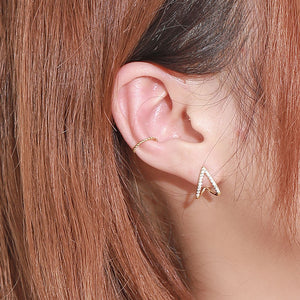
- Hook / draped style: our hook ear cuff earrings in 925 silver for a delicate cuff that hooks and drapes along the upper ear.
- No-piercing statement: our cross ear cuff earrings (no piercing) add a motif to the classic cuff shape without needing a hole.
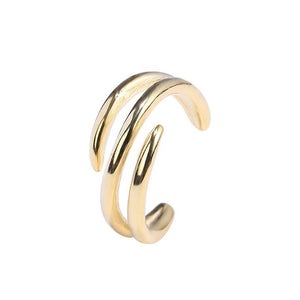
- Minimal gold look: our minimalist single cuff earrings in 18K gold plated 925 silver for a warm gold finish over a hypoallergenic silver base.
- Textured everyday cuff: our minimalist twisted cuff earrings in 925 silver add a subtle rope texture to the everyday cuff.
To browse the full range of styles side by side, see our ear cuff collection.
Shop This Guide
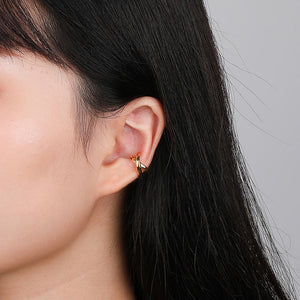
Our Ear Cuff Earrings — a double-band cuff that clips onto the cartilage with no piercing and adjusts to fit most ear shapes, in 925 sterling silver with an 18K gold plated option.
Shop the Ear Cuff EarringsSingle vs. multiple: styling your ear cuffs
A single cuff worn alone is the balanced, approachable default — one cuff on the mid-cartilage paired with a small stud in the lobe reads as effortless rather than overdone. If you want the fashion-forward, editorial look, layer multiple cuffs up the same ear with intentional spacing between them, so the ear reads as curated rather than crowded. Wearing two cuffs almost always looks more deliberate than wearing just one lonely piece.
You can also go asymmetrical — a stacked, multi-cuff look on one ear and a single stud on the other is one of the most popular curated-ear combinations right now. For more layering combinations and placement ideas, our full ear cuff guide covers styling across every ear zone. To make the look bolder, pair a cuff with a piece from our best statement earrings guide — and because many people wear cuffs around the clock, our best waterproof earrings roundup covers pairs that hold up in the shower and pool.
How to choose: a quick decision path
- Start with piercings. No piercings → adjustable C-shape or conch cuff. One lobe piercing → a chained or hook cuff opens up more looks.
- Prioritize adjustability for your first cuff. A cuff you can gently pinch or ease open will always fit better than a rigid one you can't tune.
- Pick a hypoallergenic metal. Any history of ear irritation → 925 sterling silver, 14K gold, or 18K gold plated over sterling silver only. Skip brass-based plating.
- Place it on thin cartilage first. Slide onto the thinnest upper edge, then walk it down — this is the single biggest fix for cuffs that slip.
- Buy one versatile cuff first, then build a stack once you know how it sits and where you like it.
Written by the AJLuxe Team. Last updated: July 2026. According to the American Academy of Dermatology, checking the base metal under any plating — not just the label on the box — is the most reliable way to avoid irritation, a principle that applies directly to ear cuffs given how firmly and constantly the metal presses against cartilage.
Related reading: Silver Ear Hoops: The Complete Guide to Metal, Size, and Fit (2026).
Frequently Asked Questions
Are ear cuffs suitable for non-pierced ears?
Yes. Ear cuffs are designed specifically to give the look of earrings without any piercing or needle. A true cuff wraps around the cartilage or lobe and is held in place by the natural spring tension of the metal, so there's no wound and no healing time — you can put one on and take it off at will.
Should I choose gold or silver ear cuffs?
Both are excellent as long as the base metal is skin-safe. 14K gold is often recommended for long-term durability and keeping its brilliance over years of wear. Sterling silver is ideal for sensitive skin and is easy to gently reshape for a custom grip. For a gold look at a lower price, choose 18K gold plated over a 925 sterling silver base rather than brass.
Do ear cuffs damage your ears?
No. Because ear cuffs don't penetrate the skin, there are no needles, no wounds, and no infection risk. A cuff that's too tight or placed incorrectly can cause temporary pinching, but that resolves as soon as you loosen it or move it, and it leaves no lasting damage.
How do I keep an ear cuff from falling off?
Slide the cuff onto the thinnest part of your cartilage first — usually the upper outer edge — then walk it down to where you want it, since cartilage thickens as you move inward. If the cuff is adjustable, gently pinch it a touch tighter for more grip. Avoid applying hair oil or heavy skincare to the ear before wearing, as it reduces friction and lets the cuff slip.
Are ear cuffs comfortable to wear all day?
Most people find them comfortable once they locate the "sweet spot" on the cartilage where the cuff feels secure but not tight. A well-fitted cuff stays put without pinching and lets you move your jaw normally. If a cuff aches by midday, ease it open slightly — it's gripping too hard.
How are ear cuffs sized?
Most ear cuffs are designed as "one size fits most," since everyone's cartilage is slightly different. The fit is controlled by the opening tension rather than a numbered size, and many cuffs are adjustable — you gently pinch them closed for more grip or ease them open for comfort.
What is the best placement for an ear cuff?
Mid-cartilage is the most comfortable and balanced spot for a single cuff, but you can also position one on the upper cartilage near the top of the ear or just above the lobe for a stacked effect. Always check the fit in a mirror so the cuff sits evenly against your ear rather than tilting.
Is it better to wear a single ear cuff or multiple?
A single cuff creates a balanced, casual, approachable look, especially paired with a delicate stud in the lobe. Multiple cuffs create an editorial, fashion-forward style — layer them up one ear with intentional spacing so the look reads as curated rather than crowded.
Can I wear ear cuffs on both ears?
Yes. Wearing a cuff on one ear gives an asymmetrical, casual look, while matching cuffs on both ears reads as more balanced and intentional. Both are correct — it comes down to whether you want a symmetrical or an off-center effect.
Are there ear cuffs made of real gold?
Yes. Solid 14K gold ear cuffs exist and are recommended for longevity since there's no plating to wear off, though they cost more. Gold-plated cuffs offer the same look at a lower price — just make sure the plating is over a 925 sterling silver base rather than brass so it stays skin-safe as the plating wears.
How long can I safely wear an ear cuff?
You can wear a comfortable, well-fitted cuff all day, but it's best to remove it at night so you don't lose it or apply unnecessary pressure while you sleep. Check the fit periodically during the day to make sure it hasn't shifted or loosened.
Do I need a piercing to wear an ear cuff?
Not for most styles. C-shape, wrap, and conch cuffs all grip the cartilage with no piercing needed. Only chained, threader, or hook cuffs typically use one existing lobe piercing to anchor a connected look — so if you have no piercings, stick to the tension-grip cuff styles.
All third-party trademarks, brand names and product names are the property of their respective owners. AJLuxe is not affiliated with, endorsed by, sponsored by, or otherwise connected to any third-party brand referenced in this article. Brand names are used solely for accurate comparative reference, and material descriptions reflect each brand's own published product specifications at the time of writing.
You Might Also Like
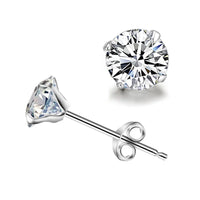
The piece they're describing → CZ Stud Earrings for Women — 925 Sterling Silver, Cubic Zirconia, Hypoallergenic
Personalize Yours


