


Last updated: September 2026
Why Do Jewelry Gifts Hit Different?
Jewelry is one of the most common "big" gifts people give and receive, for anniversaries, milestones, apologies, birthdays, and no occasion at all. It also tends to land with more emotional weight than a lot of gifts at a similar price point. Consumer psychology has a real, decades-old research tradition around why that happens, built around a few core ideas: the split between symbolic and utilitarian gifts, gift-giving as a form of relationship signaling, and the finding that perceived effort matters more than price. None of this is exotic or invented for marketing copy; it's a genuine, ongoing area of academic study in consumer behavior and psychology. Here's what that research actually says, in general terms, without manufacturing a fake statistic to make the point.
Symbolic Gifts vs. Utilitarian Gifts
Consumer researchers commonly split gifts into two broad categories: utilitarian gifts, chosen mainly for practical usefulness, and symbolic gifts, chosen mainly to express meaning, identity, or a relationship. A gift card, a kitchen tool, or a phone charger tends to sit on the utilitarian end. A piece of jewelry tends to sit on the symbolic end almost by default: it's rarely something the recipient "needs," it's worn on the body rather than used and put away, and it's frequently chosen to represent something specific, a relationship, a milestone, a shared memory, rather than to solve a practical problem.
That symbolic weight isn't incidental to jewelry, it's close to the whole point of it as a gift category. A well-known finding in this research area is that a good gift generally has to satisfy two different things at once: an objective, practical criterion (is it useful, is it good quality) and a separate, subjective, psychological criterion (does it express real thoughtfulness). Jewelry leans hard into that second criterion. Its usefulness is almost beside the point; its job is to communicate something the giver couldn't say as convincingly with words alone.
Why Effort Matters More Than Price
One of the more consistently replicated findings in gift-giving research is that how much thought and effort a gift appears to reflect has a stronger influence on how it's received than its actual monetary value. A gift that clearly took consideration, that fits the recipient specifically rather than reading as generic, tends to land better than a more expensive but more impersonal alternative, even though the giver and the recipient don't always agree on what counts as "thoughtful" in the moment.
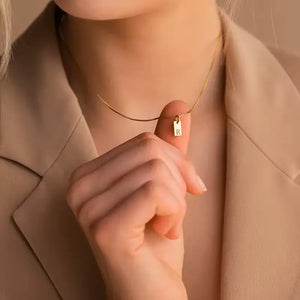
This helps explain why jewelry outperforms a lot of gifts that cost the same or more. A necklace or ring is rarely a gift you buy on autopilot; picking one out (a birthstone, an engraving, a style that matches how someone actually dresses) requires a visible decision, in a way a generic gift card doesn't. The object ends up carrying evidence of that decision every time it's worn, which is part of why jewelry keeps reading as a "big" gift well after other similarly priced presents have been forgotten.
Gift-Giving as Relationship Signaling
Gift-giving research, going back to classic work in anthropology and consumer behavior, treats the act of giving as a form of social signaling, a way of communicating the state of a relationship, not just transferring an object. Giving and receiving gifts has long been understood as a kind of reciprocal social exchange: it can express commitment, mark a shift in a relationship, or reinforce a bond, and the gift itself becomes a stand-in for things that are harder to say directly.
Jewelry is a particularly strong vehicle for that kind of signal because it's worn, not consumed or put in a drawer. A piece someone wears regularly keeps functioning as a visible marker of the relationship or moment it represents, long after the occasion that prompted it has passed. Consumer research on "possessions and the self" describes how items like jewelry can become part of how a person expresses their own identity and their connections to other people, which is a large part of why a ring or a necklace can feel like it's doing more emotional work than an object its size would suggest.
What This Actually Means When You're Choosing a Gift
If the research points anywhere practical, it's toward specificity over price. A piece that's clearly chosen for the person, rather than a generic "safe" option, tends to do more emotional work than spending more on something less personal. A birthstone that matches their actual birth month, an engraving with real meaning, a style that fits how they actually dress day to day, these are the kinds of details that make a gift read as symbolic and effortful rather than as a placeholder.
It's also worth remembering that the research describes tendencies and patterns across many people, not a guarantee for any one relationship or moment. What reads as thoughtful varies by person and by relationship, and no single formula, jewelry included, works for everyone. The consistent thread across this research is simpler than any specific gift category: gifts that visibly reflect the giver's attention to the specific recipient tend to be received better than gifts that don't, regardless of price.
Shop Gift-Ready Jewelry at AJLuxe: Love Knot Heart Necklace Gift Set →
Ready to put this into practice? See our full gifts for girlfriend guide for picks that make the moment count.
Frequently Asked Questions
Why does jewelry feel like a more meaningful gift than other items?
Because it tends to sit on the "symbolic" end of gift psychology rather than the "utilitarian" end. Consumer behavior research distinguishes gifts chosen mainly for usefulness from gifts chosen mainly to express meaning, identity, or a relationship. Jewelry is rarely bought because someone needs one; it's chosen to represent something specific, which is a large part of why it tends to carry more emotional weight than an equally priced practical item.
Does a more expensive gift always mean more to the recipient?
Not necessarily. A well-established finding in gift-giving research is that perceived effort and thoughtfulness influence how a gift is received more strongly than its price does. A less expensive but clearly personal gift can land better than a pricier but generic one, though givers and recipients don't always define "thoughtful" the same way.
Is there real research on gift-giving psychology, or is it just marketing language?
It's a genuine, established research area within consumer psychology and marketing academia, with an ongoing body of published work in journals like the Journal of Consumer Psychology and the Journal of Consumer Research. It covers topics like symbolic versus utilitarian gift value, giver-recipient differences in how gifts are evaluated, and gift-giving as a form of relationship signaling. It's a real academic field, not a single invented statistic.
Why does something you wear, like jewelry, feel different from a gift you use once?
Because it stays visible and present in daily life rather than being consumed or put away. Research on possessions and personal identity describes how worn items like jewelry can become part of how someone expresses who they are and who they're connected to, which means the gift keeps functioning as a reminder of the relationship or occasion long after the day it was given.
What makes a gift read as "thoughtful" rather than generic?
Specificity to the actual person, more than price. Details that clearly required knowing the recipient, a birthstone tied to their real birth month, a style that matches how they actually dress, an engraving with real meaning, tend to read as more effortful and thoughtful than a similarly priced but generic alternative, which research consistently ties to how positively a gift is received.
Final Thoughts
The reason jewelry gifts land differently isn't a marketing trick, it's a fairly well-documented pattern in consumer psychology: symbolic gifts outweigh utilitarian ones emotionally, effort and specificity matter more than price, and worn items keep signaling a relationship long after they're given. None of that requires a single dramatic statistic to be true; it's the accumulated finding of a real academic field studying how and why people give gifts at all.
At AJLuxe, most of what we make is designed to be given, not just worn: personalized pieces, gift-boxed sets, and details like birthstones and engravings that are meant to make a gift feel specific to one person rather than generic.
Written by the AJLuxe team. Last updated: September 2026.
Sources: Givi, "An integrative review of gift-giving research in consumer behavior and marketing," Journal of Consumer Psychology, Russell W. Belk, "Possessions and the Extended Self" (Wikipedia summary).
Shop Gift-Ready Jewelry at AJLuxe: Love Knot Heart Necklace Gift Set →
All third-party trademarks, brand names and product names are the property of their respective owners. AJLuxe is not affiliated with, endorsed by, sponsored by, or otherwise connected to any third-party brand referenced in this article. Brand names are used solely for accurate comparative reference, and material descriptions reflect each brand's own published product specifications at the time of writing.
You Might Also Like
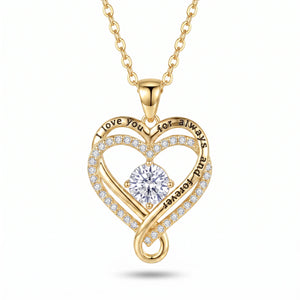
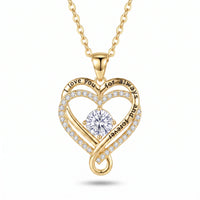
The piece they're describing → Love Knot Heart Necklace for Wife or Girlfriend — ‘I Love You for Always and Forever,’ Gift Boxed with Message Card
Personalize Yours


