


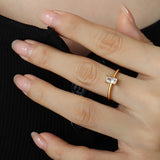
Green is the "normal" color on a mood ring — the shade most people see most often during their everyday activities. It signals average body temperature, which correlates with a calm, balanced, unremarkable emotional state. When someone asks what a mood ring is "supposed" to look like, the answer is usually green.
Shop it: the AJLuxe Color-Changing Mood Ring — a real thermochromic stone in an ornate, antiqued silver-tone band. Join the waitlist.
Mood rings work by detecting changes in skin temperature through thermochromic liquid crystals embedded in the stone. Those crystals twist at different temperatures, reflecting different wavelengths of light. Green appears in the mid-range of that temperature band — right where the human body rests during ordinary, stress-free activity.
What Each Shade of Green Means
Green isn't a single color on a mood ring — it appears across a range of shades, each reflecting a slightly different temperature and corresponding emotional state.
| Shade | Temperature | Meaning |
|---|---|---|
| Pale / Light green | ~29–31°C / 84–88°F | Unsettled, slightly anxious — trending toward yellow |
| Medium green | ~31–32°C / 88–90°F | Normal, average, calm |
| Dark green | ~32–33°C / 90–91°F | Calm with mild alertness or curiosity |
| Blue-green / Teal | ~33–34°C / 91–93°F | Relaxed, content, slightly positive |
| Yellow-green | ~28–30°C / 83–86°F | Mixed emotions — uncertain, transitioning |
The key takeaway: the darker and bluer the green, the more relaxed and positive you are. The lighter and more yellow the green, the more unsettled or anxious.
Is Green Good or Bad on a Mood Ring?
Green is neutral — neither good nor bad. It's the baseline most rings return to at rest. Think of it as the "default" reading.
Blue is more positive (happy, relaxed, at ease), and purple is more emotionally engaged (romantic, excited). But green simply means you're functioning normally. Most people see green more than any other color because the human body spends the majority of its time in this temperature range during everyday activities like working, watching TV, having casual conversations, or running everyday errands.
If your ring is always green, that's actually a good sign — it means the ring is functioning correctly and your body is at its normal resting temperature. If anything, a ring that never shows green should raise questions about whether it's calibrated correctly or damaged.
Green vs Other Colors: How to Tell Them Apart
| Color | Temperature Range | What It Signals | vs Green |
|---|---|---|---|
| Green | 29–34°C / 84–93°F | Normal, calm, baseline | — |
| Yellow | ~27–29°C / 81–84°F | Tense, slightly stressed | Cooler, more anxious than green |
| Blue | ~34–36°C / 93–97°F | Happy, relaxed, at ease | Warmer, more positive than green |
| Purple | ~36–37°C / 97–99°F | Romantic, excited, passionate | Much warmer, emotionally engaged |
What Causes a Mood Ring to Turn Green?
Your ring turns green during ordinary, low-key activity. The common triggers include:
- Sitting at a desk — working, reading, or browsing
- Watching TV or a movie — passive relaxation
- Casual conversation — not emotionally charged
- Light physical activity — a slow walk, light chores
- Cooling down after excitement — the ring transitions through purple → blue → teal → green as emotions settle
- Warming up after stress — the ring moves through black → brown → amber → yellow → green as anxiety fades
In other words, green is the destination your ring returns to when nothing extreme is happening. It's homeostasis — the body's emotional and thermal baseline.
The Science Behind Green on a Mood Ring
Mood rings contain liquid crystals (typically cholesteric or nematic) that are highly sensitive to temperature changes. As skin temperature rises, the crystals untwist and reflect longer wavelengths of light (toward red/purple). As temperature drops, they twist more tightly and reflect shorter wavelengths (toward yellow/brown/black).
Green falls in the middle of this spectrum — roughly 29–34°C — which corresponds to typical resting finger temperature for most adults in a comfortable indoor environment. The ring isn't reading your emotions directly; it's reading temperature changes caused by blood flow shifts, which are influenced by the autonomic nervous system (the same system that responds to stress, excitement, and relaxation).
See our full breakdown: Mood Ring Color Chart — Every Color and What It Means and Mood Ring Colors and Meanings.
Frequently Asked Questions
What does green mean on a mood ring?
Green means normal, calm, and average. It's the baseline "resting" color on a mood ring, indicating your body temperature is in its everyday range (~31–33°C / 88–91°F). It signals a neutral, balanced emotional state — not stressed, not excited, just ordinary calm.
Is green good on a mood ring?
Green is neutral, not positive or negative. It's the most common mood ring color because the body spends most of its time at its normal resting temperature. Blue is more positive (happy, relaxed), but green simply means you're at baseline — which is completely normal and healthy.
What does dark green mean on a mood ring?
Dark green on a mood ring indicates calm with mild alertness or curiosity — a slight temperature elevation above the neutral baseline. It appears at around 32–33°C (90–91°F) and suggests you're engaged but not stressed or overly excited.
What does teal or blue-green mean on a mood ring?
Teal or blue-green on a mood ring means relaxed, content, and slightly positive — a step above neutral green toward the happier blue zone. It appears at around 33–34°C (91–93°F) and suggests you're in a good mood and comfortable.
Why does my mood ring always stay green?
If your mood ring stays green most of the time, that's completely normal and means the ring is working correctly. Green is the most common mood ring color because the human body naturally rests at temperatures that produce a green reading. Your ring will shift to other colors during strong emotions or temperature changes.
What emotion is green on a mood ring?
Green on a mood ring corresponds to calm, neutral emotions — no particular feeling, just average balance. It's the emotional equivalent of "nothing special is happening." The medium green shade means normal/calm; lighter green leans toward mild anxiety; darker green leans toward mild alertness or curiosity.
What temperature makes a mood ring green?
A mood ring turns green at approximately 29–34°C (84–93°F), which covers the full green spectrum from pale green to teal. Medium green appears at around 31–32°C (88–90°F), which is the typical resting finger temperature for most adults in a comfortable environment.
The Bottom Line on Green Mood Rings
Green is the mood ring's "all clear" signal. When you see green, your body is at its normal resting temperature and your emotional state is calm and balanced. It's not exciting news — but that's exactly the point. If your ring stays green throughout a typical day, you're running at your baseline, which is exactly how it should work.
For a complete breakdown of every color, visit our Mood Ring Color Chart or explore the full Mood Ring Colors and Meanings guide. And if blue is catching your eye, check out What Does Blue Mean on a Mood Ring?
Looking for meaningful jewelry beyond mood rings? Our Birthstone Necklaces let you wear your birth month in a personalized piece that lasts.
All third-party trademarks, brand names and product names are the property of their respective owners. AJLuxe is not affiliated with, endorsed by, sponsored by, or otherwise connected to any third-party brand referenced in this article. Brand names are used solely for accurate comparative reference, and material descriptions reflect each brand's own published product specifications at the time of writing.
You Might Also Like
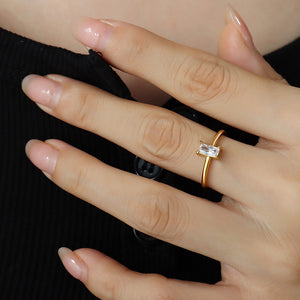

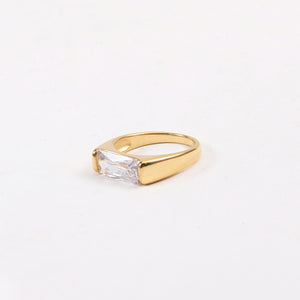
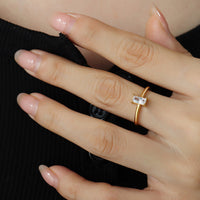
The piece they're describing → Square CZ Wedding Ring for Women — 18K Gold Plated, Princess Cut Cubic Zirconia
Personalize Yours


